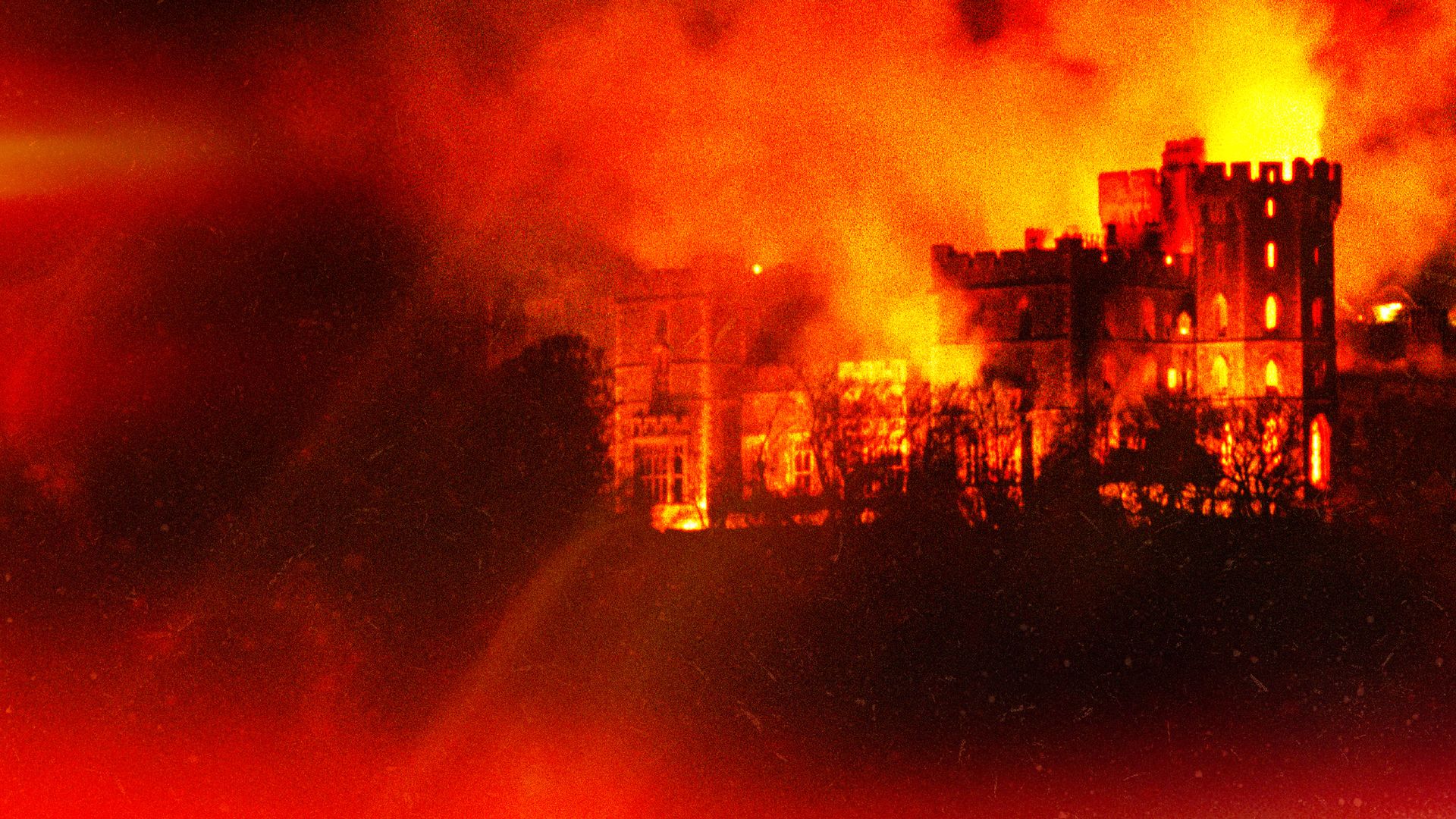
The 1992 Windsor Castle fire was a catastrophic blaze that broke out on November 20, 1992, severely damaging the historic royal residence. The fire destroyed over 100 rooms, including major state apartments, and prompted a massive, multi-year restoration project that fundamentally changed how historic British properties are managed, insured, and protected against disasters.
The Outbreak and Initial Response on November 20, 1992
The disaster began on Friday, November 20, 1992, during a routine maintenance check in Queen Victoria's Private Chapel. A faulty spotlight accidentally ignited a nearby curtain, and the flames spread rapidly through the dry, historic timber and combustible architectural fabric of the upper ward. Because the castle was undergoing modernization work, many of the heavy fire doors were temporarily removed or propped open, inadvertently creating a clear draft pathway that allowed the fire to sweep through adjoining rooms with terrifying speed.
Initial detection occurred when a member of the Royal Household noticed smoke and raised the alarm. However, the sheer scale and labyrinthine layout of Windsor Castle presented immediate logistical nightmares for the local emergency services. Berkshire Fire and Rescue Service received the first emergency call at 11:37 AM, dispatching engines to the scene. Within hours, the response escalated into a massive regional operation, eventually drawing more than 200 firefighters from seven counties to combat the inferno.
Battling the Inferno: Scale, Strategy, and Destruction
Fighting a fire in a medieval fortress presented unique technical and operational challenges. Firefighters faced low water pressure, vast floor areas, and complex structural configurations that made containment exceptionally difficult. To supply enough water to the upper levels, crews had to pump water directly from the nearby River Thames and utilize swimming pools on the castle grounds.
The primary tactical objective shifted early on: saving human life, followed closely by salvaging priceless works of art, furniture, and historical artifacts. Members of the Royal Household, staff, soldiers from the Grenadier Guards, and local volunteers formed human chains to evacuate paintings, porcelain, tapestries, and books from rooms directly threatened by the advance of the flames or water damage. Among the rescued items was a magnificent 13th-century altarpiece, though several large canvases were too heavy to remove and had to be cut from their frames or left behind.
The fire burned for 15 hours before it was finally brought under control in the early hours of November 21. By then, the structural devastation was staggering. The blaze gutted the St George's Hall, the Grand Reception Room, the Crimson Drawing Room, the Green Drawing Room, and the Private Chapel. Over 9,000 square meters of the castle—roughly one-fifth of its total floor area—suffered severe fire, smoke, or water damage.
| Area / Asset | Extent of Damage | Salvage Status |
|---|---|---|
| Private Chapel | Completely destroyed by fire and collapse | Structure gutted; architectural elements lost |
| St George's Hall | Roof collapsed; severe structural destruction | Flooring destroyed; key furnishings rescued |
| Grand Reception Room | Extensive fire and decorative loss | Gilded wood and crystal chandeliers heavily damaged |
| Royal Collection Artifacts | Minimal total loss due to rapid evacuation | Majority of paintings, armor, and books saved |
Financial Controversy and the Funding of the Restoration
The aftermath of the Windsor Castle fire triggered a fierce national debate regarding the funding of historic heritage preservation. Windsor Castle, as an occupied royal palace, belonged to the Crown, but the financial burden of repairing such a colossal state asset traditionally fell upon the British taxpayer through the Department of the Environment.
When estimates for the restoration soared past thirty-six million pounds, public backlash was immediate and intense. Taxpayers questioned why a wealthy institution should rely on public funds for repairs, especially during an economic downturn. In response to the public mood, Queen Elizabeth II announced a historic shift in royal finances. She agreed to pay for seventy percent of the restoration costs out of her own private income, generated in part by opening Buckingham Palace to the paying public for the first time during the summer months. Furthermore, the Queen agreed to begin paying income tax for the first time in modern history, neutralizing much of the public criticism and redefining the financial relationship between the Monarchy and the state.
Architectural Restoration and Technological Innovations
The restoration project, which commenced in earnest following structural stabilization, stands as one of the most remarkable engineering and conservation achievements of the late twentieth century. Led by architect Donald Insall and executed by specialist craftsmen, the project adhered to a philosophy of authentic restoration combined with modern innovation. Rather than merely rebuilding what was lost, the team debated whether to restore the rooms to their pre-fire appearance or to introduce contemporary designs. Ultimately, a balanced approach was adopted: rooms like St George's Hall and the Private Chapel were redesigned with modern architectural interpretations using traditional English green oak and modern fire-retardant materials, while the Grand Reception Room was faithfully restored to its 19th-century splendor.
Technicians seized the opportunity to upgrade the castle’s obsolete infrastructure. Modern fire-suppression systems, including computerized thermal sensors, automatic water mist sprinklers, and compartmentalized fire-resistant barriers, were installed throughout the historic core. These invisible upgrades ensured that a similar disaster could never propagate through the castle again, setting a new benchmark for heritage protection standards across the United Kingdom.
Long-Term Cultural Impact and Heritage Protection Standards
The 1992 fire left a permanent legacy on how historic monuments and heritage sites are managed across the globe. It exposed the extreme vulnerability of ancient buildings during periods of major construction or refurbishment, leading to stricter regulatory oversight for hot-work permits (such as welding, soldering, and using high-heat equipment) in historic structures.
Heritage bodies across Europe reviewed their emergency evacuation protocols, emphasizing pre-incident salvage planning. Museums and stately homes adopted the "human chain" evacuation matrix refined at Windsor, ensuring that every historic property maintained an updated priority list of portable cultural assets. The tragedy transformed a moment of national shock into a catalyst for modern preservation science.
Frequently Asked Questions
What caused the 1992 Windsor Castle fire?
The fire was caused by a faulty spotlight that came into direct contact with a curtain in Queen Victoria's Private Chapel. The intense heat from the bulb ignited the fabric, and the flames quickly spread into the void behind the wooden paneling.
How long did it take to repair Windsor Castle after the fire?
The restoration took five years to complete. Work officially began following the approval of designs in 1994 and was finished in November 1997, coming in slightly under budget and ahead of schedule.
How was the restoration funded?
The seventy-million-pound restoration was funded primarily by the Queen through a combination of her private funds, charging admission fees to tourists visiting Buckingham Palace for the first time, and a government grant for remaining palace maintenance obligations.
Were any lives lost during the fire?
Miraculously, despite the immense scale of the blaze and the suddenness with which it spread through the upper floors, no lives were lost, and no major injuries were sustained by firefighters or staff.
What were the most significant rooms destroyed?
The most severely damaged rooms included St George's Hall, the Grand Reception Room, the Crimson Drawing Room, and Queen Victoria's Private Chapel. St George's Hall required a complete redesign of its roof structure.
How did the fire change UK fire safety regulations?
The incident led to a comprehensive review of fire safety procedures in historic buildings. It accelerated the implementation of compartmentalized fire doors, advanced smoke-detection grids, and strict legal protocols governing maintenance work in heritage properties.
Safeguarding Heritage: Lessons in Disaster Preparedness
Property owners, heritage managers, and conservationists examining the 1992 Windsor Castle fire must prioritize rigorous risk assessments whenever structural renovations occur. Establishing clear emergency protocols, maintaining functional water supplies, and ensuring staff are drilled in rapid artifact salvage remain critical defenses against catastrophic loss. Continuous vigilance and modern engineering integration are essential to preserve irreplaceable cultural milestones for future generations.