The 63rd Academy Awards ceremony, honoring the best films of 1990, took place on March 25, 1991, at the Shrine Auditorium in Los Angeles, California, with actor Billy Crystal hosting the broadcast for the second consecutive year. The major cinematic victor of the evening was Dances with Wolves, which secured seven Academy Awards out of its twelve nominations, including Best Picture and Best Director for Kevin Costner.
Understanding the complete landscape of the 1991 Academy Award nominees and winners requires examining how the Academy of Motion Picture Arts and Sciences (AMPAS) evaluated a transitional year in cinema. This era bridged the high-concept commercial blockbusters of the 1980s with the grittier independent filmmaking and auteur-driven projects that would define the 1990s. Exploring these historical achievements illuminates the critical consensus, technical milestones, and artistic breakthroughs that shaped modern film history.
Historical Context and Selection Criteria of the 63rd Academy Awards
The eligibility window for the 63rd Academy Awards covered motion pictures released in calendar year 1990 in Los Angeles County. During this period, the voting membership of AMPAS—comprising industry professionals across distinct branches such as actors, directors, writers, and technicians—evaluated thousands of submissions to compile the official nomination ballots.
The voting process employed a preferential voting system for the Best Picture category, allowing members to rank nominees from first to tenth choice, while individual branch members voted exclusively for nominees within their respective fields (e.g., cinematographers voting for Best Cinematography). This rigorous framework ensured that the final roster of 1991 Academy Award nominees represented deep industry-wide respect, though it frequently sparked debate regarding commercial viability versus artistic merit.
Nominees reflected a diverse array of genres, ranging from sweeping historical epics and psychological thrillers to small-scale independent dramas. The eligibility criteria also maintained strict guidelines regarding theatrical run durations, public screenings, and format specifications, ensuring that television movies or direct-to-video releases remained strictly excluded from consideration.
Major Category Nominees and Winners
The marquee categories of the 63rd Academy Awards captured the cultural and critical conversations of 1990. The Best Picture race featured a competitive field that pitted sweeping traditional storytelling against contemporary psychological horror and dark comedy. Dances with Wolves, produced by and starring Kevin Costner, emerged triumphant, overcoming strong contenders such as Francis Ford Coppola’s The Godfather Part III, Martin Scorsese’s GoodFellas, the adaptation of Stephen King’s Misery, and the romantic fantasy Ghost.
| Category | Winner | Notable Nominees |
|---|---|---|
| Best Picture | Dances with Wolves | Awakenings, Ghost, The Godfather Part III, GoodFellas |
| Best Director | Kevin Costner (Dances with Wolves) | Francis Ford Coppola (The Godfather Part III), Martin Scorsese (GoodFellas), Barbet Schroeder (Reversal of Fortune), Peter Weir (Green Card) |
| Best Actor | Jeremy Irons (Reversal of Fortune) | Kevin Costner (Dances with Wolves), Robert De Niro (Awakenings), Gérard Depardieu (Cyrano de Bergerac), Richard Harris (The Field) |
| Best Actress | Kathy Bates (Misery) | Anjelica Houston (The Grifters), Julia Roberts (Pretty Woman), Meryl Streep (Postcards from the Edge), Joanne Woodward (Mr. and Mrs. Bridge) |
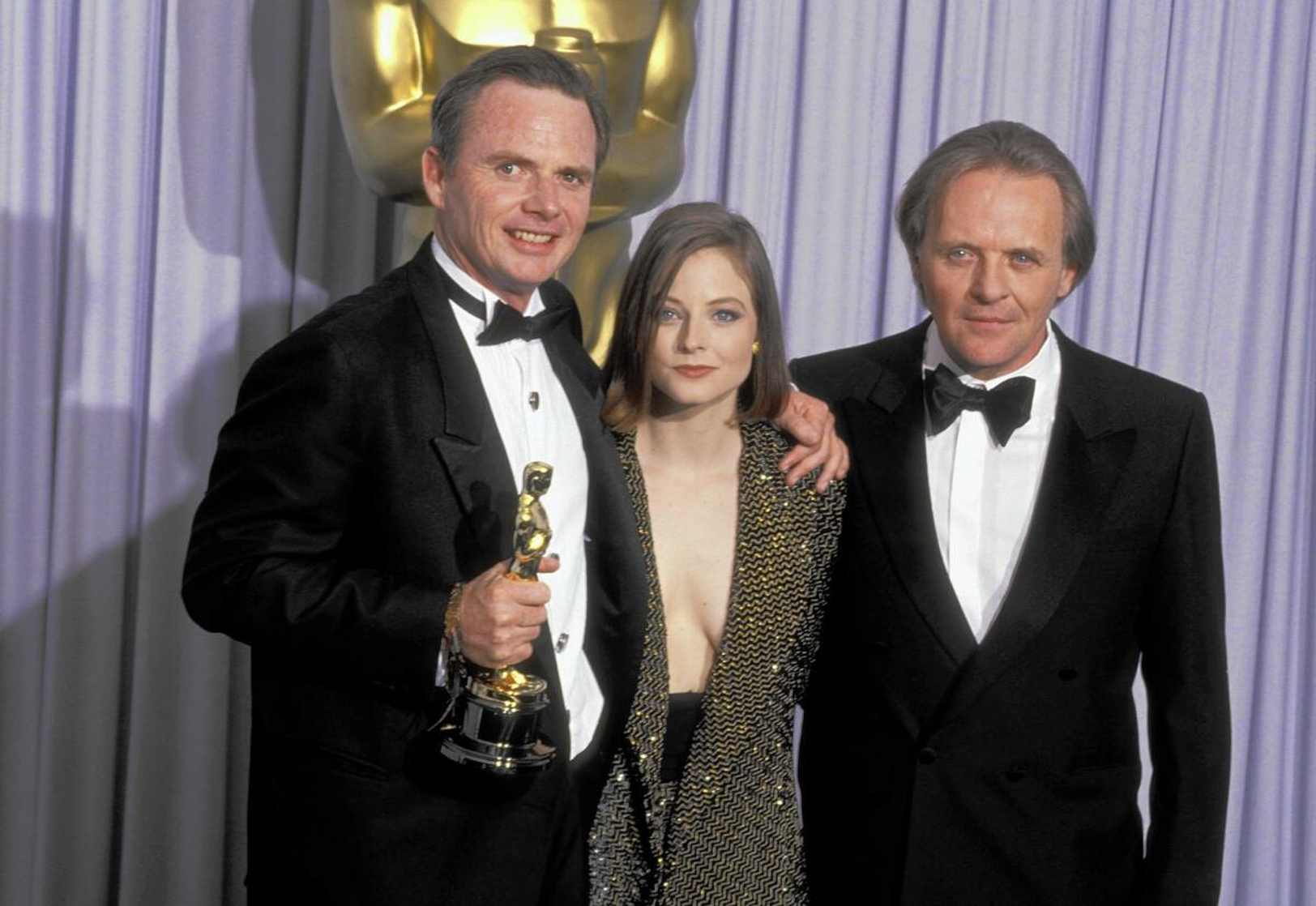
In the acting categories, Kathy Bates delivered a historic victory for her chilling portrayal of Annie Wilkes in Misery, capturing the Best Actress statuette in a rare win for the horror-thriller genre. Jeremy Irons earned Best Actor for his nuanced, cerebral performance as Claus von Bülow in Reversal of Fortune. The supporting acting races further cemented legendary careers, highlighting exceptional performances that remain reference points for dramatic intensity.
Supporting Performances and Directorial Achievements
The supporting categories of the 1991 Academy Awards showcased remarkable character work and breakout performances. Joe Pesci secured the Best Supporting Actor award for his electrifying, unpredictable portrayal of Tommy DeVito in Martin Scorsese’s GoodFellas, a performance widely regarded as one of the most memorable mob characterizations in cinema history. Other nominees in this category included Andy García (The Godfather Part III), Graham Greene (Dances with Wolves), Al Pacino (Dick Tracy), and Bruce Davison (Longtime Companion).
For Best Supporting Actress, Whoopi Goldberg triumphed for her comedic and emotional turn as psychic Oda Mae Brown in the blockbuster romance Ghost. Goldberg’s victory marked a significant milestone, making her only the second Black woman in Academy history to win an acting Oscar, following Hattie McDaniel's win in 1940. She competed against formidable nominees including Annette Bening (The Grifters), Lorraine Bracco (GoodFellas), Diane Ladd (Wild at Heart), and Mary McDonnell (Dances with Wolves).
In the directorial race, Kevin Costner’s victory for Dances with Wolves made him only the fifth actor-turned-director to win the Academy Award for Best Director. Martin Scorsese’s nomination for GoodFellas represented another critical high point, though the Academy ultimately favored Costner’s traditional, epic framing of the American frontier over Scorsese’s kinetic, rapid-fire storytelling style.
Craft, Technical, and Writing Category Excellence
Beyond the prominent marquee awards, the technical and craft categories of the 63rd Academy Awards honored the meticulous artistry required to bring complex cinematic worlds to life. Dick Tracy, directed by and starring Warren Beatty, dominated the artistic and design categories, capturing awards for Best Art Direction, Best Original Song ("Sooner or Later (I Always Get My Man)" by Stephen Sondheim), and Best Makeup (John Caglione Jr. and Doug Drexler).
Cinematography played a defining role among the 1991 nominees. Dean Semler won Best Cinematography for Dances with Wolves, utilizing natural light and sweeping prairie vistas to establish the film's visual identity. He competed against Vittorio Storaro for The Godfather Part III, Michael Ballhaus for GoodFellas, Roger Deakins for Barton Fink (released in 1991, though qualifying earlier for specific categories), and Allen Daviau for Avalon.
The screenwriting awards recognized distinct structural achievements. Bruce Joel Rubin won Best Original Screenplay for Ghost, blending supernatural elements with romantic melodrama. Meanwhile, Michael Blake won Best Adapted Screenplay for Dances with Wolves, adapting his own novel into a script that prioritized cultural dialogue and expansive historical narrative structures over concise dialogue.
Cultural Legacy and Retrospective Analysis of the 1990 Film Year
Decades after the ceremony, film historians frequently evaluate the 1991 Academy Award nominees as a fascinating study in institutional taste. The triumph of Dances with Wolves over GoodFellas is often cited by critics as a classic example of Academy voters favoring classical, optimistic, and sweeping historical narratives over cynical, formally radical, and morally ambiguous masterpieces.
Nevertheless, the full list of nominees from 1991 reflects an unusually strong year for American cinema. Films like GoodFellas and The Silence of the Lambs (which would dominate the subsequent 1992 ceremony) were actively reshaping studio expectations, proving that critical acclaim and audience engagement could coexist. The 63rd Academy Awards thus stand as a pivotal marker, capturing the end of an old Hollywood paradigm while laying the structural and creative groundwork for modern independent and studio filmmaking.
Frequently Asked Questions
Which film won Best Picture at the 1991 Academy Awards?
Dances with Wolves won Best Picture at the 63rd Academy Awards held in March 1991. Directed by and starring Kevin Costner, the epic Western secured a total of seven Academy Awards out of twelve nominations, including Best Director, Best Adapted Screenplay, and Best Cinematography.
Who hosted the 63rd Academy Awards ceremony in 1991?
Actor and comedian Billy Crystal hosted the 63rd Academy Awards ceremony. This marked his second consecutive year hosting the broadcast, establishing his long-running tenure as one of the most prominent masters of ceremonies in Oscar history.
How many nominations did GoodFellas receive at the 1991 Oscars?
GoodFellas received six Academy Award nominations at the 63rd Academy Awards, including Best Picture, Best Director for Martin Scorsese, and Best Adapted Screenplay. Joe Pesci won the sole Academy Award for the film in the Best Supporting Actor category.
What was the eligibility year for the 1991 Academy Awards?
The 63rd Academy Awards honored films released theatrically in Los Angeles County during the 1990 calendar year, spanning from January 1, 1990, through December 31, 1990.
Who won Best Actress at the 1991 Academy Awards?
Kathy Bates won Best Actress for her performance as Annie Wilkes in the psychological thriller Misery. Her victory marked a rare and notable win for the horror-thriller genre in the lead acting categories.