The 1990s was a transformative decade for cinema, characterized by the rise of independent filmmaking, groundbreaking computer-generated imagery, and a shift toward high-concept blockbusters. This era bridged the practical effects of the past with the digital future, reshaping studio economics and global pop culture.
The Cultural and Technological Landscape of 1990s Cinema
Cinema entering the final decade of the twentieth century stood at a major technological and economic crossroads. The traditional studio system, which had undergone significant restructuring throughout the 1980s, faced new pressures from corporate conglomerates acquiring major motion picture studios. Media giants recognized the global synergy of owning film production houses, music labels, and distribution networks. This corporate consolidation fueled the rise of the high-concept blockbuster—films engineered for international audiences, featuring universally understood plots, spectacular action set pieces, and extensive ancillary merchandising opportunities.
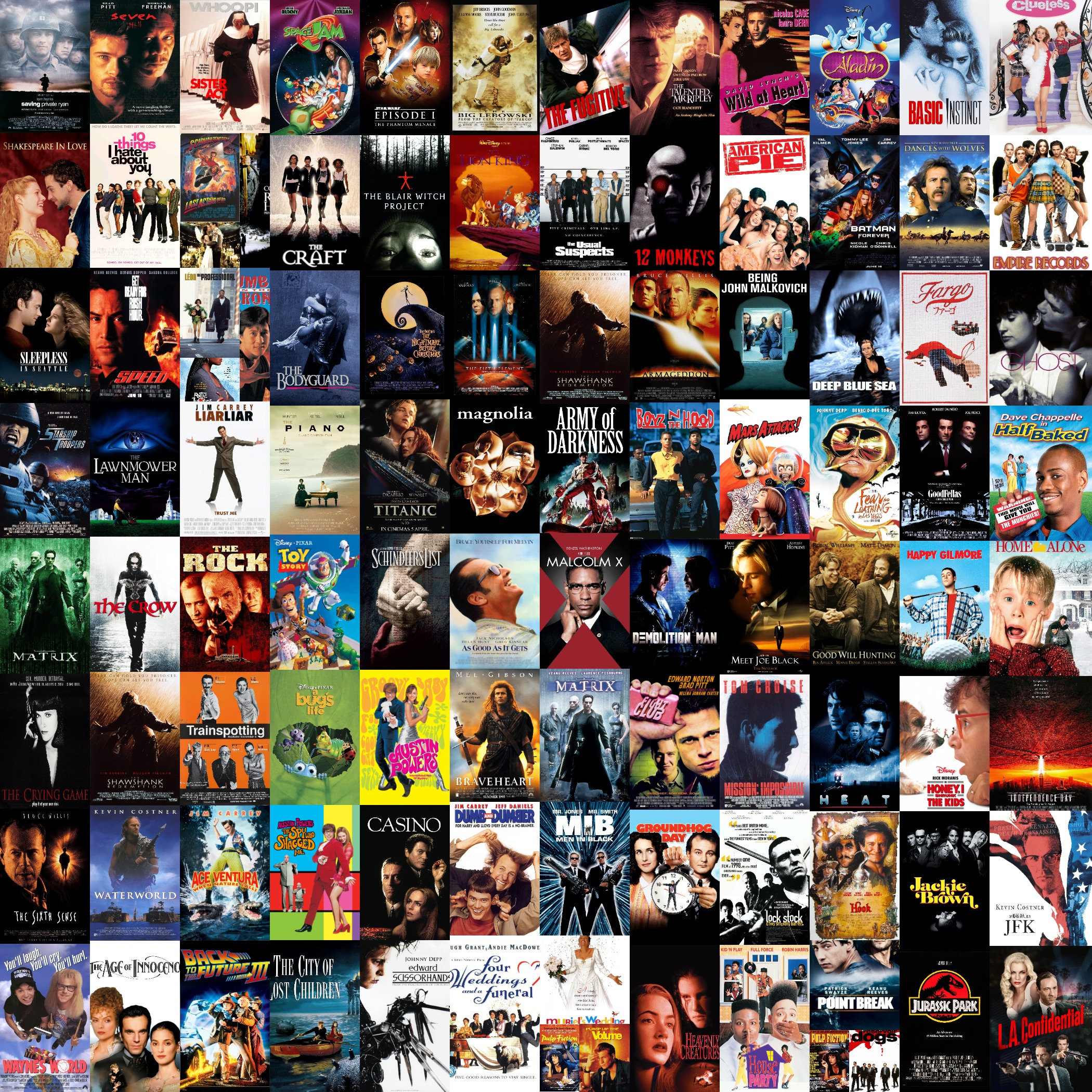
Simultaneously, rapid advancements in digital technology began to alter the visual grammar of filmmaking. While computer-generated imagery (CGI) had made tentative appearances in earlier decades, the 1990s brought these tools to breathtaking maturity. James Cameron’s Terminator 2: Judgment Day (1991) demonstrated that digital characters could display convincing emotion and movement, while Steven Spielberg’s Jurassic Park (1993) revolutionized creature effects by combining photorealistic computer-generated dinosaurs with state-of-the-art animatronics. These milestones proved that digital effects could serve narrative depth rather than act merely as sideshow attractions, forever changing audience expectations for visual spectacle.
Yet, alongside the burgeoning tentpole ecosystem, a parallel revolution unfolded in the independent film sector. Fueled by the unexpected commercial and critical triumph of Steven Soderbergh’s sex, lies, and videotape at the 1989 Sundance Film Festival, the 1990s became a golden age for American independent cinema. Miramax Films, founded by Harvey and Bob Weinstein before its later corporate iterations, pioneered aggressive marketing and distribution strategies that turned low-budget art-house pictures into mainstream cultural phenomena. Filmmakers like Quentin Tarantino, Richard Linklater, Spike Lee, and Paul Thomas Anderson found distinct spaces to explore edgy, dialogue-driven, and morally ambiguous narratives that major studios routinely avoided.
Defining Subgenres and Aesthetic Shifts
The cinematic output of the 1990s can be categorized into several distinct subgenres and stylistic movements that reflected the anxieties, ironies, and stylistic experiments of the era.
The Neo-Noir and Psychological Thriller Renaissance
The decade experienced a massive resurgence in neo-noir and dark psychological thrillers, tapping into urban paranoia and shifting societal norms. Films such as David Fincher’s Seven (1995) and Fight Club (1999), Bryan Singer’s The Usual Suspects (1995), and Christopher Nolan’s debut feature Following (1998) utilized intricate nonlinear storytelling, unreliable narrators, and bleak moral landscapes. These narratives reflected a post-Cold War disillusionment, moving away from clear-cut heroes and villains toward complex characters operating in deeply compromised environments.
The Gen X Aesthetic and Indie Dialogue
As Generation X came of age, independent cinema adopted a distinctively cynical, ironic, and colloquial tone. Richard Linklater’s Slacker (1991) and Dazed and Confused (1993), along with Kevin Smith’s Clerks (1994), captured the meandering conversations and existential dread of youth culture. Quentin Tarantino’s Pulp Fiction (1994) synthesized pop-culture pastiche, non-linear chronology, and hyper-stylized violence, creating a template for independent crime dramas that spawned countless imitators throughout the decade.
| Subgenre / Movement | Defining Characteristics | Key Representative Films |
|---|---|---|
| Digital Blockbuster | Integration of pioneering CGI, massive budgets, global marketing, high-concept premises. | Jurassic Park (1993), Independence Day (1996), Titanic (1997) |
| Independent / Neo-Noir | Non-linear plots, moral ambiguity, dark subject matter, stylized dialogue. | Pulp Fiction (1994), Seven (1995), Fargo (1996) |
| Gen X / Slacker Comedy | Conversational scripts, counterculture cynicism, ensemble casts, low budgets. | Slacker (1991), Clerks (1994), Empire Records (1995) |
| Political & Social Drama | Focus on systemic injustice, historical revisionism, personal trauma, institutional corruption. | Schindler's List (1993), The Shawshank Redemption (1994), Philadelphia (1993) |
The Evolution of Distribution and Home Video
The economic model of 1990s movies extended far beyond the theatrical box office. The home video market, specifically the VHS cassette, matured into a massive profit center that frequently rescued underperforming theatrical releases or multiplied the revenues of profitable hits. Video rental chains like Blockbuster Video saturated suburban strip malls, dictating consumer viewing habits and creating a secondary cultural life for films long after their theatrical runs concluded.
This home video boom also fostered a thriving market for direct-to-video action features and cult classics that found passionate audiences through word-of-mouth recommendations. Furthermore, the decade witnessed the introduction of the DVD format in 1996. Although adoption was gradual during its initial years, the DVD promised superior picture quality, widescreen aspect ratios, and bonus features such as director commentaries and deleted scenes. This innovation laid the groundwork for modern home-theater culture and transformed films into collectible consumer artifacts.
Concurrently, the film festival circuit—particularly Sundance, Cannes, and Toronto—evolved from industry trade events into primary launching pads for studio acquisitions. Bidding wars for independent films became legendary, occasionally inflating production and acquisition budgets to unsustainable levels. This dynamic created a vibrant ecosystem where risk-taking could yield massive cultural and financial rewards, even if it eventually led to greater corporate homogenization by the turn of the millennium.
Enduring Legacy and Retrospective Appreciation
Decades after the final credits of 1999 rolled, the cinematic landscape of the 1990s remains a touchstone for modern filmmakers and audiences alike. The era established the template for contemporary franchise filmmaking while preserving a unique space for mid-budget dramas that studios rarely finance today. Directors who emerged during this period—such as David Fincher, Quentin Tarantino, Paul Thomas Anderson, and Sofia Coppola—continue to define the upper echelons of contemporary cinema.
Moreover, retrospective appreciation of 1990s movies often centers on their intersection with the dawn of the internet age and the final years of an analog society. Films from this decade captured a specific cultural moment marked by the transition from physical media and localized communities to a hyper-connected, globalized digital economy. Whether examining the sleek cyber-philosophies of The Matrix (1999) or the small-town grit of Fargo (1996), 1990s cinema offers a comprehensive chronicle of a world preparing to step into a new millennium.
What defined the visual style of 1990s blockbusters?
The visual style of 1990s blockbusters was defined by the integration of early computer-generated imagery (CGI) with traditional practical effects. Films like Jurassic Park and Terminator 2: Judgment Day proved that digital characters and environments could look realistic, shifting studio priorities toward high-concept, effects-driven spectacles.
How did the 1990s independent film boom start?
The independent film boom was largely catalyzed by the critical and commercial success of Steven Soderbergh’s sex, lies, and videotape at the 1989 Sundance Film Festival. This victory demonstrated that low-budget, character-driven films could achieve mainstream commercial viability, leading major studios to establish specialty distribution divisions like Miramax and Sony Pictures Classics.
Why are 1990s psychological thrillers considered unique?
Psychological thrillers of this era, such as Seven, The Silence of the Lambs, and The Usual Suspects, are celebrated for their dark, neo-noir atmospheres, intricate twist endings, and exploration of institutional corruption and human depravity. They captured a post-Cold War societal anxiety that lacked the clear-cut heroism of previous decades.
What role did home video play in 1990s cinema economics?
The home video market, anchored by widespread VHS rental chains like Blockbuster, provided a crucial secondary revenue stream for Hollywood studios. It allowed box-office disappointments to achieve profitability, birthed the direct-to-video market, and cultivated dedicated fan communities through home viewing.
Strategic Viewing and Curation
For researchers, students, and cinephiles exploring the cinema of this era, establishing a structured viewing strategy ensures a comprehensive understanding of the decade's breadth. Begin by examining foundational milestones across both studio and independent sectors, pairing technological landmarks like Jurassic Park with defining independent works like Pulp Fiction. Note how stylistic choices, sound design, and narrative structures evolved between 1990 and 1999. By analyzing these shifts, viewers can appreciate how the creative risks taken during the 1990s continue to influence modern storytelling techniques and visual effects standards across the global entertainment industry.