The 1990s comedy landscape was a transformative era defined by the shift from cozy, traditional sitcoms to edgy, cynical, and meta-textual humor that mirrored a changing society. This decade birthed boundary-pushing sketch shows, cynical animated series, and mockumentaries that dismantled conventional television tropes while establishing comedic archetypes that still dominate media today.
The Cultural and Media Context of 1990s Comedy
The landscape of 1990s comedy emerged directly from the fragmentation of television audiences following the rise of cable networks like Fox, Comedy Central, and MTV. During the 1980s, network television was dominated by wholesome, family-centric sitcoms that prioritized moral lessons and reassuring resolutions. As the 1990s progressed, a cultural appetite grew for irony, subversion, and skepticism toward authority. This shift was fueled by economic anxieties, generational cynicism from Generation X, and a growing media literacy among viewers who understood and appreciated self-aware humor.
Broadcasters were willing to take greater risks to capture niche demographics. The late-night and prime-time slots became testing grounds for concepts that challenged censorship standards and societal taboos. Comedians and writers drew inspiration from alternative music, independent cinema, and stand-up comedy circuits, infusing television and film with a raw, observational edge. Consequently, 1990s comedy stopped trying to comfort viewers and instead started validating their anxieties, frustrations, and eccentricities through laughter.
Groundbreaking Sitcoms: From Observational Humor to the Meta-Textual
No discussion of the decade is complete without examining how the sitcom format evolved. At the forefront was Seinfeld, which famously marketed itself as a "show about nothing." Instead of relying on sentimental family reconciliations or dramatic character growth, creators Jerry Seinfeld and Larry David focused on the mundane frustrations of urban life and the unwritten social contracts that govern everyday behavior. The characters were unapologetically self-absorbed, petty, and cynical, setting a new precedent for antiheroes in comedy.
Simultaneously, Friends captured a aspirational, urban lifestyle that emphasized peer groups as primary support systems, codifying the "hangout sitcom" formula for a global audience. Meanwhile, shows like The Fresh Prince of Bel-Air and Martin brought distinct African American cultural experiences to mainstream prime time, blending physical comedy, sharp socio-political commentary, and vibrant ensemble casts. These programs proved that commercial viability and artistic risk-taking could coexist, expanding the boundaries of what network executives considered broadly appealing.
The Rise of Alternative Sketch Comedy and Late-Night Satire
While prime-time sitcoms captured mainstream attention, sketch comedy and late-night television underwent a radical revolution. Shows like The Kids in the Hall introduced a surreal, theatrical, and sometimes absurd brand of Canadian sketch comedy that subverted gender roles and traditional narrative structures. In the United States, In Living Color infused sketch comedy with hip-hop culture, brilliant physical performances, and sharp satirical bite, launching the careers of numerous legendary performers and writers.
On late-night television, The Daily Show (which premiered in 1996) and Late Night with Conan O'Brien redefined talk and news-parody formats. Conan O'Brien leaned into absurdist, self-referential humor that acknowledged the artificiality of television production. Meanwhile, animated series like The Simpsons—which originated as shorts on The Tracey Ullman Show before launching its own series in 1989 and defining 1990s animation—used the medium of a yellow nuclear family to deliver blistering social satire, literary allusions, and multi-layered jokes that appealed equally to children and adults.
| Subgenre | Defining Characteristic | Key Example | Primary Cultural Impact |
|---|---|---|---|
| Observational Sitcom | Mundane plots focusing on social etiquette and minor grievances | Seinfeld | Popularized the cynical antihero and anti-sentimentality in television |
| Workplace/Hangout Sitcom | Ensemble casts navigating career, romance, and friendship in urban settings | Friends | Codified the "hangout" formula and shaped global pop culture aesthetics |
| Subversive Animation | Satirical critique of societal institutions through animated mediums | The Simpsons | Proved animation could deliver sophisticated social commentary for adults |
| Alternative Sketch | Surreal, theatrical, or culturally focused rapid-fire vignettes | In Living Color | Integrated hip-hop culture and diverse perspectives into mainstream comedy |
1990s Comedy Cinema: High Concepts, Slapstick, and Gross-Out Humor
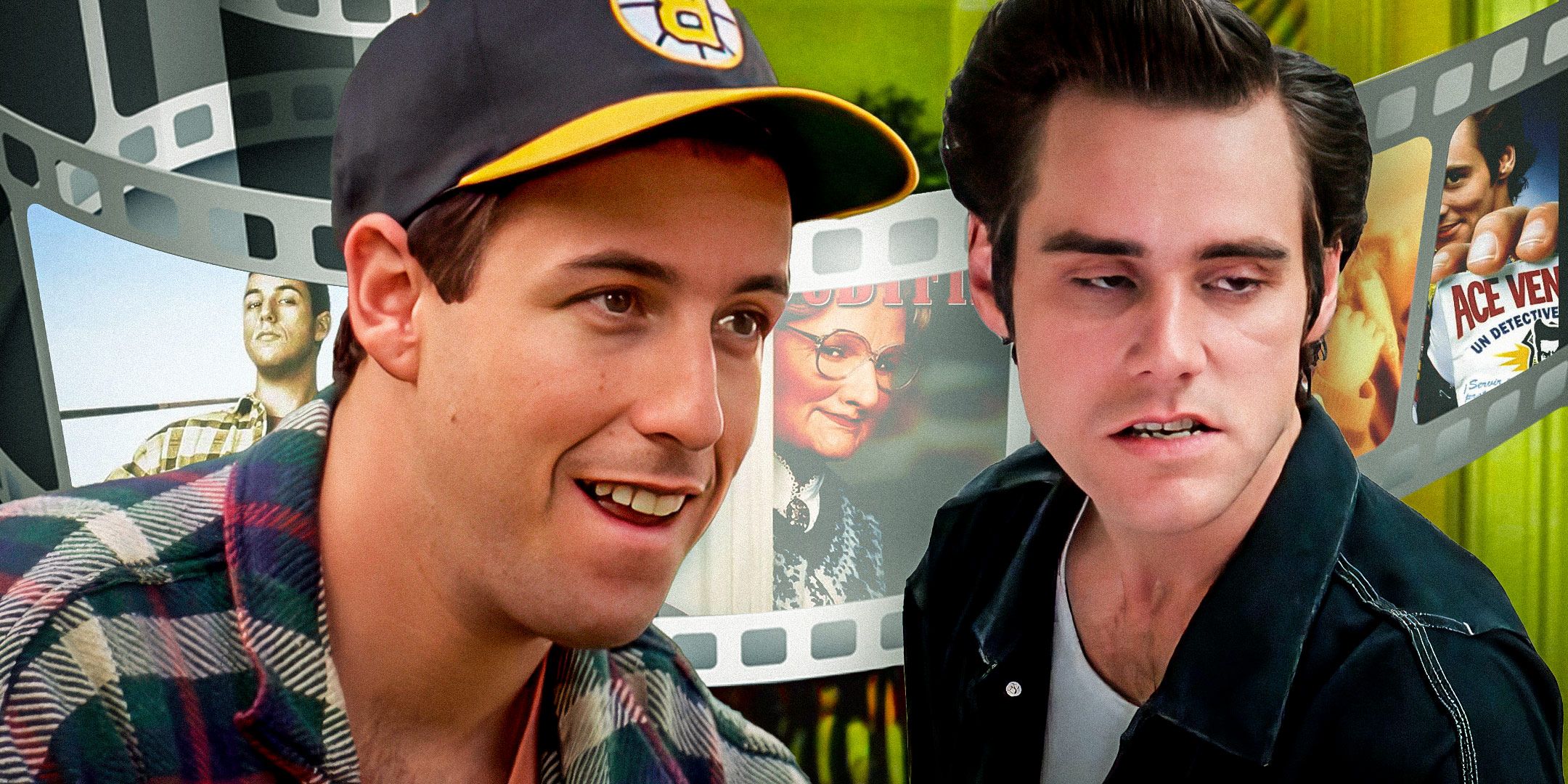
The cinematic landscape of 1990s comedy was equally diverse, ranging from high-concept blockbusters to low-budget gross-out romps. Comedic movie stars like Jim Carrey dominated the box office through unmatched physical comedy and rubber-faced elasticity in films like Ace Ventura: Pet Detective, The Mask, and Dumb and Dumber. Carrey’s meteoric rise demonstrated the enduring global appeal of pure, unadulterated slapstick combined with manic cartoonish energy.
At the same time, the decade gave rise to the modern teen comedy and the gross-out subgenre. Films like Clueless modernized Jane Austen's Emma while establishing a lexicon of fashion, slang, and teen social dynamics that defined 90s youth culture. Conversely, the Farrelly brothers pushed the boundaries of mainstream bad taste with There's Something About Mary and Dumb and Dumber, introducing a wave of boundary-pushing bodily-fluid humor that paved the way for the R-rated comedies of the 2000s. Satire also found a home in cinema through mockumentaries like Waiting for Guffman and spy parodies like Austin Powers: International Man of Mystery, which proved that audiences relished affectionate deconstructions of classic cinematic tropes.
Stand-Up Comedy's Golden Age and Cultural Mainstreaming
The stand-up comedy boom of the late 1980s translated into a mainstream cultural juggernaut throughout the 1990s. Comedy clubs flourished, and cable networks like HBO gave comedians unprecedented platforms through dedicated stand-up specials. Performers such as Chris Rock, Dave Chappelle, Ellen DeGeneres, and Jerry Seinfeld used the medium to dissect race, gender, relationships, and the absurdities of daily existence.
This era of stand-up prioritized confessional, observational storytelling over the prop-based or one-liner-heavy styles of previous decades. Comedians became cultural commentators, and their routines frequently served as the basis for television development deals. The success of stand-up proved that audiences craved authentic, unfiltered perspectives, reinforcing a cultural shift toward personal authenticity—even when that authenticity was deeply cynical or neurotic.
The Long-Term Legacy and Modern Relevance of 90s Humor
The comedic innovations of the 1990s continue to form the backbone of contemporary media. The metatextual irony pioneered by shows like Seinfeld and The Simpsons directly influenced the self-aware humor of 21st-century hits like Arrested Development, Community, and internet meme culture. Furthermore, the streaming era has triggered a massive nostalgia-driven resurgence, with audiences continually revisiting 90s sitcoms for comfort viewing, proving that the interpersonal dynamics and comedic timing of the era remain universally relatable.
Understanding this decade requires recognizing that the humor was not merely an escape from reality, but an active engagement with it. By embracing flaws, celebrating the mundane, and questioning institutional authority, 1990s comedy created a democratic space where ordinary human absurdity was the ultimate punchline.
Frequently Asked Questions About 1990s Comedy
What made 1990s comedy different from previous decades?
The 1990s marked a departure from wholesome, reassuring family sitcoms toward cynical, ironic, and self-aware humor. Influenced by Gen X disillusionment, shows prioritized flawed antiheroes, mundane observations, and meta-textual commentary over traditional moral lessons and sentimental resolutions.
Which television shows defined 1990s sitcom comedy?
Key defining shows include Seinfeld, which revolutionized observational humor and cynical character writing, and Friends, which popularized the ensemble hangout format. Other influential series include The Simpsons, The Fresh Prince of Bel-Air, and Martin.
How did 1990s cinema influence comedic trends?
Cinema in the 90s popularized high-concept physical comedy through stars like Jim Carrey, redefined teen culture with films like Clueless, and birthed a new wave of boundary-pushing gross-out humor and clever genre parodies that influenced modern comedy blockbusters.
Why is 1990s comedy still so popular today?
The enduring popularity stems from the timeless nature of its interpersonal dynamics, highly quotable dialogue, and comfort-viewing appeal. Its ironic, self-aware sensibilities also paved the way for modern internet culture and contemporary television writing styles.
What role did sketch comedy play during this decade?
Sketch comedy served as a vital incubator for cultural satire, surrealism, and diverse representation. Programs like In Living Color and The Kids in the Hall challenged television norms, introduced unique aesthetic styles, and launched the careers of iconic comedic actors.