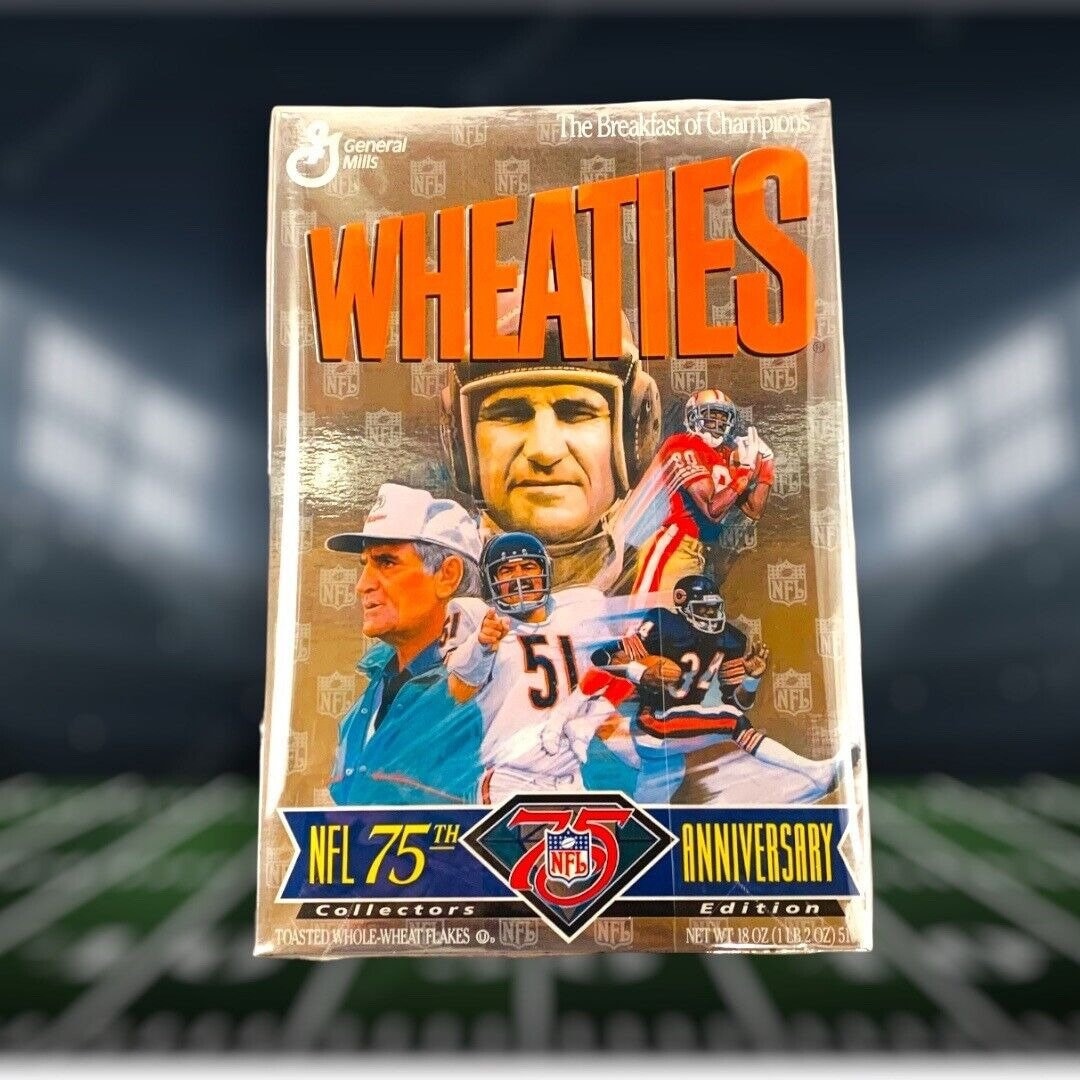
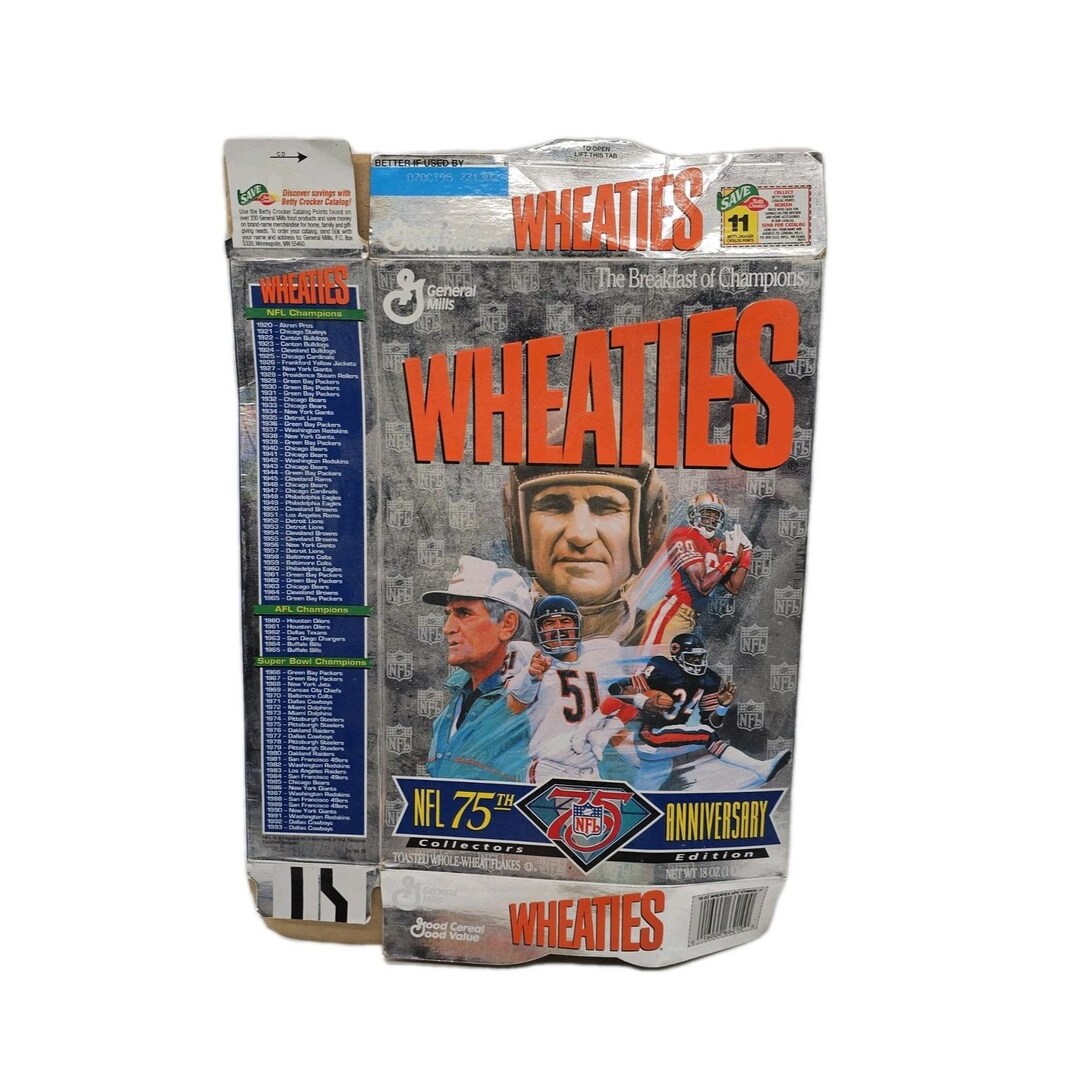
The 1990 NFL 75th Anniversary Wheaties box promotion introduced a unique crossover of cereal box memorabilia and football card collecting, featuring iconic rookies and legendary players printed directly on the packaging alongside mail-in card offers. Navigating this niche requires understanding the distinction between actual cut-out box panels, secondary inserts, and the broader 1990 sports memorabilia landscape.
Historical Context and the 1990 NFL Promotional Era
During the late 1980s and early 1990s, the sports card boom collided with major mainstream food brands, creating a massive wave of promotional packaging. General Mills capitalized on America's obsession with professional football by releasing special edition Wheaties boxes that celebrated football history. While the NFL was actually founded in 1920—meaning its true 75th anniversary occurred in 1995—General Mills and various regional promotions frequently issued football-themed boxes throughout this era, often tying into milestone anniversaries, team retrospectives, or special rookie classes.
Collectors looking back at these releases must understand that these boxes were mass-produced grocery items meant to be discarded. Consequently, finding pristine, unopened boxes or clean, unperforated panels today presents a significant challenge. The intersection of cereal packaging and football card collecting means that items are valued based on structural integrity, cardboard preservation, and the specific players highlighted on the packaging or associated mail-in offers.
Distinguishing Wheaties Box Panels from Traditional Rookie Cards
A common point of confusion for modern collectors is determining the exact nature of "Wheaties rookies cards." Unlike traditional trading card sets produced by Topps, Score, Pro Set, or Action Packed in 1990, Wheaties items typically fall into a few distinct categories:
- Back-Panel Cut-Outs: Many Wheaties boxes featured player photos, stats, or mini-cards printed directly on the back or side panels. Collectors had to use scissors to cut these out, drastically reducing the pool of "mint" condition specimens.
- Mail-In Offer Inserts: Some promotions required consumers to mail in proofs of purchase to receive a dedicated, factory-cut set of cards or posters enclosed in a protective wrapper.
- Whole Box Packaging: Unopened, flattened, or display-ready empty boxes kept in collector-grade condition.
When evaluating an item from this era, condition is everything. A cut-out panel with jagged edges or fading from grocery store shelf lighting holds very little financial value compared to a professionally stored, flat box or an intact factory-issued mail-in set.
Key Players, Rookies, and Collectible Variations
The 1990 football landscape was dominated by legendary veterans and a transitional rookie class that included future Hall of Famers. While 1990 is most famous in card collecting for the infamous Pro Set printing errors and high-production Score sets, Wheaties-associated promotions focused heavily on marquee names to drive breakfast cereal sales.
Evaluating these collectibles requires looking closely at the specific regional variations and national distributions. Some boxes featured dominant defensive stalwarts, while others showcased elite offensive skill-player rookies from the 1990 NFL Draft class, such as Emmitt Smith, Cortez Kennedy, or Junior Seau, depending on the exact promotional window. Because General Mills frequently rotated regional athlete features, checking the copyright dates, Universal Product Codes (UPC), and promotional text on the bottom flaps is essential for accurate identification.
| Item Type | Primary Format | Condition Grading Challenges | Typical Collector Appeal |
|---|---|---|---|
| Back-Panel Cut-Out | Perforated or printed cardboard square | Uneven edges, paper thinning, fading | Low to moderate; nostalgic display value |
| Flat Unopened Box | Flattened original cardboard carton | Creases along folds, edge wear, stacking pressure | Moderate; valued by box-variant collectors |
| Factory Sealed Box | Full, unopened cereal box | Original contents shifting, box crushing, fading | High; scarce due to cereal decomposition risks |
| Mail-In Card Set | Factory-cut standard cards in wrap | Centering issues, corner dings, surface scratching | Moderate to high depending on checklist |
Preservation, Storage, and Grading Realities
Preserving cardboard from 1990 requires specific archival techniques, especially when dealing with food packaging that contains residual oils or adhesives. Standard card-collecting supplies will not suffice for full-sized cereal boxes or large cut-out panels.
To protect whole boxes or flattened panels, collectors utilize custom-sized acrylic display cases or heavy-duty, acid-free comic book bags and boards. Humidity control is paramount; fluctuating moisture levels cause the cardboard to warp and invite foxing (brown age spots) on the paper stock. Furthermore, major third-party grading companies like PSA (Professional Sports Authenticator) and Beckett (BGS) offer authentication and grading services for specialized vintage packaging and rare food-issue cards, though submission criteria for large boxes differ significantly from standard trading cards. Collectors must weigh the cost of professional grading against the actual market value of the specific box or panel in question.
Evaluating Market Value and Common Pitfalls
The market for 1990s sports memorabilia is characterized by high initial production volumes. Because millions of cereal boxes were printed, scarcity is artificial, driven entirely by survival rate rather than low print runs.
- The Mass-Production Trap: Do not assume a 1990 collectible is rare simply because it is old. Most items from this year were saved in large quantities by speculators anticipating a massive financial return.
- Food Residue and Pests: Unopened boxes from 1990 still contain the original cereal contents. Over decades, this attracts rodents, insects, and accelerates internal cardboard decay. Most serious collectors prefer "empty, flattened" display boxes for this reason.
- Counterfeits and Alterations: While outright counterfeits of 1990 Wheaties boxes are rare due to low profit margins, trimmed cut-out panels disguised as factory-cut items do occasionally circulate in online marketplaces.
Frequently Asked Questions
Are 1990 Wheaties boxes and cards valuable?
Most standard 1990 Wheaties boxes and associated cut-out cards hold modest financial value, typically ranging from a few dollars to twenty dollars, due to high mass-production numbers. Exceptional value is reserved exclusively for rare regional variations, professionally authenticated factory-sealed items in pristine condition, or specific promotional subsets.
How do I know if my Wheaties box panel is an original or a reproduction?
Original panels feature period-correct paper stock, authentic printing dot matrices consistent with 1990 commercial lithography, and specific copyright text from General Mills on the margins. Reproductions or photocopies will lack the proper cardboard thickness, texture, and ink absorption characteristics of vintage packaging.
Can third-party grading companies grade full cereal boxes?
Yes, select grading and authentication companies accept specialized vintage packaging and display boxes, encapsulation them in custom acrylic holders. However, submitters should review current size limitations, fragile content policies, and fee structures before sending items in for evaluation.
What is the best way to store a collectible cereal box?
The best storage method involves keeping the box in a climate-controlled, dark environment away from direct ultraviolet light to prevent fading. Placing flattened boxes or panels inside archival-safe, acid-free sleeves with solid backing boards prevents bending, creasing, and environmental degradation.
Did Wheaties release an official 75th-anniversary box in 1990?
The NFL was founded in 1920, meaning its official 75th anniversary took place in 1995 rather than 1990. General Mills released various football-themed and milestone promotional boxes throughout the late 1980s and 1990s, requiring collectors to verify the exact copyright and historical dates printed on the packaging.
Practical Next Steps for Collectors
If you have discovered a 1990 NFL-themed Wheaties box or associated card insert, begin by documenting its exact physical condition without handling the cardboard excessively. Check the bottom flaps for copyright dates, manufacturing codes, and regional identifiers. Compare your item against verified collector databases or auction archives to track actual realized prices rather than optimistic asking prices. For high-grade or unusual variants, consult a specialized vintage memorabilia dealer before attempting any cleaning, flattening, or third-party grading submissions.