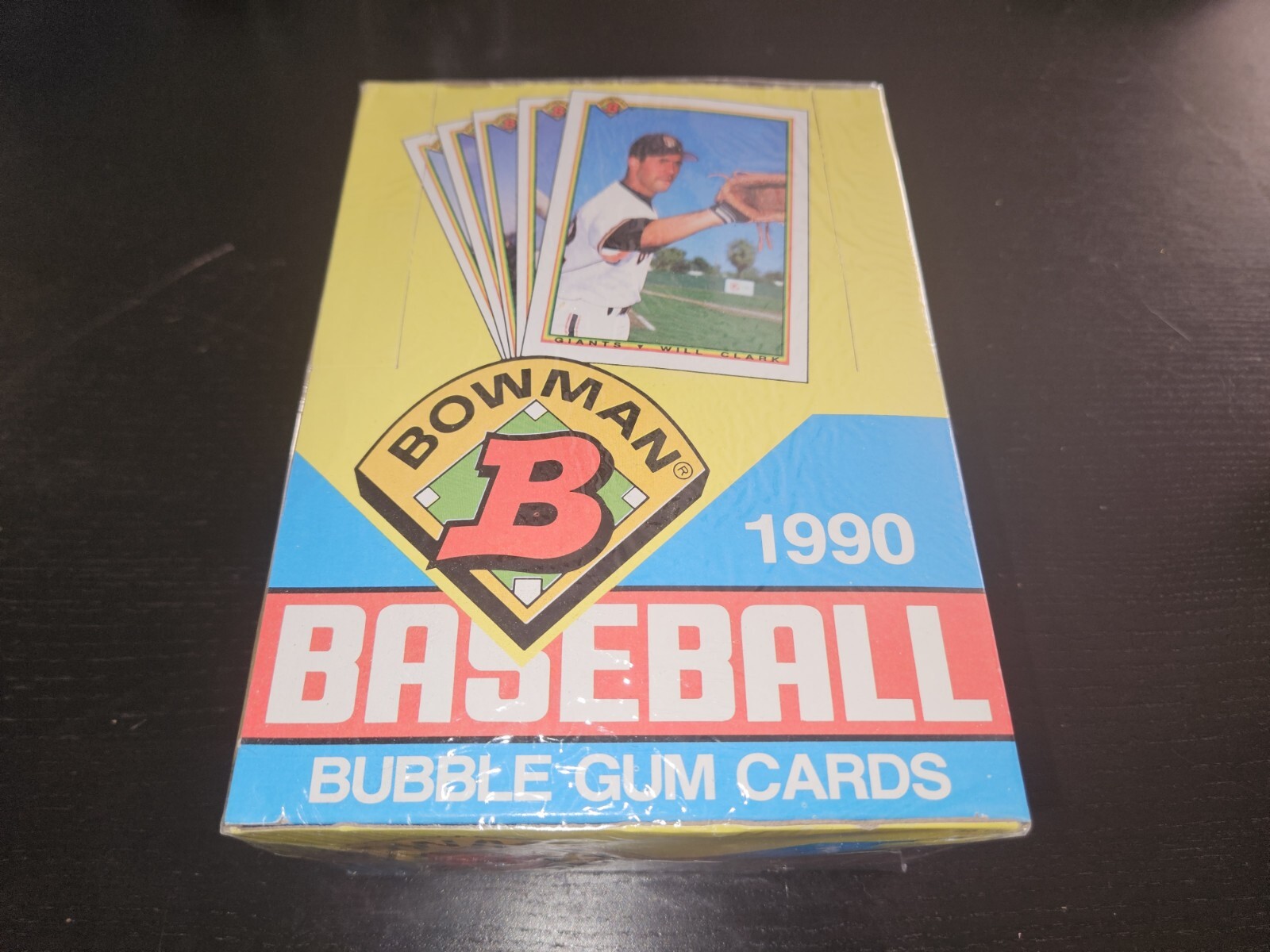
The 1990 Bowman baseball card set occupies a unique, transitional era of the hobby, characterized by massive mass-production and early attempts at premium card stock design. While the vast majority of cards from this set hold negligible market value, specific error variants, rare promotional items, and pristine professionally graded rookie cards command significant attention from collectors seeking rare finds.
Understanding the Era of Mass Production
During the late 1980s and early 1990s, the sports memorabilia market experienced an unprecedented boom. Manufacturers like Topps, Donruss, Fleer, and Score dramatically increased production volumes to meet surging consumer demand, assuming that every piece of cardboard printed would retain or grow in value. Bowman, revived by Topps in 1989, followed this exact manufacturing template for its 1990 release. The sheer volume of boxes stored away in closets, attics, and climate-controlled vaults means that raw, ungraded copies of standard cards are extraordinarily common.
This environment created a paradox for modern collectors. On one hand, you can easily purchase complete sets of 1990 Bowman baseball cards for nominal prices. On the other hand, finding specific cards in flawless condition is exceptionally difficult. The card stock utilized by Bowman in 1990 was notably glossy, thick, and prone to chipping along the dark blue and red borders. Furthermore, factory collation errors, centering issues, and corner dings plagued the initial packaging runs. Consequently, finding cards that can survive the rigorous grading process of professional evaluation services like PSA, BGS, or SGC is what separates everyday cardboard from valuable hobby gems.
Key Rookie Cards and Star Players in the Set
The 1990 Bowman set features a robust checklist blending established superstars of the era with a fresh wave of emerging talent. While the product missed out on some of the definitive mega-rookies of the early 1990s, it included several foundational players whose cards anchor the set's historical interest. Evaluating these players requires looking past the raw card value and focusing strictly on condition sensitivity and population reports from major grading companies.
| Player Name | Card Number | Primary Significance | Notable Condition Challenges |
|---|---|---|---|
| Frank Thomas | 321 | Highly sought-after early card | Dark border chipping, poor centering |
| Sammy Sosa | 277 | Prominent 1990 rookie card | Surface scratching, corner soft wear |
| Larry Walker | 341 | Hall of Fame rookie inclusion | Edge chipping, printing dots |
| Moises Alou | 303 | Early career prospect card | Off-center printing, back smudges |
| Juan Gonzalez | 353 | Power hitter early appearance | Soft corners, gloss adhesion flaws |
Beyond these standard rookie inclusions, the set is populated by veteran stars like Ken Griffey Jr., Cal Ripken Jr., and Nolan Ryan. While these veteran cards do not carry the explosive financial ceiling of pristine rookie cards, high-grade specimens of popular superstars still attract steady collector demand. The key is understanding that raw cards of these players are typically worth pennies, while copies graded Gem Mint (PSA 10) command a substantial premium due to the sheer statistical improbability of a 1990s card escaping factory and handling defects unscathed.
Rare Finds, Promos, and Uncataloged Variations
The true excitement for advanced collectors hunting 1990 Bowman baseball cards lies in the anomalies, test issues, and rare distribution pieces. Unlike modern products loaded with serial-numbered parallels, autographs, and relics, the 1990 release relied on traditional manufacturing quirks to create scarcity.
Tiffany Edition and Factory Sets
Topps produced a limited-edition "Tiffany" version of the 1990 Bowman set, mirroring the high-gloss, white-cardboard-backed sets they produced for their flagship brand throughout the decade. These Tiffany sets were issued in significantly lower print runs than the base retail and hobby versions. Identifying a true 1990 Bowman Tiffany card requires checking the glossy coating on the front and the crisp, bright white cardstock on the reverse, which lacks the grayish, fibrous texture of the standard mass-market release.
Printing Errors and Rare Variations
Quality control in 1990 left considerable room for improvement, resulting in a variety of mint errors that have found a specialized niche among error-card collectors. These include missing foil stamps, double-exposed images, severe color-correction shifts, and back-to-front printing anomalies. While most error cards are viewed merely as curiosities rather than investment-grade assets, rare blank-back cards or extreme miscuts authenticated by reputable grading houses occasionally realize surprising prices among niche collectors dedicated to production oddities.
Evaluating Condition and the Grading Reality
When examining 1990 Bowman baseball cards, the naked eye can easily be deceived. A card pulled directly from a wax pack in 1990 and placed straight into a protective sleeve may still suffer from microscopic flaws that prevent it from achieving a high grade. Professional grading is the ultimate arbiter of value for this era, as buyers are unwilling to pay premium prices for raw cards burdened by the reputation of 1990s overproduction.
| Grading Tier | Typical Appearance | Market Impact |
|---|---|---|
| Raw (Ungraded) | Stored in boxes or binders; minor wear likely | Minimal value, usually sold in bulk lots |
| Mint (PSA 9 / BGS 9) | Sharp corners, clean surface, minor centering bias | Moderate value for key rookies |
| Gem Mint (PSA 10 / BGS 9.5+) | Flawless centering, razor-sharp corners, pristine gloss | Exponential value spike for rare populations |
Centering is the single most frequent reason 1990 Bowman cards fail to achieve top grades. The cutting blades used during production frequently drifted, resulting in top-heavy or side-heavy borders that instantly disqualify a card from Gem Mint status. Additionally, the dark borders on cards like the Frank Thomas rookie make any minor chip or indentation immediately visible under magnification.
Frequently Asked Questions
Are 1990 Bowman baseball cards worth any money?
Most standard, raw 1990 Bowman baseball cards are worth only a few cents each and are commonly sold as bulk lot items. However, cards graded in pristine Gem Mint condition (such as a PSA 10 Frank Thomas rookie) or rare factory-sealed Tiffany set components can command significant market value from collectors specializing in high-grade modern vintage material.
How can I tell a regular 1990 Bowman card from a Tiffany version?
The 1990 Bowman Tiffany cards feature a high-gloss coating on the front and are printed on bright white card stock on the back. Standard base cards use a grayer, more fibrous cardboard stock on the reverse and often lack the brilliant sheen and color saturation found on the limited-edition Tiffany print runs.
What is the most valuable card in the 1990 Bowman set?
The Frank Thomas rookie card (Card #321) is widely considered the most valuable card in the set, particularly when found in professionally authenticated Gem Mint condition. Because of the dark borders and frequent centering issues, high-grade examples are scarce relative to the massive number of raw copies in existence.
Why do 1990s baseball cards have a reputation for low value?
Baseball card manufacturers massively overproduced their products during the late 1980s and early 1990s to capitalize on a surging collector market. Because millions of boxes were saved and stored away in pristine conditions, the supply of raw cards vastly exceeds current collector demand, keeping prices for common and mid-tier cards exceptionally low.
Is it worth getting my 1990 Bowman cards professionally graded?
Grading is generally only financially viable for key rookie cards or star players that exhibit flawless centering, sharp corners, and zero surface defects. Because grading fees often exceed the market value of a standard Mint (PSA 9) or lower card from this era, you should carefully inspect each card under magnification before submitting it to a service like PSA or SGC.
Strategic Collecting and Portfolio Management
Approaching the 1990 Bowman set requires a disciplined, selective mindset. Rather than attempting to hoard thousands of common cards, successful modern collectors focus exclusively on condition-sensitive key rookies and verified factory anomalies like the Tiffany sets. If you discover a collection of these cards in your possession, begin by sorting out the major rookie names and examining their borders and corners under bright light. Investing in professional grading should be reserved strictly for specimens that show zero visible flaws, as the cost of authentication and slabbing will otherwise quickly outstrip the market return of the asset.