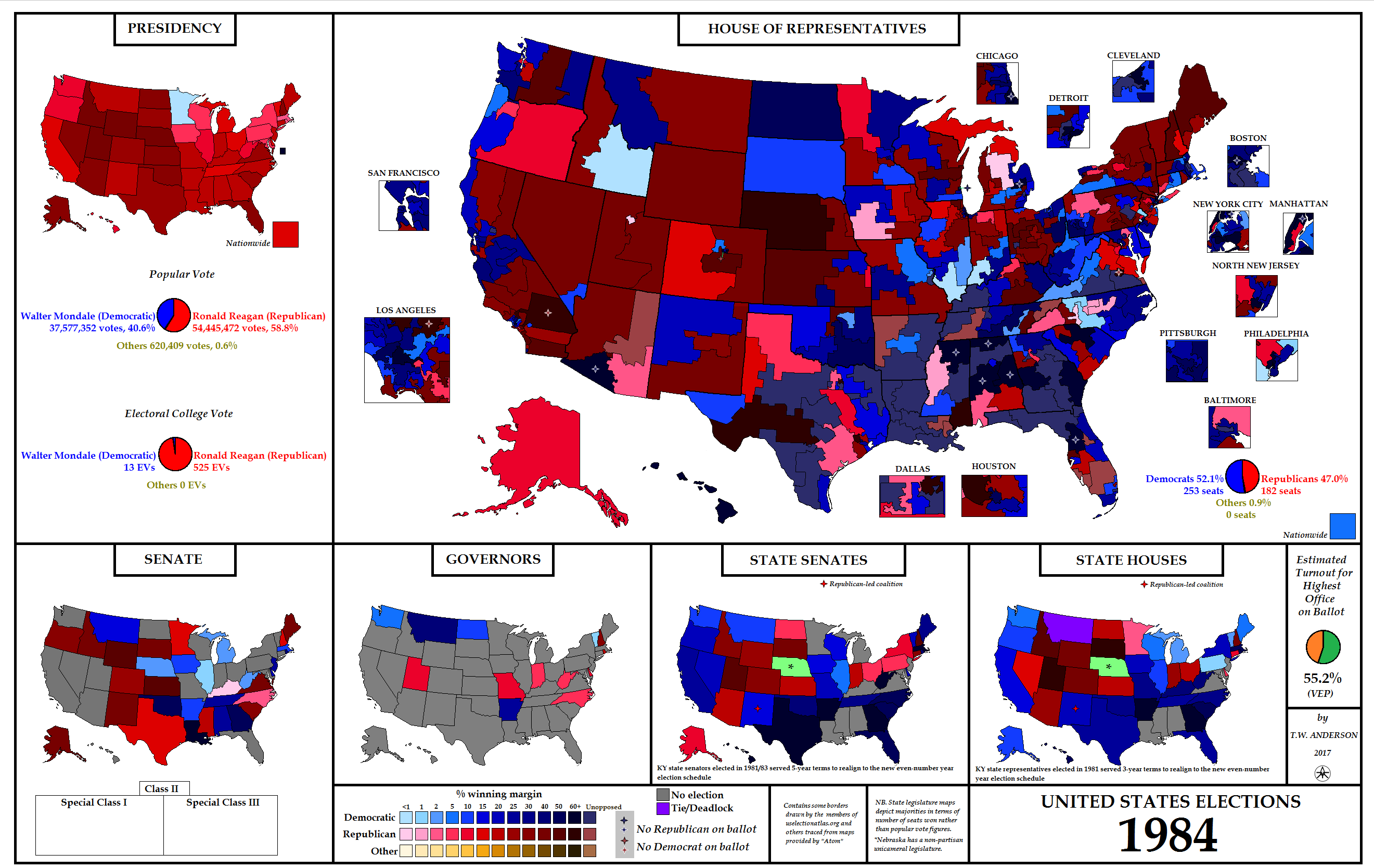
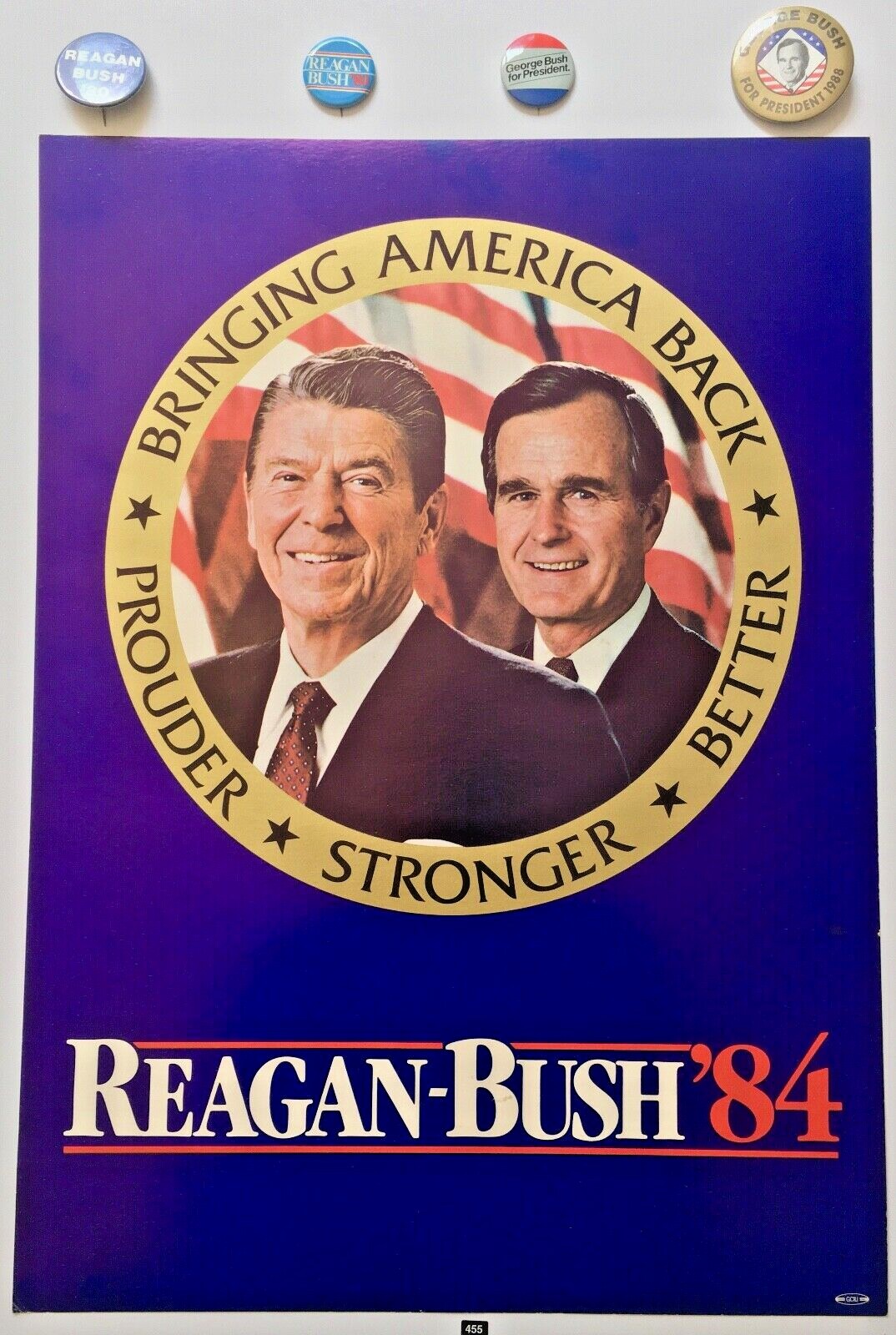
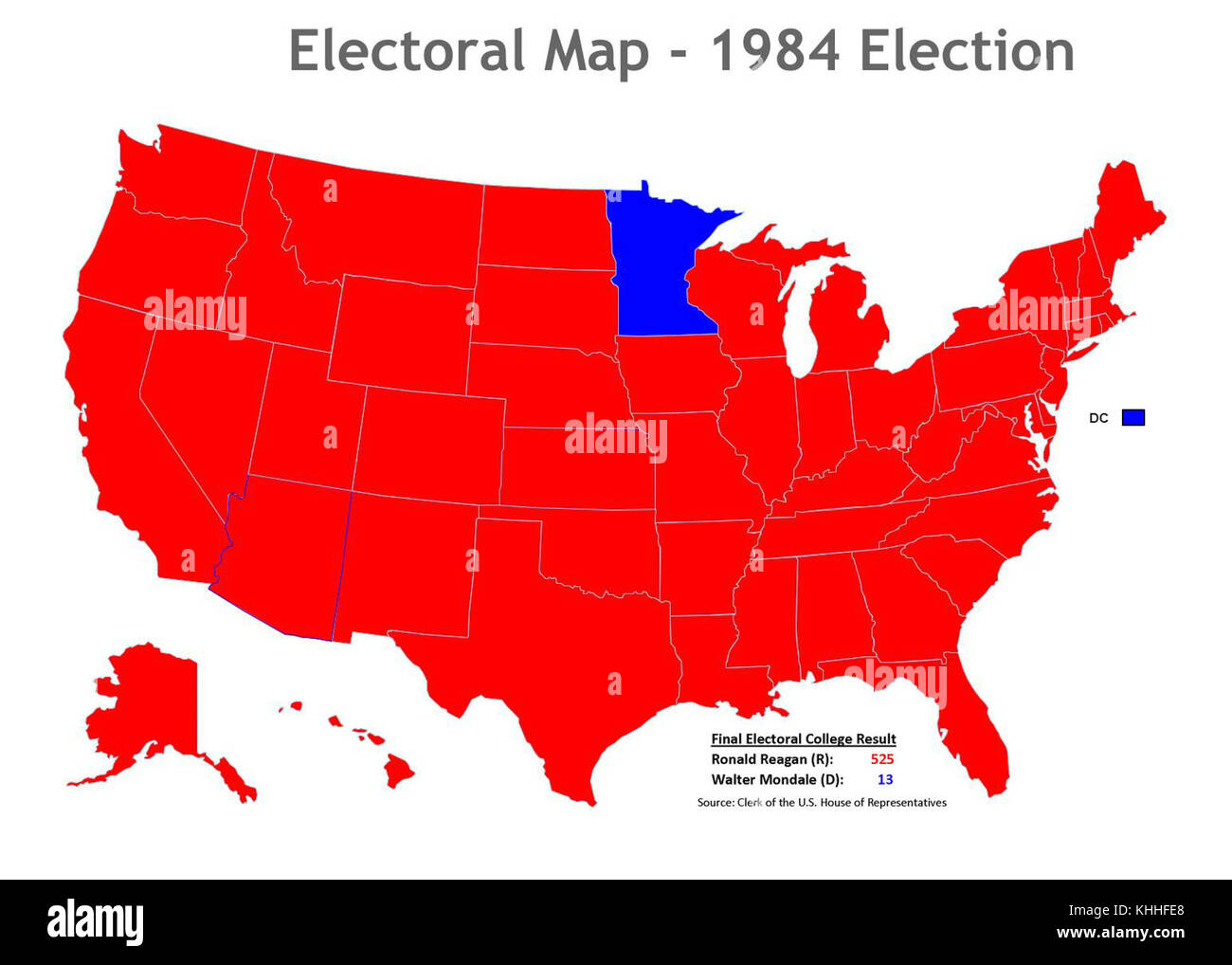
The 1984 United States presidential election was a landmark contest in which incumbent Republican President Ronald Reagan defeated former Vice President Walter Mondale in one of the largest landslides in American history. Reagan secured 525 electoral votes, carrying 49 states and cementing a conservative political realignment that would influence U.S. policy for decades.
The Economic and Political Landscape of the Early 1980s
To understand the scale of the 1984 election, one must first analyze the volatile conditions of the preceding years. When Ronald Reagan took office in 1981, the United States was grappling with "stagflation"—a punishing combination of high inflation and stagnant economic growth. The early part of Reagan’s first term saw a deep recession, driven in part by the Federal Reserve’s aggressive interest rate hikes intended to break the back of inflation.
By late 1983 and early 1984, the economic tide had turned significantly. The Gross Domestic Product (GDP) was growing at a robust pace, and the unemployment rate, which had peaked at nearly 11% in 1982, was falling rapidly. This "Reagan Recovery" became the central pillar of the President's reelection strategy. The administration’s supply-side economic policies, often referred to as "Reaganomics," included significant tax cuts and deregulation, which supporters credited for the boom.
In the foreign policy arena, the Cold War remained at the forefront of public consciousness. Reagan’s "Peace Through Strength" doctrine and his 1983 "Evil Empire" speech had polarized the electorate. While critics feared his rhetoric increased the risk of nuclear conflict, many voters viewed his firm stance against the Soviet Union as a restoration of American prestige and power following the perceived weaknesses of the late 1970s.
The Candidates: Ronald Reagan’s Incumbency vs. Walter Mondale’s Challenge
The 1984 election presented a sharp contrast in leadership styles and political philosophies. President Ronald Reagan, at 73, was the oldest person to serve as president at that time. Known as "The Great Communicator," his campaign focused on optimism, patriotism, and the theme of a "New Beginning." His running mate was Vice President George H.W. Bush, who provided a sense of foreign policy expertise and traditional Republican stability.
On the Democratic side, Walter Mondale emerged from a crowded primary field that included Senator Gary Hart and the Reverend Jesse Jackson. Mondale, a former Senator from Minnesota and Vice President under Jimmy Carter, represented the traditional New Deal/Great Society wing of the Democratic Party. To energize the base and make a historic statement, Mondale selected U.S. Representative Geraldine Ferraro as his running mate. Ferraro was the first woman to appear on a major party’s presidential ticket, a move that initially provided a significant boost in the polls and media attention.
However, the Mondale campaign faced an uphill battle from the start. He was frequently linked to the perceived failures of the Carter administration, particularly the high inflation and the Iran Hostage Crisis. Furthermore, Mondale’s campaign was marked by a commitment to political "honesty" that backfired. During his acceptance speech at the Democratic National Convention, he famously stated, "Mr. Reagan will raise taxes, and so will I. He won’t tell you. I just did." This admission, while intended to show fiscal responsibility, was successfully framed by the Republican campaign as evidence that Mondale would return to "tax and spend" policies.
Key Campaign Themes and the Impact of "Morning in America"
The 1984 campaign is often cited by political scientists as a masterpiece of political branding. The Republican "Morning in America" television advertisement, produced by the "Tuesday Team," is perhaps the most famous campaign ad in history. It featured soft, nostalgic imagery of weddings, house-buying, and flag-raisings, accompanied by a soothing voiceover highlighting the improved economic conditions. The ad focused on how life in 1984 was objectively better than it had been four years prior.
Reagan’s campaign strategy was largely positive, emphasizing a sense of national pride and unity. In contrast, Mondale’s campaign was forced into a reactive stance. He attempted to focus on the growing federal deficit, environmental protection, and the risks of Reagan’s "Star Wars" (Strategic Defense Initiative) program. However, these issues failed to resonate as strongly as the tangible feeling of economic recovery experienced by many voters.
The "gender gap" was another significant theme. While the Ferraro pick was historic, it also brought intense scrutiny. Media coverage often focused on her husband's business finances and her stance on Catholic doctrine regarding reproductive rights. These distractions made it difficult for the Mondale-Ferraro ticket to maintain a consistent message on economic policy.
The Presidential Debates and the Question of Age
The 1984 election featured two televised presidential debates that proved pivotal. After the first debate in Louisville, Kentucky, Reagan’s performance was widely criticized. He appeared tired, occasionally confused, and struggled to recall specific data points. This performance ignited a national conversation about his age and mental fitness for office, allowing Mondale to close the gap in several key polls.
The second debate in Kansas City, Missouri, became the turning point that effectively ended Mondale's momentum. When asked by moderator Henry Trewhitt if he had any doubt about his ability to function in a crisis given his age, Reagan famously quipped: "I will not make age an issue of this campaign. I am not going to exploit, for political purposes, my opponent's youth and inexperience."
The audience, and even Mondale himself, broke into laughter. This moment demonstrated Reagan’s sharp wit and reassured the public that he was still capable of leading. Following the second debate, Reagan’s lead in the polls solidified, and the "age issue" largely disappeared from the headlines.
Analyzing the 1984 Election Results and the Electoral Map
The results of the 1984 election were unprecedented in the modern era. Reagan won 49 of the 50 states, missing only Mondale’s home state of Minnesota and the District of Columbia. Even in Minnesota, the margin was razor-thin, with Mondale winning by fewer than 3,800 votes.
| Metric | Ronald Reagan (R) | Walter Mondale (D) |
|---|---|---|
| Electoral Votes | 525 | 13 |
| Popular Vote Count | 54,455,472 | 37,577,352 |
| Percentage of Popular Vote | 58.8% | 40.6% |
| States Carried | 49 | 1 + D.C. |
| Voter Turnout | 53.3% | (National Average) |
Reagan’s victory was broad-based, cutting across almost every demographic. He won the majority of the male and female vote (despite the Ferraro pick), a majority of every age group, and a significant portion of blue-collar workers, who became known as "Reagan Democrats." These were typically Northern, white, union-member Democrats who were attracted to Reagan’s socially conservative views and his strong stance on national defense.
Mondale’s base was largely restricted to African American voters and low-income urban populations, but even within these groups, Reagan made slight inroads compared to 1980. The 1984 map remains the last time a presidential candidate won more than 500 electoral votes.
Long-Term Impact on American Political Alignment
The 1984 election did more than just return Ronald Reagan to the White House; it fundamentally altered the trajectory of both major political parties. For the Republican Party, the win validated the "Reagan Coalition"—a fusion of economic libertarians, social conservatives, and national security hawks. This coalition would remain the dominant force in GOP politics for several decades.
For the Democratic Party, the 1984 defeat was a moment of profound soul-searching. The overwhelming loss suggested that the old New Deal coalition was no longer sufficient to win national elections. This led to the rise of the Democratic Leadership Council (DLC) and the "New Democrat" movement. Party leaders began to argue that Democrats needed to move toward the center on issues like crime, welfare, and fiscal policy to remain competitive. This strategic shift eventually paved the way for Bill Clinton’s victory in 1992.
Furthermore, the 1984 election influenced how future campaigns used media. The success of the "Morning in America" campaign proved that emotional, image-based advertising could be more effective than granular policy debates. Modern political consultants still study the 1984 campaign as the gold standard for incumbency protection and brand management.
Frequently Asked Questions (FAQ)
Who were the main candidates in the 1984 election?
The main candidates were the incumbent Republican President Ronald Reagan and the Democratic challenger, former Vice President Walter Mondale. Reagan ran with George H.W. Bush, while Mondale chose Geraldine Ferraro as his running mate, making her the first woman on a major party ticket.
What was the "Morning in America" campaign?
"Morning in America" was a highly successful series of television advertisements for Reagan's reelection. The ads used optimistic imagery and themes of economic recovery to convince voters that the country was on a much better path than it had been under the previous Democratic administration.
Why did Walter Mondale lose by such a large margin?
Mondale faced several challenges, including a robust economic recovery that favored the incumbent. His promise to raise taxes during his convention speech was used against him by Republicans, and he struggled to distance himself from the perceived failures of the Carter-Mondale years (1977–1981).
How did Reagan handle the concerns about his age during the 1984 election?
Reagan addressed his age during the second presidential debate with a humorous remark, stating he would not exploit his opponent's "youth and inexperience." This quip effectively neutralized the issue by demonstrating his mental sharpness and wit to a national audience.
Which states did Walter Mondale win in 1984?
Walter Mondale won only his home state of Minnesota and the District of Columbia. He lost the other 49 states to Ronald Reagan, resulting in a 525 to 13 electoral vote count.
Practical Guidance for Researching the 1984 Election
For those interested in a deeper dive into the primary source materials of the 1984 election, the following actions are recommended:
- Examine the "Tuesday Team" Archives: Review the creative briefs and video files for the 1984 Reagan-Bush commercials. These are often studied in university communications and political science departments to understand the shift toward image-based campaigning.
- Review the Federal Election Commission (FEC) Data: For a technical breakdown of campaign spending and fundraising, the FEC official website provides historical records of how both the Reagan and Mondale campaigns allocated their resources.
- Consult the American Presidency Project: This resource at UC Santa Barbara contains the full transcripts of every 1984 campaign speech and the presidential debates, which are essential for understanding the specific policy arguments of the era.
- Analyze Exit Poll Data: Studying the exit polls from 1984 reveals the specific shifts in voting blocs, such as the emergence of "Reagan Democrats" and the impact of the gender gap, which are crucial for any serious demographic analysis.