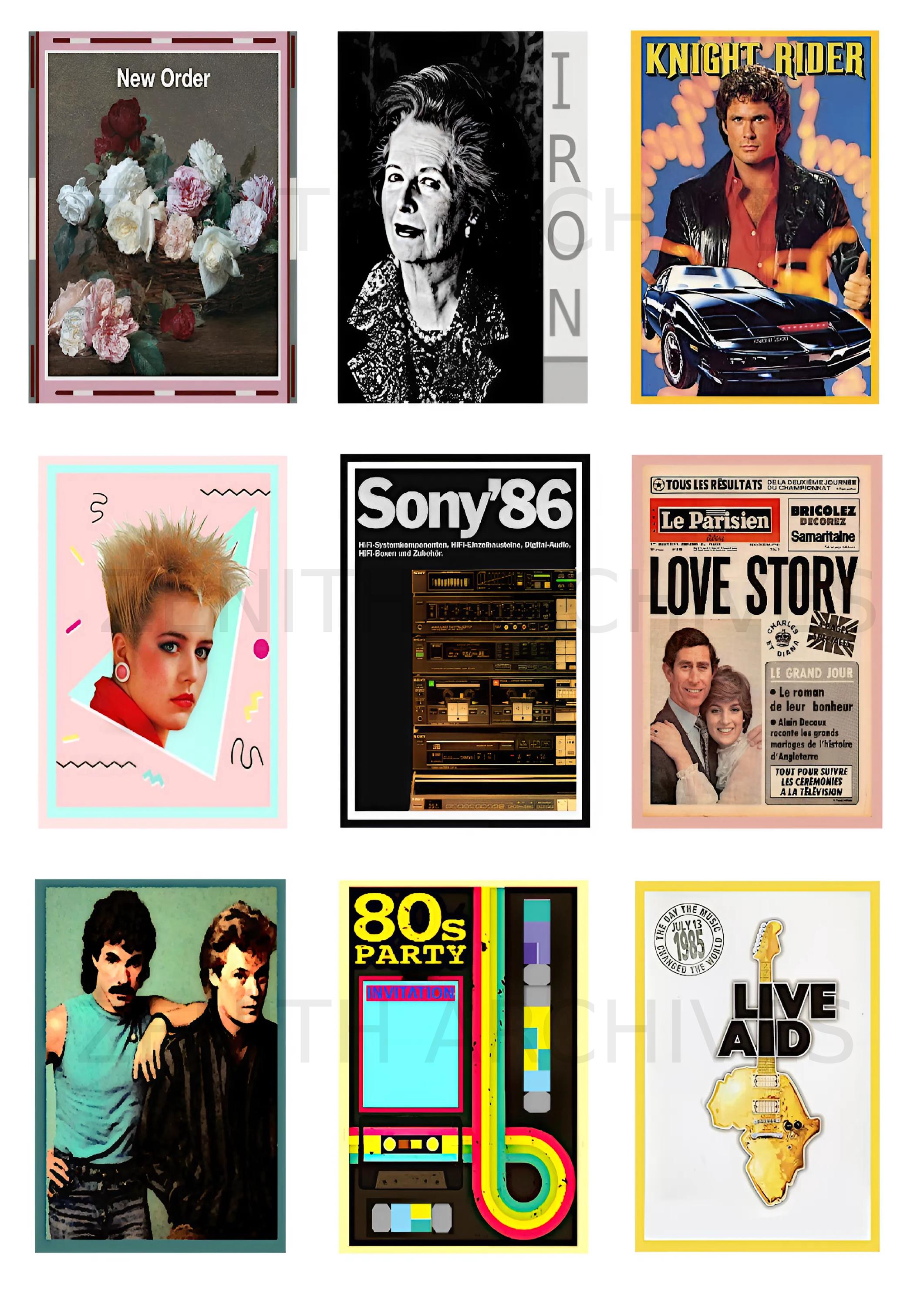
The culture of the 1980s was a vibrant and transformative decade defined by rapid technological innovation, bold consumerism, aggressive media expansion, and distinct countercultural movements that permanently reshaped global fashion, music, cinema, and socio-political landscapes.
Defining the Era: The Sociopolitical and Economic Landscape of the 1980s
The cultural identity of the 1980s did not emerge in a vacuum; it was forged against a backdrop of intense geopolitical shifts and economic restructuring. Dominated politically by figures such as U.S. President Ronald Reagan and British Prime Minister Margaret Thatcher, the decade championed deregulation, privatization, and a shift toward free-market capitalism. This socio-economic shift birthed the archetype of the "yuppie" (young urban professional) and fostered an era of conspicuous consumption where wealth, luxury brands, and corporate ambition were openly celebrated in mainstream media.
Simultaneously, the Cold War reached its dramatic climax during this ten-year span. Tensions between the United States and the Soviet Union influenced everything from geopolitical policy to blockbuster cinema, spawning suspense thrillers and cautionary nuclear-themed narratives. Yet, beneath the corporate veneer and nuclear anxiety, grassroots movements flourished. Activism surrounding the burgeoning HIV/AIDS epidemic, environmental consciousness, and anti-apartheid campaigns laid bare the fractures in contemporary society, ensuring that the decade’s cultural output was as socially conscious as it was commercially driven.
The Technological Revolution: From Analog Origins to Digital Horizons
No assessment of 1980s culture is complete without examining the technological leap that occurred between 1980 and 1989. The decade marked the transition of computing from elite institutional mainframes into accessible consumer products. The introduction of the IBM Personal Computer in 1981, followed by Apple’s Macintosh in 1984, democratized word processing and introduced graphical user interfaces to the general public. These developments laid the foundational infrastructure for the modern digital workplace and home office.
Home entertainment experienced an equally radical transformation. The video cassette recorder (VCR) shifted from an expensive novelty to a household staple, giving birth to the video rental store industry and fundamentally altering how audiences consumed cinema. Concurrently, the video game industry recovered from its 1983 crash through the global dominance of Nintendo’s Entertainment System (NES), turning arcade pastimes into domestic rituals. Portable audio was revolutionized by Sony’s Walkman, introduced at the end of the previous decade but culturally perfected in the 1980s, which allowed individuals to curate personalized soundtracks for their daily commutes and workouts.
Evolution of 1980s Music Genres
| Genre / Movement | Key Characteristics | Defining Artists and Bands | Cultural Impact |
|---|---|---|---|
| Synth-Pop & New Wave | Heavy reliance on synthesizers, drum machines, polished production, and minimalist melodies. | Depeche Mode, Human League, Tears for Fears, Duran Duran | Bridged electronic experimentation with commercial pop, dominating global radio charts and fashion aesthetics. |
| Arena Rock & Hair Metal | Towering guitar solos, anthemic choruses, high-energy stage performances, and theatrical personas. | Bon Jovi, Def Leppard, Mötley Crüe, Van Halen | Defined stadium-scale entertainment and elevated music video visualization via MTV. |
| Hip-Hop (Golden Age) | Sampling, intricate rhyme schemes, turntablism, and socio-political lyricism from urban centers. | Run-D.M.C., Public Enemy, Beastie Boys, Eric B. & Rakim | Transformed underground street culture into a major commercial and artistic force with global reach. |
| Alternative & Indie Rock | Jangle guitars, introspective or post-punk lyricism, DIY ethos, and rejection of mainstream gloss. | The Smiths, R.E.M., The Cure, Pixies | Laid the groundwork for the 1990s alternative rock explosion and established independent record labels. |
Cinema and Television: Blockbusters, MTV, and the Small Screen
The cultural output of 1980s cinema was bifurcated into high-concept commercial blockbusters and gritty independent storytelling. Studios discovered the immense profitability of youth-oriented adventure, sci-fi, and action films. Directors like Steven Spielberg and George Lucas set new benchmarks for visual effects and merchandising, transforming movies into multi-platform cultural events. Films such as Star Wars: Episode V - The Empire Strikes Back (1980), E.T. the Extra-Terrestrial (1982), and Back to the Future (1985) established narrative templates that still influence modern Hollywood.
Simultaneously, television underwent a paradigm shift with the August 1, 1981 launch of Music Television (MTV). By broadcasting 24-hour music videos, MTV transformed auditory art into visual spectacles, launching the careers of pop icons like Madonna and Michael Jackson, whose artistic output and music videos became cultural touchstones. On the scripted television front, prime-time soap operas like Dallas and Dynasty fed the decade’s appetite for wealth and drama, while gritty police procedurals and groundbreaking sitcoms reflected changing family dynamics and urban realities.
Fashion, Style, and Aesthetic Excess
The visual language of the 1980s was characterized by hyperbole, vibrant color palettes, and structural experimentation. Fashion moved away from the earthy tones of the 1970s into loud neon hues, acid-wash denim, leather jackets, and power suits equipped with exaggerated shoulder pads. This sartorial boldness mirrored the economic ambitions of the era, providing professionals and youths alike with a uniform that commanded attention.
Athletic wear also broke out of the gym and onto the streets. The fitness craze, fueled by aerobics videos and jogging culture, popularized spandex, leg warmers, and branded footwear as everyday casual wear. In hair and beauty, volume was paramount; teased hair, heavy eyeliner, and vibrant makeup were standard across both mainstream pop culture and underground subcultures like goth and punk.
How the 1980s Laid the Groundwork for Modern Digital Culture
- Mass Media Decentralization: The proliferation of cable television and specialized magazines fragmented monolithic audiences into niche subcultures, anticipating modern internet community structures.
- Consumer Electronics Integration: The normalization of personal computers, VCRs, and electronic synthesizers conditioned the public to rapidly adopt subsequent digital innovations.
- Global Branding and Marketing: Modern synergy—where a film release, soundtrack album, toy line, and clothing collection launch simultaneously—was perfected during this decade.
- Independent Distribution Models: The DIY ethos of 1980s indie music and underground publishing established frameworks for independent content creation and distribution seen today.
Frequently Asked Questions
What major technological inventions from the 1980s still impact daily life today?
The 1980s introduced consumer personal computing via IBM and Apple, the foundational standards for digital audio through the Compact Disc, and early cellular communication technology. These inventions shifted society from an analog paradigm to the digital infrastructure that underpins modern telecommunications, remote work, and personal computing.
How did MTV change the music industry in the 1980s?
MTV revolutionized the music industry by coupling audio recordings with high-production-value visual narratives. This made visual appeal and music video performance central to an artist's commercial success, directly altering how songs were marketed, promoted, and consumed on a global scale.
Why is the 1980s often referred to as the golden age of the blockbuster?
Hollywood studios during the 1980s mastered the high-concept action and sci-fi genre film, backed by sophisticated merchandising tie-ins. Movies were increasingly designed as immersive theatrical events targeted at teenagers and families, creating a sustainable financial model that continues to dominate major studio slates.
What distinguished the fashion of the early 1980s from the late 1980s?
Early 1980s fashion retained some residual earthy tones and relaxed fits from the late 1970s, alongside early sportswear trends. By contrast, the late 1980s embraced sharp geometric lines, neon colors, heavy accessorizing, power dressing with pronounced shoulder pads, and highly stylized streetwear influenced by the rise of hip-hop.
How did the geopolitical climate influence 1980s culture?
Heightened Cold War tensions between the West and the Soviet Union generated widespread anxiety about nuclear proliferation. This atmosphere directly inspired dystopian science fiction, satirical music, politically charged punk rock, and suspenseful geopolitical thrillers that dominated box offices and bestseller lists.
Strategic Preservation of 1980s Cultural Heritage
Preserving and studying the cultural artifacts of the 1980s requires careful archiving of both physical media—such as vinyl records, cassette tapes, and analog film prints—and early digital files. Scholars, archivists, and enthusiasts should prioritize maintaining original playback hardware, documenting oral histories of key creators, and supporting institutional archives dedicated to retro-computing and broadcast history. Engaging with these materials ensures that the foundational shifts of the decade remain accessible for future historical and sociological analysis.