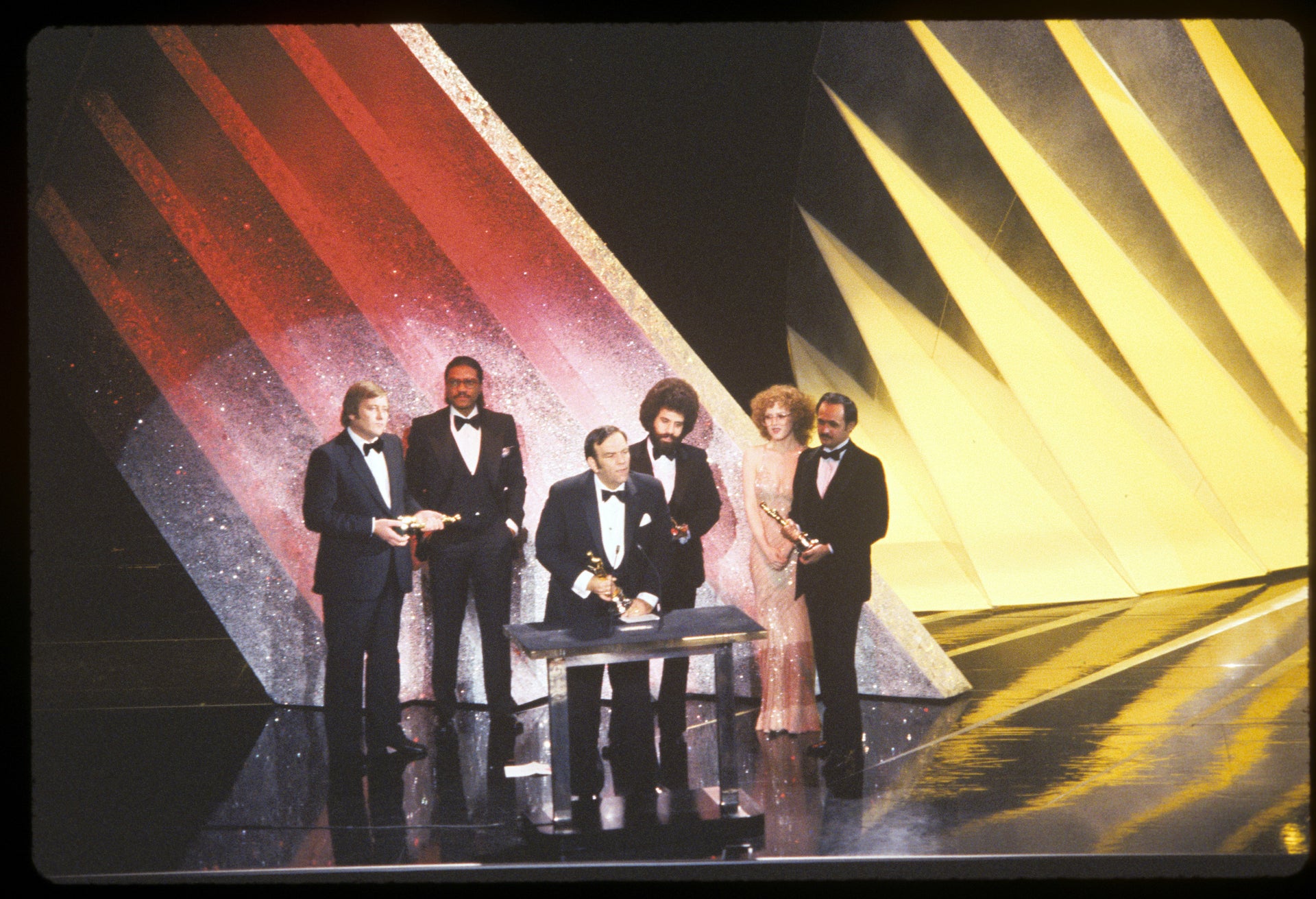
The 49th Academy Awards ceremony, honoring the best films of 1976, took place on March 28, 1977, at the Dorothy Chandler Pavilion in Los Angeles. Dominated by Sidney Lumet's satirical masterwork Network and John G. Avildsen's low-budget phenomenon Rocky, this edition of the Oscars captured a transitional moment in American cinema as gritty, countercultural realism collided with crowd-pleasing commercial triumph.
Historical Context and the 1976 Cinematic Landscape
The films competing at the 1977 Academy Awards represented the absolute zenith of the "New Hollywood" era. Directors influenced by European art-house cinema, gritty independent filmmaking, and investigative journalism were reshaping studio moviemaking. The year 1976 had delivered a slate of motion pictures that deeply questioned institutional authority, media ethics, and the American dream.
Yet, this intellectual and artistic rigor shared theater space with a populist counter-wave. Studio executives were beginning to realize the financial potential of high-concept, highly accessible narratives. This tension between cynical social commentary and unbridled cinematic optimism defined the race, transforming the ceremony into a symbolic referendum on the future direction of the American film industry.
Major Nominees and Categories at the 49th Academy Awards
The race for Best Picture featured five extraordinarily distinct nominees that demonstrated the range of studio output during the mid-1970s. The contenders included All the President's Men, a taut political thriller chronicling the journalistic investigation of the Watergate break-in; Bound for Glory, a sweeping biographical drama about folk singer Woody Guthrie; Network, a blistering satire on television news broadcasting; Taxi Driver, Martin Scorsese's psychological portrait of urban alienation; and Rocky, an underdog sports drama about a struggling club fighter in Philadelphia.
While Network entered the evening with a leading ten nominations and captured multiple high-profile acting statues, it was Rocky that secured the night's ultimate prize. The triumph of Rocky signaled to Hollywood that audiences still craved traditional, emotionally resonant storytelling despite the prevailing tide of pessimistic realism.
Acting Victories and Iconic Acceptance Speeches
The acting categories for the 1977 Academy Awards featured some of the most competitive lineups in Oscar history, resulting in wins that remain legendary among film historians. Peter Finch posthumously won the Best Actor award for his electrifying portrayal of unhinged news anchor Howard Beale in Network, making him the first performer to win an Academy Award posthumously. His co-star, Beatrice Straight, captured the Best Supporting Actress category with a performance lasting barely five minutes of screen time, establishing a historical record for the shortest ever performance to win an acting Oscar.
In the Best Actress category, Faye Dunaway triumphed for her blistering performance as ruthless television executive Diana Christensen in Network. Meanwhile, television and film veteran Jason Robards secured the Best Supporting Actor trophy for his portrayal of cynical Washington Post editor Ben Bradlee in All the President's Men, cementing the film's journalistic gravity.
| Category | Winner | Film |
|---|---|---|
| Best Picture | Irwin Winkler and Robert Chartoff, Producers | Rocky |
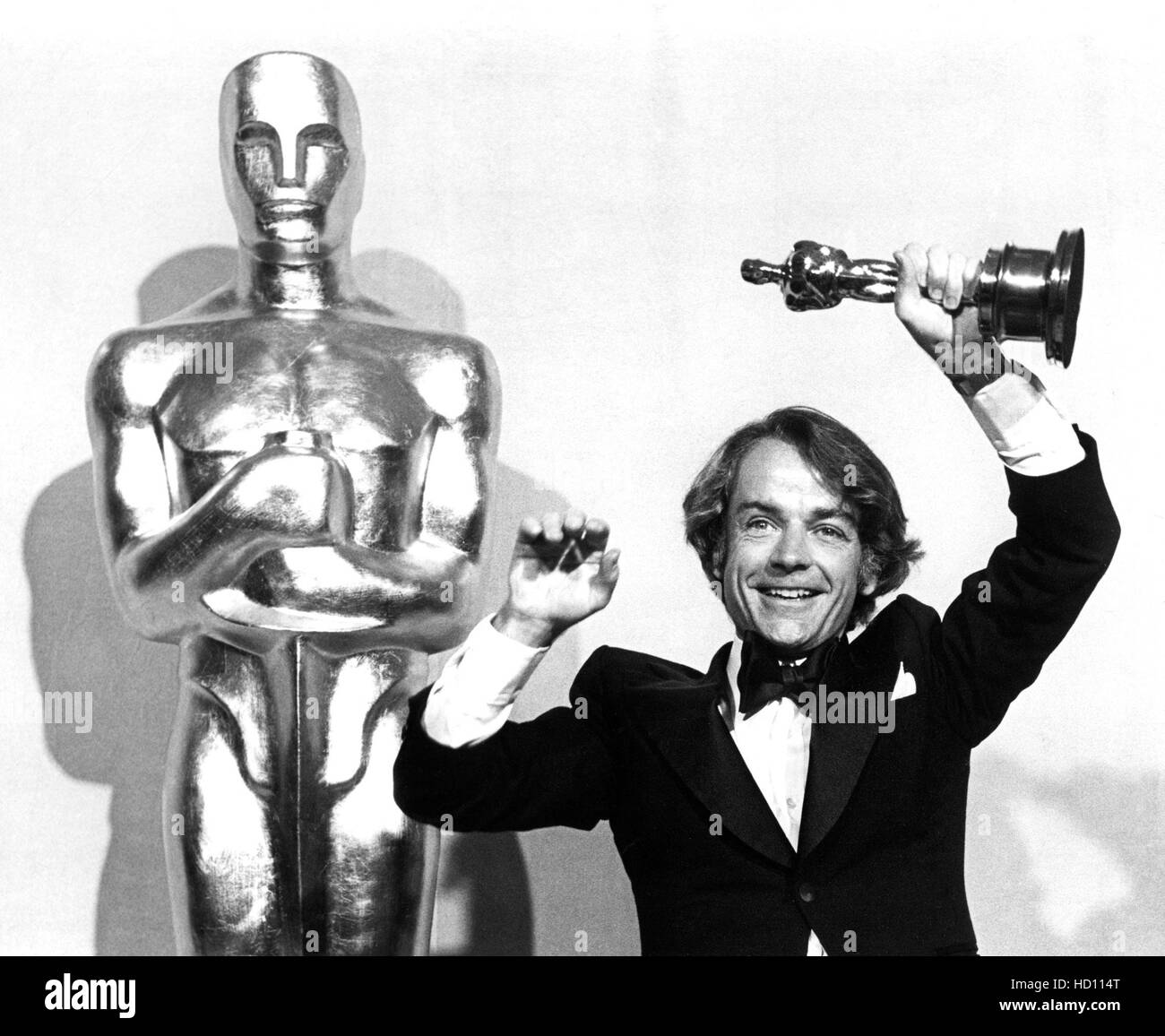
| Best Director | John G. Avildsen | Rocky |
| Best Actor | Peter Finch | Network |
| Best Actress | Faye Dunaway | Network |
| Best Supporting Actor | Jason Robards | All the President's Men |
| Best Supporting Actress | Beatrice Straight | Network |
| Best Original Screenplay | Paddy Chayefsky | Network |
The Triumph of Rocky and Commercial Realities
The victory of Rocky stands as one of the most famous upsets in Academy history. Produced on a microscopic budget of roughly one million dollars and shot in less than a month, the film was a massive financial gamble for United Artists. Sylvester Stallone, who both wrote the screenplay and starred in the title role, famously refused to sell the script unless he was cast as the lead.
The film's resonance lay in its synthesis of classic Hollywood mythmaking and contemporary grit. By focusing on dignity in defeat and the struggle for self-respect rather than institutional corruption, Rocky offered an emotional release valve for an American public recovering from the Vietnam War and the Watergate scandal. Its success paved the way for the modern blockbuster era, proving that word-of-mouth and populist appeal could overcome traditional studio marketing strategies.
Legacy and Cultural Impact of the 1976 Film Slate
Looking back from 2026, the films honored at the 1977 Academy Awards have aged with remarkable durability. Works like Taxi Driver and Network are frequently cited by contemporary critics and filmmakers as prescient warnings about media manipulation, urban decay, and political alienation. Paddy Chayefsky's prophetic screenplay for Network, featuring the iconic "I'm as mad as hell, and I'm not going to take this anymore!" monologue, anticipated the rise of sensationalist 24-hour cable news and reality television by decades.
Simultaneously, the technical achievements recognized that evening—such as Haskell Wexler’s pioneering use of the Panaglide camera rig in Bound for Glory—permanently altered the visual language of cinema. The convergence of technical innovation, biting social critique, and commercial powerhouse moviemaking ensures that the 49th Academy Awards remains a permanent touchstone for the art of film.
Frequently Asked Questions
Which film won Best Picture at the 1977 Academy Awards?
Rocky won the Academy Award for Best Picture at the 49th Academy Awards ceremony held on March 28, 1977. Produced by Irwin Winkler and Robert Chartoff and directed by John G. Avildsen, the film triumphed over formidable competitors including Network and All the President's Men.
Who won Best Actor at the 1977 Academy Awards?
Peter Finch won the Best Actor award posthumously for his role as Howard Beale in Network. This marked the first time an actor received an Academy Award after their passing, following Finch's death in January 1977 prior to the ceremony.
How many nominations did Network receive in 1977?
Network received ten Academy Award nominations at the 49th ceremony, including bids for Best Picture, Best Director, and four acting nominations. It ultimately converted four of those nominations into wins, dominating the major performance categories.
Who was the host of the 49th Academy Awards?
The 49th Academy Awards ceremony was hosted by Richard Pryor, Ellen Burstyn, Warren Beatty, and Jane Fonda. The Academy utilized a multi-host format for the evening to reflect the diverse trends and changing guard within the American film industry during the late 1970s.
What was the shortest performance to win an Oscar?
Beatrice Straight won the Academy Award for Best Supporting Actress for her role as Louise Schumacher in Network. Her total screen time in the film is approximately five minutes and forty seconds, making it the shortest performance ever to win an acting Academy Award.
Planning Your Cinematic Exploration
To fully appreciate the historical weight of the 1977 Academy Awards, film enthusiasts and researchers should view the nominated masterworks in parallel rather than isolation. Start by screening Network and All the President's Men to understand the cynical, investigative mood of mid-1970s political and media critique, then balance this perspective with the redemptive, populist energy of Rocky. Examining original screenplay texts and contemporary trade reviews from Variety and The Hollywood Reporter will further illuminate the industry pressures and artistic ambitions that defined this pivotal year in film history.