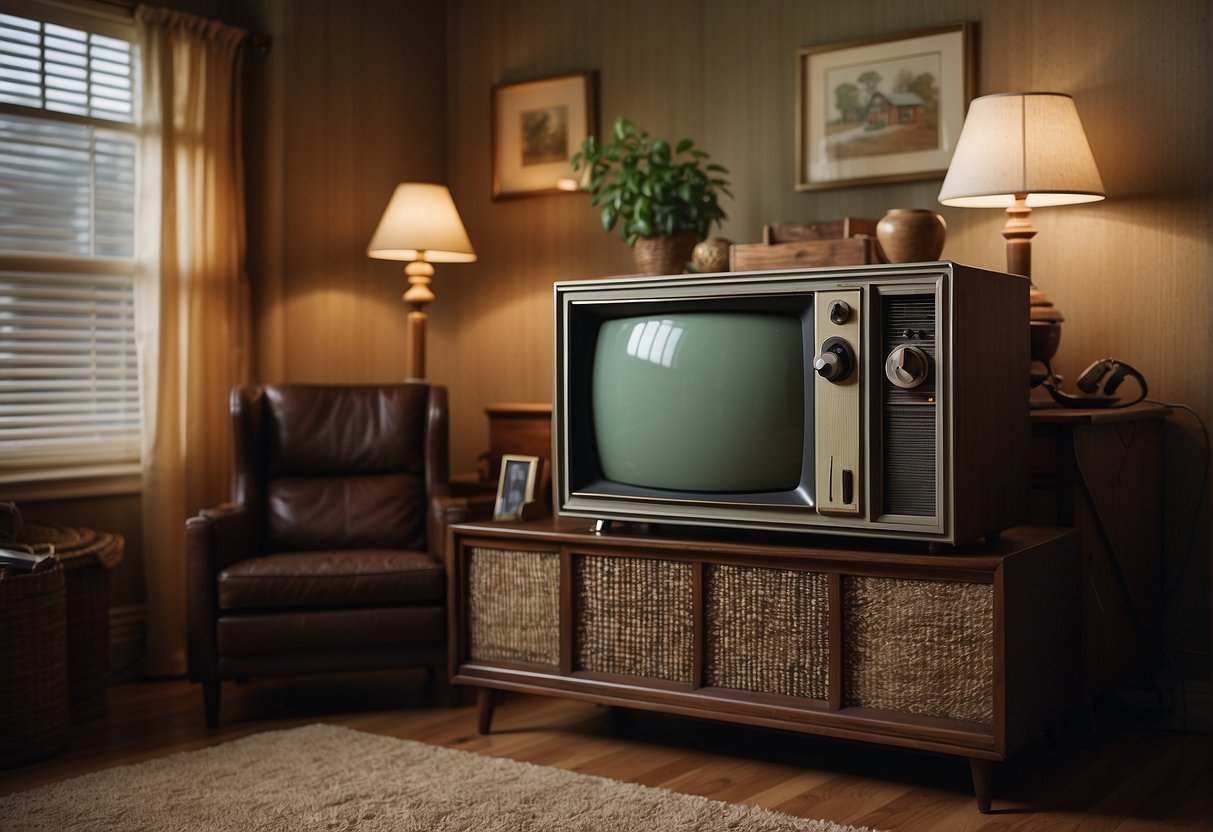
1970s television marked a revolutionary transitional era defined by the widespread adoption of color broadcasting, socially conscious sitcoms, gritty police dramas, and the birth of cable networks. This decade fundamentally reshaped cultural discourse by tackling taboo political, racial, and socio-economic issues directly in living rooms across the globe.
The landscape of 1970s television was a complex ecosystem balancing technological evolution with groundbreaking narrative risks. As cathode-ray tube (CRT) color sets finally surpassed black-and-white receivers in household market penetration, producers and networks altered their aesthetic strategies. Visual media during this decade shifted from escapist pastoral fantasies toward urgent, contemporaneous urban realities. Creators harnessed the medium to reflect the changing social fabric of post-Vietnam, post-Watergate society, giving voice to marginalized demographics while establishing the foundational formats of modern serialized and episodic entertainment.
Technological Shifts and Broadcast Standards of the Era
The technical foundation of 1970s television underwent a massive hardware overhaul as color broadcasting transitioned from an expensive novelty to an absolute industry standard. By the middle of the decade, the vast majority of households in developed television markets owned color receivers, requiring production studios to completely abandon monochromatic lighting schemes, heavy makeup palettes, and high-contrast set designs. Cameras transitioned from early cumbersome tube models to more reliable plumbicon camera tubes, enhancing color fidelity and reducing motion lag.
Simultaneously, the distribution infrastructure began its historic diversification. While the traditional "Big Three" terrestrial networks—CBS, NBC, and ABC—maintained absolute dominance over prime-time viewership, the seeds of alternative distribution were planted. The Federal Communications Commission (FCC) enacted the Prime Time Access Rule in 1971, which stripped the major networks of one hour of nightly network programming to encourage local station independence and syndication. This regulatory shift paved the way for independent stations to thrive and created fertile ground for the nascent cable television industry, pioneered by early systems like HBO (Home Box Office), which launched via satellite transmission in 1975.
The Rise of Socially Conscious Sitcoms
Perhaps the most culturally impactful programming shift of the 1970s was the transformation of the situation comedy. Spearheaded by producer Norman Lear, network comedies abandoned sterile, escapist domestic setups in favor of sharp, topical satire that mirrored real-world cultural tensions. Programs like All in the Family, which premiered in 1971, injected racism, sexism, anti-communism, and generational conflict directly into prime-time comedy, using humor to expose the absurdity of prejudice.
This era broke long-standing broadcast taboos by centering working-class families and minority protagonists in complex, realistic scenarios. Shows like Maude, Good Times, The Jeffersons, and Sanford and Son expanded television's demographic footprint, offering nuanced explorations of poverty, upward mobility, urban life, and feminism.
| Show Title | Network | Original Run | Primary Themes & Cultural Impact |
|---|---|---|---|
| All in the Family | CBS | 1971–1979 | Blue-collar conservatism, racism, generational divide, social satire. |
| The Mary Tyler Moore Show | CBS | 1970–1977 | Independent career women, second-wave feminism, modern workplace dynamics. |
| MASH* | CBS | 1972–1983 | Anti-war sentiment, dark comedy, institutional bureaucracy, moral ambiguity. |
| Good Times | CBS | 1974–1979 | Urban poverty, systemic racism, African-American family resilience. |
Complementing these working-class narratives, The Mary Tyler Moore Show redefined female independence on screen. By focusing on an unmarried, career-focused woman working in a Minneapolis newsroom, the series dismantled the traditional tropes of women defined solely by marriage or domesticity, setting a blueprint for future workplace ensembles.
Gritty Dramas, Mini-Series, and Cinematic Storytelling
While comedies tackled cultural politics, dramatic programming in the 1970s embraced moral ambiguity, police corruption, and historical scale. The idealized, infallible detective archetype of previous decades was largely replaced by flawed, cynical law enforcement officers navigating decaying urban centers. Shows like Columbo, Kojak, and The Rockford Files favored character psychology and procedural realism over clean, tidy resolutions.
Furthermore, the 1970s invented the modern television mini-series, a format capable of sustaining sweeping narrative arcs over consecutive nights. The cultural watershed of this format was Roots (1977), an ABC adaptation of Alex Haley's historical novel that traced generations of an African-American family from enslavement to emancipation. Roots paralyzed the nation, drawing record-shattering viewing audiences and proving that television could command collective national introspection on an unprecedented scale.
Variety Shows, Late Night, and Counterculture Integration
The variety show format, a staple of early broadcasting, underwent a psychedelic and countercultural reinvention in the 1970s. Shows like The Carol Burnett Show maintained traditional sketch and musical excellence, while productions like The Sonny & Cher Comedy Hour infused contemporary fashion, rock music, and irreverent banter into prime time.
Late-night television experienced an institutional earthquake with the 1975 debut of NBC's Saturday Night Live (originally titled Saturday Night Live). Created by Lorne Michaels, the live sketch comedy program captured the cynical, anti-establishment humor of the post-Watergate youth culture. By blending absurdist humor, recurring characters, and live musical performances from cutting-edge rock and punk acts, the show bridged the gap between countercultural sensibilities and mainstream entertainment, cementing late-night television as a powerful cultural incubator.
Production Formats and Technical Specifications
Producing television in the 1970s required navigating a hybrid technical landscape where film and electronic media intersected. Understanding the production specifications of the era clarifies why certain shows achieved their distinct aesthetic look:
- Multicam Video Setup: Studio-bound sitcoms (often recorded in front of a live studio audience or with a studio audience track added later) were shot primarily on three or four electronic video cameras using 35mm or plumbicon tube sensors, recorded directly onto 2-inch quadruplex videotape.
- Single-Camera Film Production: Action-adventures, hour-long dramas, and on-location sequences were typically shot on 16mm or 35mm celluloid film. This required separate post-production processes involving telecine transfer for broadcast integration.
- Audio Limitations: Monophonic sound was standard throughout the decade, with multi-track magnetic recording adopted primarily for post-production mixing of orchestral scores and laugh tracks rather than spatial audio delivery.
- Aspect Ratio: All commercial broadcasts adhered strictly to the standard 4:3 aspect ratio, dictating close framing and character-centric compositions that translated well to smaller domestic screens.
Frequently Asked Questions About 1970s Television
What technical format were most 1970s television shows recorded in?
Most studio-based sitcoms were recorded on 2-inch quadruplex videotape using multi-camera electronic setups, while location-heavy dramas and action series were shot on 16mm or 35mm film before being transferred to tape for broadcast.
How did the Prime Time Access Rule impact 1970s television?
Enacted by the FCC in 1971, the rule reclaimed one hour of prime-time programming from the major networks and gave it back to local affiliates. This spurred a boom in first-run syndication, leading to the creation of popular game shows and local interview programs.
Why did sitcoms become so political during this decade?
Producers like Norman Lear recognized that a younger, more urban demographic was rejecting traditional escapist programming. Inspired by British imports and contemporary social movements, they utilized comedy as a Trojan horse to address civil rights, feminism, and anti-war sentiments.
When did cable television begin influencing traditional broadcast networks?
While cable systems had existed for decades as community antenna television (CATV), national satellite distribution began in 1975 with the launch of HBO. This innovation allowed specialty programming to bypass local terrestrial affiliates and reach nationwide audiences directly.
Are original 1970s master tapes still widely available for modern restoration?
Many videotaped programs from the 1970s suffer from physical degradation, magnetic print-through, or were actively wiped and reused by networks to save on tape costs. Consequently, film-originated shows often survive in much better archival condition than early videotaped studio productions.
Preserving and Archiving Retro Broadcast Heritage
For media historians, collectors, and researchers examining 1970s television, verifying historical availability requires consulting specialized institutional archives such as the UCLA Film & Television Archive or the Paley Center for Media. When sourcing vintage episodes or studying broadcast history, prioritize officially licensed physical media releases (such as specialized boutique Blu-ray distributors) or accredited academic databases rather than unverified streaming rips. Verifying the original production format—whether master film elements or surviving kinescopes—ensures an accurate understanding of how these landmark cultural artifacts originally appeared to audiences.