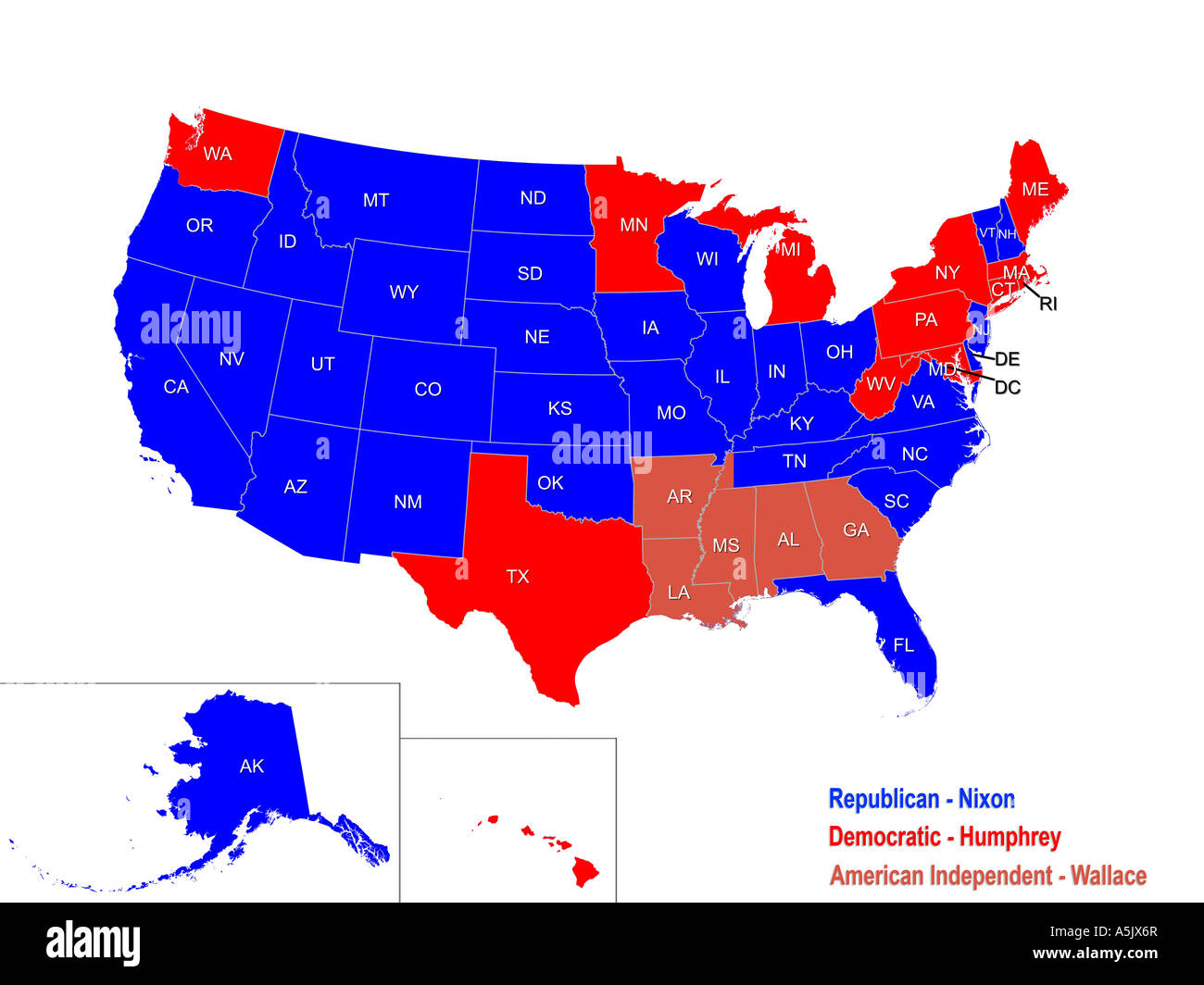
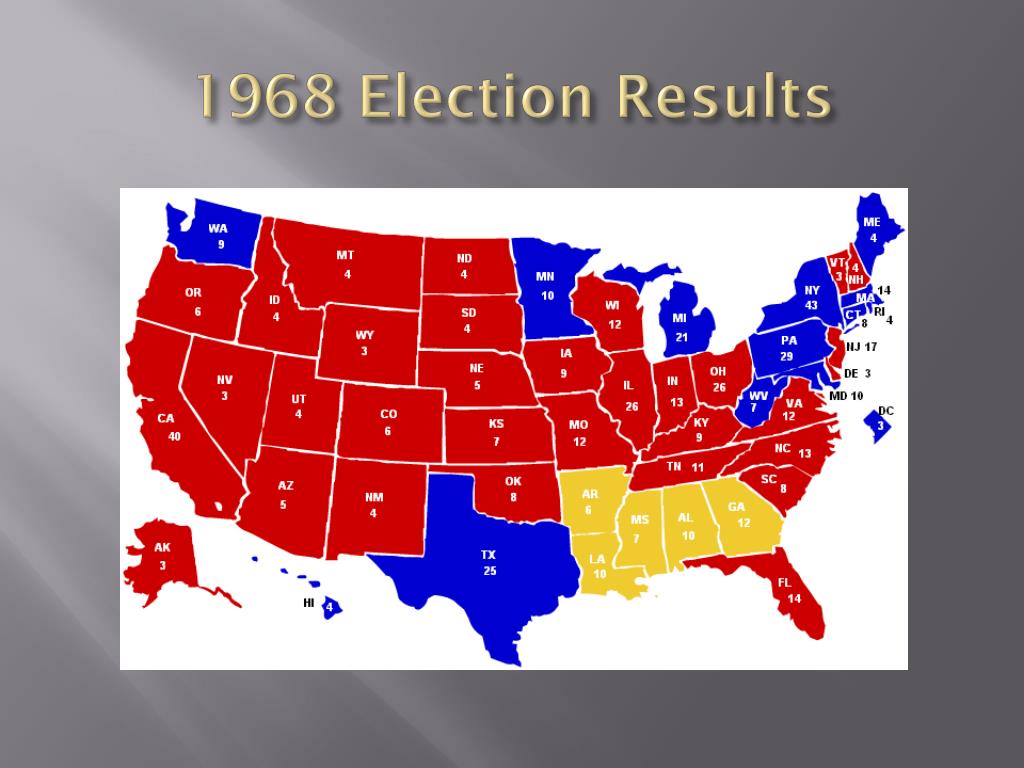
The 1968 United States presidential election was one of the most tumultuous and consequential political contests in American history, culminating in the election of Republican Richard Nixon over Democrat Hubert Humphrey and American Independent George Wallace. Set against a backdrop of the Vietnam War, widespread civil rights unrest, and the assassinations of Martin Luther King Jr. and Robert F. Kennedy, the election fundamentally reshaped the national political landscape and fractured the New Deal coalition.
The Volatile Political Landscape of 1968
To understand the outcome of the 1968 election, one must examine the profound social and political upheavals that defined the era. The United States was deeply divided over foreign policy, specifically the escalating military involvement in Vietnam. Public skepticism toward the Johnson administration's handling of the war reached a breaking point following the Tet Offensive in January 1968, which demonstrated that communist forces retained immense capability despite official assertions that victory was near.
Domestically, the nation was grappling with intense civil unrest. The civil rights movement, while achieving major legislative victories earlier in the decade, faced severe friction and grief following the assassination of Martin Luther King Jr. in April 1968. Major American cities experienced riots and protests, leading to a pervasive national anxiety regarding law and order. This climate of fear and frustration created a fertile ground for candidates who promised stability, a restoration of institutional authority, and a definitive departure from the status quo.
The Democratic Party in Crisis and the Chicago Convention
The turmoil of 1968 profoundly destabilized the ruling Democratic Party. Incumbent President Lyndon B. Johnson, facing plummeting approval ratings and a surprisingly strong primary challenge from anti-war candidate Eugene McCarthy, announced in March 1968 that he would neither seek nor accept the nomination of his party for another term.
Following Johnson's withdrawal, Senator Robert F. Kennedy entered the race, galvanizing anti-war Democrats, working-class voters, and minority communities. However, Kennedy's assassination in June 1968 plunged the party into deeper despair. Vice President Hubert Humphrey, who represented the establishment wing of the party and the continuity of Johnson's policies, secured the nomination despite having entered virtually no primary contests.
The culmination of the Democratic primary process occurred at the Democratic National Convention in Chicago, Illinois. Outside the International Amphitheatre, thousands of anti-war protesters clashed violently with the Chicago Police Department and the National Guard in televised altercations that shocked the viewing public. Inside the convention hall, bitter platform fights and procedural battles mirrored the deep fractures within the party, leaving Humphrey with a severely damaged and divided foundation as the general election campaign began.
The Republican Strategy and Richard Nixon’s Ascent
While the Democrats fractured, the Republican Party presented a disciplined front centered on former Vice President Richard Nixon. Having lost the 1960 presidential election and the 1962 California gubernatorial race, Nixon meticulously rebuilt his political standing. He positioned himself as a unifying figure capable of bridging the divides within his own party and appealing to the broad center of the American electorate.
Nixon recognized the mounting exhaustion with social upheaval and harnessed the anxieties of what he famously termed the "silent majority"—ordinary, middle-class Americans who obeyed laws, worked hard, and felt alienated by radical countercultural movements and urban protests. On the critical issue of the Vietnam War, Nixon famously claimed he had a "secret plan" to bring "peace with honor," shielding himself from concrete policy traps while promising an orderly exit from the conflict.
Furthermore, Nixon implemented the "Southern Strategy," an electoral approach designed to peel conservative white voters away from the traditionally Democratic South. By emphasizing states' rights, local control, and a strict interpretation of law and order without explicitly endorsing segregation, Nixon and his campaign laid the groundwork for a long-term realignment of American regional politics.
George Wallace and the Third-Party Insurgency
The 1968 election was also defined by the powerful third-party candidacy of George Wallace, the former segregationist Governor of Alabama, running under the American Independent Party banner. Wallace capitalized directly on white backlash against integration, federal overreach, and anti-war demonstrations.
Wallace's platform resonated far beyond the Deep South, drawing substantial support from blue-collar industrial workers in northern states who felt abandoned by the Democratic Party's shift toward civil rights and cultural liberalism. His fiery populist rhetoric attacked "pointy-headed bureaucrats," cultural elites, and federal judges. At its peak, Wallace's campaign polled near 20 percent nationally, raising legitimate concerns among major party strategists that he might win enough electoral votes to throw the election into the House of Representatives. Although his momentum faded somewhat in the final weeks as voters feared a wasted vote, Wallace ultimately secured 46 electoral votes and over 13 percent of the popular vote.
| Candidate | Political Party | Popular Vote Share | Electoral Votes | Primary Electoral Base |
|---|---|---|---|---|
| Richard Nixon | Republican | 43.4% | 301 | Suburbs, Midwest, Western states, Border South |
| Hubert Humphrey | Democrat | 42.7% | 191 | Northeast, urban centers, organized labor, minority voters |
| George Wallace | American Independent | 13.5% | 46 | Deep South, working-class northern whites |
Election Results and Historical Significance
The general election on November 5, 1968, resulted in one of the closest popular vote margins in American history. Richard Nixon defeated Hubert Humphrey by less than one percentage point in the popular vote (43.4 percent to 42.7 percent), though Nixon secured a more decisive victory in the Electoral College with 301 votes to Humphrey's 191.
| Election Metric | Richard Nixon (Republican) | Hubert Humphrey (Democrat) | George Wallace (Independent) |
|---|---|---|---|
| Popular Vote | 31,783,314 | 31,271,839 | 9,901,118 |
| Percentage | 43.4% | 42.7% | 13.5% |
| Electoral Votes | 301 | 191 | 46 |
The consequences of the 1968 election extended far beyond the immediate transfer of executive power. It marked the definitive collapse of the New Deal coalition that had dominated American politics since the 1930s. The Democratic Party's internal divisions regarding race, foreign policy, and cultural values created enduring fault lines. Simultaneously, the election proved that a Republican presidential candidate could build a winning national coalition by combining southern conservative realignment with suburban middle-class anxieties.
Frequently Asked Questions
Why was the 1968 presidential election considered a turning point in U.S. history?
The 1968 election marked a profound cultural and political inflection point due to the confluence of the Vietnam War, widespread civil rights unrest, and high-profile assassinations. It dismantled the New Deal political coalition, redefined the electoral strategies of both major parties, and initiated a long-term conservative shift in presidential politics.
What role did the Vietnam War play in the 1968 election?
The Vietnam War dominated public discourse and fractured the ruling Democratic Party after the Tet Offensive undermined confidence in official military progress. Anti-war sentiment drove Lyndon B. Johnson from the race, while Richard Nixon successfully capitalized on public fatigue by promising an honorable resolution to the conflict.
How did George Wallace impact the 1968 election outcome?
George Wallace ran a powerful third-party campaign that appealed to white segregationists in the South and disaffected blue-collar workers in the North. By capturing 46 electoral votes and 13.5 percent of the popular vote, he demonstrated the electoral potency of working-class populism and regional discontent.
Who won the 1968 presidential election and by what margin?
Republican Richard Nixon won the election, defeating Democrat Hubert Humphrey. While Nixon secured a comfortable majority in the Electoral College with 301 votes, the popular vote was exceptionally close, with Nixon winning by a margin of less than one percent.
What was Richard Nixon's "Southern Strategy"?
Nixon's Southern Strategy was an electoral approach designed to win over conservative white voters in the American South. By emphasizing states' rights, law and order, and localized governance, the campaign successfully fractured the solid Democratic South and began a historic political realignment.
Analyzing the Legacy of a Fragmented Era
Evaluating the 1968 election requires looking past the immediate numerical results to examine how political parties adapted to mass social movements. Modern campaigns continue to study Nixon’s ability to harness middle-class anxiety and Humphrey’s struggle to unify a fractured base. Researchers and historians examining this era should consult primary documents archived in presidential libraries and legislative records from the 90th United States Congress to gain a comprehensive understanding of the policy debates that defined the period.