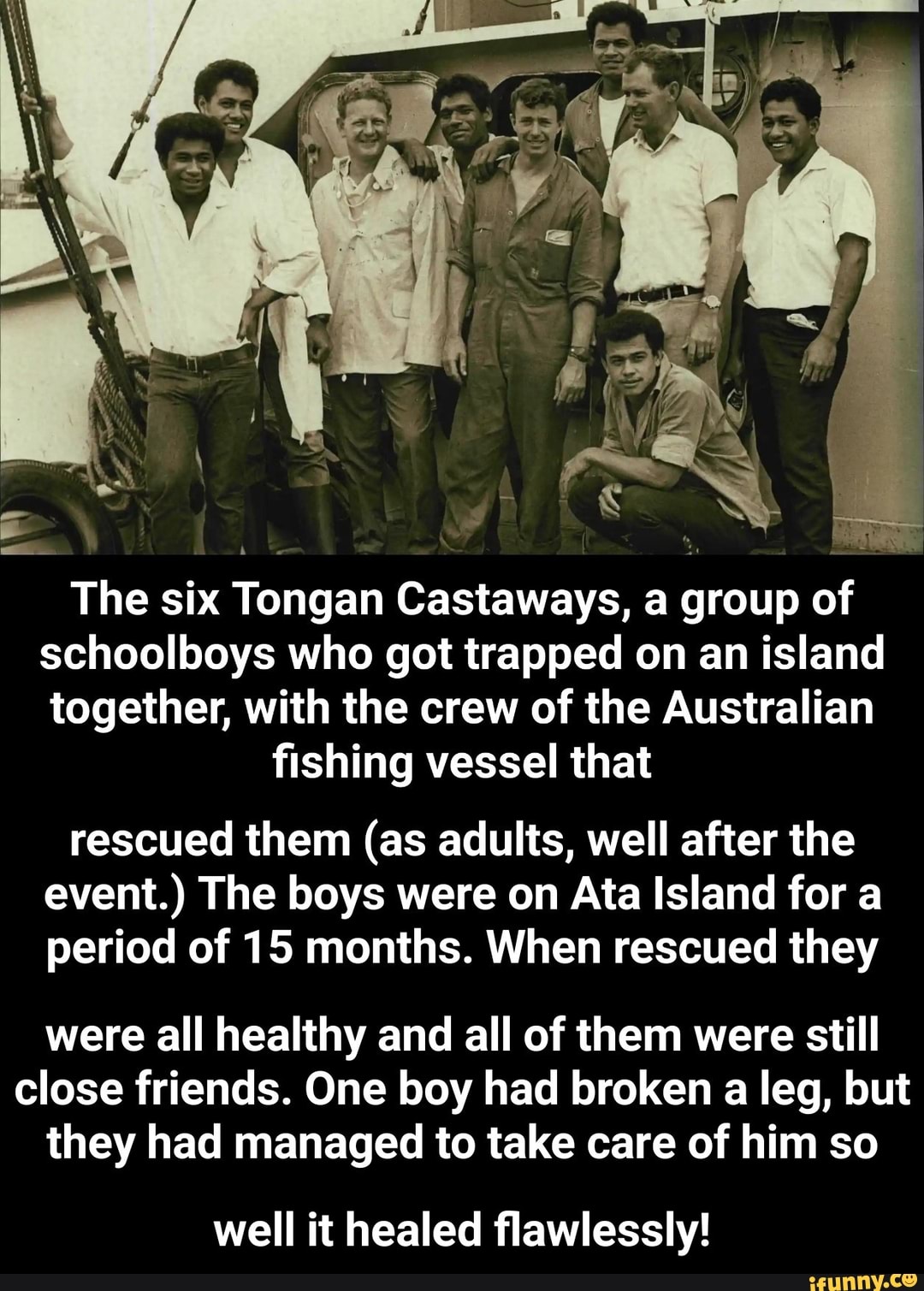
In June 1965, six Tongan teenage boys stole a small boat, became lost at sea during a violent storm, and drifted for over a year before washing up on the remote, uninhabited island of ʻAta. While popular culture often frames isolated youth as descending into savagery, these boys maintained a disciplined society, cultivated gardens, and kept a fire burning continuously until their rescue in September 1966.
Historical Context and Departure from Nukuʻalofa
The remarkable saga of the 1965 Tongan castaways began as a poorly planned escapade among bored schoolmates attending St. Andrew's High School, a strict boarding institution in Nukuʻalofa, the capital of Tonga. The group consisted of six boys ranging in age from 13 to 16: Sione Fataua, David Fifita, Kolo Fatai, Tevita Siolaʻa, Luke Vea, and Mano Totau. Frustrated by the monotony of boarding school life and seeking an adventure across the open ocean, the boys formulated a plan to steal a boat and sail approximately 100 miles south to Fiji, or perhaps even further to New Zealand or the Chatham Islands.
On the night of June 11, 1965, the teenagers slipped down to the harbor and commandeered a small, 24-foot wooden fishing boat owned by a local fisherman named Taniela Uhatahi. None of the boys possessed navigational equipment, nautical charts, sufficient fresh water, or spare provisions. They brought along only a few makeshift items, including two sacks of green bananas, a few coconuts, a small gas burner, and makeshift fishing lines. Untrained in deep-water seamanship, they cast off into the dark, unpredictable waters of the South Pacific without realizing the immense meteorological hazards waiting for them.
The Storm and Drifting at Sea for Eight Days
Shortly after clearing the sheltered waters of Tongatapu, the amateur sailors encountered a severe tropical squall. The storm battered their small vessel, snapping the boat's mast and ripping away the rudder. Deprived of any steering mechanism or means of propulsion, the boys were entirely at the mercy of the prevailing ocean currents and fierce winds. For eight terrifying days and nights, the disabled boat drifted aimlessly across the open sea.
During this week-long ordeal, the boys faced immediate dehydration and starvation. Their meager supply of green bananas was quickly exhausted, and they had to rely entirely on rainwater collected in coconut shells and whatever raw fish they could catch with improvised hooks. Sleep was virtually impossible due to the constant threat of capsizing and the agonizing physical discomfort of exposure to salt spray and blistering sun. Despite their youth and fear, the group established an early consensus on sharing resources and rations equally, a foundational decision that would govern their behavior for the months to come.
Shipwreck and Survival on the Volcanic Island of ʻAta
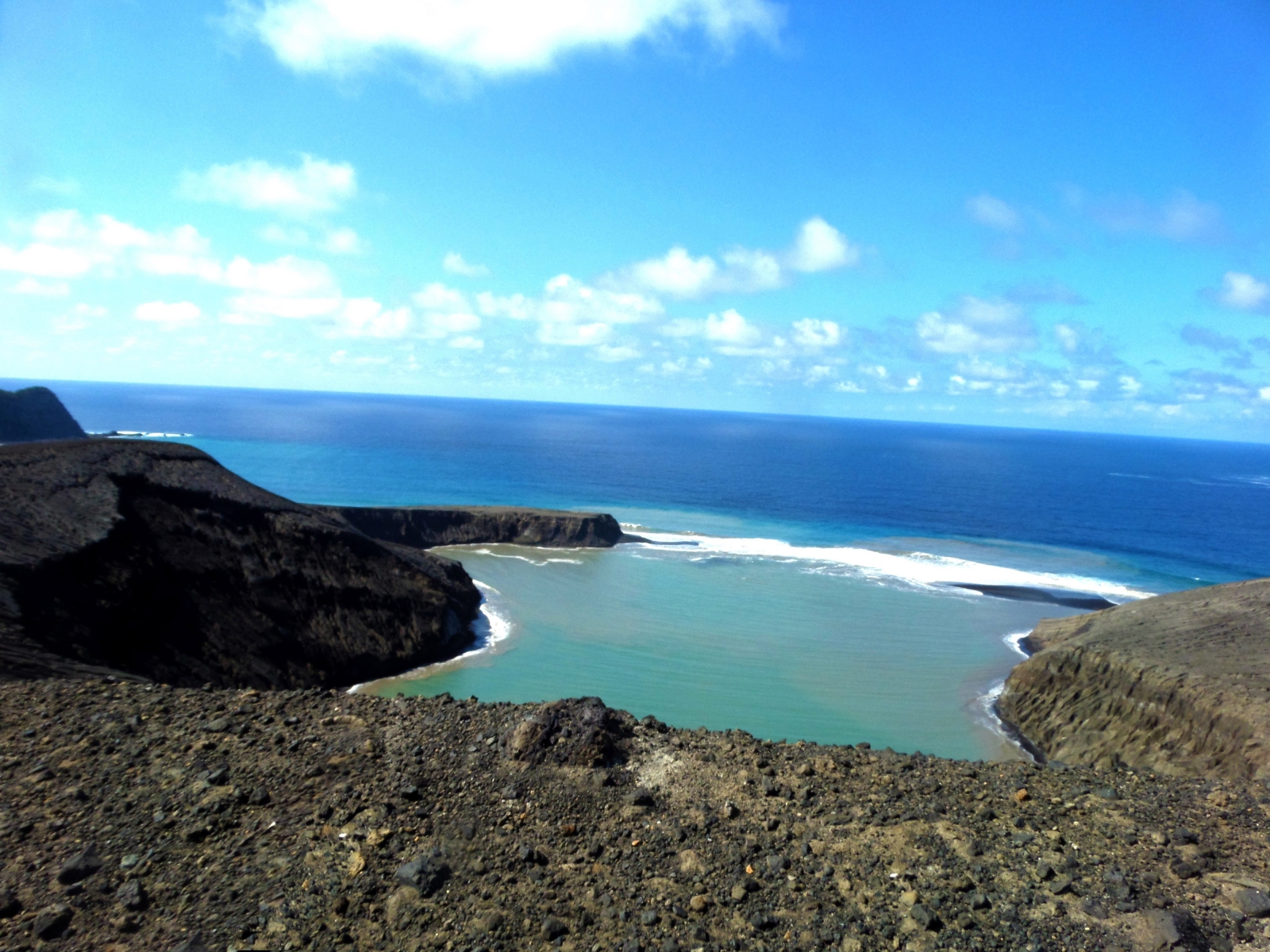
On the eighth day of drifting, the disabled boat struck the coral reef surrounding ʻAta, a steep, volcanic island in the southern reaches of the Tongan archipelago. ʻAta had been abandoned by its human inhabitants nearly a century earlier, in 1863, when Peruvian slave ships raided the island and abducted a large portion of the population, prompting the remaining villagers to relocate to ʻEua. The island was characterized by sheer cliffs, dense tropical brush, and rough terrain, offering no established infrastructure, shelter, or welcoming provisions.
Knowing they could not swim back to inhabited islands without a boat, the boys abandoned the wrecked vessel and scrambled ashore. Their initial days on ʻAta were grim; they survived on seabirds' eggs, wild coconuts, and whatever rainwater they could find trapped in rock hollows. Recognizing that rescue could take months or years, the teenagers quickly organized themselves into an effective survival commune. They elected a leadership structure, resolved interpersonal disputes through enforced timeout periods rather than physical violence, and divided daily chores, including foraging, cooking, gardening, and night watch duties.
Establishing a Sustainable Community
Unlike the fictional narrative portrayed in William Golding’s novel Lord of the Flies, the Tongan castaways demonstrated remarkable cooperation, emotional maturity, and resourcefulness. They utilized fragments of their wrecked boat and natural materials to build sturdy communal shelters that protected them from the harsh weather. Their diet evolved from raw scavenging to a varied menu that included seabirds, raw fish caught in tide pools, and edible plants discovered on the upper plateaus of the island.
Crucially, the boys discovered an ancient, overgrown garden site left behind by the island's 19th-century inhabitants, where feral taro, bananas, and chickens had thrived in the volcanic soil. They cultivated these plots to establish a reliable source of carbohydrates and fresh produce. Furthermore, they managed to maintain a continuous, unquenched fire for over fifteen months, shielding the embers from torrential rain and wind. They also constructed a gymnasium out of driftwood, practiced gymnastics, played a makeshift guitar made from a piece of wood and discarded wire from their wrecked boat, and sang daily hymns to maintain their morale and psychological well-being.
Comparison of Survival Factors
| Survival Factor | Fictional Tropes (Lord of the Flies) | Real-Life Experience (1965 Tongan Castaways) |
|---|---|---|
| Social Structure | Total breakdown of order, tribal violence, and tribal warfare. | Strict egalitarian cooperation, shared labor, and democratic conflict resolution. |
| Sustenance | Reliance on hunting wild pigs and erratic foraging; eventual starvation and chaos. | Cultivation of feral gardens, sustained fishing, gathering seabird eggs, and equal rationing. |
| Fire Management | Fire is lost due to carelessness, leading to panic and destruction. | Fire maintained continuously for 15 months, guarded vigilantly through storms. |
| Morale and Routine | Descent into savagery, fear, and psychological deterioration. | Regular exercise, music, prayer, and structured daily routines to sustain mental health. |
Rescue by Peter Warner and Return to Civilization
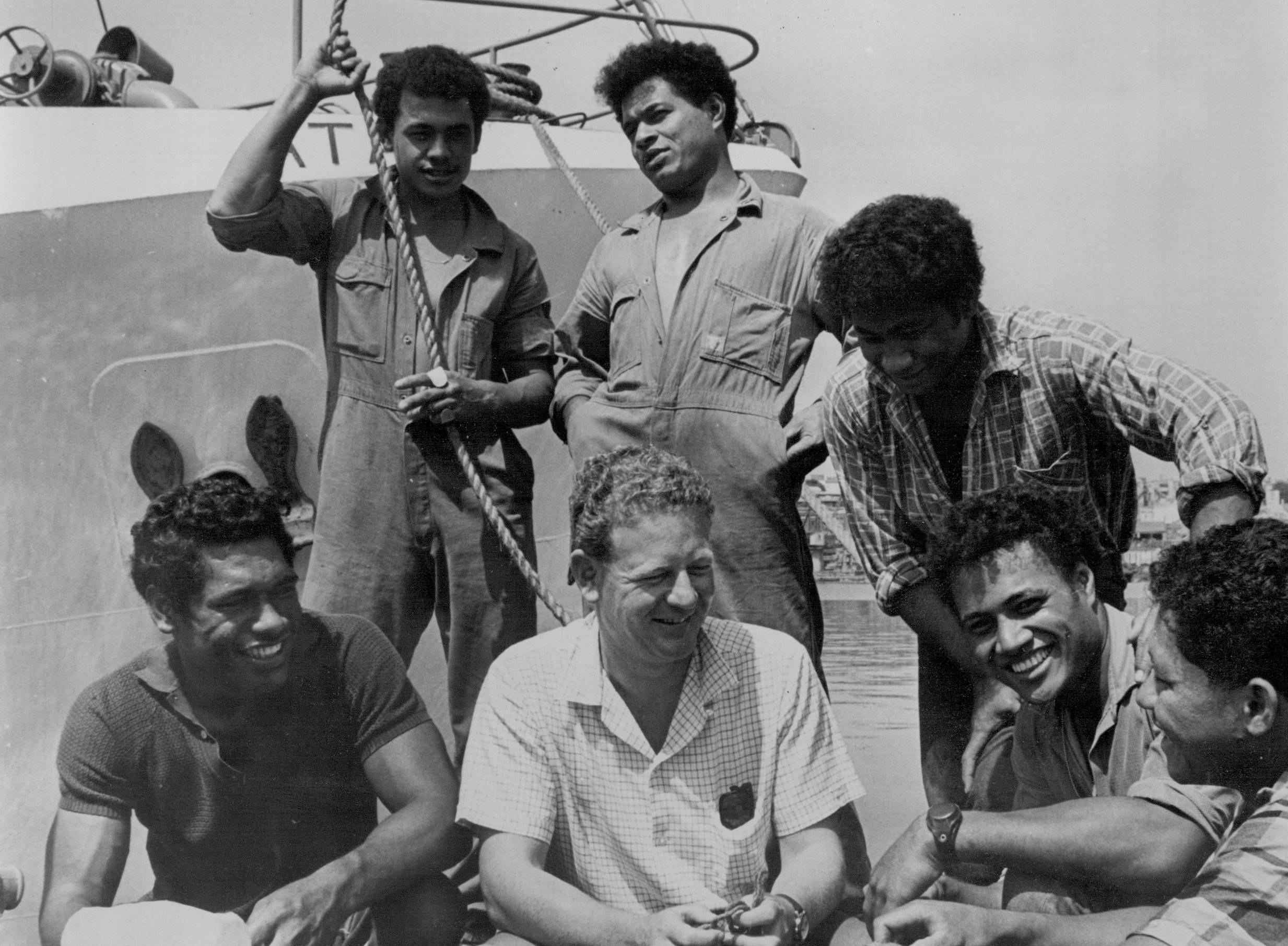
The ordeal of the six castaways came to an end on September 11, 1966, more than fifteen months after they had first set sail. Their rescue was orchestrated by Peter Warner, an Australian fisherman and sea captain who was navigating his lobster boat, the Jinotol, through the waters near ʻAta. Warner noticed unusual burned patches of vegetation on the slopes of the uninhabited island and investigated with binoculars, spotting a group of long-haired, naked youths screaming and waving frantically from the surf.
Warner maneuvered his ship closer, and one of the boys swam out to the vessel, shouting in English that they were from Tonga and had been stranded for over a year. Skeptical at first, Warner contacted shore authorities in Nukuʻalofa and discovered that the boys had been officially declared dead months prior, with memorial services already held for their families. The castaways were brought aboard the Jinotol, fed, and medically evaluated before being returned to their families in Tonga as national heroes. Despite their illegal departure and the theft of the fishing boat—for which the boat's owner ultimately dropped charges given the miraculous circumstances—the boys resumed their normal lives, leaving behind a legendary testament to human resilience, friendship, and adaptability.
Frequently Asked Questions
How long were the Tongan boys stranded on the island of ʻAta?
The boys were stranded on ʻAta for fifteen months and three weeks, having been marooned in June 1965 and rescued in September 1966. Throughout this entire period, they lived entirely off the land and sea without any outside contact or modern provisions.
Did the Tongan castaways experience violence or conflict like in Lord of the Flies?
No. Unlike the fictional premise of William Golding's novel, the Tongan boys maintained a harmonious, cooperative society based on mutual respect, shared labor, and strict adherence to conflict-resolution rules. When arguments arose, they dealt with them by separating until tempers cooled.
How did the boys maintain fire for over a year?
The boys successfully started a fire using friction and protected the burning embers meticulously. They assigned shifts to tend the flames continuously day and night, shielding the firepit from heavy rain and windstorms to ensure it never went out.
Who rescued the castaways from ʻAta?
An Australian sea captain and fisherman named Peter Warner rescued the boys on September 11, 1966. Warner spotted unusual smoke and vegetation patterns on the island while sailing past in his fishing vessel, the Jinotol, and investigated the anomaly.
What happened to the boat the boys stole?
The 24-foot fishing boat, owned by Taniela Uhatahi, was severely damaged when it struck the coral reef surrounding ʻAta on the eighth day of their drift. The wreckage was subsequently abandoned and used by the boys for various salvage materials during their stay.
Planning Your Reading on Maritime Survival History
To further explore the historical documentation, maritime archives, and subsequent interviews concerning the 1965 Tongan castaways, examine maritime records preserved in the Tongan National Archives or historical journalism pieces detailing Peter Warner's memoirs. Readers interested in human endurance psychology can also review primary interviews conducted with the surviving cast members by historian Rutger Bregman in his book Humankind: A Hopeful History.