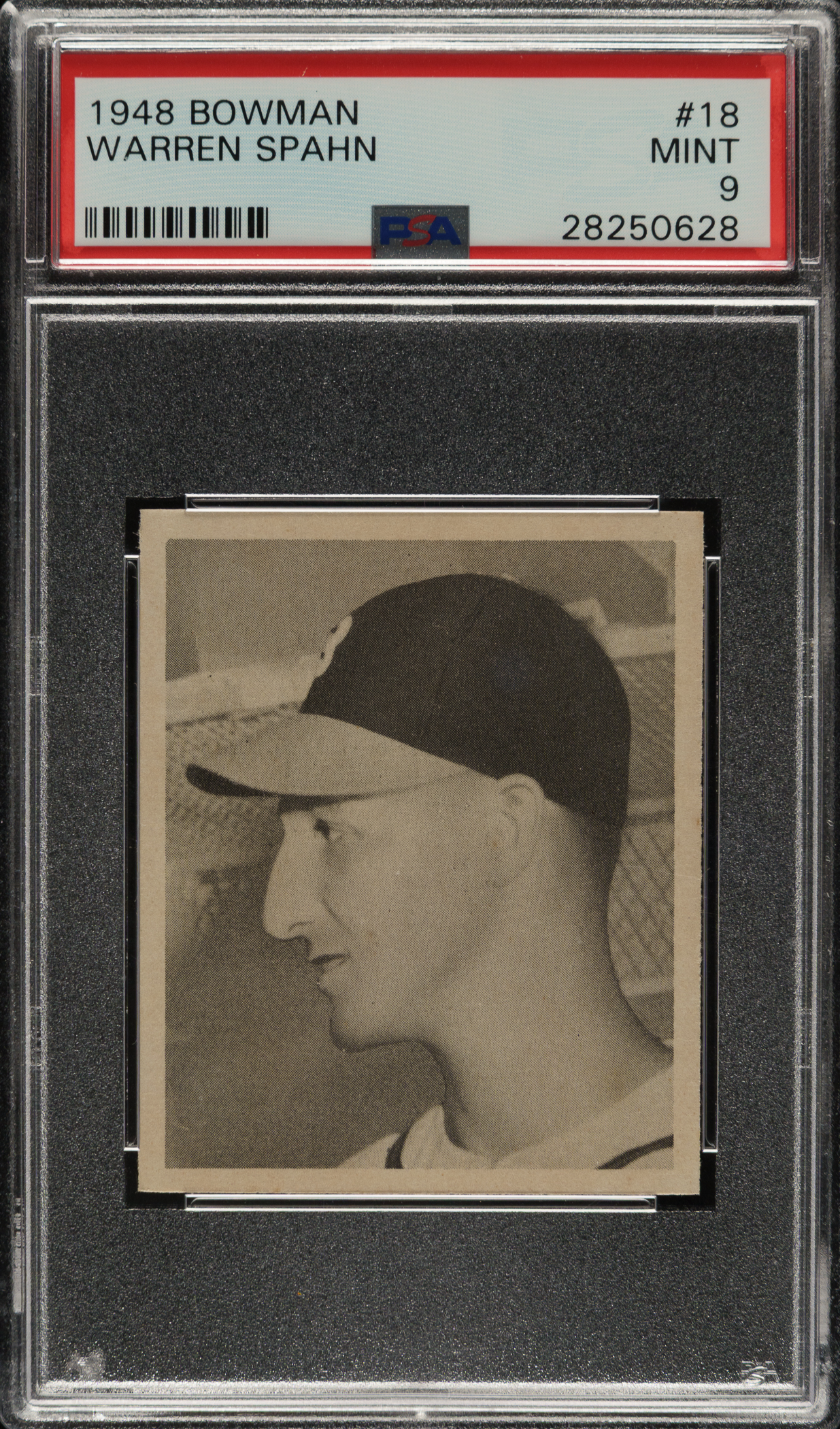
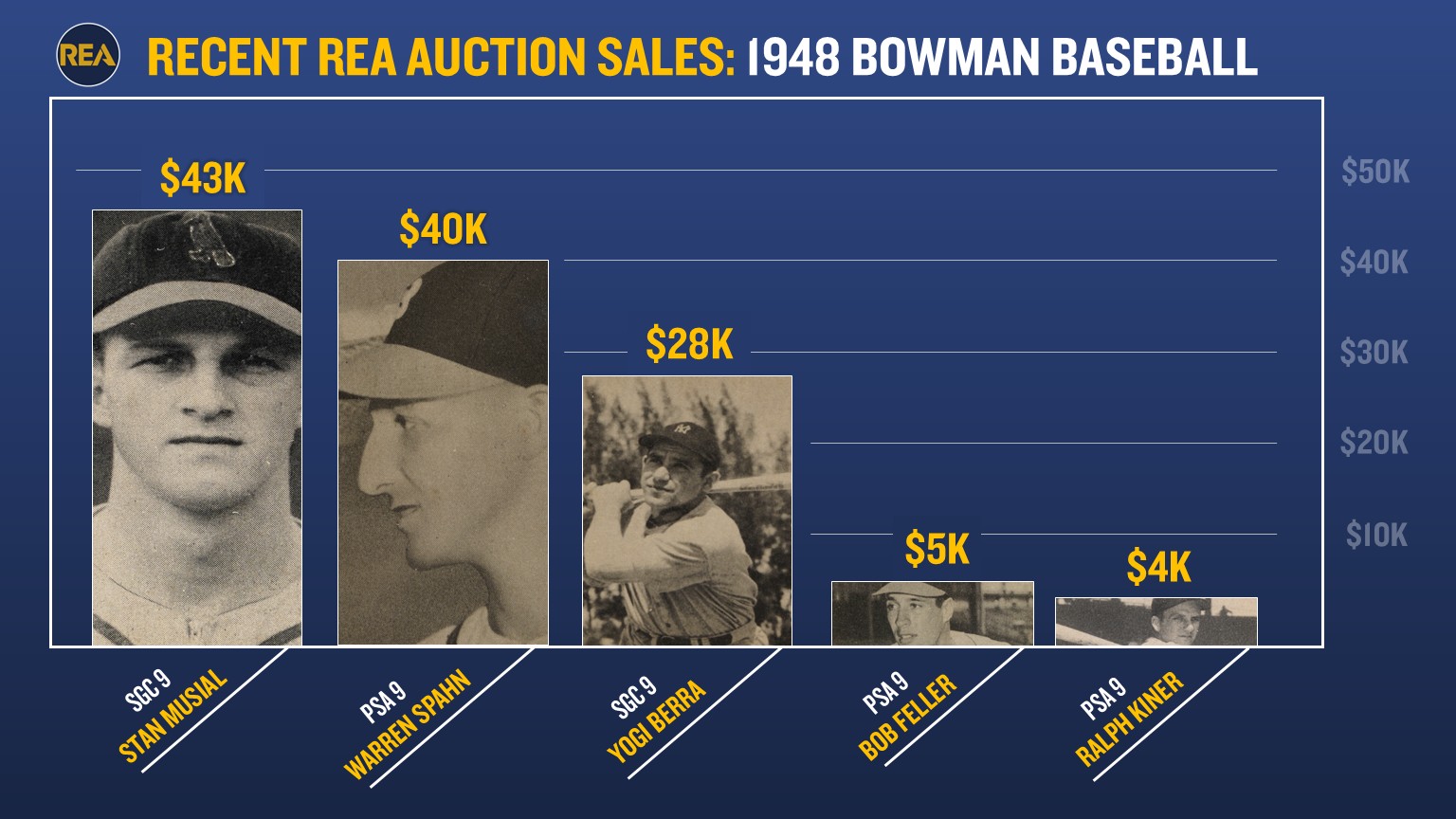
The 1948 Bowman baseball card set represents a monumental milestone in sports memorabilia history, serving as the true post-war pioneer that revived the modern trading card industry. Issued by the Bowman Gum Company of Philadelphia, this 72-card black-and-white release introduced collectors to iconic rookie cards of future Hall of Famers like Stan Musial, Yogi Berra, and Warren Spahn, establishing a design and distribution blueprint that would define the hobby for generations.
Understanding the Historical Significance of the 1948 Bowman Set
The immediate post-World War II era marked a period of profound transition and recovery in the United States, creating fertile ground for the resurgence of leisure industries and youth markets. Prior to 1948, the major tobacco and confectionery companies that had dominated card production in the early 20th century—most notably the American Tobacco Company and Goudey Gum—had largely scaled back or ceased operations due to material shortages during the war. Into this vacuum stepped the Bowman Gum Company, led by Lithuanian immigrant Jacob Warren Bowman. Recognizing a pent-up demand among children and returning service members for baseball memorabilia, Bowman launched a compact, 72-card black-and-white set distributed in wax packs alongside bubble gum.
This release was revolutionary not merely because of its timing, but because it laid the structural foundation for the modern sports card industry. By choosing a smaller, pocket-friendly card dimension (approximately 2 1/16 by 2 1/2 inches, slightly smaller than the later standard), Bowman made the cards easy to handle, store, and trade. The set was printed by sheet-fed lithography on thick, unnumbered cardstock, with the backs featuring a brief player biography, statistical highlights, and promotional text for Bowman's Blony bubble gum. Because the checklist was relatively small and distribution was largely localized to the Northeast and Midwest, surviving high-grade copies of these cards have become exceptionally scarce and fiercely contested by vintage card enthusiasts.
Key Rookies and Hall of Fame Highlights
Every major vintage set is defined by its marquee rookie cards, and the 1948 Bowman release punches well above its weight class despite its modest 72-card checklist. Because major league baseball had integrated just one year prior with Jackie Robinson's debut in 1947, the set captures a shifting landscape in professional sports, even though early Bowman sets featured a mix of established veterans and emerging stars who had lost prime playing years to military service.
The crown jewel of the set is universally acknowledged to be card number 36, featuring St. Louis Cardinals legend Stan Musial. Although Musial's card actually debuted in the 1948 Leaf set around the same time, the Bowman issue remains an iconic cornerstone of any elite vintage collection. The front displays a sharp, high-contrast black-and-white portrait of a youthful Musial, while the back details his remarkable early-career batting titles.
Beyond Musial, the checklist includes the official rookie cards of several legendary figures who shaped baseball's golden age:
- Yogi Berra (Card #6): Captures the legendary New York Yankees catcher and manager at the very dawn of his historic championship-laden career.
- Warren Spahn (Card #18): Features the winningest left-handed pitcher in Major League Baseball history during his prime years with the Boston Braves.
- Ralph Kiner (Card #8): Showcases the Pittsburgh Pirates home run king during an era when he dominated the National League slugging categories.
- Phil Rizzuto (Card #4): Highlights the slick-fielding Yankees shortstop and future Hall of Fame broadcaster.
Set Characteristics, Variations, and Design Aesthetics
The visual identity of the 1948 Bowman set is defined by its stark, unadorned black-and-white photography. Unlike the vibrant, color-tinted lithographs that Bowman would introduce in 1949 and that Topps would popularize in 1952, the inaugural post-war set relied on crisp studio portraits and posed action shots set against neutral or airbrushed backgrounds. This monochromatic aesthetic gives the cards a distinct, timeless journalistic quality.
A notable technical aspect of the 1948 Bowman release is the absence of card numbers on the reverses of the first printing series, though card numbers were eventually added to the backs of later print runs or associated with checklist lists in subsequent hobby catalogs. Because the cards were hand-cut or machine-cut with crude blades during a period of industrial scarcity, collectors frequently encounter specimens with irregular borders, asymmetrical margins, and corner wear. Consequently, finding cards centered properly with sharp corners is a primary driver of value in the modern grading market.
The card stock used by Bowman in 1948 is relatively thick compared to later 1950s issues, but it is also prone to toning, staining from bubble gum oils, and paper loss on the reverse if cards were forcefully removed from scrapbooks. Understanding these production quirks is essential for authenticating genuine 1948 specimens and distinguishing them from rare modern reprints or counterfeit reproductions that periodically infiltrate the marketplace.
Evaluating Condition and Professional Grading Standards
Condition is the single most critical determinant of value for any vintage sports card, and this rule applies with absolute rigor to the 1948 Bowman set. Because these cards were treated as ephemeral toys by children 80 years ago, surviving examples in pristine condition are museum-quality artifacts. Professional third-party grading services—such as Professional Sports Authenticator (PSA), Sportscard Guaranty Corporation (SGC), and Beckett Grading Services (BGS)—evaluate these cards on a 10-point scale, scrutinizing centering, corners, edges, and surface preservation.
The grading landscape for 1948 Bowman cards reveals stark pricing cliffs between technical grades:
- PSA 7 (Near Mint) and Above: Extremely scarce; command exponential premiums and are typically acquired only by advanced high-end registry collectors or elite investors.
- PSA 5 to 6 (Excellent to Excellent-Mint): Represent the sweet spot for many collectors, offering strong eye appeal, clean surfaces, and visible details without the six-figure price tags of top-tier grades.
- PSA 3 to 4 (Very Good to Good): Display moderate, honest wear such as rounded corners, minor surface creases, or slight paper toning, making them accessible entry points for budget-conscious set builders.
- PSA 1 to 2 (Poor to Fair): Heavily worn, trimmed, or structurally compromised specimens that still serve as placeholder copies for rare key cards like Musial or Berra.
Comparative Overview of 1948 Post-War Baseball Card Issues
To fully appreciate the historical context of the 1948 Bowman set, it is helpful to compare it against its primary contemporary competitor, the 1948 Leaf set, as well as the later market-defining 1952 Topps release. Each set utilized distinct printing methods, distribution footprints, and aesthetic choices that impact their collectibility today.
| Set Name | Year Issued | Card Count | Primary Aesthetic | Key Rookie Cards | Market Status |
|---|---|---|---|---|---|
| 1948 Bowman | 1948 | 72 | Black-and-White Photography | Stan Musial, Yogi Berra, Warren Spahn | Post-war pioneer; highly prized for clean portraits and historical primacy. |
| 1948 Leaf | 1948-1949 | 98 | Color-Tinted Lithography | Jackie Robinson, Babe Ruth (tribute), Stan Musial | Vibrant color palette; notorious for print defects and extreme scarcity in high grades. |
| 1952 Topps | 1952 | 407 | Full-Color Illustrated/Photo | Mickey Mantle, Willie Mays (second year) | The undisputed king of post-war vintage; massive checklist and iconic design. |
Common Authentication Challenges and Modern Counterfeits
The high market value commanded by key cards in the 1948 Bowman set has unfortunately attracted sophisticated counterfeiters and dishonest actors seeking to exploit novice collectors. Protecting capital in the vintage card market requires a rigorous understanding of authentication red flags, paper stock analysis, and printing forensics.
Counterfeiters frequently target star cards such as Stan Musial and Yogi Berra. Modern forgeries are often produced using high-resolution digital scanning and offset printing, which can be detected under magnification. Genuine 1948 Bowman cards feature authentic dot patterns and lithographic characteristics native to late-1940s printing presses, whereas fake reproductions often display modern rosette dot matrices or solid pixel blocks under a jeweler's loupe. Furthermore, modern fraudsters sometimes attempt to trim authentic lower-grade cards to create fake sharp borders or alter the surface of damaged cards to erase stains. For these reasons, purchasing uncertified ("raw") high-value 1948 Bowman cards carries substantial financial risk, and serious collectors strongly prioritize specimens that have already been authenticated and encapsulated by reputable third-party grading services.
Frequently Asked Questions About 1948 Bowman Cards
How many total cards are in a complete 1948 Bowman set?
The complete 1948 Bowman set consists of exactly 72 cards. It is a relatively compact checklist compared to the massive multi-series sets that emerged later in the 1950s, making a completed set an attainable, albeit expensive, goal for dedicated vintage collectors.
Are all 1948 Bowman cards printed in black and white?
Yes, the entire 72-card set features black-and-white photography on the front. Bowman did not transition to color until their landmark 1949 release, which introduced multi-colored illustrations and photographs to the hobby.
Which card is the most valuable in the 1948 Bowman set?
The Stan Musial rookie card (Card #36) is consistently the most expensive and sought-after card in the set, regularly commanding top dollar at major auction houses when found in high technical grades. Yogi Berra and Warren Spahn rookie cards follow closely behind in market demand.
How can I tell if a 1948 Bowman card is an original or a reprint?
Original 1948 Bowman cards feature period-correct cardstock, authentic lithographic printing textures, and correct dimensions. Modern reprints or counterfeits often show digital dot patterns, incorrect paper thickness, or modern ink wear. Encapsulation by a trusted grading authority like PSA, SGC, or BGS is the safest method to verify authenticity.
Why do some 1948 Bowman cards lack card numbers on the back?
The earliest print runs of the 1948 Bowman set were issued without numbers on the reverse side. Card numbers were subsequently added in later print runs or referenced through promotional checklists, making the unnumbered variants an interesting sub-category for print-run specialists.
Strategic Acquisition and Preservation Next Steps
Building a collection around the 1948 Bowman set requires a disciplined approach, patience, and a clear financial strategy. Whether you intend to assemble a complete 72-card master set or simply acquire foundational rookie cards of icons like Yogi Berra and Stan Musial, start by establishing a strict grade threshold that aligns with your budget and aesthetic preferences. Prioritize certified, professionally slabbed specimens to eliminate authentication risk, and monitor major auction houses and reputable vintage dealers to track realized market values. Once acquired, store your vintage cards in climate-controlled, UV-protected environments away from direct sunlight, excessive humidity, and temperature fluctuations to preserve their historical integrity for decades to come.