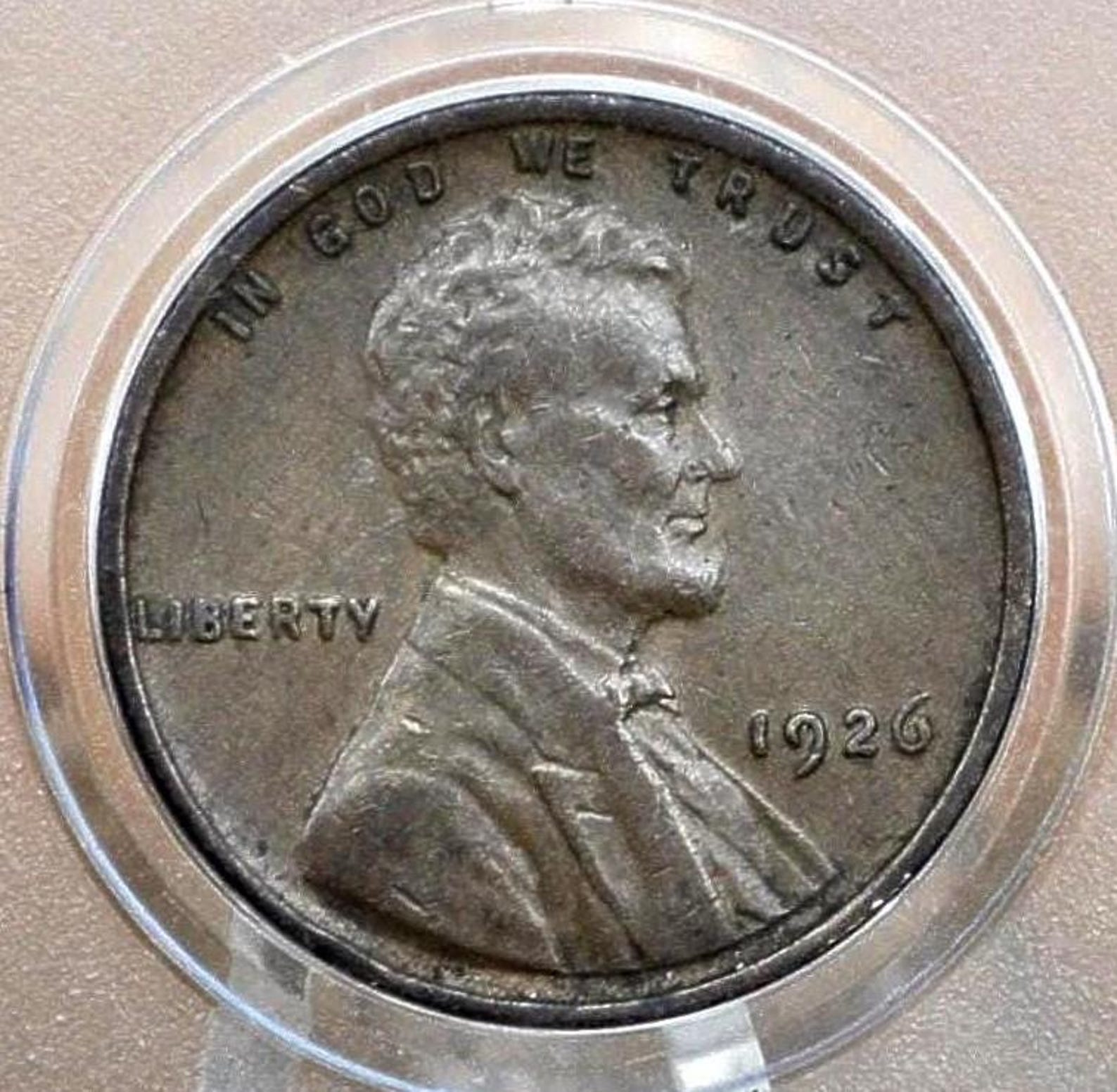
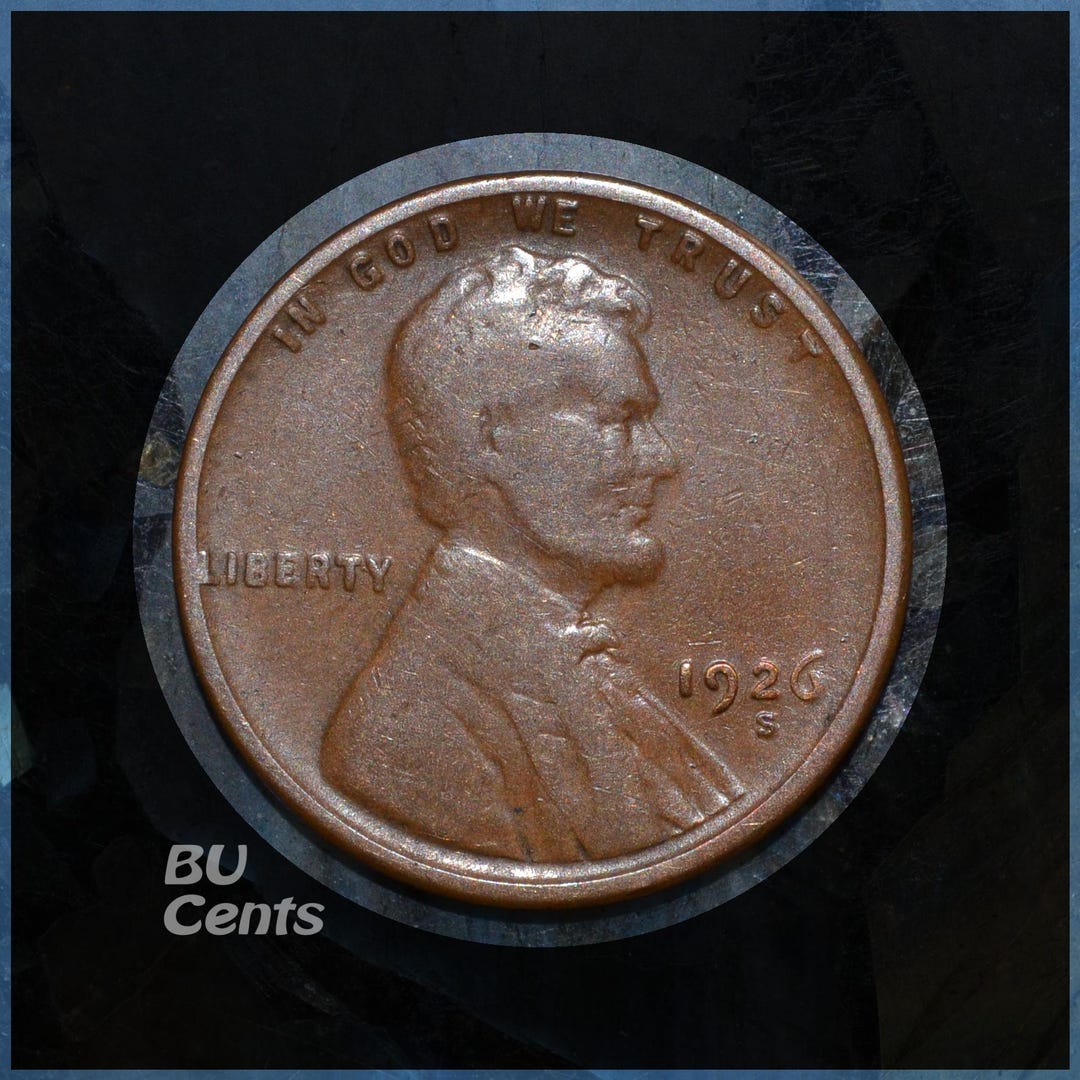
The net worth of a 1926 Lincoln wheat penny ranges from $0.20 for heavily worn common Philadelphia strikes to over $100,000 for top-grade, uncirculated specimens. Rarity depends heavily on the mint mark: while Philadelphia minted over 157 million pieces, the 1926-S is a premier key date with a mintage of just 955,000.
Overview of the 1926 Lincoln Wheat Penny Series
Designed by sculptor Victor David Brenner and first issued in 1909, the Lincoln wheat cent features President Abraham Lincoln on the obverse and two stylized ears of wheat framing the denomination on the reverse. By 1926, the United States Mint had been producing this iconic design for seventeen years, but economic conditions and regional demand created stark differences in production volume across its facilities.
In 1926, Lincoln cents were struck at three locations: the main United States Mint in Philadelphia (which used no mint mark), the Denver Mint (marked with a small "D" beneath the date), and the San Francisco Mint (marked with a small "S" beneath the date). Every 1926 wheat penny shares identical physical specifications:
- Composition: 95% copper, 5% tin and zinc (bronze)
- Weight: 3.11 grams
- Diameter: 19.05 millimeters (0.75 inches)
- Edge: Plain (smooth)
Understanding the historical background of the 1926 series requires recognizing that small-denomination coinage served active daily commerce. High velocity in cash transactions meant that the vast majority of coins entered circulation immediately, leading to heavy wear over subsequent decades. Consequently, finding any 1926 penny in pristine, mint-state condition is a challenge, but finding specific mint marks in high grades represents a true numismatic milestone.
Mintage Numbers and Key Date Identification
Determining whether your 1926 wheat penny is a common pocket-change survivor or a valuable rarity starts with checking the mint mark located on the obverse directly below the date.
1926 Obverse Layout: [ Lincoln Profile ] LIBERTY 1926 [ Mint Mark ] <-- (Blank = Philadelphia, D = Denver, S = San Francisco)
1926 Philadelphia (No Mint Mark)
The Philadelphia Mint produced 157,088,000 cents in 1926. Due to this high output, circulated examples remain abundant today. Millions of these coins survived, making average-grade worn specimens readily accessible to budget-conscious collectors. Value primarily accumulates only when a Philadelphia strike achieves high mint-state grades with original red copper luster.
1926-D (Denver Mint)
With a total mintage of 5,628,000 pieces, the 1926-D is classified as a semi-key date within the Lincoln cent series. While worn examples are relatively inexpensive, production was low enough that demand consistently outstrips supply in Extremely Fine (EF) grades and higher. Mint-state 1926-D pennies command significant premiums because local collectors in the 1920s preserved very few original rolls.
1926-S (San Francisco Mint) — The Key Date
The 1926-S is the standout key date of the year and one of the most famous rarities in the entire Lincoln wheat series. The San Francisco Mint struck only 955,000 Lincoln cents in 1926—the lowest total mintage for any Lincoln penny during the 1920s.
Beyond its exceptionally low mintage, the 1926-S suffers from severe quality control issues typical of San Francisco coinage during this era. Most pieces were struck from tired, worn dies, resulting in soft details on Lincoln's hair, the coat lapel, and the upper wheat stalks. Furthermore, very few uncirculated bags or rolls were saved by contemporary dealers or collectors. As a result, the 1926-S is scarce in circulated grades and exceedingly rare in Gem Uncirculated condition with full original red color.
Grading Standards and Color Designations
Numismatic value depends directly on the coin’s physical condition and visual surface characteristics. Professional grading services such as the Professional Coin Grading Service (PCGS) and the Numismatic Guaranty Company (NGC) evaluate Lincoln cents using the 70-point Sheldon scale, complemented by essential color designations.
The Numerical Grading Scale
- Good (G-4 to G-6): Heavily worn. Lincoln’s profile is a flat outline. The rim is completely flat, and the date and mint mark are legible but faint.
- Very Fine (VF-20 to VF-30): Moderate wear throughout. Lincoln's hair details above the ear are visible, and the lines on the wheat ears on the reverse show clear separation.
- Extremely Fine (EF-40 to EF-45): Slight wear confined to high points such as Lincoln's cheekbone, hair, and the tips of the wheat stalks. Original mint luster may remain in protected areas.
- About Uncirculated (AU-50 to AU-58): Traces of wear visible only on the absolute highest surfaces. Original mint luster covers 50% to 90% of the coin's fields.
- Mint State (MS-60 to MS-67+): Absolutely no trace of wear. The coin retains full original design detail, though surface marks, spots, or strike quality determine the exact numerical grade.
Color Designations for Uncirculated Pennies
Because copper oxidizes over time when exposed to oxygen and moisture, uncirculated copper coins receive a two-letter color designation appended to their numerical grade. This classification dramatically impacts market value:
- Brown (BN): Less than 15% of the original red mint luster remains. The surfaces have toned to a dark chocolate brown, tan, or mahogany hue.
- Red-Brown (RB): Retains between 15% and 85% of original red luster. The coin shows a mixture of original mint brightness and natural copper toning.
- Red (RD): Retains 85% or more of original bright mint luster. Coins designated as Red represent the ultimate surface preservation and carry the highest financial values in the numismatic market.
Comprehensive 1926 Wheat Penny Net Worth & Value Chart
The following table provides estimated market values for 1926 Lincoln wheat cents based on certified sales records, numismatic auction results, and current market trends. Values reflect typical pricing for coins graded by PCGS or NGC.
| Strike / Mint Mark | Mintage | Good (G-4) | Very Fine (VF-20) | Extremely Fine (EF-40) | MS-63 Brown (BN) | MS-65 Red (RD) |
|---|---|---|---|---|---|---|
| 1926 Philadelphia | 157,088,000 | $0.20 | $0.75 | $2.50 | $18.00 | $150.00 |
| 1926-D (Denver) | 5,628,000 | $1.50 | $7.00 | $22.00 | $120.00 | $1,800.00 |
| 1926-S (San Francisco) | 955,000 | $15.00 | $45.00 | $140.00 | $1,250.00 | $85,000.00+ |
Note: Raw, uncertified coins generally sell for 20% to 40% less than certified examples due to grading uncertainties and risk of unverified alterations.
Value Multipliers for Top-Pop 1926-S Pennies
The value curve for the key-date 1926-S accelerates rapidly in higher grades. While a well-worn Good-4 example can be acquired for under $20, an MS-64 Red example routinely commands over $25,000. In MS-65 Red or higher, public auction records demonstrate that a single certified specimen can exceed $100,000. This disparity underscores the importance of professional verification for any high-grade candidate.
Rare Varieties, Errors, and Counterfeit Authentication
Because the 1926-S holds such high market value, it is a frequent target for illegal alteration and counterfeiting. Collectors and investors must exercise caution when evaluating uncertified key-date examples.
Detecting Altered 1926-S Cents
The two most common methods of creating deceptive 1926-S counterfeits involve:
- Mint Mark Addition: Fraudulent sellers take a genuine, common 1926 Philadelphia penny and solder or glue an "S" mint mark salvaged from a low-value San Francisco coin onto the obverse. Inspecting the coin under high magnification (10x to 30x loupe) reveals seams, glue residue, or mismatched color around the mint mark.
- Date Alteration: Altering a common 1936-S or 1946-S cent by scraping away part of the first digit to resemble a "2". Examining the style and alignment of the font under magnification exposes altered digits, as genuine 1926 numbers feature specific, standardized shapes.
Authentic 1926-S mint marks possess a distinct shape and location. Third-party authentication from PCGS or NGC is strongly recommended before purchasing any 1926-S coin valued above $50.
Die Varieties and Errors
While 1926 is not known for massive dramatic doubled dies like the famous 1955 doubled die obverse, minor variations exist across all three mints:
- Die Cracks and Cuds: As dies degraded during production, fine raised lines (cracks) formed on the coin surface. When a piece of the die broke off entirely, it produced a smooth, raised, un-struck blob of metal called a "cud" along the rim.
- Off-Center Strikes: Coins struck off-center due to misaligned planchets are valued based on the percentage of the off-center error and whether the full date and mint mark remain visible.
- Lamination Flaws: Impurities in the bronze alloy caused the metal surface to peel or flake. While lamination errors are historic anomalies, they generally add modest value ($5 to $25) depending on severity.
Essential Preservation and Appraisal Guidelines
Proper storage and preservation are critical to protecting the net worth of any vintage copper coin. Copper is the most chemically reactive metal used in pre-modern United States coinage, making it exceptionally vulnerable to environmental damage.
Preservation Rules for Copper Coins
- Never Clean Your Coins: Cleaning a penny with chemicals, metal polish, soap, or abrasive cloths strips away the natural patina and creates micro-scratches on the surface. Cleaned coins are categorized as "Improperly Cleaned" or "Details graded" by grading services, permanently reducing their market value by 50% to 80%.
- Avoid PVC Holders: Soft plastic flips containing polyvinyl chloride (PVC) leach plasticizers over time, creating a sticky green film on the coin's surface that eats into the copper metal. Use only inert, archival-safe holders made of polyethylene terephthalate (MYLAR) or hard acrylic capsules.
- Control Climate: Store coins in a low-humidity, temperature-controlled environment. High humidity accelerates corrosion, leading to destructive green verdigris (copper carbonate).
When to Seek Professional Grading
Submitting a coin to PCGS or NGC involves upfront fees for membership, handling, insurance, and grading services—typically totaling $40 to $70 per coin. Therefore, submission is financially logical only when the estimated certified value significantly exceeds the authentication costs.
For 1926 pennies, submit the coin if:
- It is a 1926-S in any condition grading Very Good (VG) or higher.
- It is a 1926-D in About Uncirculated (AU) or Mint State condition.
- It is a 1926 Philadelphia strike that retains 100% full original red mint luster with no noticeable carbon spots or surface blemishes.
Is a 1926 penny worth anything?
Yes. Every 1926 Lincoln wheat penny is worth more than its face value due to its copper content and historic appeal. Worn 1926 Philadelphia cents are worth $0.20 to $0.50, while Denver (1926-D) and San Francisco (1926-S) strikes are worth significantly more.
How can I tell if my 1926 penny has a mint mark?
Examine the obverse (front) of the coin below the four-digit date "1926". If there is no letter beneath the date, it was minted in Philadelphia. A small "D" indicates the Denver Mint, and a small "S" indicates the San Francisco Mint.
Why is the 1926-S wheat penny so expensive?
The 1926-S has a low mintage of just 955,000 pieces. Furthermore, very few uncirculated specimens were saved by collectors at the time of issue, and many produced had weak strikes. This combination of low original mintage and extreme scarcity in high grades makes it a premier key date.
What is the difference between Brown, Red-Brown, and Red wheat pennies?
These terms describe the amount of original mint luster remaining on an uncirculated copper coin. Brown (BN) coins have lost most red luster to natural oxidation. Red-Brown (RB) coins retain between 15% and 85% red luster, while Red (RD) coins maintain 85% or more original bright copper color. Red coins command the highest prices.
Are there any valuable error coins for the 1926 wheat penny?
While there are no major recognized doubled dies for 1926, valuable errors include off-center strikes, planchet lamination splits, and die cuds. Major off-center strikes retaining a full date and mint mark can add $50 to several hundred dollars in value depending on condition.
Practical Next Actions for Collectors and Estate Holders
If you have inherited a collection or discovered a 1926 wheat penny, follow these steps to secure its maximum value:
- Isolate and Identify: Carefully handle the coin by its edges—never touch the obverse or reverse faces directly with bare fingers. Identify the presence or absence of a mint mark under good lighting using a magnifying glass.
- Conduct an Initial Grade Assessment: Compare your coin's surface details against standard online grading guides provided by the Numismatic Guaranty Company to determine if it is in circulated or mint-state condition.
- Protect High-Value Candidates: If you suspect you have a genuine 1926-S or an uncirculated 1926-D, place it immediately into an archival-safe, PVC-free flip or hard acrylic capsule.
- Obtain Professional Verification: For coins estimated to be worth more than $100, consult an authorized dealer affiliated with the Professional Numismatists Guild (PNG) or submit the coin directly to PCGS or NGC for official encapsulation and grading.