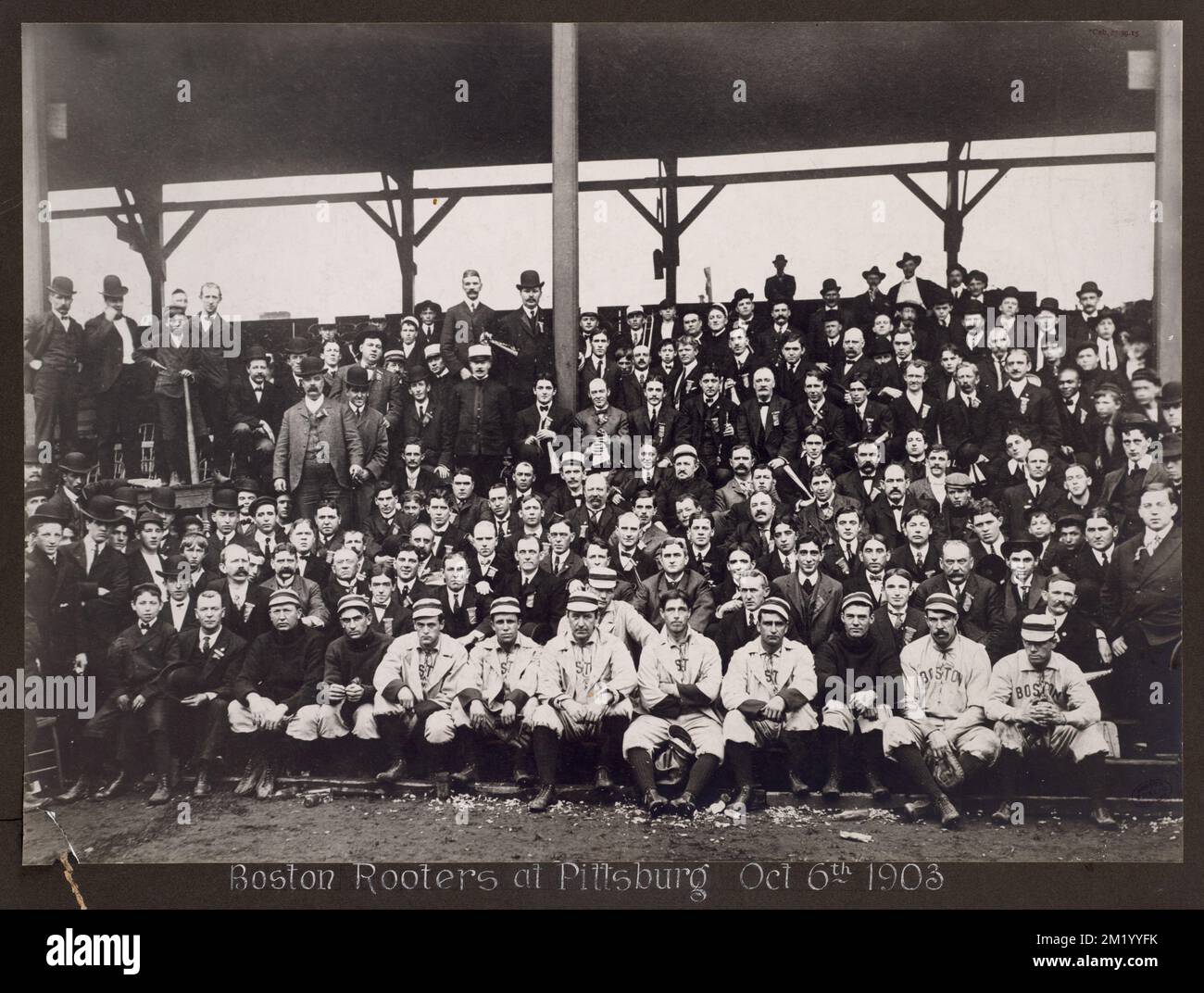
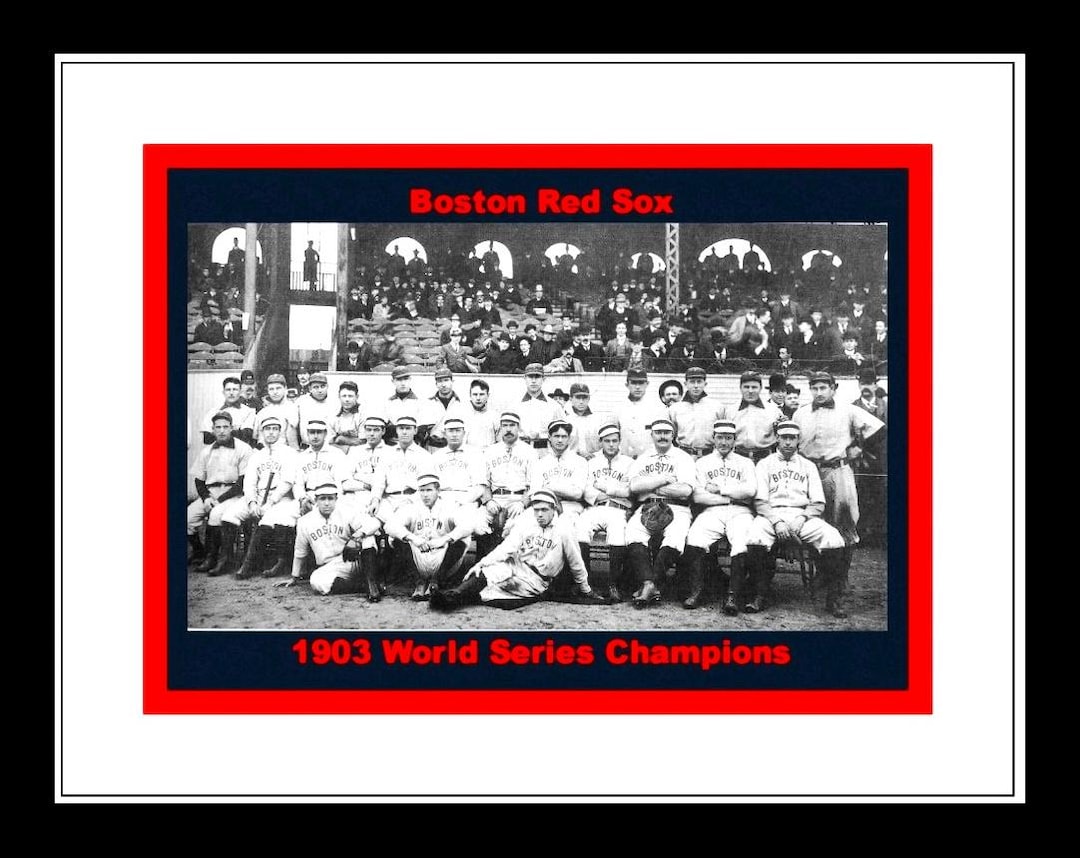
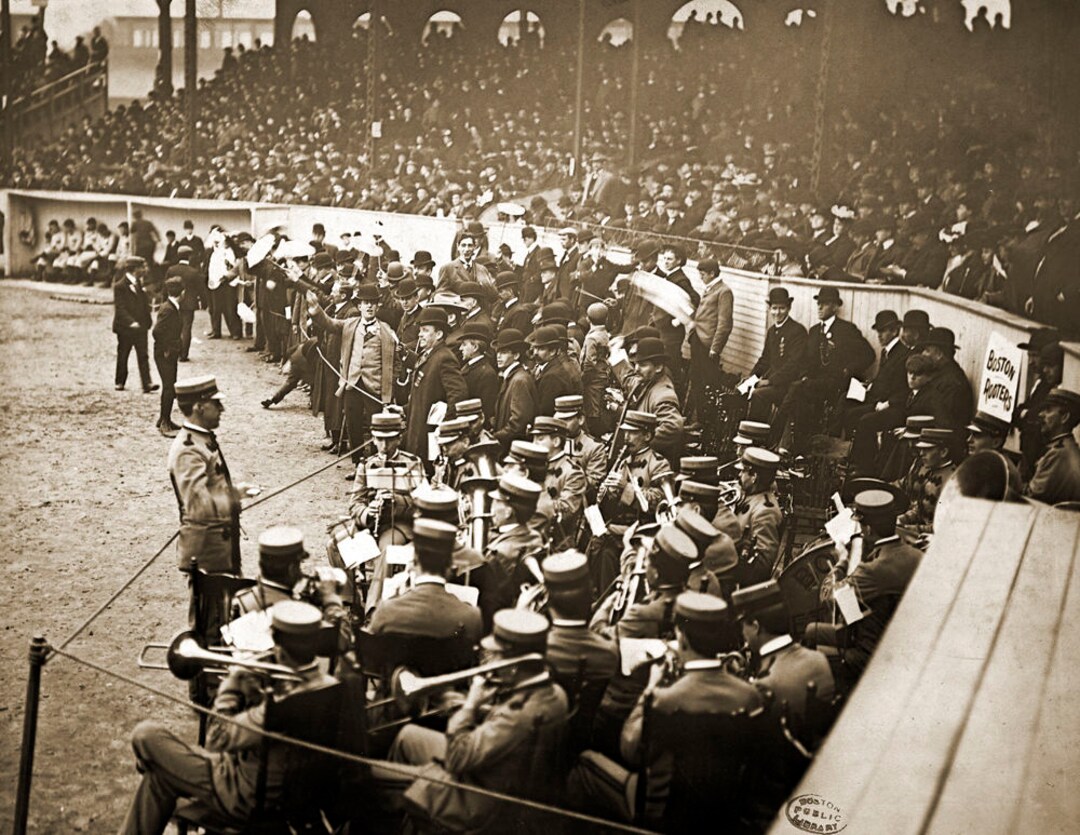
The 1903 World Series was the first modern championship series in Major League Baseball, played from October 1 to October 13, 1903. The American League champion Boston Americans defeated the National League champion Pittsburgh Pirates five games to three in a best-of-nine format, establishing the framework for professional baseball's annual postseason spectacle.
Historical Context and the AL-NL Peace Pact
The creation of the 1903 World Series marked the end of a bitter war between professional baseball's two competing major leagues. Founded in 1876, the National League (NL) enjoyed a monopoly on top-tier professional baseball for decades. That monopoly was challenged in 1901 when Byron "Ban" Johnson reorganized the Western League into the American League (AL), declaring it a competing major league. The AL aggressively raided NL rosters for marquee talent, offering higher salaries and refusing to honor NL reserve clauses.
By 1903, the escalating war for players had severely damaged the financial stability of both leagues. Recognizing that ongoing hostility would ruin the sport, team owners assembled in early 1903 to sign the National Agreement. This historic pact established mutual recognition of contracts, respected reserve clauses, created a three-man National Commission to govern professional baseball, and laid the groundwork for peaceful interleague competition.
With peace restored, the idea of a postseason championship between the two league champions gained traction. Unlike modern World Series, which are mandated by Major League Baseball, the 1903 matchup was arranged as a voluntary postseason exhibition between Pittsburgh Pirates owner Barney Dreyfuss and Boston Americans owner Henry Killilea. The agreement called for a best-of-nine series, bringing together the undisputed best team in the senior circuit and the powerhouse champion of the upstart American League.
Team Profiles and Key Rosters
Pittsburgh Pirates (National League Champions)
The Pittsburgh Pirates entered the 1903 World Series as heavy favorites. They had dominated the National League for three consecutive seasons (1901–1903), finishing the 1903 campaign with a 91-49 record. Managed by player-manager Fred Clarke, Pittsburgh boasted one of the most formidable lineups of the dead-ball era, headlined by legendary shortstop Honus Wagner, who captured the NL batting title with a .355 average.
However, Pittsburgh faced severe pitching shortages right before the series began. Star pitcher Ed Doheny suffered a nervous breakdown late in the season and was committed to a medical facility, leaving him unavailable. Meanwhile, rotation mainstay Sam Leever developed severe shoulder inflammation (then termed "glass arm"). This forced manager Fred Clarke to rely almost exclusively on workhorse starter Charles "Deacon" Phillippe to carry the pitching load.
Boston Americans (American League Champions)
The Boston Americans (who later took the name Boston Red Sox) captured the American League pennant with a 91-47 record, finishing 14.5 games ahead of the Philadelphia Athletics. Led by player-manager Jimmy Collins, a defensive innovator at third base, Boston featured an exceptional pitching duo and a balanced, high-contact offense.
Boston's primary strength was its starting rotation. Future Hall of Famer Denton True "Cy" Young anchored the staff, posting a 28-9 record during the regular season. Young was supported by right-hander Bill Dinneen, who won 21 games, and Tom Hughes, who contributed 20 victories. Outfielder Patsy Dougherty provided offensive firepower, leading the AL in hits and runs scored.
Game-by-Game Breakdown of the Best-of-Nine Championship
1903 World Series Outcome: Boston Americans win 5–3 Game 1: Pittsburgh 7, Boston 3 (Huntington Avenue Grounds, Boston) Game 2: Boston 3, Pittsburgh 0 (Huntington Avenue Grounds, Boston) Game 3: Pittsburgh 4, Boston 2 (Huntington Avenue Grounds, Boston) Game 4: Pittsburgh 5, Boston 4 (Exposition Park, Pittsburgh) Game 5: Boston 11, Pittsburgh 2 (Exposition Park, Pittsburgh) Game 6: Boston 6, Pittsburgh 3 (Exposition Park, Pittsburgh) Game 7: Boston 7, Pittsburgh 3 (Exposition Park, Pittsburgh) Game 8: Boston 3, Pittsburgh 0 (Huntington Avenue Grounds, Boston)
Game 1: Pittsburgh Strikes First
October 1, 1903 – Huntington Avenue Grounds, Boston Opening before more than 16,000 fans in Boston, the series began with a matchup between Cy Young and Deacon Phillippe. Pittsburgh made an immediate statement against Young, scoring six runs in the first four innings. Phillippe was dominant, striking out ten batters and surrendering three runs. Jimmy Sebring hit the first home run in World Series history, a inside-the-park blast in the seventh inning, securing a 7-3 victory for the Pirates.
Game 2: Dinneen Evens the Series
October 2, 1903 – Huntington Avenue Grounds, Boston Boston bounced back in Game 2 behind a brilliant pitching performance by Bill Dinneen. Dinneen struck out 11 Pittsburgh hitters while pitching a three-hit complete game shutout. Boston outfielder Patsy Dougherty provided all the offensive output needed, hitting two home runs—the first player ever to hit multiple home runs in a single World Series game. Boston won 3-0 to tie the series.
Game 3: Phillippe Outduels Hughes
October 3, 1903 – Huntington Avenue Grounds, Boston Due to pitching shortages, Pittsburgh started Phillippe again on just one day of rest. Facing Boston starter Tom Hughes, Phillippe pitched his second consecutive complete game victory. Pittsburgh accumulated seven hits and capitalized on three Boston errors to secure a 4-2 win, taking a 2-1 series lead before the series moved to Pennsylvania.
Game 4: Pirates Hold Off a Late Rally
October 6, 1903 – Exposition Park, Pittsburgh After a rest day and a rainout, Phillippe pitched his third complete game in six days. Boston started Cy Young, seeking redemption after his Game 1 defeat. Pittsburgh built a 5-1 lead through seven innings, capitalizing on defensive miscues. Boston staged a furious four-run rally in the top of the ninth inning, but Phillippe closed out the game to secure a 5-4 victory, giving the Pirates a 3-1 series lead.
Game 5: Boston Begins the Comeback
October 7, 1903 – Exposition Park, Pittsburgh Facing elimination, Boston turned to Cy Young for Game 5. Young delivered a masterclass performance, allowing just two unearned runs over nine innings. The Boston offense exploded in the sixth inning, scoring six runs highlighted by a triple from Young himself. Boston cruised to an 11-2 victory, reducing Pittsburgh's series lead to 3-2.
Game 6: Dinneen Ties the Series
October 8, 1903 – Exposition Park, Pittsburgh Bill Dinneen returned to the mound for Boston against Pittsburgh's Sam Leever, whose shoulder injury severely limited his effectiveness. Boston scored three runs in the top of the first inning and maintained control throughout the contest. Dinneen pitched his third complete game of the series, securing a 6-3 victory and tying the series at three games apiece.
Game 7: Young Puts Boston Ahead
October 10, 1903 – Exposition Park, Pittsburgh In Game 7, Pittsburgh manager Fred Clarke was forced to start Deacon Phillippe for the fourth time in ten days. The workload finally caught up to the exhaustion-plagued pitcher. Boston generated ten hits, including triples by Jimmy Collins, Patsy Dougherty, and Hobe Ferris. Cy Young pitched nine solid innings, surrendering three runs to earn his second victory of the series as Boston took a 4-3 lead with a 7-3 victory.
Game 8: Dinneen Seals the Championship
October 13, 1903 – Huntington Avenue Grounds, Boston Returning to Boston for Game 8, the Americans aimed to close out the series. Bill Dinneen started for Boston, while Phillippe gamely took the mound for his fifth complete game of the series for Pittsburgh. Dinneen was virtually unhittable, striking out seven and holding Pittsburgh scoreless. Boston scored runs in the fourth and sixth innings to win 3-0. Honus Wagner struck out looking for the final out, crowning the Boston Americans as the first modern World Series champions.
1903 World Series Game Summary Table
| Game | Date | Location | Winning Pitcher | Losing Pitcher | Score | Series Status |
|---|---|---|---|---|---|---|
| Game 1 | Oct 1, 1903 | Huntington Avenue Grounds (Boston) | Deacon Phillippe (1-0) | Cy Young (0-1) | PIT 7, BOS 3 | PIT leads 1-0 |
| Game 2 | Oct 2, 1903 | Huntington Avenue Grounds (Boston) | Bill Dinneen (1-0) | Sam Leever (0-1) | BOS 3, PIT 0 | Tied 1-1 |
| Game 3 | Oct 3, 1903 | Huntington Avenue Grounds (Boston) | Deacon Phillippe (2-0) | Tom Hughes (0-1) | PIT 4, BOS 2 | PIT leads 2-1 |
| Game 4 | Oct 6, 1903 | Exposition Park (Pittsburgh) | Deacon Phillippe (3-0) | Cy Young (0-2) | PIT 5, BOS 4 | PIT leads 3-1 |
| Game 5 | Oct 7, 1903 | Exposition Park (Pittsburgh) | Cy Young (1-2) | Brickyard Kennedy (0-1) | BOS 11, PIT 2 | PIT leads 3-2 |
| Game 6 | Oct 8, 1903 | Exposition Park (Pittsburgh) | Bill Dinneen (2-0) | Sam Leever (0-2) | BOS 6, PIT 3 | Tied 3-3 |
| Game 7 | Oct 10, 1903 | Exposition Park (Pittsburgh) | Cy Young (2-2) | Deacon Phillippe (3-1) | BOS 7, PIT 3 | BOS leads 4-3 |
| Game 8 | Oct 13, 1903 | Huntington Avenue Grounds (Boston) | Bill Dinneen (3-0) | Deacon Phillippe (3-2) | BOS 3, PIT 0 | BOS wins 5-3 |
Key Factors That Decided the Series
1. Pitching Durability and Exhaustion
The defining factor of the 1903 World Series was pitching endurance. Pittsburgh's loss of Ed Doheny and the injury to Sam Leever forced Deacon Phillippe to pitch 44 out of 69 total innings for his team. Phillippe threw five complete games in 13 days—an extraordinary athletic feat, but one that led to diminished sharpness late in the series. By contrast, Boston split duties primarily between Cy Young (34 innings pitched) and Bill Dinneen (35 innings pitched), allowing their starters crucial rest between appearances.
2. The Slump of Honus Wagner
Pittsburgh shortstop Honus Wagner, widely considered the finest overall player in baseball at the time, struggled significantly during the series. Plagued by an ankle injury, Wagner hit just .222 (6-for-27) with six strikeouts and made six errors in the field. Wagner later described his performance in the 1903 Series as the greatest disappointment of his professional career.
3. Boston's Defensive Resilience and Clutch Hitting
While Pittsburgh made 18 errors over the eight games, Boston played cleaner defense at critical moments. Offensively, Boston out-hit Pittsburgh .252 to .237. Key contributions came from second baseman Hobe Ferris, who drove in five runs in Game 7, and Patsy Dougherty, who batted .242 with two home runs and five RBIs across the series.
4. Financial Incentives and Ticket Shares
Financial dynamics played a unique role in player morale. Gate receipts were pooled to form player compensation shares. Interestingly, each losing player on the Pittsburgh Pirates actually earned more money ($1,316) than each winning player on the Boston Americans ($1,182). This occurred because Pittsburgh owner Barney Dreyfuss surrendered his entire owner's share of the gate receipts to his players, whereas Boston owner Henry Killilea retained his portion of the team profits.
Legacy and Impact on Professional Baseball
The success of the 1903 World Series transformed professional baseball in several lasting ways:
- Legitimization of the American League: Boston's victory over the established National League champion proved that the American League was an equal major league in terms of talent, competition, and fan appeal.
- Establishment of the "Fall Classic": The massive crowd sizes (over 100,000 total spectators across eight games) and intense public interest proved that an annual postseason championship was commercially viable and wildly popular.
- The 1904 Refusal and the 1905 Governance: In 1904, John T. Brush, owner of the NL champion New York Giants, refused to play the AL champion Boston Americans, calling the AL a "minor league." Public outrage over the boycott forced Major League Baseball to adopt the "Brush Rules" in 1905, making the World Series a mandatory, officially governed annual event.
How to Explore and Study 1903 World Series History
For historians, baseball enthusiasts, and researchers looking to study the primary documents and physical artifacts of the 1903 World Series, several key resources exist:
- Visit the Site of Huntington Avenue Grounds: The original ballpark where Games 1, 2, 3, and 8 were played was located in Boston on land now occupied by Northeastern University. A bronze statue of Cy Young and a commemorative plaque mark the original location of the pitcher's mound and home plate.
- National Baseball Hall of Fame and Museum (Cooperstown, NY): The Hall of Fame archives contain original box scores, scorecards, ticket stubs, and news clippings from the 1903 World Series, alongside artifacts from Cy Young, Honus Wagner, and Jimmy Collins.
- Library of Congress Digital Archives: Researchers can access digitized newspapers from October 1903 (such as The Boston Globe and The Pittsburgh Press) through the Chronicling America collection to read original game reports written by period sportswriters.
- Society for American Baseball Research (SABR): SABR's Games Project offers meticulously researched, play-by-play reconstructions and biographies of every player involved in the 1903 Fall Classic.
Frequently Asked Questions
Who won the first modern World Series in 1903?
The Boston Americans (now known as the Boston Red Sox) won the first modern World Series in 1903, defeating the Pittsburgh Pirates five games to three in a best-of-nine series.
Why was the 1903 World Series a best-of-nine format?
The owners of the two competing clubs, Barney Dreyfuss of Pittsburgh and Henry Killilea of Boston, voluntarily agreed to a best-of-nine format to maximize gate receipts and fan engagement. The best-of-seven format was later standardized under the 1905 Brush Rules.
How did Cy Young perform in the 1903 World Series?
Cy Young had a 2-2 record in four starts during the 1903 World Series. After losing Game 1 and Game 4, Young bounced back to win Game 5 and Game 7, posting a 1.85 ERA across 34 innings pitched.
Why did Deacon Phillippe pitch five games for the Pittsburgh Pirates?
Pittsburgh experienced severe pitching shortages prior to the series. Star starter Ed Doheny was institutionaled following a mental health crisis, and starter Sam Leever suffered a severe shoulder injury. Manager Fred Clarke had little choice but to rely on Deacon Phillippe for five complete games.
Was there a World Series played in 1904 after the 1903 series?
No, there was no World Series played in 1904. The New York Giants (NL champions) refused to play the Boston Americans (AL champions) due to hostility between Giants manager John McGraw, owner John T. Brush, and American League President Ban Johnson.