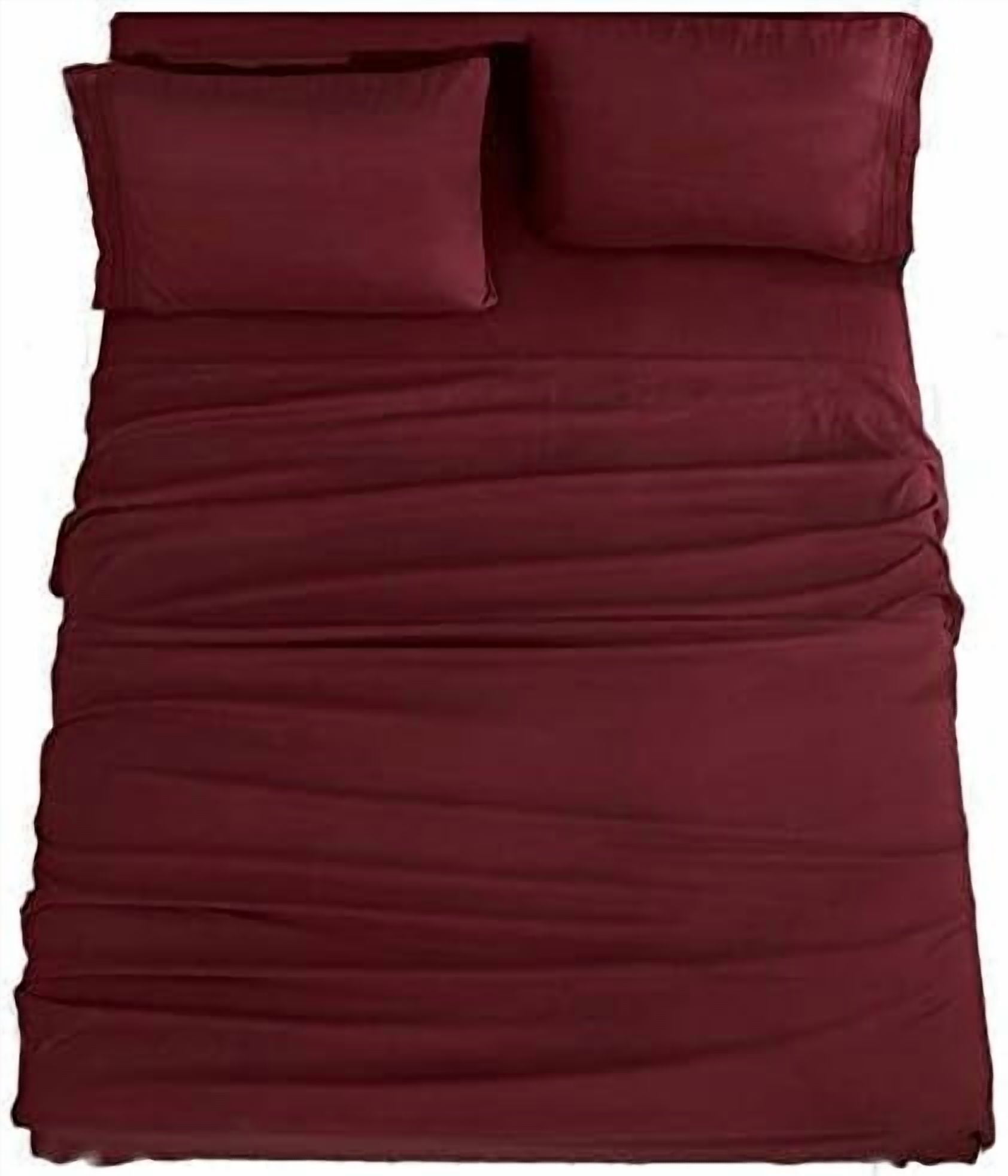
Authentic luxury silk bedding is measured by momme weight rather than thread count. Products marketed as "1800 thread count silk sheets" are typically brushed polyester microfiber engineered for a silky feel, or synthetic blends. Pure mulberry silk uses momme weight (19mm to 30mm) to determine density, durability, and drape, making thread count an unreliable metric for true silk bedding.
The Technical Reality of Thread Count vs. Momme Weight
In high-end textile manufacturing, measuring fabric density depends heavily on the specific fiber type. Cotton relies on thread count—the number of vertical (warp) and horizontal (weft) threads woven into one square inch of fabric. Pure silk, however, utilizes an international standard called momme weight (pronounced mum-ee and abbreviated as mm).
Momme weight measures the weight in pounds of a piece of silk fabric sized 100 yards long by 45 inches wide. One momme equals approximately 4.340 grams per square meter ($g/m^2$). Because natural silk filaments extruded by Bombyx mori silkworms are infinitely long and exceptionally fine, counting individual threads per inch does not accurately reflect fabric structure or quality.
When cotton bedding exceeds 400 to 600 thread count, manufacturers often twist thin, inferior threads together into multi-ply yarns to artificially multiply the count. In silk production, attempting to weave 1,800 threads of raw silk into a single square inch would create a thick, stiff, and suffocating material rather than a fluid, breathable textile. Understanding this distinction is essential when evaluating claims of "1800 thread count silk."
Decoding "1800 Thread Count": Microfiber Misconceptions vs. Real Silk
Search results and marketplace listings for "1800 thread count silk sheets" frequently lead consumers toward synthetic bedding options. Dissecting these product listings reveals critical structural differences between true silk and synthetic alternatives.
| Pure Mulberry Silk | Brushed Polyester Microfiber |
|---|---|
| Measured in Momme (19–30mm) | Measured in GSM or Thread Count |
| Protein fiber (Fibroin) | Synthetic polymer (Petroleum) |
| Natural temperature control | Traps heat and moisture |
| Hypoallergenic & smooth | May generate static electricity |
Brushed Microfiber Marketed as "Silk-Like"
The vast majority of sheets sold under the "1800 thread count silk" label are manufactured from 100% brushed polyester microfiber. Microfiber synthetic filaments are extremely fine—thinner than a strand of human hair—allowing manufacturers to tightly pack thousands of synthetic strands into a square inch.
While microfiber can be brushed to feel soft and velvety, it lacks the biological properties of organic silk. Microfiber is derived from petroleum byproducts, traps body heat, generates static electricity, and lacks the natural moisture-wicking amino acids present in real silk fibroin.
Misleading Retail Terminology
Retailers often use phraseology such as "1800 Thread Count Silk Soft," "Silky Microfiber," or "Hotel Collection Silk Touch." These descriptive tags leverage the luxury reputation of silk while delivering a synthetic product. In rare cases where a listing claims to offer pure silk with an 1800 thread count, the seller is either misapplying cotton metrics to silk or inflating multi-ply thread calculations to appeal to shoppers accustomed to cotton thread-count standards.
Defining Genuine Luxury Silk: Grade, Momme Weight, and Weave Standard
Evaluating true luxury silk requires looking beyond conventional cotton marketing terms and focusing on three core manufacturing metrics: silk grade, momme weight, and weave construction.
- Grade 6A Mulberry
- Highest Uniformity & Long-Filament Silk
- Momme Weight Selection
- 19mm : Light Luxury
- 22mm : Optimal Balance
- 25mm : Heavy Luxury
- 30mm : Ultra-Premium
- Charmeuse Weave
- Satin-Front, Matte-Back
- Fluid Body Drape
Silk Quality Grading: The 6A Standard
Silk raw material is graded on an alphabetical scale from C to A, with A being the highest quality. Within Class A, fibers are further classified from 1A to 6A.
- Grade 6A represents the pinnacle of natural silk production. It utilizes long, unbroken filaments harvested exclusively from cultivable Bombyx mori silkworms fed a pure mulberry leaf diet.
- Grade 6A fibers display uniform ivory color, tensile strength, and minimal surface slubs or raw irregularities.
Momme Weight Spectrum for Luxury Bedding
For silk bed sheets, momme weight typically ranges between 19mm and 30mm:
- 19 Momme: The traditional entry point for luxury silk bedding. It offers a light, supple drape and reasonable durability for secondary bedrooms or pillowcases.
- 22 Momme: The industry benchmark for master bedroom luxury. A 22mm fabric contains roughly 15% more silk per square yard than 19mm, yielding enhanced tensile strength, richer luster, and improved resistance to friction wear.
- 25 Momme: A heavier silk fabric providing exceptional durability, deep drape, and extended longevity. It uses thicker silk filaments and is less prone to seam pulling.
- 30 Momme: An ultra-luxurious, heavy-weight silk fabric. While durable, 30mm silk is denser and stiffer initially, requiring careful washing to soften its feel over time.
Charmeuse Weave vs. Traditional Satin
Authentic luxury silk sheets utilize a specific weaving technique called Charmeuse. Charmeuse silk features a satin weave construction where warp threads float over multiple weft threads. This creates a glossy, lustrous front surface and a muted, matte backing. Unlike synthetic satin, pure silk Charmeuse breathes naturally and regulates skin temperature without slippage.
Technical Comparison: Silk Metrics vs. Alternative High-End Bedding
To assist buyers in choosing high-end bedding, the following table compares key technical specifications, performance attributes, and ideal metrics across pure silk, long-staple cotton, and synthetic luxury alternatives.
| Bedding Material | Standard Metric | Optimal Luxury Specification | Fiber Composition | Breathability & Thermal Control | Average Lifespan |
|---|---|---|---|---|---|
| Pure Mulberry Silk | Momme Weight (mm) | 22mm – 25mm (Grade 6A) | 100% Fibroin Protein | Exceptional (Self-regulating) | 5 – 10 Years (with proper care) |
| Egyptian / Pima Cotton | Thread Count (TC) | 300 – 500 TC (Single-Ply) | 100% Extra-Long Staple Cellulose | High (Absorbent, breathable) | 3 – 7 Years |
| Brushed Microfiber | Grams per Sq Meter (GSM) | 90 – 120 GSM | 100% Polyester Polymer | Low (Traps heat and moisture) | 1 – 3 Years |
| Bamboo Viscose / Lyocell | Thread Count or GSM | 300 – 400 TC | Regenerated Cellulose | High (Moisture-wicking) | 2 – 4 Years |
| Silk-Cotton Blends | Thread Count & Momme | 600 TC / 12–15mm equivalent | Mixed Protein & Cellulose | Moderate to High | 2 – 5 Years |
How to Identify Pure Mulberry Silk and Avoid False Marketing
Distinguishing authentic silk from high-thread-count synthetics requires careful inspection of product labels, physical attributes, and manufacturing details.
- Visual & Tactile
- Multi-dimensional pearlescent glow vs. flat sheen
- Burn Test Verification
- Natural protein burn: Smells like burning hair; crushes to ash
- Verified Silk
- OEKO-TEX Standard 100 Certified
1. Evaluate Fabric Luster and Hand-Feel
Pure mulberry silk exhibits a multi-dimensional, pearlescent glow. Because silk fibers act as triangular prisms, light refracts at varying angles, creating soft color variations as the fabric moves. Synthetic microfiber or satin polyester possesses a flat, uniform metallic sheen. Pure silk warms quickly against skin touch, whereas synthetic fabrics feel cool initially but quickly trap body heat.
2. Verify Material Certifications
Look for independent laboratory certifications. The OEKO-TEX Standard 100 certification confirms that the finished silk is free from harmful chemicals, heavy metals, and toxic dyes. Genuine manufacturers transparently state the exact momme weight (e.g., 22 Momme) and silk grade (e.g., Grade 6A 100% Mulberry Silk) directly on the product label and documentation.
3. Perform a Physical Burn Test (Fabric Sample)
If testing a thread sample from an interior seam, a burn test offers definitive proof of composition:
- Pure Silk: As a protein fiber, silk burns slowly when exposed to a flame, self-extinguishes upon flame removal, smells distinctively like burning hair, and leaves a dark, soft ash that easily crushes between fingers.
- Polyester Microfiber: Synthetic material melts rapidly into a hard, plastic bead, produces dark smoke, and emits a sweet, chemical odor.
Care and Maintenance Protocol for High-Momme Luxury Silk Sheets
High-momme silk sheets are a long-term investment. Preserving their tensile strength, sheen, and softness requires adherence to specialized laundering protocols.
Washing Parameters
- Water Temperature: Always use cool or tepid water, never exceeding 30°C (86°F). Heat weakens natural silk protein fibers and causes shrinkage.
- Detergent Selection: Use a pH-neutral liquid detergent specifically formulated for silk and wool. Never use standard detergents containing enzymes (such as protease), biological stain removers, optical brighteners, or chlorine bleach. These agents digest protein structures, causing micro-tears and fiber degradation.
- Machine vs. Hand Washing: While hand washing is ideal, machine washing on a delicate or "Silk" cycle is safe if sheets are placed inside a breathable mesh laundry bag to prevent snagging against the washer drum.
Drying and Pressing Instructions
- Drying: Avoid tumble drying, even on low heat settings. Line dry sheets indoors away from direct sunlight, or drape them over an indoor drying rack. Direct exposure to solar ultraviolet rays degrades silk proteins, causing yellowing and brittleness.
- Ironing: If pressing is desired, iron while the fabric is slightly damp using the lowest heat setting ("Silk" setting, under 110°C / 230°F). Iron on the reverse matte side of the Charmeuse weave using a clean pressing cloth.
Frequently Asked Questions
Why do sellers advertise "1800 thread count silk sheets" if silk uses momme weight?
Sellers frequently use "1800 thread count silk" as a marketing keyword to attract buyers familiar with cotton thread count standards. In most cases, these products are 100% brushed polyester microfiber engineered to feel soft, or synthetic blends containing no natural mulberry silk.
What is a good momme weight for daily use luxury silk sheets?
A momme weight of 22mm offers the optimal balance of durability, weight, and softness for daily bedding. While 19mm is suitable for pillowcases, 22mm to 25mm provides increased resistance to abrasion, seam stress, and wash cycles.
Are high-thread-count cotton sheets better than 22 momme silk sheets?
Neither fabric is universally superior, as they serve different sleeping preferences. High-thread-count extra-long staple cotton offers a crisp, cool structure. Silk provides a friction-free surface that helps skin and hair retain moisture, along with natural thermal regulation.
How can I tell if an online sheet listing is selling fake silk?
Check the product details for material composition percentages, momme weight specs, and price point. If the product costs under $100 for a sheet set, avoids mentioning "100% Mulberry Silk," or uses vague descriptors like "Silk Soft" alongside an "1800 Thread Count" label, it is almost certainly synthetic microfiber.
Can high-momme silk sheets help regulate sleeping temperature?
Yes. Pure mulberry silk is a natural thermal regulator. Its breathable protein structure allows air to circulate while wicking excess moisture away from the body during warm nights, while trapping insulating air pockets during colder weather.
Final Purchasing Guidance: Selecting Authentic Luxury Bedding
When shopping for luxury bedding, focus on verified material specifications rather than marketing terms like "1800 thread count." To invest in authentic luxury silk:
- Verify Material Content: Confirm the product is explicitly labeled 100% Grade 6A Mulberry Silk.
- Select the Right Momme Weight: Target 22mm to 25mm Charmeuse silk for master bedroom sheet sets to balance long-term durability with optimal drape.
- Check Safety Certifications: Ensure the product holds OEKO-TEX Standard 100 certification to verify non-toxic processing.
- Consider Premium Alternatives: If seeking high thread counts in a crisp woven fabric, opt for certified extra-long-staple Egyptian or Pima cotton in the 300 to 500 single-ply range rather than synthetic microfiber labeled with artificially high thread counts.