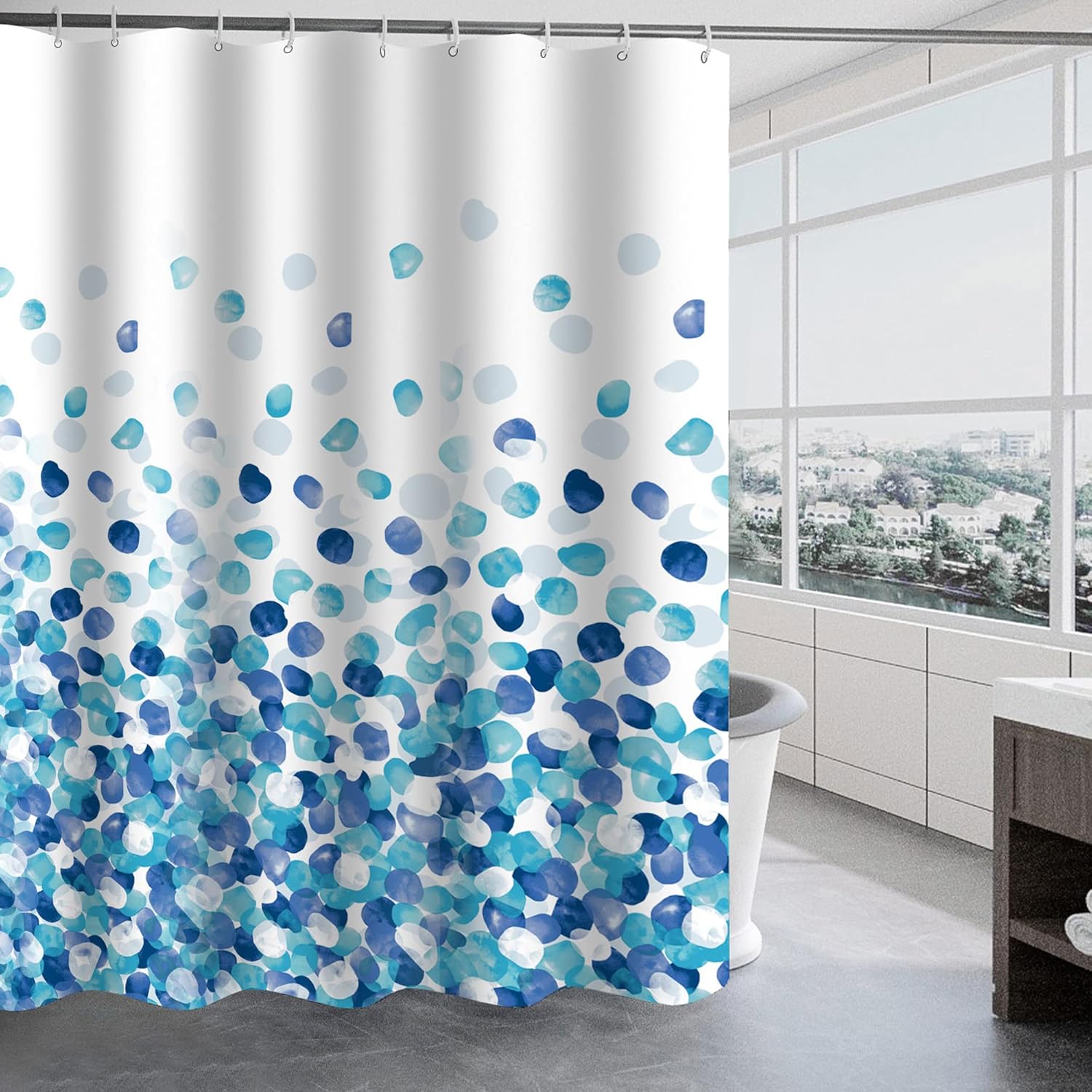
A 180-inch shower curtain provides continuous, gap-free textile coverage for oversized bathroom layouts, freestanding tub enclosures, and wide walk-in double showers. By spanning 15 feet across a single track or wraparound rod, this extra-wide format eliminates unsightly seams, prevents water leakage, and establishes a luxurious, floor-to-ceiling drapery aesthetic in spacious residential master suites.
Understanding 180-Inch Sizing and Spatial Dynamics in Large Bathrooms
Designing an expansive master bathroom requires balancing architectural proportions with functional water containment. Standard shower curtains measure 72 inches wide by 72 inches high, which is insufficient for expansive walk-in enclosures, corner alcoves, or freestanding bathtubs that require complete perimeter coverage. A 180-inch shower curtain (measuring 180 inches in width, or approximately 457 centimeters) is engineered specifically to span wide distances without requiring multiple overlapping panels.
When evaluating curtain dimensions, it is essential to distinguish between imperial and metric product designations:
- 180-Inch Width (Extra-Wide Imperial Specialty Sizing): Designed for high-end residential interiors, custom double showers, U-shaped or oval tub hoops, and ceiling-tracked wet rooms.
- 180 cm Width (Standard Metric Sizing): Measures approximately 71 inches, which corresponds to standard single-tub openings in European and global markets.
In oversized bathroom designs, spatial planning depends heavily on the fullness factor. Hanging a curtain flat across an opening creates a rigid, industrial appearance and increases the risk of water escaping at the edges. To achieve elegant fabric folds and reliable splash protection, interior designers recommend a fullness ratio of 1.5x to 2x relative to the length of the curtain rod. For example, a 180-inch curtain hanging on a 90-inch to 120-inch rod creates deep, soft gathers that trap steam and redirect water back into the drainage pan.
- Fullness Calculation
- 180" Curtain Width ÷ 1.8 Fullness Ratio = ~100" Enclosure Span
- Wall to Wall: 100" Span
- Richly Gathered Fabric (Deep Ripples)
Architecturally, oversized bathrooms feature higher ceilings (often 9 to 10 feet), wider floor plans, and glass-free wet zones. Integrating a single continuous 180-inch drapery panel maintains visual cohesion across these large spaces. Eliminating vertical breaks preserves clean horizontal sightlines, making the bathroom feel unified while serving as a prominent focal point.
Material Selection for Extra-Wide Shower Liners and Fabric Curtains
Selecting the correct material for a 180-inch shower curtain involves weighing durability, drape, water repellency, and weight distribution. Because a fabric panel of this scale carries substantially more mass than a standard panel, the material must maintain structural integrity without sagging or stressing wall anchors.
| Material Type | Water Resistance | Drape & Aesthetics |
|---|---|---|
| Heavyweight Linen | Requires Liner | Superior / Natural Fold |
| Woven Polyester | Hydrophobic Finish | Clean / Modern Ripple |
| Cotton Duck Canvas | Requires Liner | Architectural / Tailored |
| PEVA Eco-Liner | 100% Waterproof | Utilitarian / Hidden |
Outer Fabric Curtains
- Heavyweight Linen and Linen Blends: Linen offers textural depth and breathability, making it a favorite for organic modern and transitional master bathrooms. At 180 inches wide, heavyweight linen drapes with natural elegance. However, because linen is porous, it must always be paired with an independent waterproof liner.
- Woven Polyester and Microfiber: Modern high-denier polyester weaves provide superior stain resistance, machine-washable convenience, and inherent moisture shedding. Polyesters treated with durable water repellent (DWR) finishes resist water saturation while maintaining a soft, cloth-like hand.
- Cotton Duck Canvas: Canvas provides a crisp, tailored structure that suits classic, industrial, or farmhouse architecture. Because cotton absorbs moisture readily, canvas panels require adequate room ventilation and routine laundering to prevent mildew development.
Inner Waterproof Liners
A 180-inch outer curtain requires a matching 180-inch inner liner to protect the decorative fabric from moisture.
- PEVA (Polyethylene Vinyl Acetate): PEVA is a non-chlorinated, eco-conscious alternative to traditional PVC. It is scent-free, flexible, and completely waterproof. Heavy-gauge PEVA liners (8-gauge to 10-gauge) resist billowing caused by thermal air currents inside large shower enclosures.
- Fabric Polyester Liners: Machine-washable polyester liners coated with TPU (Thermoplastic Polyurethane) offer a quiet, rustle-free drape. They are easy to launder alongside outer fabric panels and dry quickly.
- Weighted Hems and Magnet Integration: Due to the expansive surface area of a 180-inch liner, air movement generated by warm water spray can cause lightweight plastics to cling to the bather. High-quality 180-inch liners incorporate bottom hem weights—such as lead-free rubberized weights or encapsulated corner magnets—to maintain vertical tension and keep the liner secured inside the basin rim.
Rod Architecture and Ceiling-Mounted Hardware for Wide Spans
Standard spring-loaded tension rods are unsuitable for 180-inch shower curtains. The weight of a 15-foot fabric panel—especially when damp—will cause unsupported tension poles to bow, slip, or fail. Extra-wide installations require purpose-built hardware capable of supporting continuous loads between 25 and 60 pounds.
- Ceiling
- Ceiling Support
- Wall (Oversized Flange)
- Heavy-Duty Solid Brass Rod (180" Span)
- Wall (Oversized Flange)
Structural Mounting Methods
- Wall-to-Wall Anchored Solid Rods: For straight runs, use seamless stainless steel, solid brass, or thick-gauge aluminum tubing with an outer diameter of at least 1.25 to 1.5 inches. Heavy-duty mounting flanges must be fastened directly into wall studs or secured using high-load toggle bolts behind drywall.
- Ceiling Support Rods (Bridged Systems): When spanning distances over 90 inches without a center wall support, a ceiling drop rod is mandatory to prevent sagging. Split-ring ceiling supports anchor directly into ceiling joists, holding the horizontal rod rigid while allowing specialized open-loop shower rings to glide past the support bracket.
- Ceiling-Mounted Curtain Tracks: Popular in contemporary, minimal, and wet-room designs, heavy-duty aluminum ceiling tracks hide hardware within the ceiling architecture. Roller-ball carriers inside the track ensure quiet, effortless sliding across the entire 180-inch length.
- Freestanding Enclosure Hoops (Oval & U-Shaped Rings): For standalone clawfoot or pedestal bathtubs positioned away from walls, 180-inch curtains wrap completely around 360-degree ceiling-suspended oval hoop frames. Dual ceiling drop supports are typically positioned at opposite ends of the hoop to distribute the load evenly.
Ring and Glide Selection
- Roller-Ball Rings: Stainless steel rings equipped with sealed ball bearings minimize friction along metal rods, reducing surface wear and preventing curtain snagging.
- Open C-Shaped Rings: Flexible polycarbonate or brass C-rings pass freely over ceiling support brackets, enabling an uninterrupted 180-inch pull from side to side.
- Heavy-Duty Brass Grommets: Ensure the curtain header features reinforced double-stitched webbing and rustproof brass or stainless steel grommets to prevent tearing under load. A typical 180-inch curtain incorporates 30 to 36 grommets, compared to 12 grommets on a standard 72-inch panel.
Comparative Guide: Oversized Shower Curtain Configurations
The table below outlines technical specifications, hardware requirements, and visual results for common 180-inch shower curtain installations.
| Enclosure Configuration | Target Enclosure Width | Recommended Height | Hardware / Mounting System | Ideal Material Combination | Key Design Benefit |
|---|---|---|---|---|---|
| Freestanding / Clawfoot Tub Wrap | 54" – 72" Tub Perimeter | 72" – 84" Standard | Ceiling-Suspended Oval Hoop (Dual Drops) | Woven Poly Curtain + PEVA Liner | Complete 360° water containment without gaps |
| Extra-Wide Walk-In Double Shower | 90" – 120" Open Span | 84" – 96" Extended | 1.5" Stainless Steel Rod + Center Support | Linen Blend Curtain + TPU Fabric Liner | Seamless span across dual showerheads |
| Recessed Ceiling Track Wet Room | 108" – 144" Floor Span | 96" – 108" Custom | Flush Ceiling-Mounted Aluminum Track | Heavyweight Microfiber | Minimalist look with floor-to-ceiling proportions |
| Corner L-Shaped Enclosure | 60" x 36" Corner Rim | 84" Extended | L-Shaped Corner Rod with Corner Ceiling Drop | DWR Polyester Curtain + Magnet Liner | Single continuous panel covers two open sides |
Designing with Scale: Visual Styling and Layering in Expansive Bathrooms
Integrating a 180-inch shower curtain into an oversized bathroom involves more than choosing hardware; it requires thoughtful visual proportioning. Because a 15-foot panel creates a substantial plane of fabric, its texture, color, and drop height strongly influence the room's atmosphere.
- Vertical Proportion Strategy
- Ceiling Line - 108" Height
- Ceiling-Mounted Track / Concealed Mounting
- Continuous 180" Wide Fabric Drapery (Creates Vertical Length and Elongates Space)
- 1/2 Inch Floor Clearance (Prevents Moisture Wicking)
- Finished Floor Line
Verticality and Floor-to-Ceiling Drapery
Pairing extra-wide drapery with extended drop heights (such as 84, 96, or 108 inches) draws the eye upward, accentuating high ceilings. Suspended from near the ceiling line, an extra-wide curtain visually elongates the room. Keep the bottom hem roughly 0.5 inches off the floor to prevent the fabric from sitting in standing water while keeping the look crisp and tailored.
Pattern Scale and Color Palette
- Large-Scale Patterns and Textures: Fine, small-scale prints often look chaotic across a 180-inch expanse. Opt instead for solid neutrals, subtle waffle weaves, wide vertical stripes, or large geometric patterns that match the room's proportions.
- Monochromatic Integration: Matching the curtain color to adjacent painted surfaces or tile creates an open, expansive feel. Light tones like alabaster, soft gray, warm oat, and crisp white reflect light across large rooms.
- Contrast Statements: In white or marble bathrooms, a dark curtain (such as charcoal, navy, or deep forest green) creates a bold accent wall that grounds the room's layout.
Moisture Control and Environmental Balance
Wide textile installations trap steam and retain surface moisture over larger surface areas. To prevent mold and mildew growth:
- Ensure the bathroom HVAC exhaust fan is rated for the room's square footage (minimum 1 CFM per square foot of floor area, per guidelines from the HVI - Home Ventilating Institute).
- Spread the curtain wide across the rod after every use, allowing air to circulate through the fabric folds.
- Maintain a minimum 2-inch gap between the outer decorative fabric and the inner waterproof liner to encourage airflow between the layers.
Installation, Maintenance, and Troubleshooting
Installing and maintaining a 180-inch shower curtain requires deliberate care to manage the extra fabric volume and weight safely over time.
Step-by-Step Installation Procedure
Locate Studs
Mount Flanges
Attach Drop Rod
Thread Rings
Hang Curtain
Adjust Hem
Measure and Mark Wall Anchors: Use a laser level to establish a level line across the enclosure span. Locate wall studs using a stud finder; if studs are unavailable, install heavy-duty hollow-wall toggle anchors rated for at least 50 lbs each.
Mount Flanges and Support Hardware: Fasten the end flanges securely to the wall. If using a span wider than 90 inches, anchor the ceiling drop bracket into a ceiling joist at the midpoint.
Assemble and Thread Hardware: Slide roller-ball rings or track glides onto the rod before securing it into the mounting flanges. Verify that open C-rings align correctly with any ceiling support brackets.
Hang Decorative Panel and Liner: Attach the inner liner to the inside hooks and the outer fabric curtain to the outer hooks. Confirm that both panels move smoothly from end to end.
Check Floor Clearance and Hem Alignment: Ensure the curtain hangs level across its full 180-inch width. Adjust the ceiling drop support length or tracking hardware if any section sags.
Laundering and Maintenance Protocols
- Machine Washing Fabric Panels: Wash 180-inch woven polyester or cotton curtains every 4 to 6 weeks on a gentle cycle using warm water and mild liquid detergent. Avoid fabric softeners, which can coat fibers and reduce water-repellent properties.
- Liner Care: Wash PEVA or fabric liners monthly. To remove soap scum and hard water deposits, add one cup of distilled white vinegar to the wash cycle along with two bath towels to provide gentle scrubbing action.
- Drying: Hang fabric curtains back on the rod to air-dry immediately after washing. The natural weight of the damp panel will help pull out wrinkles without ironing.
Common Troubleshooting Solutions
- Mid-Span Rod Bowing: Install a middle ceiling drop support or upgrade to a thick-gauge 1.5-inch solid brass rod.
- Curtain Clinging (Billowing): Switch to a heavier 10-gauge liner or attach clip-on bottom magnetic weights to hold the liner edge firmly against the bathtub rim.
- Sticking or Rough Gliding: Clean dust and soap residue from the top of the metal rod, then apply a thin coat of silicone spray or glide wax to the surface.
Frequently Asked Questions
How do I know if I need a single 180-inch curtain instead of two smaller curtains?
Use a single 180-inch shower curtain when you need continuous water protection across wide openings, curved corner tracks, or freestanding tubs. Combining two standard 72-inch curtains leaves a vertical gap where panels meet, allowing water to escape onto the floor. A single 180-inch panel eliminates seams and keeps water securely inside the shower area.
What is the correct curtain height to pair with a 180-inch width?
The ideal height depends on your ceiling height and mounting hardware. Standard 72-inch height panels often look disproportionate across a 180-inch width. For oversized bathrooms with 9-foot or 10-foot ceilings, select extended 84-inch, 96-inch, or custom 108-inch heights to maintain balanced visual proportions.
Can a 180-inch shower curtain wrap entirely around a freestanding tub?
Yes. A 180-inch curtain is designed to enclose standard freestanding and clawfoot tubs (which typically range from 54 to 72 inches in length). Mounted on an oval or rectangular ceiling-hung track, the 180-inch width provides full 360-degree coverage with enough fullness to keep water contained on all sides.
How do I prevent a 180-inch curtain rod from sagging in the middle?
To prevent sagging across spans wider than 90 inches, use a rigid 1.25-inch to 1.5-inch diameter metal rod anchored into studs, and install a ceiling drop rod at the center point. Alternatively, install a continuous ceiling-mounted aluminum curtain track anchored into ceiling joists along its full length.
How many rings or hooks are needed for a 180-inch shower curtain?
A standard 180-inch shower curtain requires 30 to 36 shower rings or glides, compared to 12 rings for a standard 72-inch panel. Ensure your hardware package includes enough matching heavy-duty rings to support the extra grommets and weight.
Action Plan for Designing Your Extra-Wide Enclosure
To achieve a seamless, high-performance shower curtain installation in your oversized bathroom, follow these essential design steps:
- Accurately Measure Your Space: Measure the total width of the rod path or ceiling track and multiply by 1.5 to 1.8 to select your final curtain width. Confirm the vertical distance from the mounting hardware down to 0.5 inches above the floor.
- Specify Rigid Support Hardware: Avoid tension poles. Select 1.25-inch or 1.5-inch heavy-duty metal tubing with solid wall flanges, or install a ceiling track anchored into joists. Use ceiling drop brackets for open spans wider than 90 inches.
- Pair High-Performance Fabrics: Select a durable, machine-washable outer curtain (such as linen-blend or high-denier polyester) paired with a heavy-gauge PEVA or TPU liner equipped with weighted bottom hems.
- Maintain Balanced Proportions: Pair 180-inch wide curtains with extended vertical drops (84 to 96 inches) and select large-scale textures or neutral tones that complement your bathroom architecture.
- Establish Regular Maintenance: Wash the liner monthly and the outer curtain every 6 weeks. Ensure your bathroom ventilation system operates at recommended CFM levels to keep textiles dry and free from mold.