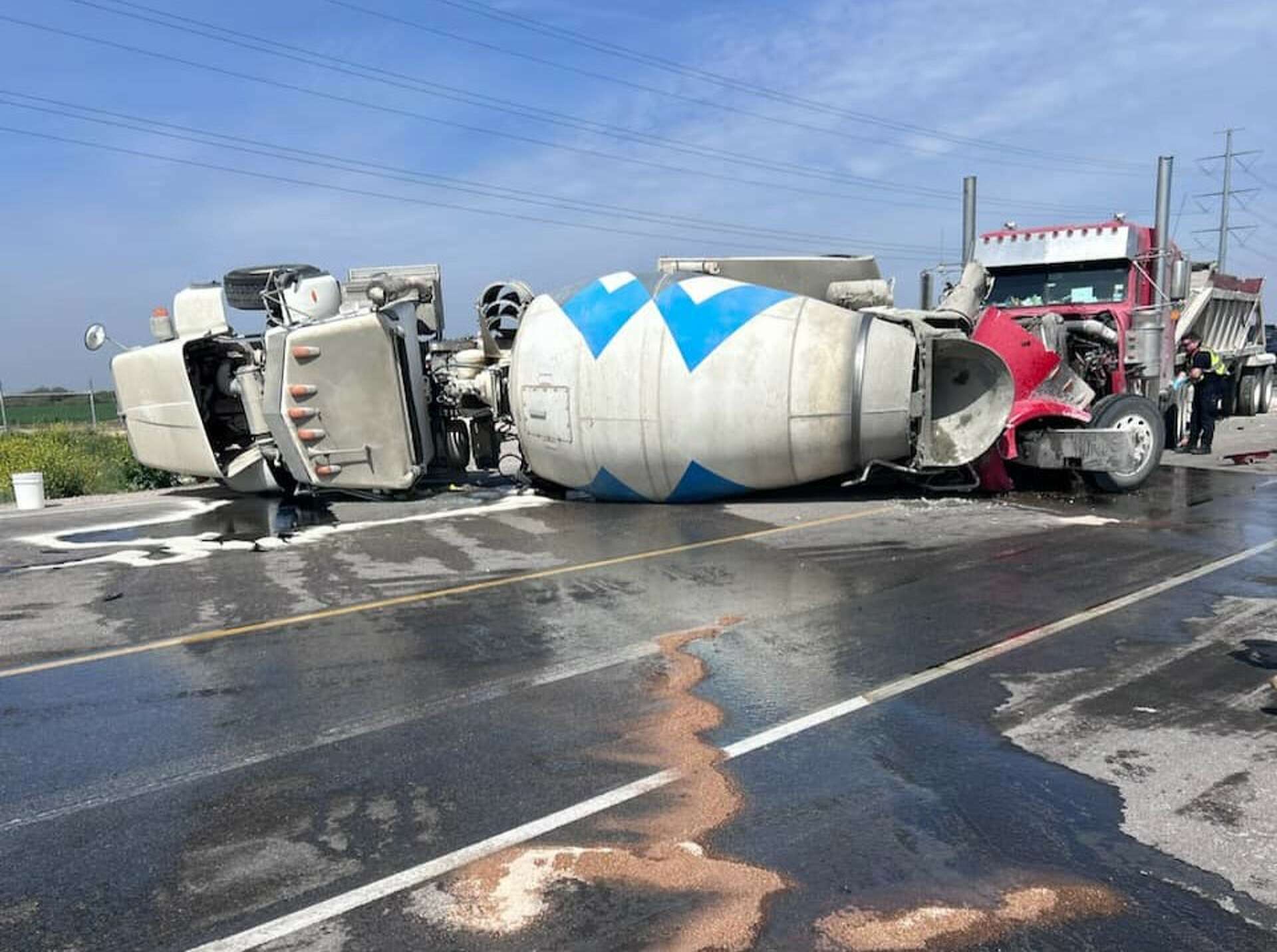
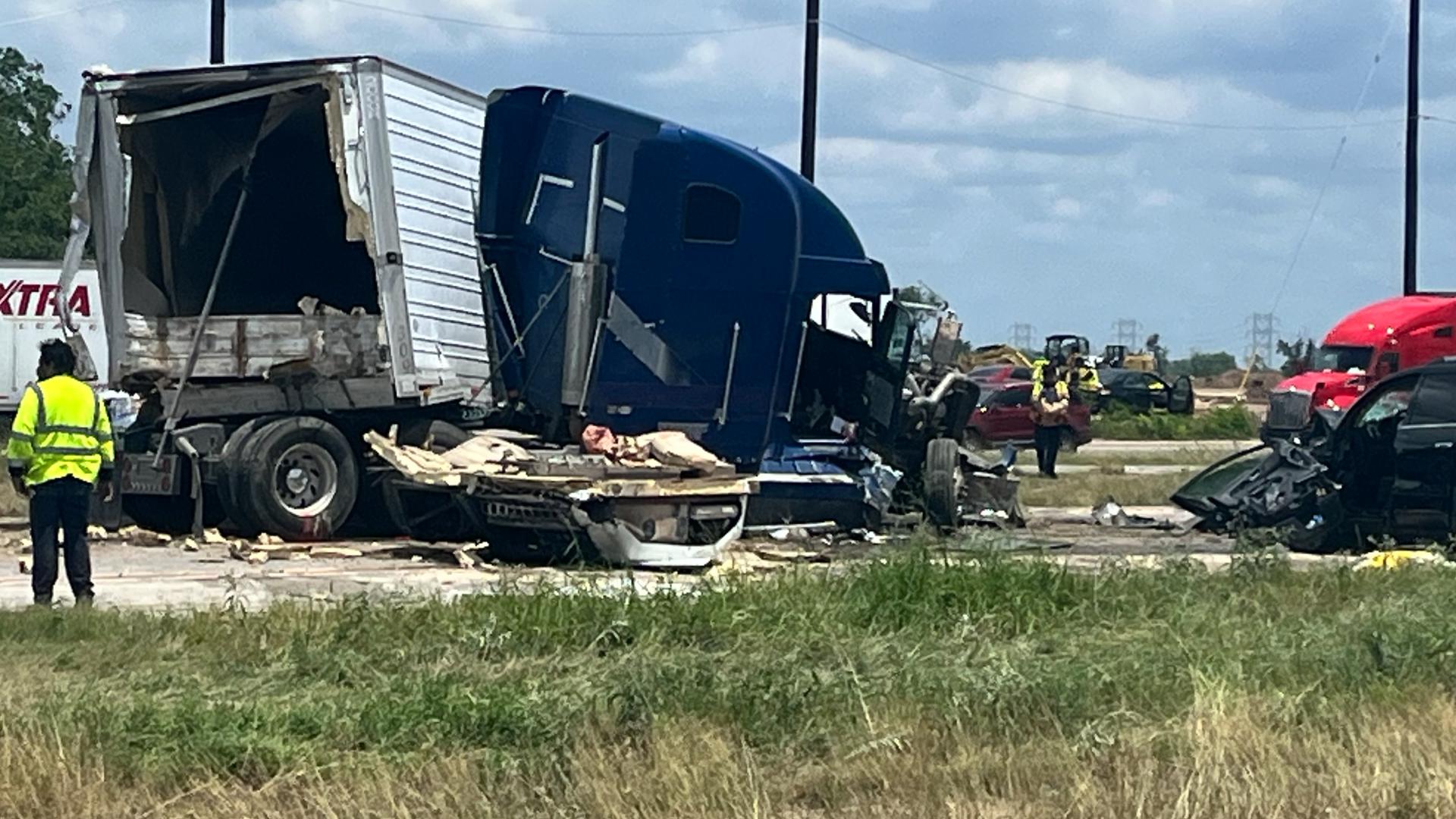
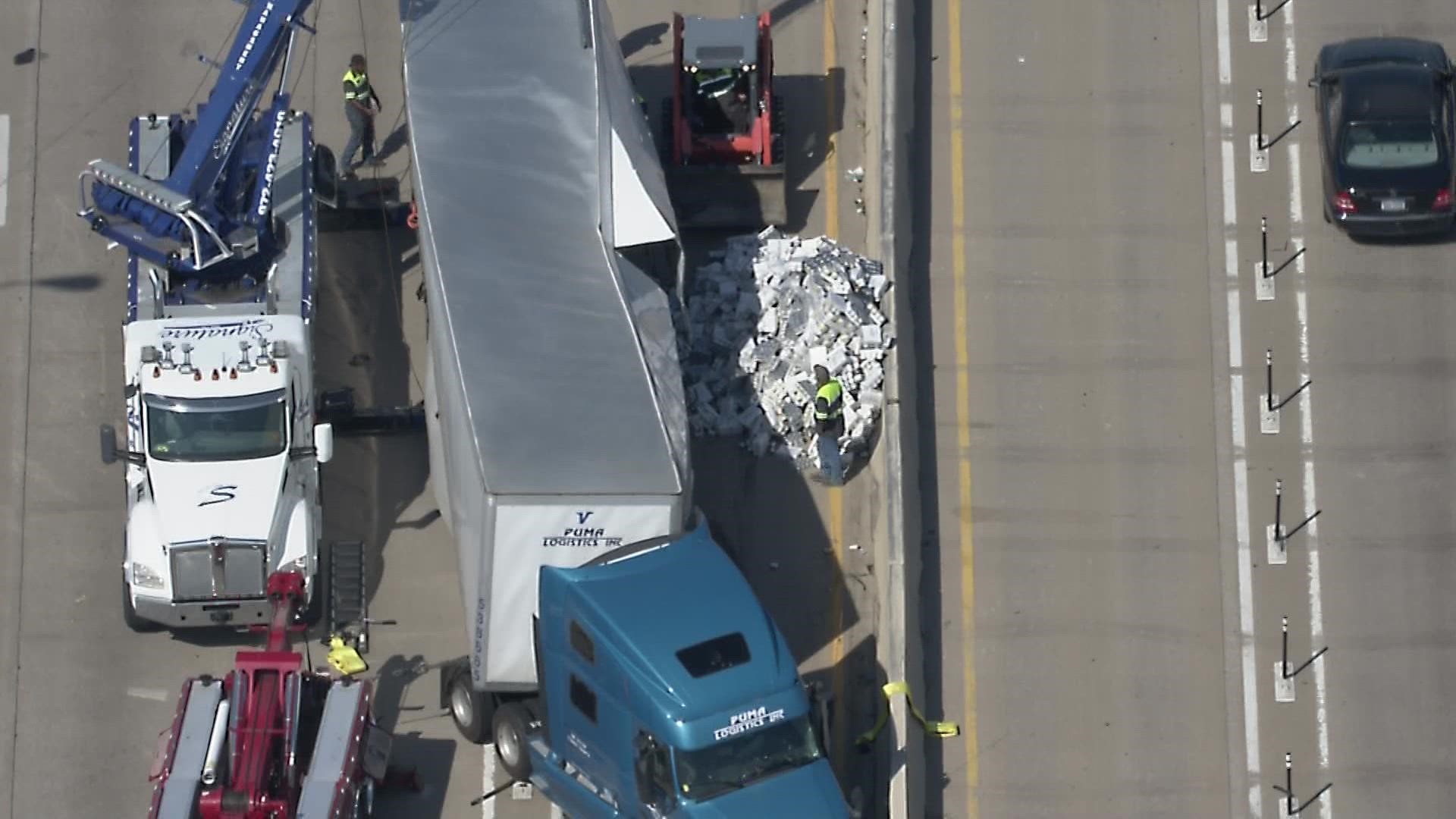
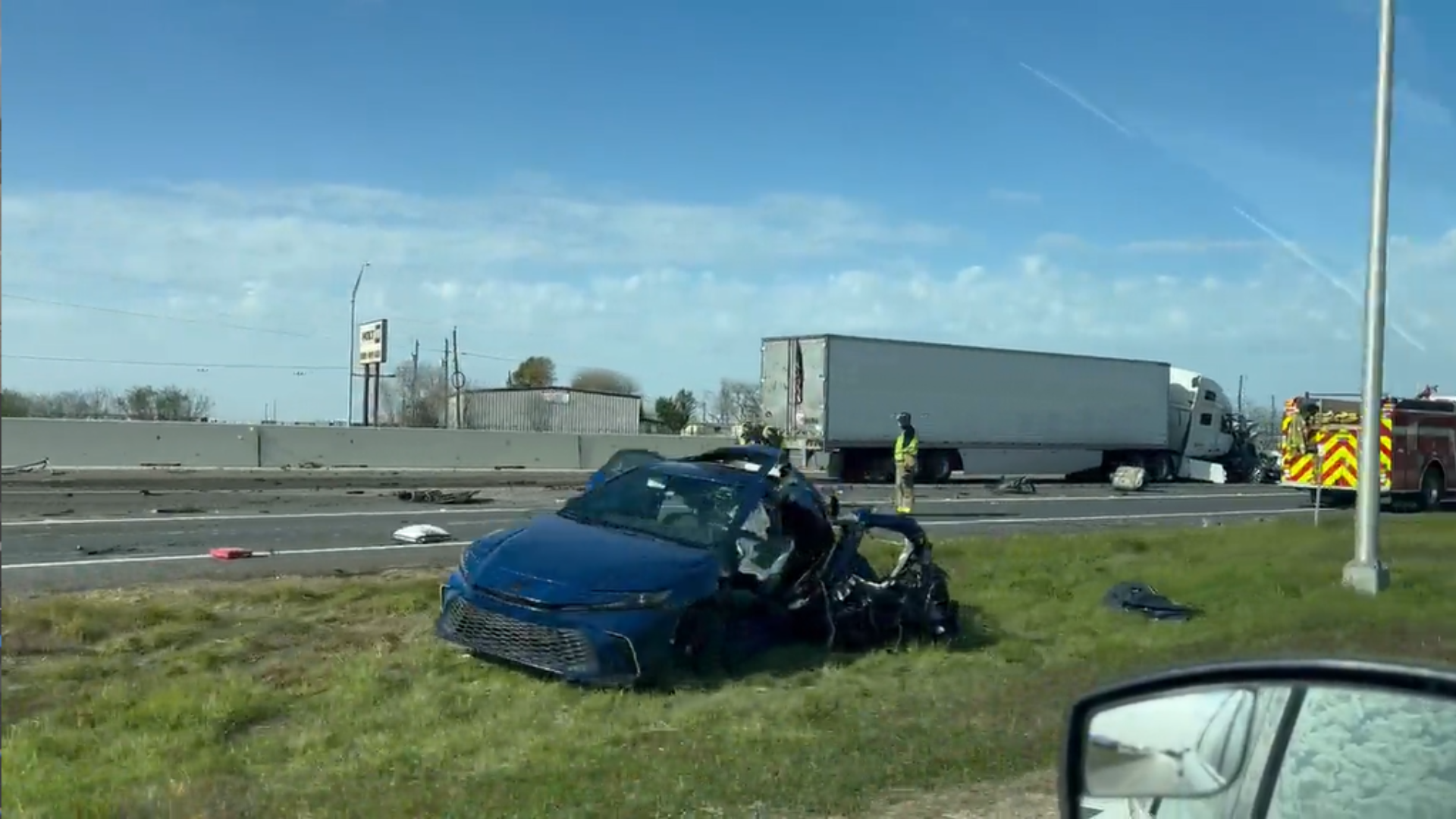
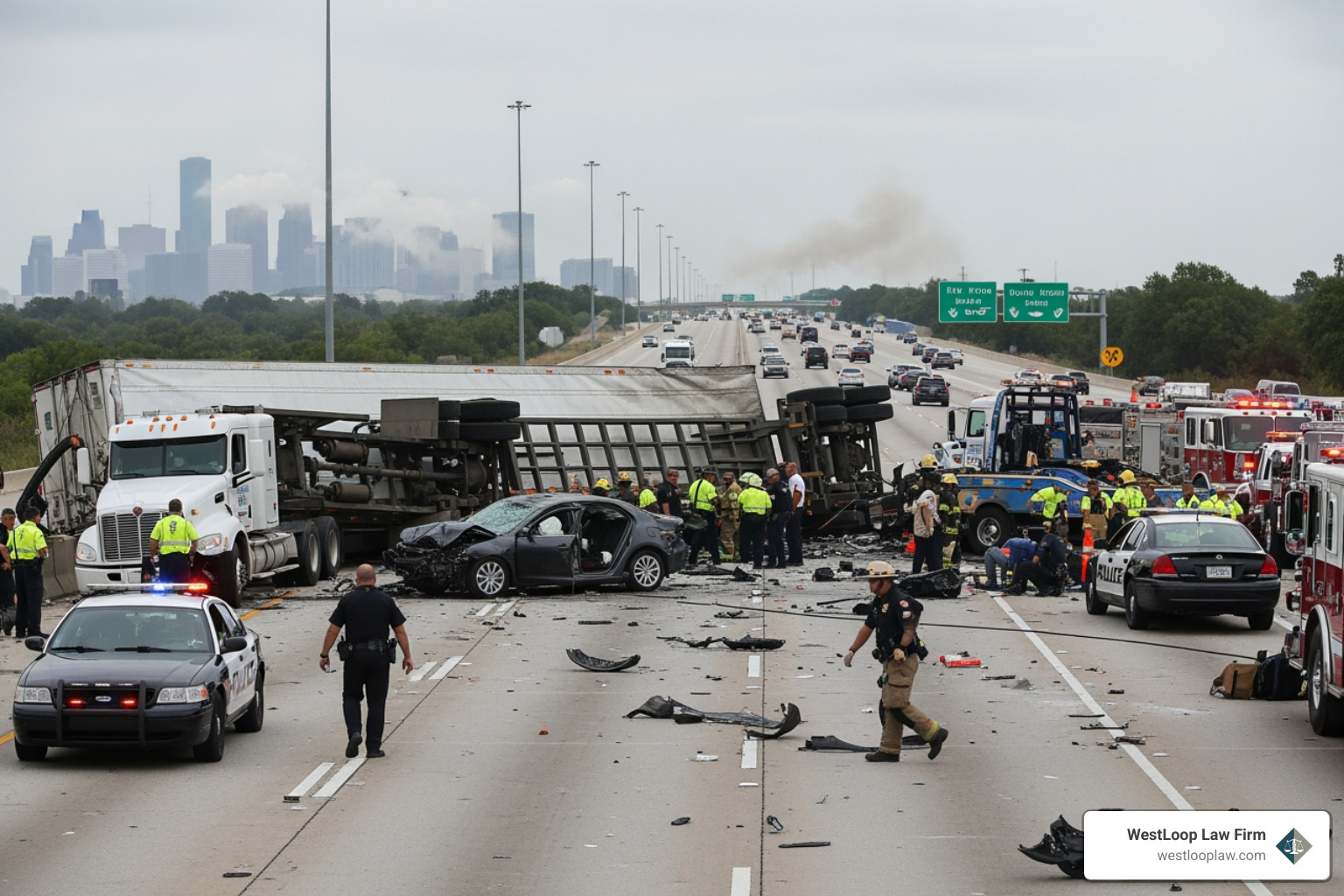
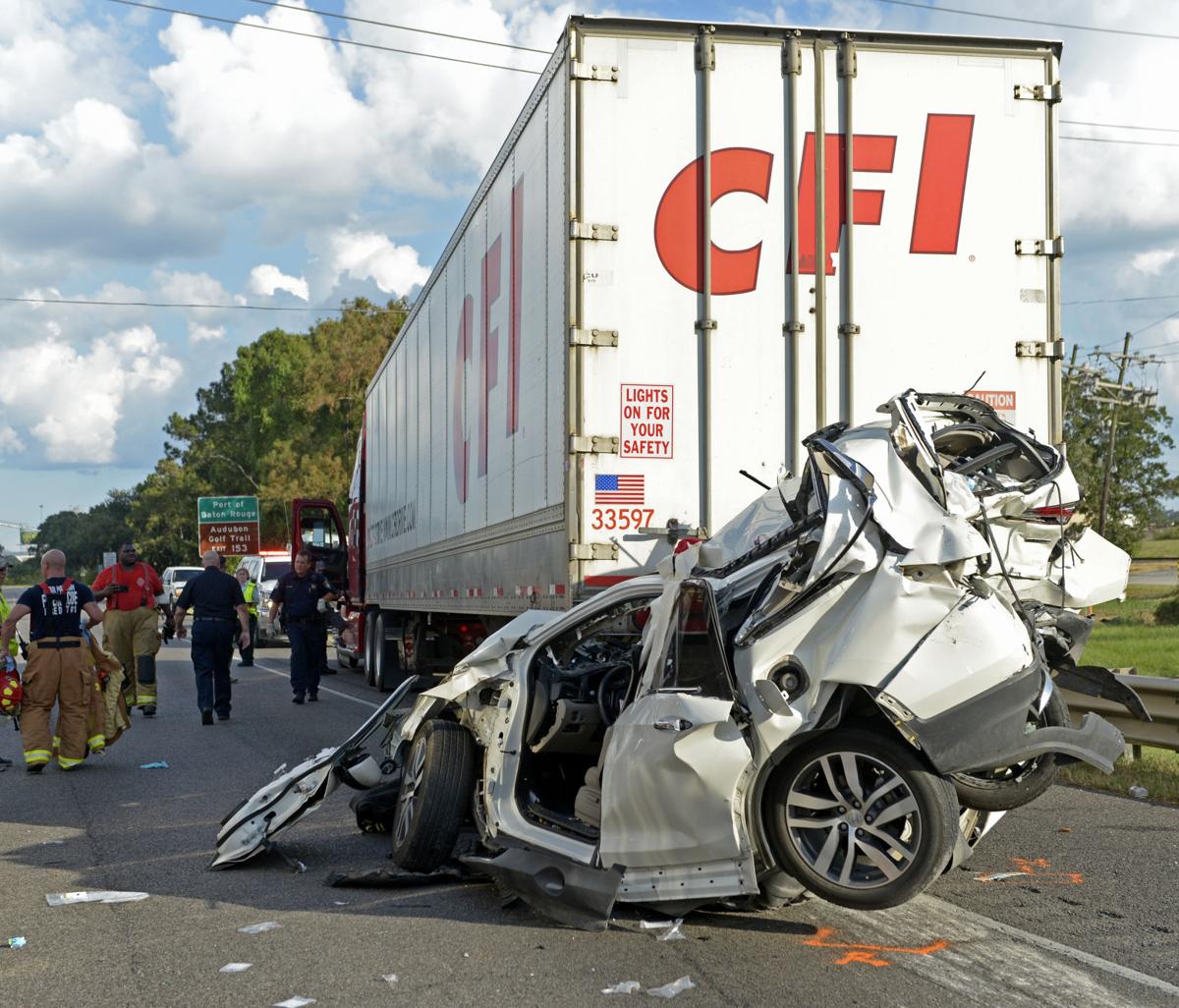
18 wheeler accidents involve heavy commercial tractor-trailers subject to strict federal safety standards and multi-party legal liability. Resolving a commercial truck collision requires evaluating Federal Motor Carrier Safety Administration compliance, preserving critical electronic crash data, and pursuing claims against negligent motor carriers, drivers, freight shippers, or equipment manufacturers.
Primary Causes and Contributing Factors in Commercial Truck Collisions
Commercial semi-trucks can weigh up to 80,000 pounds when fully loaded, compared to an average passenger sedan weighing roughly 3,000 to 4,000 pounds. This massive discrepancy in mass and momentum means that when an 18 wheeler collides with a smaller vehicle, the force generated is catastrophic. Pinpointing the root cause of a truck crash requires analyzing driver actions, mechanical reliability, and operational practices.
Driver Fatigue and Hours-of-Service Violations
Driver fatigue remains one of the leading causes of commercial vehicle crashes. Truck drivers often work under demanding delivery deadlines and extended schedules. When operators fail to take mandatory rest periods, their reaction times, spatial awareness, and decision-making capabilities degrade significantly. Sleep deprivation affects the brain similarly to alcohol intoxication, making fatigued driving a severe hazard on highways.
Mechanical Failures and Neglected Maintenance
A fully loaded tractor-trailer relies on complex mechanical systems, including air brakes, multi-axle suspension, heavy-duty tires, and steering assemblies. A breakdown in any of these components can lead to a loss of control. Common mechanical issues include:
- Brake System Failure: Misadjusted air brakes or worn friction pads increase stopping distances exponentially.
- Tire Blowouts: Overloaded trailers or underinflated tires can cause sudden blowouts, leaving debris on highways and causing drivers to lose control.
- Steering and Suspension Breakdown: Faulty tie rods or failed suspension components can render a rig unsteerable at highway speeds.
Improper Cargo Loading and Weight Distribution
Proper cargo distribution is critical to maintaining a semi-truck's center of gravity. If cargo is unsecured, improperly balanced, or exceeds gross vehicle weight limits, it can shift during transit. Shifted cargo often causes jackknife accidents, where the trailer swings out at a ninety-degree angle to the tractor, or dangerous rollover crashes on highway curves and exit ramps.
Inadequate Training and Driver Oversight
Operating an 18 wheeler requires specialized skill, defensive driving capabilities, and thorough knowledge of safety protocols. Some motor carriers attempt to address driver shortages by putting under-trained or inexperienced drivers on the road. When trucking companies fail to conduct proper background checks, verify driving credentials, or provide adequate training, they expose everyone on the road to heightened risk.
Federal Regulatory Framework Governing 18 Wheeler Operations
Commercial trucking in the United States operates under strict oversight from the Federal Motor Carrier Safety Administration (FMCSA), an agency within the U.S. Department of Transportation. FMCSA regulations, codified under Title 49 of the Code of Federal Regulations (49 CFR), establish uniform standards designed to minimize preventable highway crashes.
- FMCSA Regulatory Compliance Stack
- 49 CFR Part 395: Hours of Service (HOS) & ELDs
- 49 CFR Part 396: Inspection, Repair, & Maintenance
- 49 CFR Part 391: Driver Qualifications & Fitness
- 49 CFR Part 387: Minimum Financial Responsibility
Hours of Service (HOS) Mandates
To combat driver fatigue, the FMCSA enforces strict Hours of Service regulations under 49 CFR Part 395 for property-carrying commercial motor vehicle drivers:
- 11-Hour Driving Limit: Drivers may operate a vehicle for a maximum of 11 hours after 10 consecutive hours off duty.
- 14-Hour Duty Window: Drivers cannot drive beyond the 14th consecutive hour after coming on duty, regardless of rest breaks taken during the shift.
- Mandatory 30-Minute Break: Drivers must take a 30-minute interruption after cumulative 8 hours of driving without a break.
- 60/70-Hour Limits: Drivers cannot operate a truck after accumulating 60 hours on duty over 7 consecutive days, or 70 hours over 8 consecutive days. Resetting this clock requires a minimum 34-consecutive-hour off-duty period.
Inspection, Repair, and Maintenance Regulations
Under 49 CFR Part 396, motor carriers must systematically inspect, repair, and maintain all motor vehicles under their control. Truck drivers are required to complete Daily Vehicle Inspection Reports (DVIRs) covering steering, brakes, lighting, tires, mirrors, and coupling devices. Any reported safety defect must be repaired before the truck returns to service.
Determining Legal Liability Across Multiple Responsible Parties
Establishing liability after an 18 wheeler accident is fundamentally different from standard passenger vehicle litigation. Rather than dealing exclusively with an individual driver, truck accident claims often involve complex corporate structures and multiple potentially liable entities.
- 18 Wheeler Collision Event
- Truck Driver
- Speeding
- HOS Violation
- Impairment
- Motor Carrier (Employer)
- Respondeat Superior
- Negligent Hiring
- Forced Overtime
- Cargo Loaders / Shippers
- Overloading
- Improper Lashing
- Weight Shift
- Equipment Mfrs
- Brake Defect
- Tire Defect
- Latent Fault
- Truck Driver
Motor Carrier (Trucking Company) Liability
Trucking companies can be held liable through two primary legal avenues:
- Direct Negligence: Occurs when the motor carrier engages in reckless business practices, such as failing to conduct background checks, ignoring HOS violations, neglecting fleet maintenance, or encouraging drivers to violate safety laws to meet fast delivery schedules.
- Vicarious Liability (Respondeat Superior): Under this legal doctrine, employers are held legally responsible for the negligent acts of their employees performed within the scope of their employment.
Freight Shippers and Cargo Loaders
If an accident is caused by unstable, unbalanced, or improperly secured cargo, third-party logistics providers, freight shippers, or third-party loading facilities may share fault. Improperly secured loads can dislodge from flatbed trailers or shift inside enclosed dry vans, causing loss of vehicle control.
Maintenance Contractors and Parts Manufacturers
When mechanical breakdown triggers a collision, external maintenance vendors or component manufacturers may be held accountable. If an independent repair shop fails to properly adjust a brake assembly, or if a manufacturer produces a defective tire prone to tread separation, product liability laws allow injured parties to seek financial recourse from those entities.
Key Differences: Passenger Car Collisions vs. 18 Wheeler Accidents
| Aspect | Standard Passenger Car Accident | 18 Wheeler Commercial Accident |
|---|---|---|
| Primary Regulatory Body | State Motor Vehicle Codes | FMCSA (Federal) & State DOTs |
| Common Defendant Count | Typically 1 to 2 drivers | Multiple (Driver, Carrier, Shipper, Mfr) |
| Minimum Insurance Requirements | State minimums ($15k–$50k typical) | Federal minimums ($750k–$5M+) |
| Critical Evidence Required | Police report, basic photos, driver statement | ELD logs, ECM black box data, DQF, maintenance records |
| Investigation Complexity | Relatively low to moderate | Highly technical; requires accident reconstruction experts |
Essential Evidence Collection and Preservation Protocols
Building a successful legal claim following an 18 wheeler collision requires gathering technical evidence immediately after the crash occurs. Trucking companies employ quick-response risk mitigation teams that arrive at crash scenes within hours to protect their legal interests. Injured parties must take prompt, structured steps to secure relevant records before they are overwritten, destroyed, or lost.
Black Boxes and Electronic Logging Devices
Modern commercial trucks are equipped with advanced electronic monitoring devices:
- Engine Control Module (ECM): Often referred to as the truck's "black box," the ECM records critical telemetry data leading up to a crash, including vehicle speed, throttle position, brake application, engine RPM, and seatbelt usage.
- Electronic Logging Devices (ELD): Connected directly to the engine, ELDs track driving hours, duty status changes, and vehicle movement, serving as objective proof of potential Hours-of-Service violations.
Spoliation Letters and Legal Holds
Crucial digital evidence, including ECM telemetry and dashcam footage, can be legally overwritten by trucking systems after 30 to 90 days under routine data retention policies. To stop evidence destruction, an injured party's legal counsel must draft and deliver a formal Letter of Spoliation. This legal notice orders the motor carrier, its insurance underwriters, and related vendors to preserve all physical, digital, and documentary evidence related to the crash.
- Critical Evidence Checklist
- ECM "Black Box" Telemetry Data
- ELD Duty Status & Hours-of-Service Logs
- Driver Qualification File (DQF) & Drug Tests
- Fleet Maintenance & DVIR Inspection Records
- Bill of Lading & Cargo Weight Manifests
- Forward-Facing & Cab Telematics Video
Financial Recovery and Insurance Coverage Standards
Due to the extreme damage and severe injuries typical of commercial vehicle collisions, federal law mandates substantial insurance coverage for interstate motor carriers.
Minimum Financial Responsibility Mandates
Under 49 CFR § 387.9, the FMCSA sets mandatory minimum public liability and property damage insurance limits based on the nature of freight transported:
- Non-Hazardous Freight (Vehicles over 10,000 lbs): $750,000 minimum mandatory coverage.
- Oil and Certain Hazardous Materials: $1,000,000 minimum mandatory coverage.
- Hazardous Substances, Explosives, and Radioactives: $5,000,000 minimum mandatory coverage.
Categories of Recoverable Damages
Victims of 18 wheeler collisions may be eligible to recover both economic and non-economic damages through insurance settlements or court verdicts:
- Economic Damages: Quantifiable financial losses, such as emergency medical costs, hospital stays, surgeries, long-term physical therapy, lost current wages, reduced future earning capacity, and physical vehicle repair or replacement costs.
- Non-Economic Damages: Non-monetary losses, including physical pain and suffering, emotional trauma, permanent physical impairment, scarring, loss of consortium, and reduced overall quality of life.
- Punitive Damages: Awarded in rare cases involving gross negligence, intentional misconduct, or systemic corporate disregard for safety, such as forcing drivers to bypass safety checks or falsify logbooks.
Critical Steps to Take After an 18 Wheeler Collision
- Prioritize Safety and Call Emergency Services: Immediately move to a safe area if possible, call emergency responders, and request law enforcement assistance and medical evaluation for all involved parties.
- Document the Crash Scene Thoroughly: If physically able, take detailed photographs and videos of vehicle damage, road conditions, skid marks, traffic signals, weather conditions, and visible injuries. Capture company logos, USDOT numbers, and trailer license plates.
- Exchange Operational Information: Collect the truck driver's name, Commercial Driver's License (CDL) number, motor carrier company name, USDOT/MC registration numbers, insurance carrier details, and contact details from neutral eyewitnesses.
- Refrain from Making Statements to Insurers: Do not provide recorded statements, sign liability releases, or discuss fault with the trucking company’s risk management adjusters without consulting an attorney.
- Seek Complete Medical Evaluation: Some severe injuries, such as internal bleeding, soft tissue damage, or traumatic brain injury (TBI), may not show immediate symptoms due to post-crash adrenaline. Immediate diagnostic scans establish a direct medical record connecting injuries to the crash event.
- Retain Specialized Legal Counsel: Contact a personal injury attorney experienced in handling complex FMCSA regulations and commercial trucking litigation to issue preservation notices and initiate an independent investigation.
Frequently Asked Questions About 18 Wheeler Accidents
How long do I have to file a lawsuit after an 18 wheeler accident?
The deadline to file a personal injury or property damage lawsuit, known as the statute of limitations, varies by state. In most jurisdictions, this period ranges between one and four years from the date of the collision. However, critical electronic evidence must be preserved long before this deadline through formal legal notices.
What is an Electronic Logging Device (ELD), and why is it vital to a truck accident claim?
An Electronic Logging Device (ELD) is an onboard digital system that automatically records a commercial driver's driving time, engine hours, vehicle movement, and location data. ELD records provide unalterable verification of whether a truck driver violated federal Hours-of-Service limits or drove beyond permitted shift durations before an accident occurred.
Can a trucking company be held liable if the driver was classified as an independent contractor?
Yes. Motor carriers cannot avoid legal responsibility simply by labeling drivers as independent contractors. Under federal safety regulations, if a company operates a commercial truck under its USDOT registration number, it maintains operational control over that vehicle and can be held vicariously liable for the driver's negligence on the road.
How do commercial truck insurance limits compare to standard personal car policies?
Standard passenger vehicle insurance policies often carry minimum liability limits between $15,000 and $50,000. By contrast, federal law mandates that interstate commercial trucking companies carry at least $750,000 in liability coverage for non-hazardous freight, with mandatory limits rising to $5,000,000 for hazardous cargo operations.
What is a spoliation letter, and when should it be sent?
A spoliation letter is a formal legal demand sent to a trucking company, driver, and insurer, instructing them to preserve all physical and digital evidence related to a crash. This includes black box telematics, dashcam video, maintenance files, and driver qualification records. It should be drafted and delivered by legal counsel immediately after an accident occurs.
Strategic Actions to Safeguard Your Legal Rights
Navigating an 18 wheeler accident claim requires swift action, detailed technical evidence, and a clear understanding of federal motor carrier safety standards. Because trucking corporations deploy investigative teams immediately after a collision to minimize their liability, victims must proactively secure their legal standing.
If you or a family member have been involved in a commercial truck crash, secure immediate medical evaluation, obtain official law enforcement accident reports, and consult a qualified personal injury attorney familiar with FMCSA regulations to preserve essential electronic data and protect your legal rights.
Disclaimer: This article provides general legal information and education regarding commercial truck accidents. It does not constitute formal legal advice. Individuals involved in motor vehicle collisions should consult a licensed personal injury attorney in their jurisdiction for professional advice tailored to their specific case.