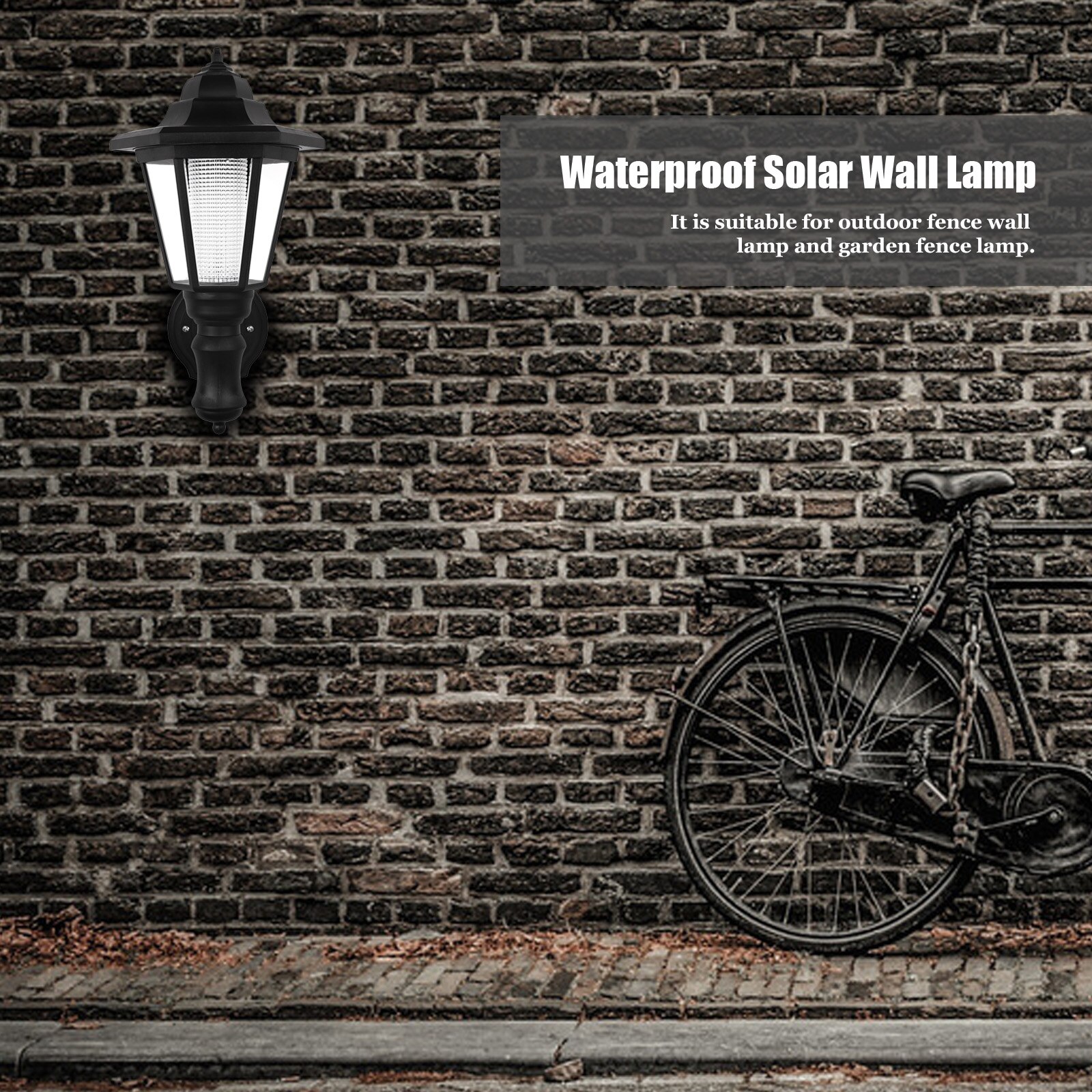
A 16 LED solar power outdoor lamp is an autonomous lighting fixture that converts sunlight into direct current electricity via an integrated photovoltaic panel to power 16 high-efficiency light-emitting diodes. Delivering 200 to 300 lumens of focused illumination, these eco-friendly lamps utilize rechargeable lithium-ion batteries and passive infrared sensors to provide zero-cost perimeter security and pathway lighting.
Technical Architecture and System Engineering
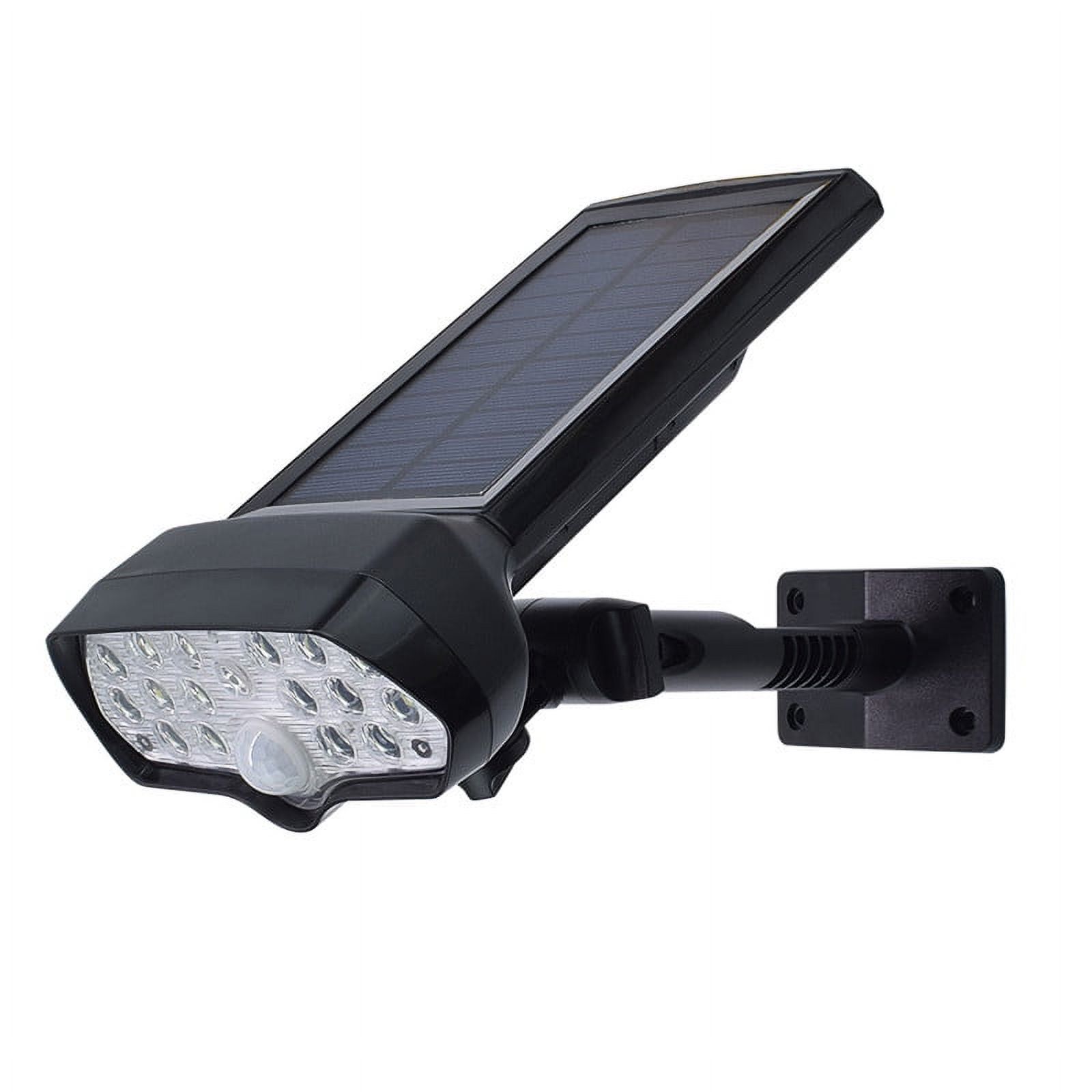
Understanding the performance of a 16 LED solar lamp requires examining its internal electronic components and energy harvest system. Unlike simple battery-operated fixtures or complex hardwired landscape systems, a solar outdoor lamp functions as a micro-power grid containing four primary sub-systems: the photovoltaic module, the light engine, the energy storage unit, and the micro-controller sensing circuit.
16 LED Solar Lamp Architecture:
- Solar Panel (PV)
- Charge Controller / PCB Circuit
- Lithium-ion Battery
- PIR Sensor & Optical Light Sensor
- 16 SMD LED Array
Photovoltaic Module Efficiency
The top surface of a standard 16 LED fixture features a small-scale solar panel, usually constructed from polycrystalline or monocrystalline silicon encapsulated in a protective Polyethylene Terephthalate (PET) or tempered glass layer. Typical panels operate at a rated voltage of 5.5V with a power output between 0.55W and 0.75W.
- Polycrystalline Panels: Offer energy conversion efficiencies between 15% and 17%. They perform reliably in standard sunlight conditions and provide a cost-effective manufacturing footprint.
- Monocrystalline Panels: Provide higher conversion efficiencies ranging from 19% to 22%, allowing faster energy transfer under partial shade or indirect daylight.
16 SMD LED Array Configuration
The light engine relies on Surface-Mount Device (SMD) technology, most commonly using SMD 2835 or SMD 5050 LED packages. Arranged in a compact 16-diode grid, these LEDs run at low forward voltages (typically 3.0V to 3.4V per series branch).
- Color Temperature: Most 16 LED security and pathway lamps are tuned to a daylight white spectrum ranging between 6,000K and 6,500K. High color temperatures increase perceived brightness and visual contrast during night vision conditions.
- Beam Angle: Reflective housings combined with frosted or clear polycarbonate lenses disperse light across a 120-degree cone, illuminating an area of roughly 25 to 40 square feet when mounted at standard heights.
Battery Storage and Power Management
Energy harvested during daylight hours is stored in an internal rechargeable battery, typically a single-cell 3.7V 18650 lithium-ion (Li-ion) or lithium iron phosphate ($\text{LiFePO}_4$) battery with capacities ranging from 800mAh to 1,200mAh.
A built-in Printed Circuit Board (PCB) acts as a charge controller and driver, managing voltage flow to protect the chemistry:
- Overcharge Protection: Terminates charging when the cell reaches approximately 4.2V to prevent thermal runaway.
- Over-discharge Protection: Cuts power supply to the LEDs when cell voltage drops below 2.8V to 3.0V, preventing permanent lithium capacity degradation.
Passive Infrared (PIR) and Optical Sensing
The intelligence of the system rests on two sensors: a CdS photoresistor (or PV panel voltage sensor) and a Passive Infrared (PIR) motion sensor. The optical sensor evaluates ambient lux levels, suppressing LED output until natural light drops below 10 to 20 lux. The PIR motion sensor detects thermal radiation shifts (body heat in the 8–14 micrometer infrared band) across its field of view. Using a segmented Fresnel lens, the sensor detects motion within a 10 to 16-foot radius over a 120-degree arc.
Luminous Output and Eco-Friendly Performance Analysis
Evaluating whether a 16 LED solar lamp provides adequate light requires comparing its lumen output and energy offset against conventional outdoor lighting options.
Lumen Calculation and Wattage Equivalency
Each individual SMD 2835 LED operating at full drive current yields roughly 15 to 20 lumens. A 16 LED array operating at full capacity generates approximately 240 to 320 lumens of flux.
To put this in perspective:
- A traditional 25-watt incandescent outdoor bulb produces approximately 200–250 lumens.
- A 4-watt low-voltage halogen landscape spotlight produces around 250 lumens.
- A 16 LED solar lamp matches or exceeds these output levels during active motion triggers, consuming zero grid-supplied watts.
Lumen Output Comparison:
- 25W Incandescent Bulb: ~250 Lumens (Consumes 25W Grid Power)
- 4W Halogen Spotlight: ~250 Lumens (Consumes 4W Low-Voltage)
- 16 LED Solar Lamp: ~280 Lumens (Consumes 0W Grid Power)
Environmental and Financial Impact
Replacing standard AC grid-powered fixtures with solar lamps eliminates direct electrical consumption.
If a homeowner runs four 30-watt incandescent porch lights for 10 hours per night, the annual energy usage equals:
$$\text{Annual Energy} = \frac{4 \times 30\text{ W} \times 10\text{ hrs/day} \times 365\text{ days}}{1,000} = 438\text{ kWh/year}$$
Transitioning those four fixtures to autonomous solar units eliminates 438 kWh of grid energy demand annually. Depending on local utility sources, this prevents hundreds of pounds of $\text{CO}_2$ emissions per year while delivering complete independence from utility grid power outages.
Multi-Mode Power Conservation
To maximize operational duration on a modest 1,200mAh battery, modern 16 LED lamps feature programmed micro-controller operating modes:
- Mode 1 (Security / Motion Trigger): The light remains completely off in dark conditions until the PIR sensor detects motion. Upon activation, it switches to 100% brightness (approx. 280 lumens) for 15 to 30 seconds before shutting off. This mode conserves maximum battery power, allowing operation through multiple rainy or overcast days.
- Mode 2 (Dim Standby / Motion Trigger): The lamp maintains a low continuous output (approx. 20–30 lumens) from dusk to dawn. When motion is detected, it ramps up to 100% brightness for 15 to 30 seconds, then returns to dim standby.
- Mode 3 (Continuous Twilight Mode): The fixture runs continuously at a medium output level (approx. 100 lumens) for 4 to 6 hours or until the battery reaches its low-voltage cutoff threshold.
Comparative Performance Matrix
The following table compares 16 LED solar outdoor lamps against alternative solar array sizes and wired outdoor fixtures across critical installation and engineering parameters:
| Lighting Solution | Lumens Output | Power Source | Battery / Supply | Primary Use Case | Installation Effort | Expected Lifespan |
|---|---|---|---|---|---|---|
| 16 LED Solar Lamp | 200 – 320 lm | Solar (0.55W PV) | 3.7V 1200mAh Li-ion | Doorways, fence posts, small pathways | Surface mount (screws/tape); No wiring | 2–4 years (battery dependent) |
| 100+ LED Solar Floodlight | 800 – 1,500 lm | Solar (2W–5W PV) | 3.7V 2200–4400mAh Li-ion | Driveways, large yards, perimeter security | Wall/pole mount; Direct sun alignment | 3–5 years |
| Low-Voltage 12V System | 300 – 600 lm | Main Grid (Transformer) | Direct 12V AC/DC line | Architectural landscape & garden accents | Trenching, cable routing, transformer setup | 5–10+ years |
| 120V AC Grid Floodlight | 1,500 – 3,000+ lm | Main Grid (Hardwired) | Direct AC utility line | High-intensity area floodlighting | Electrical box wiring; Conduit installation | 5–10+ years |
Optimal Strategic Placement and Installation Guidance
Maximizing the efficiency and operational longevity of a 16 LED solar lamp requires proper orientation relative to solar trajectories and proper mounting height.
Solar Installation Setup:
- Sun Path (Midday Peak)
- Solar Panel (PV): Mounted at 30°-45° Tilt (Facing South)
- 16 LED Lamp
- Mounting Height: 6.5 ft - 8 ft (2.0 m - 2.5 m)
- Ground Level
- Motion Detection Range: 10-16 ft / 120° Field of View
Azimuth and Tilt Alignment
Solar panels require direct solar irradiance to recharge their internal batteries fully.
- Northern Hemisphere: Mount the fixture so the photovoltaic panel faces true south.
- Southern Hemisphere: Mount the fixture facing true north.
- Tilt Angle: A fixed panel angle between 30 and 45 degrees promotes self-cleaning when it rains while capturing maximum solar radiation across seasonal elevation changes.
Avoid placing lamps beneath roof overhangs, evergreen trees, or structural shadows. Even partial shading over 10% of a polycrystalline solar panel's surface area can decrease energy generation by up to 50% due to series-cell resistance.
Mounting Height and PIR Coverage
For optimal PIR sensor performance and light dispersion:
- Ideal Mounting Height: Position the lamp between 6.5 feet and 8 feet (2.0 to 2.5 meters) above ground level.
- Detection Arc: Mounting higher than 8 feet broadens the illuminated area but reduces PIR sensor sensitivity to smaller thermal signatures (such as pets or low-profile movements). Mounting lower than 6 feet restricts motion detection range and narrows light coverage.
- Surface Attachment: Secure the light using stainless steel screws driven into wall anchors for brick, stucco, or wood siding. Weatherproof exterior double-sided acrylic foam tape may be used on smooth metal or vinyl surfaces, provided the surface is cleaned with isopropyl alcohol beforehand.
Environmental Resilience, Battery Degradation, and Maintenance
Outdoor solar lights must withstand temperature extremes, ultraviolet exposure, moisture, and dust accumulation.
Ingress Protection (IP) Standards
Quality 16 LED outdoor lamps feature an IP65 Waterproof Rating defined by the International Electrotechnical Commission (IEC):
- First Digit (6): Complete protection against dust ingress over extended exposure.
- Second Digit (5): Protection against low-pressure water jets projected from any directional angle (e.g., rain, sprinkler systems).
Lamps rated below IP64 should not be installed in exposed perimeter locations subject to direct wind-driven rain or heavy snow.
IP Rating Breakdown:
- IP 65
- 6 (Dust Protection): Totally dust-tight enclosure
- 5 (Water Protection): Resists low-pressure water jets & heavy rain
Thermal Limits of Lithium-Ion Batteries
Ambient temperature directly impacts internal battery performance:
- Cold Degradation (< 0°C / 32°F): Sub-freezing temperatures increase internal cell resistance, temporarily reducing effective capacity by 20% to 30% and slowing chemical charge acceptance during peak daylight hours.
- Heat Degradation (> 45°C / 113°F): Sustained exposure to severe heat accelerates electrolyte degradation, shortening overall battery cycle life.
Maintenance Checklist
To maintain operational efficiency over several years, perform simple maintenance every six months:
- Clean the Photovoltaic Surface: Wipe dust, pollen, bird droppings, and dried rain spots from the PET lens using a soft microfiber cloth dampened with clear water. Do not use abrasive chemical cleaners, which can scratch the protective film.
- Clear Environmental Obstructions: Trim nearby tree branches, vines, or shrubs that have grown over the panel's direct line of sight to the sun.
- Inspect Housing Seals: Check the silicone housing gasket and PIR lens cover for physical cracking or weather degradation to prevent moisture intrusion into the internal circuit board.
Frequently Asked Questions
How bright is a 16 LED solar lamp compared to traditional outdoor bulbs?
A 16 LED solar outdoor lamp generates approximately 200 to 300 lumens at full illumination. This output is comparable to a standard 25-watt to 30-watt incandescent light bulb or a 4-watt low-voltage halogen landscape fixture. It provides sufficient light to illuminate entry doorways, small steps, fence posts, or keyholes, but is not designed to replace high-wattage stadium or parking lot floodlights.
How many hours of direct sunlight do 16 LED solar lamps require to reach full charge?
Under clear skies, a 16 LED lamp requires approximately 6 to 8 hours of direct sunlight to charge its 1,200mAh lithium-ion battery fully. Indirect sunlight on overcast or cloudy days will still charge the battery, but at a reduced efficiency rate (taking 10 to 12 hours or requiring multiple days to reach maximum capacity).
Do 16 LED solar motion lamps work during winter or rainy days?
Yes, 16 LED solar lamps operate in winter and during rainy weather, provided their photovoltaic panel receives daylight. However, shorter daylight hours and lower sun angles reduce total energy generation. Selecting "PIR Motion Sensor Mode" (Mode 1), where the lamp remains completely off until triggered, ensures reliable operation throughout extended winter nights by conserving stored energy.
Can the internal lithium-ion battery in a 16 LED solar light be replaced?
Many compact 16 LED wall lamps feature sealed housings welded shut with sonic bonds or silicone adhesive to maintain an IP65 waterproof rating, making battery replacement impractical. However, units assembled with exposed stainless steel housing screws contain a standard 18650 lithium-ion cell that can be replaced by desoldering or unclipping the battery container.
What is the average lifespan of a 16 LED solar outdoor fixture?
The LED array itself typically lasts up to 50,000 operational hours, while the photovoltaic panel operates efficiently for 5 to 10 years. The primary limiting component is the internal lithium-ion battery, which generally undergoes 500 to 1,000 charge-discharge cycles. This results in an effective overall product service life of 2 to 4 years before light duration begins to noticeably diminish.
Strategic Action Plan for Implementing Solar Outdoor Lighting
Deploying 16 LED solar lamps effectively requires a systematic approach to procurement, pre-installation testing, and positioning.
Step 1: Conduct a Site Solar Audit
Before purchasing fixtures, evaluate target mounting surfaces between 10:00 AM and 2:00 PM. Identify wall segments, fence posts, or garage pillars that receive uninterrupted, direct sunlight during peak solar hours. Avoid areas shadowed by deep roof eaves, large tree limbs, or adjacent structures.
Step 2: Bench-Test Fixtures Before Surface Mounting
Perform a simple operation test before drilling holes into exterior walls:
- Expose the solar lamp to direct daylight or bright indoor light for 10 seconds.
- Completely cover the solar panel with an opaque cloth or cardstock to simulate darkness.
- Press the mode selector button to step through operational settings (Sensor Mode, Dim Mode, Continuous Mode).
- Wave a hand in front of the PIR sensor dome to confirm that the motion activation circuit and 16 LED array illuminate at full brightness.
Step 3: Mount with Proper Hardware
Position the lamp between 6.5 and 8 feet above the ground. Use stainless steel or zinc-coated hardware to prevent rust stains on exterior walls. When installing on masonry or brick, drill pilot holes using a masonry bit, insert expanding plastic wall anchors, and tighten screws flush against the mounting bracket. Ensure the top solar panel faces open sky at a slight downward tilt to shedding water and debris naturally.
Step 4: Set Conservation Operating Modes
For high-traffic paths or regions with frequent overcast weather, program the internal controller to Mode 1 (Off-to-Bright PIR Trigger). This setting ensures that battery energy is conserved strictly for motion events, guaranteeing reliable perimeter lighting even during long winter nights.