A 15 minute yoga practice offers an accessible, science-backed method to improve joint mobility, reduce systemic stress, and enhance core stability without demanding hours of free time. By pairing intentional movement with controlled diaphragmatic breathing, short daily yoga sessions effectively activate the parasympathetic nervous system, release chronic muscle tension, and maintain functional range of motion across major joints.
The Science and Physiological Impact of Short Yoga Sessions
Short-duration, high-frequency exercise protocols have gained widespread validation in physical therapy and sports science. While traditional studio classes often last 60 to 90 minutes, a focused 15 minute yoga session provides significant physiological returns by targeting neuromuscular control and arterial stiffness.
- 15-Minute Yoga Time Allocation
- [2 Min] Centering & Diaphragmatic Breathwork
- [5 Min] Dynamic Warm-Up & Spinal Mobilization
- [5 Min] Standing Balance & Muscular Activation
- [3 Min] Down-Regulation & Integrative Savasana
When you engage in movement combined with conscious breathwork—known as pranayama—even for a quarter of an hour, your body responds through clear neurological and hormonal pathways:
- Autonomic Nervous System Regulation: Slow, controlled nasal breathing stimulates the vagus nerve. This transition shifts the body from a sympathetic ("fight-or-flight") state to a parasympathetic ("rest-and-digest") state, measurable through increased Heart Rate Variability (HRV) and reduced salivary cortisol levels.
- Synovial Fluid Distribution: Articular cartilage relies on mechanical loading and movement for lubrication. Fifteen minutes of gentle movement cycles synovial fluid through the hip, shoulder, and spinal joints, delivering essential nutrients to cartilage and reducing early morning stiffness.
- Postural Decompression: Prolonged sitting compresses the lumbar spine and shortens the hip flexors and pectorals. A brief daily sequence counters these adaptations by strengthening the posterior chain (glutes, rhomboids, erector spinae) and lengthening tight anterior tissues.
- Metabolic and Vascular Conditioning: Dynamic flows, such as classic Sun Salutations (Surya Namaskar), induce light cardiovascular stress. This minor exertion triggers endothelial nitric oxide release, aiding blood vessel dilation and encouraging healthy circulation throughout the day.
For individuals facing high stress or desk-bound work environments, short daily sessions often yield higher long-term adherence rates than sporadic, intense workouts. Consistency drives soft tissue adaptation and neurological motor pattern retention far more effectively than occasional effort.
Structuring an Effective 15-Minute Yoga Sequence
Maximizing a short session requires structured time management. Without a blueprint, micro-practices risk becoming disorganized stretching routines that fail to build functional mobility or mental focus.
An optimized 15 minute yoga sequence breaks down into four clear movement blocks:
| Phase | Duration | Primary Objective |
|---|---|---|
| 1. Centering | 2 Minutes | Breath regulation, postural alignment |
| 2. Mobilization | 5 Minutes | Multi-planar spinal motion, hip openers |
| 3. Activation | 5 Minutes | Muscular engagement, standing balance |
| 4. Integration | 3 Minutes | Parasympathetic recovery, resting pose |
1. Centering (2 Minutes)
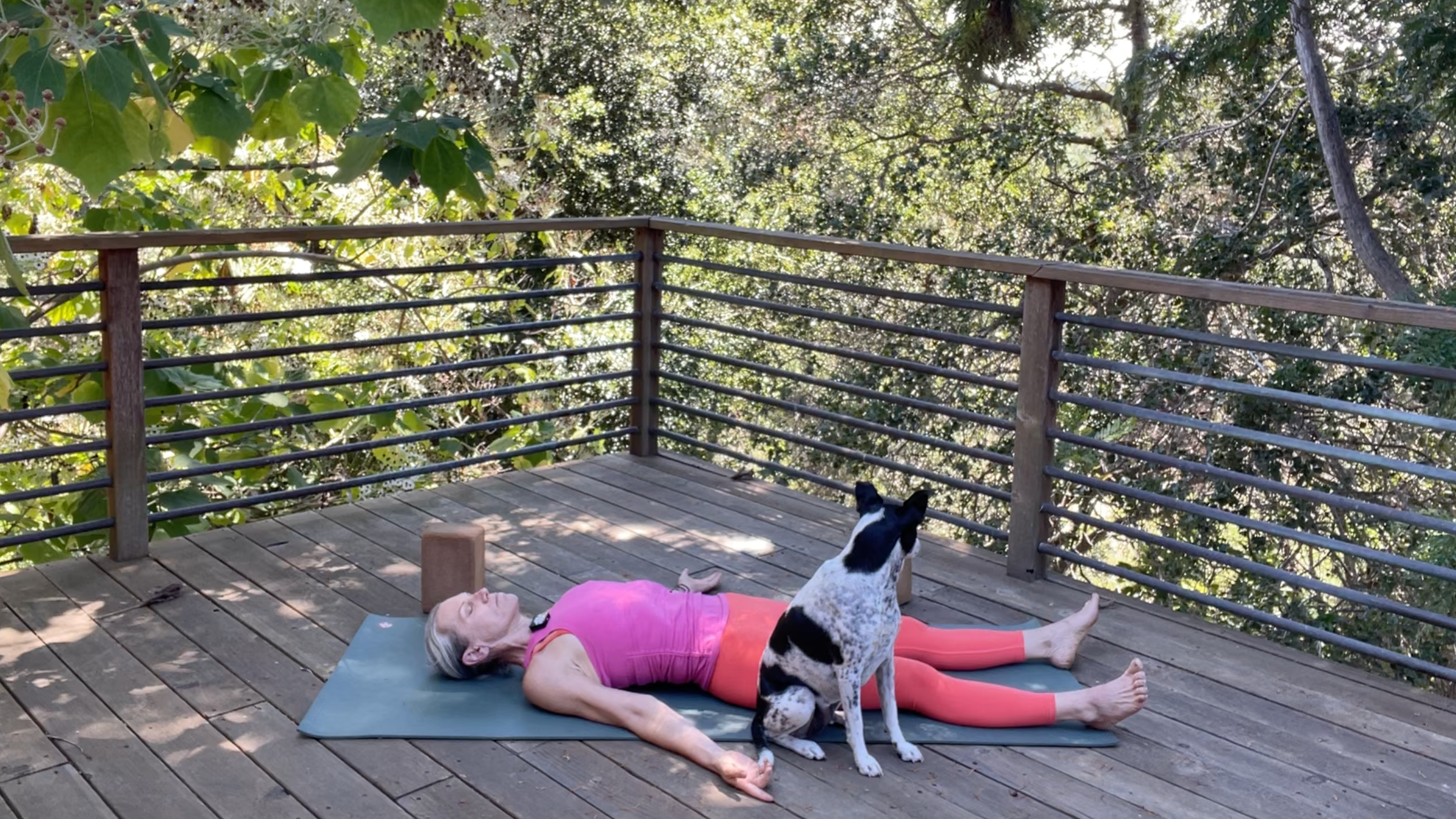
Begin in a stable seated posture (Sukhasana) or lying flat on your back (Savasana). Focus on establishing an even, three-part abdominal breath. Inhale through the nose for four seconds, filling the lower abdomen, ribs, and chest, then exhale slowly for six seconds. This extended exhalation sets the baseline for neural down-regulation before physical movement begins.
2. Mobilization (5 Minutes)
Transition into dynamic movements that take the spine through flexed, extended, laterally bent, and rotated positions. Move through fluid, breath-linked transitions rather than long static holds. This phase warms the deep postural muscles, hydrates myofascial sheets, and prepares joint capsules for weight-bearing poses.
3. Activation (5 Minutes)
Introduce standing poses or ground-based core postures that challenge balance and build stability. Holding poses for 3 to 5 breaths builds endurance in stabilizing muscles around the hips, ankles, and shoulder girdles. Focus on precise joint alignment rather than deep flexibility.
4. Integration and Down-Regulation (3 Minutes)
End with restorative postures and a brief resting phase. This stage lowers heart rate, brings blood pressure back to baseline, and consolidates motor learning. Skipping this final step undermines the nervous system benefits that make short yoga practices so effective.
Three Targeted 15-Minute Micro-Routines
Different times of day and physical demands call for distinct sequences. The following three targeted 15 minute yoga routines address morning stiffness, mid-day desk fatigue, and evening wind-down needs.
- Selecting Your Micro-Routine
- MORNING: Dynamic Flow (Sun Salutations & Standing)
- MIDDAY: Desk Reset (Chest Openers & Spine Twist)
- EVENING: Restorative (Fwd Folds & Legs-Up-Wall)
Routine 1: Morning Energy and Mobility Flow
Focus: Awakening the spine, raising core temperature, and building lower-body strength.
- Cat-Cow Pose (Marjaryasana-Bitilasana) — 2 Minutes: On hands and knees, inhale as you arch the spine and lift the chest; exhale as you round the spine and tuck the chin. Move continuously with your breath.
- Downward-Facing Dog (Adho Mukha Svanasana) — 1 Minute: Tuck toes, lift hips high, and pedal the feet gently to stretch the hamstrings and calves while engaging the upper back.
- Sun Salutation A (Surya Namaskar A) — 4 Minutes: Complete three slow cycles, stepping or floating between Forward Fold (Uttanasana), Halfway Lift (Ardha Uttanasana), Plank, Cobra (Bhujangasana), and Downward Dog.
- Warrior II (Virabhadrasana II) to Reverse Warrior — 3 Minutes: Hold Warrior II for 4 breaths on the right side, flip the palm to reach back into Reverse Warrior for 3 breaths, then repeat on the left side.
- Tree Pose (Vrksasana) — 2 Minutes: Stand tall, placing one foot on the inner calf or thigh of the opposite leg. Hold for 5 steady breaths per side to activate foot intrinsic muscles and ankle stabilizers.
- Seated Centering — 3 Minutes: Sit comfortably, close your eyes, and take 10 slow, deep nasal breaths before starting your day.
Routine 2: Midday Desk Reset and Posture Correction
Focus: Reversing sedentary strain, opening tight chest muscles, and decompressing the lower back.
- Supported Chest Opener — 2 Minutes: Sit or stand, interlace your fingers behind your lower back, roll your shoulders back, and pull your hands downward while keeping your ribcage knit down.
- Thread the Needle (Parsva Balasana) — 3 Minutes: From hands and knees, slide your right arm under your torso, resting your right shoulder and temple on the mat to stretch the upper back and thoracic spine. Hold for 90 seconds per side.
- Low Lunge (Anjaneyasana) with Side Bend — 4 Minutes: Step your right foot forward between your hands and lower your left knee. Reach your arms overhead, clasp your left wrist with your right hand, and lean gently to the right. Hold for 2 minutes per side to release the psoas and hip flexors.
- Seated Spinal Twist (Ardha Matsyendrasana) — 3 Minutes: Sit with legs extended, cross your right foot over your left knee, and twist your torso to the right, placing your right hand behind you for support. Hold for 90 seconds per side.
- Standing Forward Fold (Uttanasana) with Ragdoll Hold — 3 Minutes: Stand with feet hip-width apart, bend knees generously, grasp opposite elbows, and let your head and upper body hang heavy to release lumbar pressure.
Routine 3: Evening Wind-Down and Parasympathetic Down-Regulation
Focus: Releasing muscular tension, slowing the heart rate, and preparing for restful sleep.
- Child’s Pose (Balasana) — 3 Minutes: Kneel on the floor with big toes touching, knees wide, and torso folded forward with arms extended long on the mat. Deepen abdominal breathing.
- Reclined Bound Angle Pose (Supta Baddha Konasana) — 3 Minutes: Lie on your back, bring the soles of your feet together, and let your knees fall open to the sides. Rest your hands on your lower stomach.
- Supine Reclined Twist (Supta Matsyendrasana) — 3 Minutes: Lie flat, hug your right knee into your chest, and draw it across your body to the left side while extending your right arm out. Hold for 90 seconds per side.
- Legs-Up-the-Wall Pose (Viparita Karani) — 4 Minutes: Bring your hips close to a wall and extend your legs straight up against it, resting your torso flat on the ground. This inverted pose helps drain stagnant fluid from the legs and triggers deep relaxation.
- Corpse Pose (Savasana) — 2 Minutes: Lie fully flat, release all physical effort, and focus on slow, natural breathing.
Comparative Analysis of 15-Minute Yoga Styles
Not all 15 minute yoga practices deliver the same benefits. Choosing the right style depends on your daily energy levels, physical condition, and goals.
| Yoga Style | Energy Level | Primary Physical Target | Mental Benefit | Best Time of Day | Equipment Recommended |
|---|---|---|---|---|---|
| Vinyasa Flow | Moderate to High | Cardiovascular health, shoulder and core stability | Elevates focus and energy | Morning / Early Afternoon | Yoga mat, block |
| Hatha Yoga | Low to Moderate | Isometric endurance, static balance | Improves patience and posture | Any time | Yoga mat, strap |
| Yin Yoga | Low (Restorative) | Connective tissue, deep fascia, joint capsules | Calms anxiety, aids sleep | Evening / Before bed | Mat, bolster, blanket |
| Chair Yoga | Low | Thoracic mobility, gentle hamstring releases | Reduces office fatigue | Midday desk breaks | Sturdy chair |
| Power Yoga | High | Core strength, metabolic conditioning | Enhances resilience | Morning | Yoga mat |
Essential Postures and Safe Modifications for Beginners
Short yoga sessions offer less warm-up time than longer classes, making proper form and smart modifications essential for avoiding joint strain.
- Safe Alignment & Modifications
- Down Dog: Bend knees, lift heels to protect hamstrings.
- Plank: Lower knees to maintain neutral lumbar spine.
- Cobra: Keep elbows bent, squeeze shoulder blades back.
- Low Lunge: Place block under hands to keep chest lifted.
Downward-Facing Dog (Adho Mukha Svanasana)
- Target: Latissimus dorsi, hamstrings, calves, shoulder stabilization.
- Alignment: Spread fingers wide and press through the knuckles of your index fingers and thumbs. Keep a micro-bend in your knees if your hamstrings feel tight, prioritize keeping a long spine over touching your heels to the floor.
- Modification: Place your hands on a stable yoga block or wall to reduce weight-bearing pressure on the wrists.
Cobra Pose (Bhujangasana)
- Target: Erector spinae, chest expansion, abdominal stretching.
- Alignment: Lie prone with hands planted under your shoulders. Keep elbows hugging close to your ribs, press the tops of your feet into the mat, and lift your chest using upper-back strength rather than pushing heavily into your hands.
- Modification: Lower onto your forearms to practice Sphinx Pose, which reduces extension depth in the lumbar spine.
Low Lunge (Anjaneyasana)
- Target: Iliopsoas, rectus femoris, gluteal activation.
- Alignment: Ensure the front knee stacks directly over the ankle, avoiding sharp forward angles that over-stress the patellar tendon. Keep your hips squared to the front of the mat.
- Modification: Place a folded blanket under your back knee to cushion the joint against hard flooring.
Maximizing Results: Consistency, Breathwork, and Environment
Because a 15 minute yoga session is concise, optimizing environmental and breathing conditions ensures you get the most out of every minute.
- 15-Minute Practice Optimization
- Breath Control: Ujjayi / 4-6 Pacing — Down-regulates nervous system instantly.
- Environment Design: Quiet space, mat out — Eliminate phone alerts for uninterrupted time.
- Habit Stacking: Anchor to morning coffee or evening shower routine.
Incorporating Ujjayi Pranayama
Ujjayi breathing (Victorious Breath) involves breathing through your nose while gently constricting the back of your throat, creating a soft ocean-like sound. This technique increases intra-thoracic pressure, helps stabilize your core during poses, and gives your mind a focal point that enhances mental concentration.
Creating a Distraction-Free Environment
To get full value from a 15-minute practice, eliminate interruptions before you step on the mat:
- Set your phone to Do Not Disturb mode.
- Keep your yoga mat unrolled or easily accessible in a designated space to lower the friction of getting started.
- Use a silent or gentle timer to track your 15 minutes, avoiding the distraction of checking the clock.
Overcoming the "Too Short" Fallacy
A common misconception in fitness is that brief practices lack real value. However, clinical exercise research consistently shows that daily 15-minute bouts of movement produce superior long-term tissue adaptation and behavioral consistency compared to a single weekly 90-minute session. Micro-practices build a strong daily habit, making movement a seamless part of your daily routine rather than a demanding task.
For guidance on safe alignment and movement modifications, consult resources like the American Physical Therapy Association.
Designing Your Sustainable Daily 15-Minute Yoga Habit
To make short yoga sessions a lasting part of your lifestyle, focus on habit stacking and choosing flows that fit your energy levels.
- Anchor Your Practice: Attach your 15-minute session to an established daily habit. Perform your morning flow right after brewing your coffee, or practice your evening wind-down immediately after turning off your work computer.
- Select Two Core Flows: Choose one energetic flow for high-energy days and one restorative flow for days when you feel exhausted. Having these ready removes decision fatigue.
- Track Consistency over Intensity: Focus on maintaining a continuous streak of daily practice rather than pushing for extreme flexibility in individual poses.
- Listen to Biofeedback: Pay attention to joint feedback. If you feel sharp pain in your knees, lower back, or wrists, back off the depth of the pose and use modifications.
By committing to a targeted, well-structured 15 minute yoga routine each day, you can protect your joint health, manage daily stress, and maintain functional mobility for years to come.
Frequently Asked Questions
Is 15 minutes of yoga enough to see health and fitness results?
Yes. Practicing yoga for 15 minutes daily can significantly improve joint mobility, lower cortisol levels, and enhance muscular endurance over time. While short sessions may not build powerlifter-level strength or peak cardiovascular endurance, they excel at maintaining spinal health, relieving stress, and establishing lasting daily exercise habits.
Can 15-minute yoga routines replace full 60-minute studio classes?
A 15-minute routine serves a different function than a comprehensive 60-minute studio class. Long classes allow time for deep systemic warming, advanced peak poses, and prolonged restorative work. However, 15-minute micro-sessions offer superior frequency and consistency, making them ideal for busy schedules or daily postural maintenance between longer workouts.
What equipment do I need for a short home yoga practice?
All you really need is a non-slip yoga mat to provide traction and cushioning on hard floors. Optional accessories like high-density foam blocks, a woven yoga strap, or a firm blanket can help beginners maintain safe spinal alignment and comfortably reach the floor during tight hamstring stretches.
When is the best time of day to perform a 15-minute yoga sequence?
The ideal time depends on your personal health goals. Morning sessions help reduce joint stiffness and boost mental clarity for the day. Midday breaks relieve desk-related tightness in the shoulders and lower back. Evening flows calm the nervous system and prepare the body for restful sleep. Choose the time of day that best supports your schedule and energy levels.
How should beginners modify 15-minute flows to avoid strain?
Beginners should focus on maintaining a long, neutral spine rather than forcing their limbs into full depth. Useful modifications include keeping a soft bend in the knees during forward bends, dropping down to the knees in plank positions, and using yoga blocks under the hands to bring the floor closer. Never push into sharp or pinching pain.