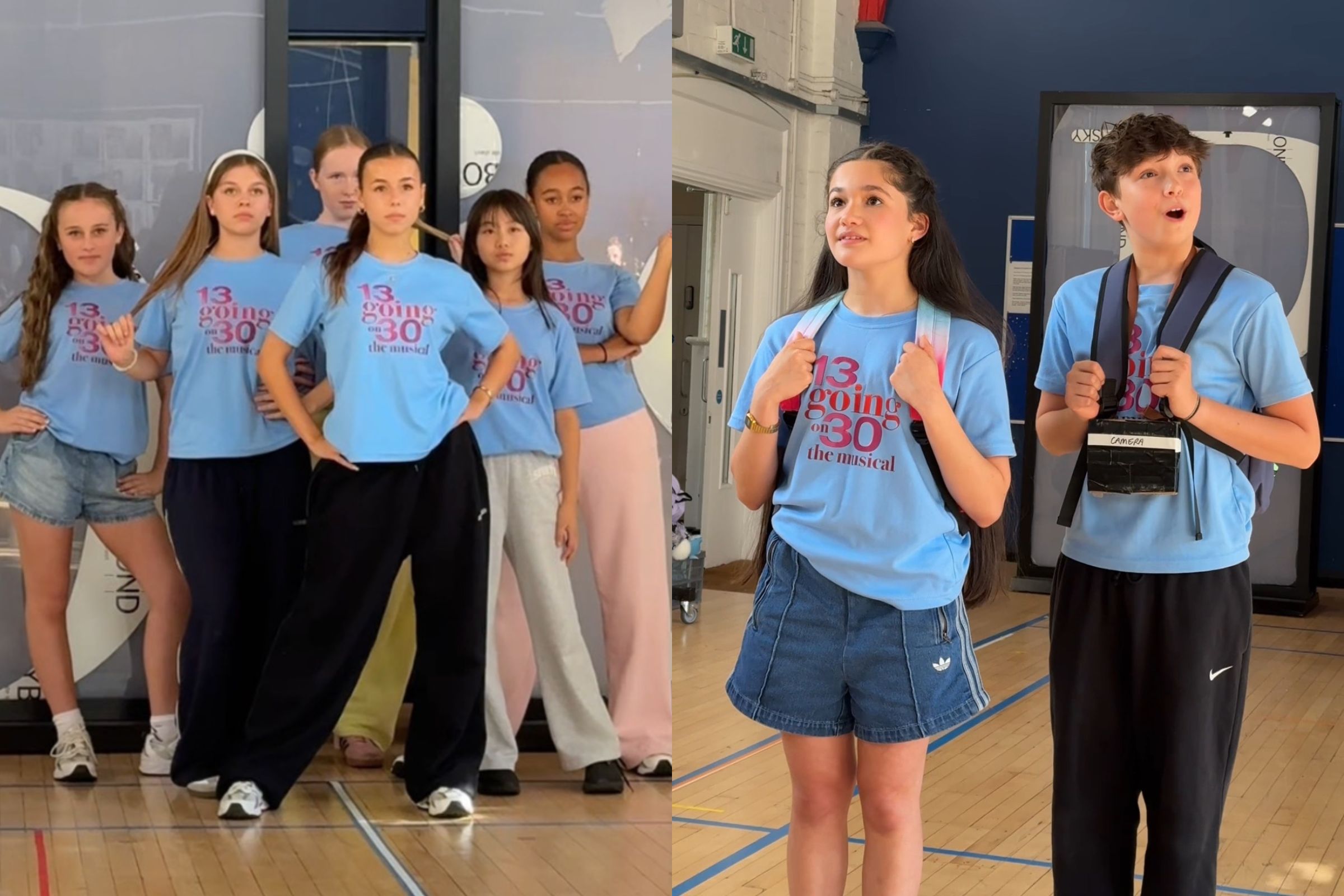
13 Going on 30 is a 2004 fantasy romantic comedy directed by Gary Winick that follows Jenna Rink, a teenage girl who makes a birthday wish to be thirty, only to find herself living that life overnight. A central plot point features the "Six Chicks," a clique of popular girls that bullies Jenna at thirteen, shaping her desire to grow up and join the "in" crowd.
The Narrative Foundation of 13 Going on 30
At its heart, 13 Going on 30 is a classic "be careful what you wish for" fable centered on the universal desire to escape the awkwardness of adolescence. The protagonist, Jenna Rink (played by Christa B. Allen at thirteen and Jennifer Garner at thirty), is a social outcast who desperately wants to skip the struggles of middle school. On her thirteenth birthday, following a humiliation orchestrated by the popular crowd, she locks herself in a closet and wishes to be "thirty, flirty, and thriving."
The film explores the tension between the innocence of childhood and the complexities of adulthood. When Jenna wakes up in the body of a successful magazine editor in New York City, she must navigate a career, romantic relationships, and the realization that she has lost touch with her best friend, Matt Flamhaff. The movie emphasizes themes of authenticity, the importance of retaining one's moral compass, and the realization that the grass is not always greener on the other side of maturity. It serves as a commentary on the shallow nature of popularity and the superficiality often found in the world of high-fashion journalism.
Identifying the Six Chicks and Their Role
In the film’s opening act, the "Six Chicks" represent the pinnacle of social cruelty at Jenna’s middle school. Led by Lucy "Tom-Tom" Wyman, this group of girls exerts power through exclusion and calculated social maneuvers. They are not merely classmates; they are the catalyst for Jenna’s profound insecurity. By inviting Jenna to a party only to use her as a laughingstock, they ignite her desperate need to abandon her current life.
While the group is often referred to collectively as the "Six Chicks," the narrative primarily focuses on their leader, Lucy. The group serves as a foil to Jenna’s genuine, albeit awkward, character. Their presence highlights the contrast between the artificiality of middle school social hierarchies and the authentic, deep-seated bond Jenna shares with her childhood friend, Matt.
Key Cast and Character Dynamics
Understanding the film requires looking at both the younger versions of characters and their adult counterparts. The casting choices were instrumental in bridging the gap between the teenage mindset and the adult experiences the characters undergo.
| Actor (Adult) | Actor (Child) | Character Role |
|---|---|---|
| Jennifer Garner | Christa B. Allen | Jenna Rink |
| Mark Ruffalo | Sean Marquette | Matt Flamhaff |
| Judy Greer | Alexandra Kyle | Lucy "Tom-Tom" Wyman |
| Kathy Baker | N/A | Bev Rink |
| Phil Reeves | N/A | Wayne Rink |
The relationship between Jennifer Garner and Mark Ruffalo is widely credited with the film’s enduring popularity. Their chemistry anchors the transition from childhood nostalgia to adult companionship, grounding the film's fantastical premise in genuine emotion.
The Significance of the "Six Chicks" in Jenna’s Development
The Six Chicks serve as a narrative device that defines the "before" state of Jenna’s life. Their cruelty is not just an obstacle for the character; it is a mirror for the adult world she eventually enters. As an adult, Jenna (Jennifer Garner) discovers that her colleague and former middle school antagonist, Lucy (Judy Greer), is still utilizing the same exclusionary tactics in the boardroom that she used in the classroom.
This continuity illustrates the film’s central point: becoming "thirty and thriving" does not automatically mean one has matured. The adult version of the Six Chicks—now working in the competitive environment of Poise magazine—demonstrates that bullies often simply trade the school hallway for the office cubicle. Jenna’s realization that she must stop emulating the Six Chicks and instead embrace the values of her younger, truer self is the turning point of the movie.
Production and Reception Context
Released in 2004, 13 Going on 30 was a significant commercial success, bolstered by the star power of Jennifer Garner, who was then at the peak of her fame due to the television series Alias. The film was directed by Gary Winick, who brought a lighthearted but grounded approach to the fantasy-comedy genre.
Critics at the time noted the film’s debt to other body-swap comedies like Big, but praised its unique female perspective. The production design, particularly the transformation of the magazine office, highlighted the glitz and artificiality of 2000s-era pop culture. By 2026, the film is widely recognized as a cult classic of the early 2000s, frequently cited for its nostalgic value and its commentary on the pressure to conform to societal expectations.
Common Misconceptions Regarding the Cast
A frequent point of confusion for viewers involves whether the same actresses played the Six Chicks in both the 1987 sequences and the 2004 sequences. While the adult version of Lucy (Judy Greer) is a primary antagonist throughout the film, the other members of the Six Chicks do not transition into the adult storyline in the same capacity. The film maintains a clear separation between the "teen" drama and the "adult" drama, with only Jenna and Lucy bridging the gap in a meaningful way.
Additionally, some viewers occasionally confuse the child actors with their adult counterparts. While Christa B. Allen was lauded for her performance as young Jenna, the casting team deliberately selected an actress who could mimic Jennifer Garner’s mannerisms rather than someone who was a visual twin. This choice helped maintain the internal logic of the character’s personality remaining constant despite the sudden aging process.
Frequently Asked Questions
Who was the leader of the Six Chicks in 13 Going on 30?
The leader of the group is Lucy "Tom-Tom" Wyman. As a teenager, she orchestrates the social sabotage of Jenna Rink, and as an adult, she remains a primary antagonist in Jenna’s professional life, consistently attempting to undermine her at Poise magazine.
Why did Jenna wish to be 30 instead of any other age?
Jenna felt that by age 30, she would have reached the "peak" of life—a point where she would be fashionable, successful, independent, and surrounded by friends. She viewed age 30 as a final destination that would render the difficulties of her thirteenth year irrelevant.
How does the film handle the time travel aspect?
The film does not focus on the "how" of the time travel; it is treated as a magical realism element triggered by "wishing dust" (magic glitter) gifted by Matt on her thirteenth birthday. The story prioritizes the character arc over scientific or supernatural explanations, focusing on the psychological and emotional shifts Jenna experiences.
Are the Six Chicks essential to the ending of the movie?
Yes, they serve as the moral benchmark. By the end of the film, Jenna rejects the toxic social structure embodied by the Six Chicks. Her evolution is marked by her decision to prioritize her own integrity and her relationship with Matt over the validation of her peers, effectively breaking the cycle of bullying that started in the 1987 closet scene.
Is 13 Going on 30 considered a classic body-swap film?
It is firmly established in the canon of body-swap comedies. While it draws inspiration from predecessors like Big and Freaky Friday, it is distinguished by its focus on the transition into womanhood and its specific exploration of professional workplace dynamics in the fashion industry.
Next Steps for Fans of the Film
If you are interested in exploring the themes of 13 Going on 30 further, consider revisiting the film’s director commentary or behind-the-scenes features, which provide context on the casting process and the creation of the 1980s nostalgia aesthetic. You may also find it useful to compare the film to other "wish-fulfillment" comedies of the same era to see how the genre handled the shift between adolescent angst and adult reality. For those looking for more content involving the cast, the work of Jennifer Garner and Mark Ruffalo in their subsequent filmographies often touches on similar themes of character growth and romantic maturity.