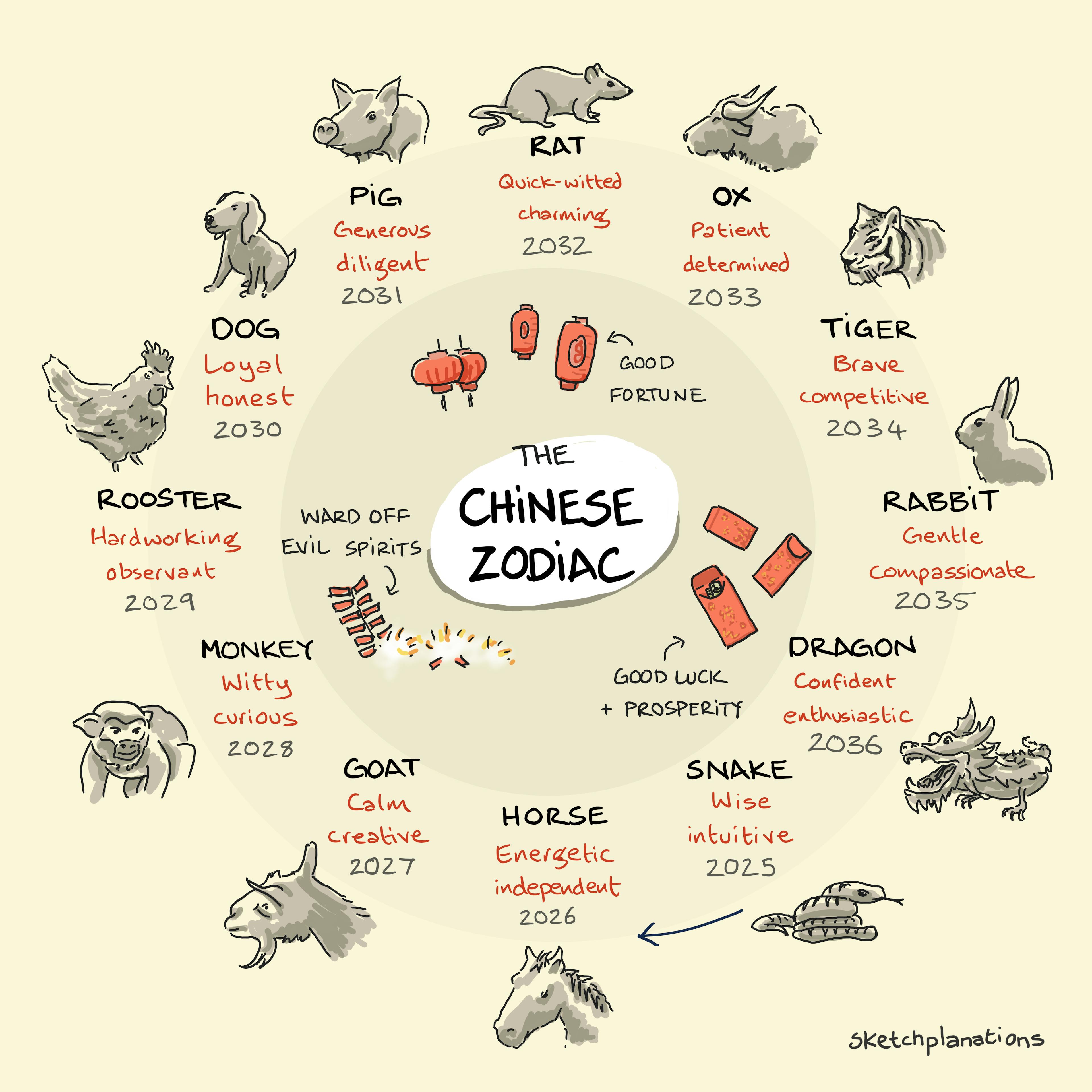
The Chinese zodiac, known as Shengxiao, is a repeating 12-year cycle where each year is represented by a specific animal and its reputed attributes. Based on the Chinese lunisolar calendar, this system assigns personality traits, compatibility, and fortune to individuals born within these years, serving as a cultural framework for understanding time and human character.
The Structure of the Lunar Calendar and the Zodiac Cycle
The Chinese zodiac is fundamentally tied to the lunar calendar, which tracks the phases of the moon rather than the solar year. Because a lunar year consists of roughly 354 days, the start of the Chinese New Year shifts annually, typically falling between January 21 and February 20. Understanding this is essential for accurately identifying one's zodiac sign, as a person born in early January might belong to the sign of the previous calendar year.
The 12-year cycle is not merely a sequence of animals; it is deeply integrated with the theory of the Five Elements—Wood, Fire, Earth, Metal, and Water. Each year is paired with one of these elements in a specific order, creating a 60-year "sexagenary" cycle. While the animal sign provides the core personality archetype, the elemental association refines the nuances of that year’s energy, adding a layer of complexity to traditional astrological readings.
The 12 Signs and Their Symbolic Significance
The order of the animals—Rat, Ox, Tiger, Rabbit, Dragon, Snake, Horse, Goat, Monkey, Rooster, Dog, and Pig—is rooted in ancient folklore, most famously the "Great Race." According to the myth, the Jade Emperor invited all animals to participate in a race to determine the order of the zodiac. Their performance in this race is said to reflect the traits associated with each sign today.
The First Half: Growth and Foundation
- Rat: Known for intelligence, adaptability, and resourcefulness. The Rat is considered a sign of wealth and surplus.
- Ox: Represents diligence, persistence, and reliability. Those born in the year of the Ox are often viewed as hardworking and grounded.
- Tiger: Symbolizes courage, authority, and unpredictability. Tigers are natural leaders but can be prone to impulsivity.
- Rabbit: Associated with grace, sensitivity, and artistic talent. The Rabbit is often viewed as the luckiest of the signs, valuing peace and harmony.
- Dragon: The only mythical creature, the Dragon embodies power, ambition, and charisma. It is considered the most auspicious sign in the cycle.
- Snake: Represents wisdom, intuition, and mystery. People under this sign are often deep thinkers and strategist-oriented.
The Second Half: Action and Reflection
- Horse: Characterized by energy, independence, and a love for freedom. The Horse thrives in active, social environments.
- Goat: Symbolizes kindness, gentleness, and artistic inclination. Goats are often nurturing and prefer quiet, stable lives.
- Monkey: Known for wit, curiosity, and innovation. The Monkey is a quick learner who excels at solving complex problems.
- Rooster: Represents observation, punctuality, and attention to detail. Roosters are typically hardworking and honest.
- Dog: Signifies loyalty, integrity, and sincerity. The Dog is highly protective and values justice and community.
- Pig: Embodies optimism, generosity, and resilience. The Pig is often associated with prosperity and a relaxed approach to life.
Comparison of Zodiac Sign Characteristics
The following table categorizes the 12 signs by their primary traditional attributes and elemental orientation, which can help in interpreting the temperament of each sign within the 2026 calendar year and beyond.
| Animal | Primary Attribute | Element Association | Key Personality Trait |
|---|---|---|---|
| Rat | Intelligence | Water | Resourceful |
| Ox | Diligence | Earth | Reliable |
| Tiger | Courage | Wood | Authoritative |
| Rabbit | Harmony | Wood | Artistic |
| Dragon | Power | Earth | Charismatic |
| Snake | Wisdom | Fire | Intuitive |
| Horse | Freedom | Fire | Energetic |
| Goat | Kindness | Earth | Nurturing |
| Monkey | Wit | Metal | Innovative |
| Rooster | Precision | Metal | Diligent |
| Dog | Loyalty | Earth | Protective |
| Pig | Generosity | Water | Resilient |
The Influence of Elements on the 12-Year Cycle
While the animal sign remains consistent, the elemental influence changes every two years. For example, a person born in a "Wood" year may exhibit more growth-oriented and creative tendencies, while a "Metal" year often brings themes of clarity, discipline, and rigidity.
To determine the element, one looks at the last digit of the birth year:
- 0 or 1: Metal
- 2 or 3: Water
- 4 or 5: Wood
- 6 or 7: Fire
- 8 or 9: Earth
By combining the animal sign and the element, observers can derive a more specific character profile. A "Fire Dragon," for instance, is perceived as more intense and prone to dramatic shifts than an "Earth Dragon," which is typically viewed as more stable and grounded.
Common Misconceptions and Cultural Context
A recurring error for those new to the Chinese zodiac is the assumption that the cycle follows the Gregorian January 1st start date. Because the zodiac is determined by the lunar calendar, individuals born in January or early February must consult a professional conversion chart or a lunar calendar to verify their sign. Failing to do so frequently results in an incorrect sign assignment.
Furthermore, it is important to note that the zodiac is traditionally used in East Asian cultures to assess compatibility for business partnerships, marriage, and project timing. While it serves as a tool for cultural reflection, it should not be conflated with scientific or predictive outcomes. In professional settings in 2026, many individuals use these cycles for personal growth or as a fun, historical lens through which to view personality dynamics, rather than as a definitive manual for decision-making.
Frequently Asked Questions
H3: Does the Chinese zodiac change every year?
Yes, the zodiac animal changes every year according to a fixed 12-year rotation. After the 12th year (the Pig), the cycle restarts with the Rat. This rotation is cyclical and perpetual, serving as the basis for the Chinese calendar system.
H3: How do I find my exact zodiac sign?
To find your sign, you must identify your birth date according to the Chinese lunar calendar. Because this calendar fluctuates against the Gregorian calendar, you should use a trusted conversion tool or look up your birth year in a standard lunar-Gregorian conversion table to ensure you are not misidentified due to a January or February birth date.
H3: Is compatibility strictly dictated by zodiac signs?
Traditional practices use signs to suggest compatibility, focusing on "trines" or specific animal pairings that are thought to complement each other. However, these are cultural traditions and generalizations rather than strict rules for personal or professional success.
H3: What is the significance of the "Year of my birth sign"?
In traditional belief, the year of your zodiac animal (your Ben Ming Nian) is considered a pivotal time. It is often believed that one may face challenges during this year, and as a result, many choose to wear red accessories or charms to invite protection and good luck during their namesake year.
Applying Zodiac Knowledge in 2026
If you are interested in exploring your zodiac sign further, the most practical next step is to verify your specific birth year and element using a verified, historically accurate source. Once confirmed, you can research the "affinity" signs associated with yours to understand the archetypes of people you may work or collaborate with most effectively. For those looking to integrate these concepts into daily life, consider using the traditional traits as a self-reflection tool to balance your professional strengths and weaknesses throughout the year.