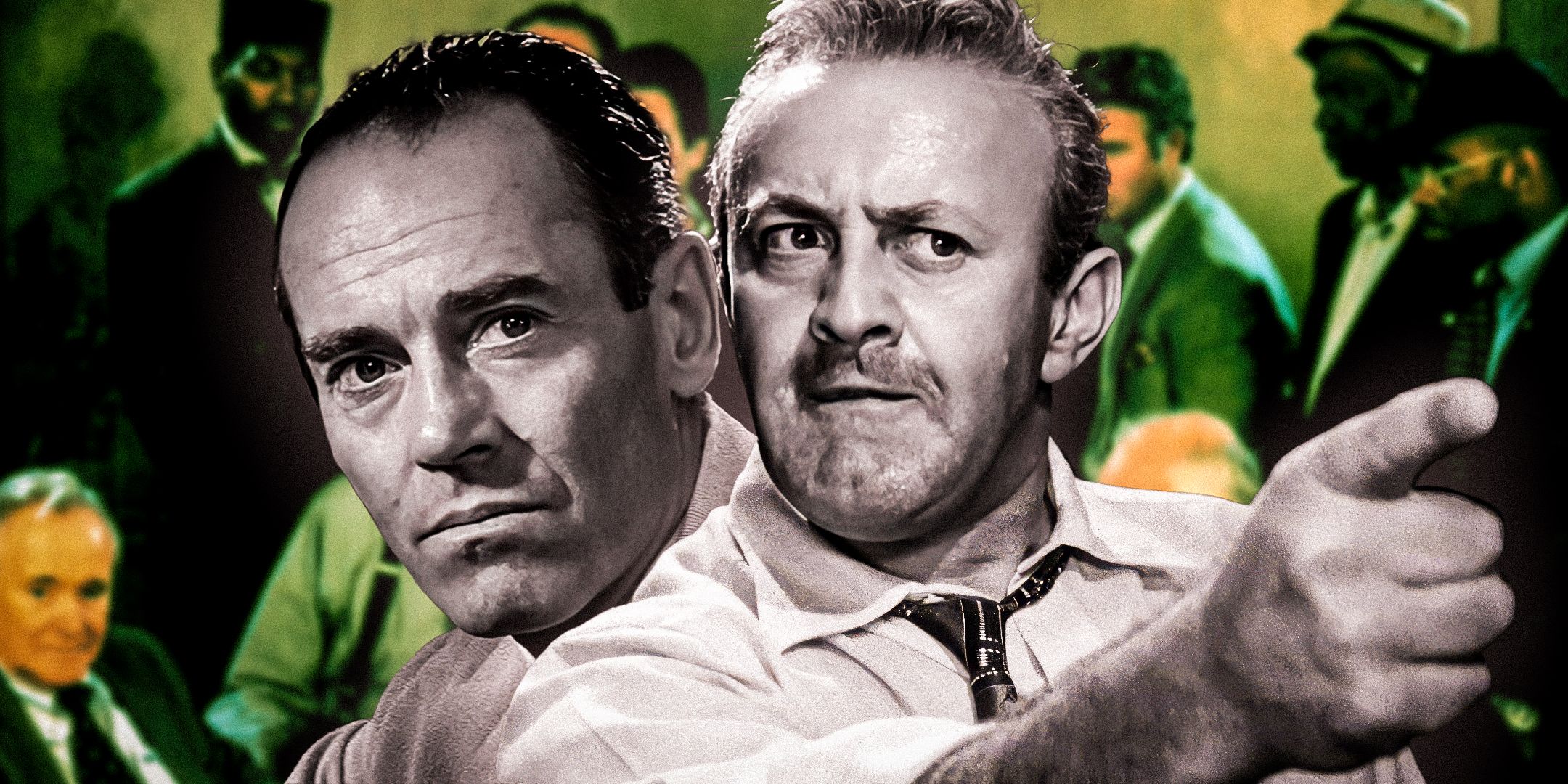
In the seminal drama 12 Angry Men, the "shocking truth" behind the father’s murder is that there is no absolute, objective truth discoverable by the jury. The narrative hinges not on the factual certainty of whether the defendant committed the crime, but on the profound fallibility of the judicial process, eyewitness testimony, and the inherent biases of the twelve men tasked with rendering a verdict.
The Myth of Objective Certainty
When audiences investigate the "shocking truth" of the father’s murder in Reginald Rose’s masterpiece, they are often searching for a definitive plot twist or a hidden confession that reveals the defendant’s innocence or guilt. However, the brilliance of the script lies in its refusal to provide this comfort. The film is a masterclass in epistemology—the study of knowledge—specifically regarding the "reasonable doubt" standard required for a criminal conviction.
Throughout the deliberation, the jurors analyze the physical evidence: a switchblade knife, the testimony of an elderly neighbor who allegedly heard the murder, and the account of a woman across the street who claimed to witness the act through a passing train. As the protagonist, Juror 8, methodically dismantles these accounts, the "truth" shifts. It becomes clear that the original investigation was rushed and that the police work was biased by the defendant's background. By the end of the narrative, the film suggests that the most shocking truth is that a man's life can hang in the balance of a system that relies entirely on human perception, which is demonstrably flawed.
Deconstructing the Evidence
The jury’s journey begins with an overwhelming consensus that the defendant is guilty. This belief is rooted in three primary pieces of evidence. Understanding why these pieces fall apart is essential to grasping the film's core theme of judicial skepticism.
- The Switchblade: The prosecution emphasized the uniqueness of the knife, which the defendant claimed he lost. Juror 8’s decision to produce an identical knife—purchased for a small sum at a local pawn shop—shatters the claim that the murder weapon was a rare, one-of-a-kind object. This act proves that the prosecution’s "smoking gun" was merely a common item, introducing the first meaningful spark of doubt.
- The Elderly Witness: The man living downstairs claimed to hear the argument and the body hit the floor. The jury reconstructs the timeline of the man’s movement from his bedroom to the front door, revealing it would be physically impossible for him to traverse the hallway in the timeframe he testified to, given his infirmity and gait.
- The Female Witness: The woman claimed to see the murder through the windows of an elevated train. The defense team identifies that she wore bifocals but was not wearing them while lying in bed, meaning her perception of the event was obscured by the lack of clear vision during the high-stress moment.
Comparison of Juror Perspectives
The tension in the room is not just about the facts of the case, but the psychological baggage the jurors bring into the room. The following table categorizes the primary archetypes present in the jury room and their approach to the "truth."
| Juror Type | Primary Motivation | Approach to Evidence | View on "Reasonable Doubt" |
|---|---|---|---|
| The Logical (Juror 8) | Justice/Fairness | Skeptical/Empirical | Requires near-certainty |
| The Traditionalist (Juror 3) | Personal Vendetta | Confirmation Bias | Ignores doubt for retribution |
| The Pragmatist (Juror 4) | Cold Logic | Fact-oriented | Values consensus over nuance |
| The Observer (Juror 9) | Human Insight | Empathic | Recognizes human fallibility |
The Role of Bias in the Verdict
The "shocking truth" is also a commentary on the jurors themselves. As the film progresses, the dialogue reveals that many of the men are not debating the evidence, but rather projecting their own insecurities, prejudices, and domestic frustrations onto the case. Juror 3, for instance, is driven by an estranged relationship with his own son, which colors his perception of the defendant. His insistence on a "guilty" verdict is not a pursuit of justice, but a manifestation of his desire to see a "rebellious" youth punished.
This highlights the fragility of the American jury system. The film demonstrates that the "truth" is often hostage to the emotional state of the deciders. In a real-world legal context, this is known as the trial by peers risk, where subjective human experience often overrides objective legal standards. The film serves as a cautionary tale for legal practitioners and citizens alike regarding the necessity of checking one’s personal life at the door before entering the deliberation room.
Reasonable Doubt as a Safeguard
In the United States legal system, the burden of proof rests entirely on the prosecution. "Beyond a reasonable doubt" does not mean "beyond any doubt whatsoever," but rather that the evidence is so compelling that no reasonable person could conclude otherwise. The shock expressed by the jury at the beginning of the film stems from their misunderstanding of this threshold.
When Juror 8 introduces doubt, he is not necessarily declaring the defendant innocent. He is simply asserting that the case presented is too fragile to justify taking a life. By 2026, the legal interpretation of this standard remains the bedrock of defense law. The lesson provided by the film is that the primary role of a juror is not to find "the truth," but to determine if the state has met its heavy burden. If the state fails, the jury must acquit, regardless of their personal feelings about the defendant's character.
FAQ: Common Questions Regarding the Film’s Conclusion
Does the film ever confirm if the defendant actually killed his father?
No. The film purposefully leaves the defendant’s guilt or innocence ambiguous. By never showing the audience what actually happened, the movie forces the viewer to experience the same uncertainty as the jurors, highlighting that in a courtroom, we only ever see reconstructed versions of reality.
Why is the setting restricted to a single room?
The single-room setting creates a sense of claustrophobia that mirrors the high stakes of the deliberation. It forces the characters—and the audience—to focus entirely on the dialogue and the shifting power dynamics without external distractions. This technical constraint serves the narrative goal of proving that truth is reached through conversation, not physical action.
Is the film accurate to real-world courtroom procedures?
While the film is a dramatic work, it is highly accurate in its portrayal of the process of deliberation. It correctly identifies the importance of the jury foreman, the role of evidence review, and the standard of unanimity required in many jurisdictions for criminal cases. However, in reality, a judge might intervene if a jury becomes overly combative or if jurors bring in outside information that was not entered into the trial record.
What is the most important takeaway for a modern audience?
The most enduring lesson is the vital importance of critical thinking and empathy. The film demonstrates that it is easier to follow the herd than it is to stand alone against a crowd. It challenges viewers to question their own biases and to prioritize the rigorous analysis of facts over the convenience of a quick, unexamined judgment.
Next Actions: Analyzing Legal Narratives
If you are interested in the intersection of law and human psychology, consider reviewing historical case studies where forensic evidence was later overturned by new analysis. This practice helps one understand how "truths" that seem settled at one point in time can be proven false as technology and methodology evolve. For those interested in the legal system, observing real-world jury selection processes or reading legal transcripts can offer further insight into how "reasonable doubt" is tested in 2026.