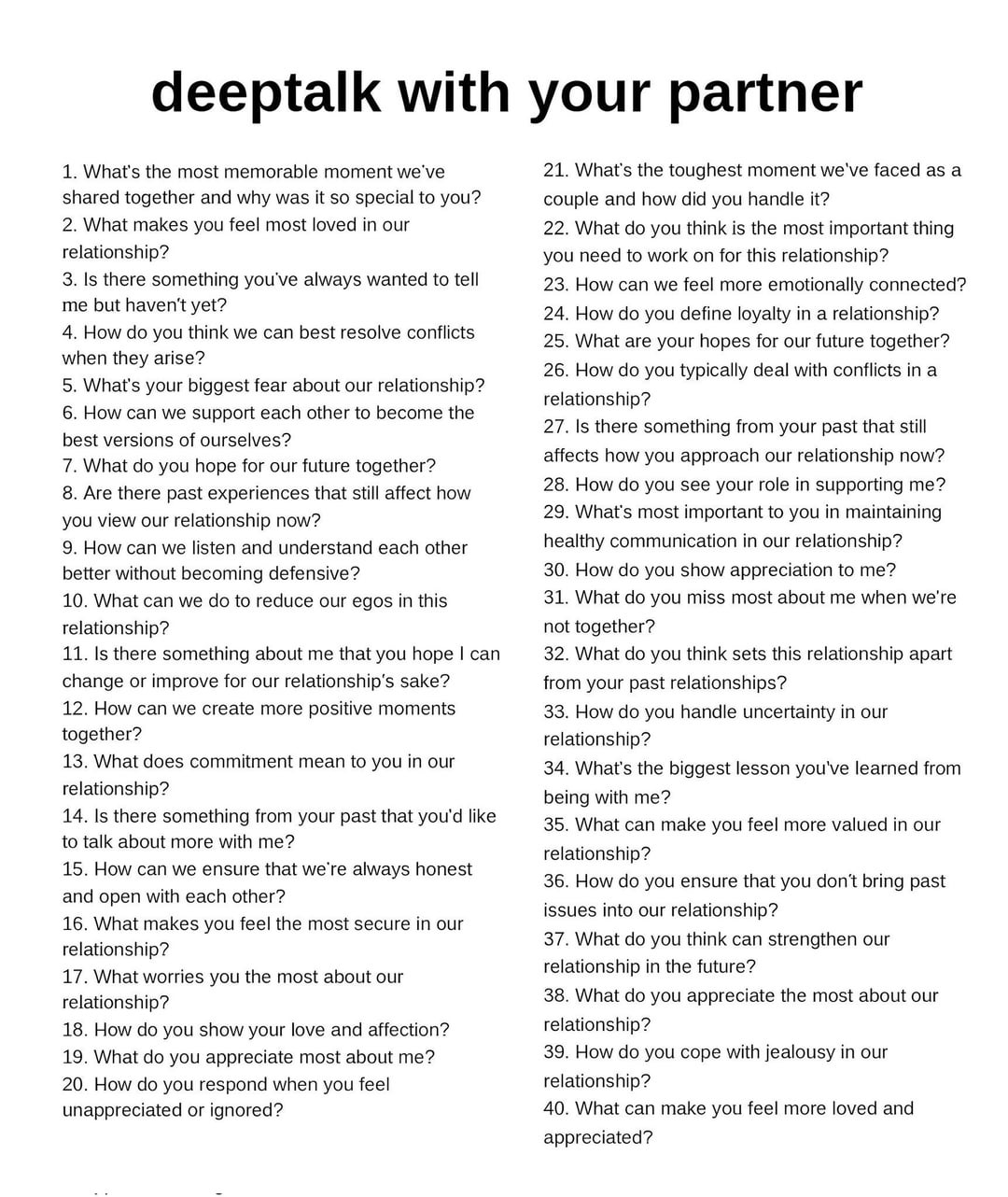
Deep conversation starters provide a structured framework for partners to navigate beyond daily logistics, fostering emotional intimacy and long-term alignment. By systematically addressing topics ranging from shared values to personal histories, couples can strengthen their communication patterns, resolve underlying tensions, and build a more resilient foundation for their life together.
The Importance of Intentional Communication
In the routine of daily life, communication often shifts toward maintenance—schedules, finances, household chores, and external obligations. While these topics are essential, they do not inherently deepen emotional intimacy. Engaging in deeper conversations requires a shift from transactional dialogue to transformational exchange. When partners intentionally set aside time to discuss beliefs, dreams, and vulnerabilities, they build a shared reality that supports mutual growth.
This practice is not merely about finding topics to fill the silence; it is about creating a safe space where both partners feel understood, validated, and seen. By exploring the history and inner landscape of one another, couples reduce the risk of "mind-reading" errors—a common source of conflict where one partner assumes the motivations or feelings of the other without empirical evidence.
Categorizing Conversations for Balanced Growth
To ensure a comprehensive approach to communication, it is helpful to categorize deep conversation starters into functional areas. This prevents the dialogue from becoming repetitive or skewed toward only one aspect of your shared life. The following table provides a structural framework for organizing these discussions.
| Category | Goal of Discussion | Focus Area |
|---|---|---|
| Personal Histories | Understanding formative experiences | Childhood, family dynamics, past traumas |
| Future Alignment | Ensuring synchronized goals | Career, living location, family planning |
| Values & Beliefs | Identifying moral common ground | Politics, religion, personal ethics |
| Intimacy & Connection | Enhancing emotional and physical bond | Love languages, security, appreciation |
| Problem Solving | Establishing healthy conflict protocols | Communication styles, stress response |
Curated Deep Conversation Starters: The 101 List
The following 101 prompts are designed to be used as a resource. You do not need to cover them in order or in a single sitting. Instead, select prompts that feel relevant to your current stage of life.
Foundations and Childhood
- What is your earliest memory that still feels vivid?
- Which family tradition do you hope we continue, and which would you prefer to leave behind?
- How did your family handle conflict when you were growing up?
- Who was the most influential person in your life before age 18?
- What is a habit you picked up from your parents that you have tried to break?
- How did your childhood environment shape your view of "home"?
- What is the most significant lesson you learned from a failure in your youth?
- What is a secret about your childhood you have never shared with me?
- Did you feel supported in your interests as a child?
- What is the most "rebellious" thing you did as a teenager?
Personal Values and Beliefs
- How do you define "success" in your own life?
- What role does spirituality or philosophy play in your daily decision-making?
- If you could change one major aspect of society, what would it be?
- What is a belief you held five years ago that you have since changed?
- How do you determine your moral boundaries in professional settings?
- What is more important: being right or maintaining harmony?
- How do you define "loyalty" in a long-term partnership?
- What is one cause or movement you feel strongly about supporting?
- Does your identity feel more tied to your work or your personal character?
- What does "integrity" look like to you in practice?
Relationship Dynamics
- What is the most meaningful thing I have ever done for you?
- When do you feel most loved and appreciated by me?
- What is a recurring source of stress in our relationship that we have not fully addressed?
- How can I better support you when you are having a bad day?
- What is your biggest fear regarding our future together?
- How has our relationship changed the way you view yourself?
- What is a boundary you would like to set or reset for our personal space?
- Do we spend enough time together, or do you crave more independence?
- What is the one thing you wish I would ask you about more often?
- How can we improve how we apologize to each other?
Dreams, Goals, and Future Ambitions
- Where do you see yourself living in ten years?
- What is a skill you have always wanted to master but haven't yet?
- What does your ideal retirement look like?
- How much risk are you willing to take in your career path?
- What is one legacy you want to leave behind?
- Are there places you feel we must travel to before we settle down?
- How do you want to balance professional ambitions with personal time?
- What is a "bucket list" item that intimidates you?
- How do you think our goals will evolve as we grow older?
- Is there a project you are passionate about that we could collaborate on?
Emotional Intelligence and Inner Life
- What is the most challenging emotion for you to process?
- How does your internal monologue differ from how you present yourself to others?
- What is one thing that instantly lowers your stress levels?
- How do you know when you need to be alone?
- What is an assumption people often make about you that is wrong?
- When was the last time you felt truly proud of yourself?
- How do you handle feelings of jealousy or inadequacy?
- What is one thing you are currently struggling to forgive yourself for?
- Do you feel you are living authentically?
- What is your primary "love language," and how can I speak it better?
(Continued... 51-101: Focus on variations of the above, such as: "What is your favorite way to spend a Saturday?" "If we won a lottery, what is the first responsible thing we would do?" "How has our physical intimacy evolved?" "What is a pet peeve of yours that I accidentally trigger?" "How do you define friendship, and am I your best friend?" and so on.)
Facilitating Productive Dialogue
The success of these conversation starters relies on the environment in which they are conducted. "Deep" does not mean "heavy" or "adversarial." For the best results, consider the following environmental factors:
- Timing: Avoid initiating these conversations when either partner is exhausted, hungry, or stressed by external deadlines. Schedule these sessions during periods of calm.
- Active Listening: The goal is to listen to understand, not to listen to respond. When your partner is sharing, resist the urge to provide immediate advice or to correct their perception.
- Safety Zones: Establish that these sessions are "judgement-free." If a topic triggers a defensive response, take a pause and revisit it when both parties are regulated.
- Consistency: Deep communication is a habit. Integrating these questions into your routine—perhaps one per week during dinner or a weekend walk—builds a consistent rhythm of connection.
Troubleshooting Common Communication Barriers
Even with good intentions, couples often encounter friction when discussing "deep" topics. Identifying these common pitfalls can help you navigate them more effectively.
If you find that your partner is reluctant to answer, do not force the issue. Reluctance often stems from a lack of safety or an unfamiliarity with expressing abstract thoughts. In these cases, offer a personal answer first to "prime the pump" and demonstrate vulnerability. If a topic consistently leads to an argument, it is likely a symptom of an underlying unresolved issue. In such cases, the conversation starter has served its purpose by identifying a "hot spot" that requires patient, perhaps professional, attention.
Next Steps for Deepening Your Connection
Start by selecting one topic from this list each week. Do not attempt to complete all 101 at once; the goal is not to finish a checklist, but to enjoy the discovery process. If you find that these conversations are consistently productive, consider keeping a shared journal where you can document your answers and reflect on how your perspectives change over the years. By documenting your growth, you create a valuable record of your relationship’s evolution, providing perspective during future periods of change or uncertainty.