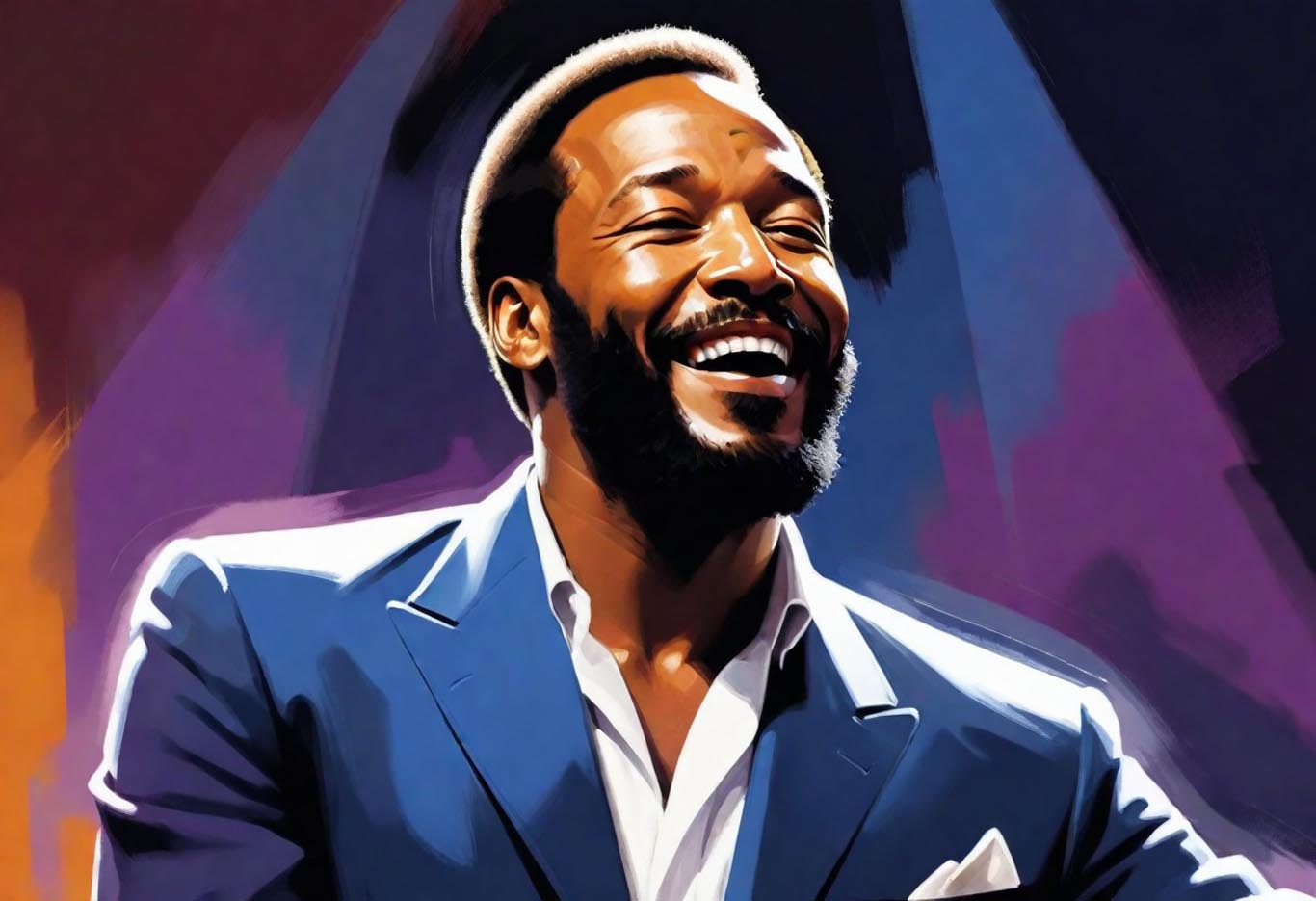
Marvin Gaye, an architect of the Motown sound and a transcendent figure in 20th-century music, left a legacy defined by his vocal range, socio-political commentary, and complex personal evolution. From his origins in the church to his mastery of soul, funk, and R&B, Gaye’s life offers a multifaceted study of artistic genius, internal struggle, and the transformative power of the recording studio.
The Early Life and Foundations of a Legend
Born Marvin Pentz Gay Jr. on April 2, 1939, in Washington, D.C., his upbringing was deeply influenced by his father, a minister in the House of God. This environment introduced him to gospel music, which remained a fundamental component of his vocal technique. The tension between his religious upbringing and his burgeoning interest in secular rhythm and blues created the duality that defined much of his career.
He joined the United States Air Force as a teenager, though his service was short-lived after he was discharged for his refusal to follow orders. Upon returning to civilian life, he pursued music with the D.C.-based doo-wop group, The Marquees. His transition to Motown began when he caught the attention of Berry Gordy in 1961. Initially, Gaye was viewed as a jazz crooner, a stylistic preference he maintained even as he achieved global fame through pop-oriented soul hits.
Defining the Motown Sound: A Timeline of Evolution
The professional journey of Marvin Gaye is synonymous with the rise of Motown Records. However, his tenure at the label was marked by constant artistic friction. While Gordy envisioned Gaye as a polished performer in the tradition of Frank Sinatra, Gaye sought to explore social commentary and personal liberation through his music.
Key Professional Milestones
| Era | Focus | Notable Achievement |
|---|---|---|
| 1961–1964 | The Crooner Years | Initial singles and "Stubborn Kind of Fellow" |
| 1965–1968 | The Duet Period | Collaborations with Tammi Terrell |
| 1971–1973 | Social Consciousness | What's Going On and Let's Get It On |
| 1976–1982 | Personal Exploration | I Want You and "Sexual Healing" |
His collaborations with Tammi Terrell are widely considered the gold standard for male-female duets in soul music. The tragic nature of their partnership—complicated by Terrell’s recurring health issues and subsequent death—imparted a bittersweet emotional weight to hits such as "Ain't No Mountain High Enough" and "You're All I Need to Get By."
The Masterpiece: What's Going On
In 1971, Gaye defied the conventional wisdom of his record label by releasing What's Going On. This album marked a radical departure from the Motown formula. It was a conceptual song cycle addressing systemic poverty, environmental destruction, and the trauma of the Vietnam War. Berry Gordy famously resisted the album’s release, deeming it too political and musically unorthodox.
When the title track was released as a single and subsequently became a massive commercial success, it forced a shift in the Motown hierarchy. It granted Gaye the creative autonomy to dictate his own artistic path, setting a precedent for other soul artists to assert control over their material and production quality. This period solidified his reputation as not just a singer, but a prophetic songwriter capable of capturing the zeitgeist of a fractured nation.
The Nuance of His Vocal Genius
Marvin Gaye’s vocal style was characterized by a three-tiered technique. He utilized his baritone for intimate ballads, his tenor for soul-driven anthems, and his falsetto for transcendent, ethereal heights. This versatility allowed him to layer his own voice in the studio, creating the thick, choral-like soundscapes that defined Let's Get It On and I Want You.
He viewed the recording studio as an instrument in its own right. He was meticulous about the acoustics and the arrangement of his backing vocals. Unlike many of his contemporaries who relied on external producers, Gaye eventually moved toward self-production. His ability to arrange complex vocal harmonies and counter-melodies ensured that his records possessed a depth of texture that remains a benchmark for sound engineering in the soul genre.
Personal Turmoil and the Final Act
The latter part of Gaye’s life was marked by significant personal turmoil, including substance abuse issues and legal challenges regarding his tax obligations. He relocated to Europe in the late 1970s, specifically to London and Belgium, to evade professional pressures and personal strife. It was in Ostend, Belgium, that he recorded "Sexual Healing," the song that signaled a massive, if brief, comeback.
The track showcased a shift toward the emerging synthesizer-heavy sound of the early 1980s. Despite winning Grammy Awards for the single, his final years were spent in a state of flux. He returned to the United States, living with his parents in Los Angeles. This living arrangement culminated in the tragic domestic confrontation with his father on April 1, 1984, which resulted in his death.
Legacy and Influence in Modern Music
Gaye’s influence persists in 2026 across virtually every genre of popular music. His rhythmic phrasing, his use of the studio as a canvas, and his willingness to tackle difficult subject matter established a template for modern R&B and Neo-soul. Artists ranging from D'Angelo and Maxwell to modern pop acts frequently cite his albums as foundational texts for both singing and production.
He remains a symbol of the "tortured artist"—a man who struggled to reconcile his spiritual roots with his human desires. His music continues to be preserved through remastered collections and historical archives, ensuring that his technical innovations in recording remain accessible to students of music theory and sound engineering.
Frequently Asked Questions
Did Marvin Gaye write all his own songs?
Marvin Gaye did not write all of his songs, but he was a prolific songwriter and co-writer. While he interpreted material provided by the Motown songwriting team during his early years, he increasingly wrote and produced his own work, particularly starting with the What's Going On project, where he was heavily involved in both composition and arrangement.
Why is the 1971 album What's Going On considered so important?
It is considered a landmark in music history because it was one of the first major-label pop albums to utilize a song cycle format to address serious social issues. It challenged the industry's view of what a soul artist could discuss, effectively bridging the gap between protest music and commercial radio.
What was the cause of the dispute with his father?
The dispute was part of a long-standing pattern of domestic tension. The fatal confrontation occurred after a period of intense argument involving his parents, which had been simmering for weeks. Marvin Gaye’s father was subsequently charged with and pleaded no contest to voluntary manslaughter.
Was Marvin Gaye primarily a jazz or a soul singer?
While he is categorized as a soul and R&B icon, his personal aesthetic was deeply rooted in jazz and big band crooning. Throughout his career, he made multiple attempts to record jazz albums, often to the disapproval of his record label, which wanted to keep him focused on the highly profitable soul charts.
How did he record his signature layered vocal sound?
Gaye achieved his dense, lush vocal sound through a process called overdubbing. He would record several tracks of his own voice singing different parts—often harmonizing with himself—and then mix them to create the effect of a large choir. This technique allowed him to maintain total control over the emotional nuances and intonation of the vocal arrangements.
Next Steps for Fans and Researchers
To further understand the depth of Marvin Gaye’s artistry, those interested in his technical legacy should listen to the instrumental tracks of his 1970s studio sessions. Many of these have been released in recent years as high-fidelity, isolated stem files or expanded album editions. These recordings reveal the intricate, multi-layered arrangements that were often obscured in the final radio mixes. Researchers looking for historical context should consult the archives of Motown Records and contemporary interviews published in trade journals like Billboard or Rolling Stone from the 1970s to see how his public image was managed and subsequently subverted by his own creative choices.