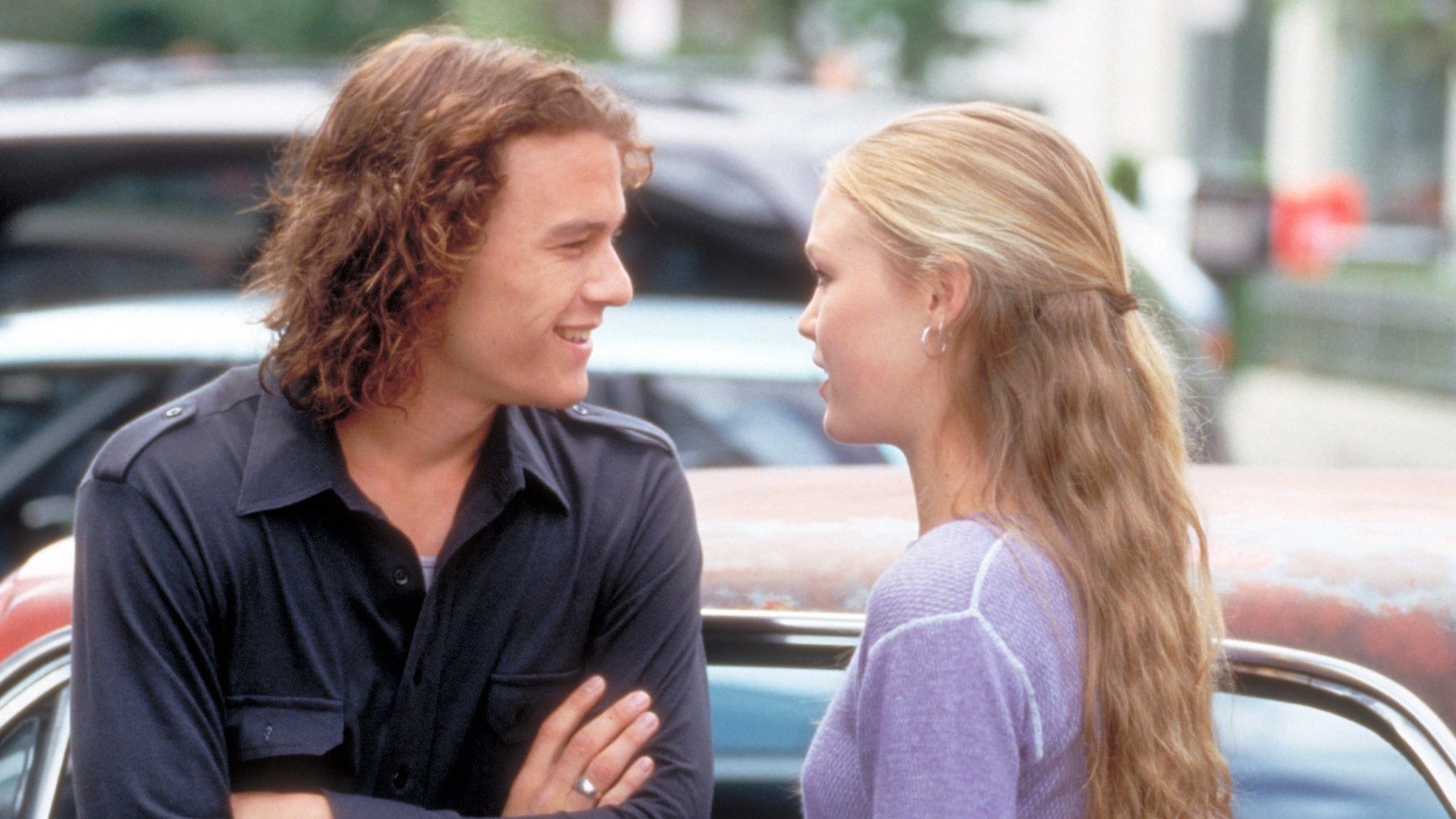
Nearly three decades after its 1999 release, 10 Things I Hate About You remains the definitive teenage adaptation of William Shakespeare’s The Taming of the Shrew. As of 2026, the film’s legacy is solidified as a cornerstone of the romantic comedy genre, offering a blend of sharp-witted feminism, genuine chemistry, and a soundtrack that perfectly captured the late-90s zeitgeist. Whether you are revisiting it for nostalgia or introducing it to a new generation, the film’s exploration of identity and independence remains remarkably resilient.
Understanding the Age Rating and Parental Guidance
When evaluating 10 Things I Hate About You for a modern audience in 2026, the PG-13 rating assigned by the MPAA remains the standard benchmark. The film was designed for a teenage audience, and its content reflects the high school experience of the late 20th century. However, viewing habits and parental expectations have evolved, making a nuanced breakdown of the content essential for contemporary families.
The film contains moderate "teen" themes including underage drinking at parties, suggestive dialogue, and brief depictions of marijuana use. Language is used frequently but stays within the PG-13 limits, focusing on insults and typical high school slang rather than severe profanity. There is no graphic violence, though a few scenes involve teenage rebellion and minor scuffles.
From a 2026 perspective, some of the social dynamics—particularly the "bet" that drives the plot—may require context. Modern viewers often discuss the ethics of Patrick Verona (Heath Ledger) being paid to date Kat Stratford (Julia Stiles). While the film eventually subverts the "taming" trope by showing Patrick’s genuine transformation, parents might use these plot points to discuss consent, honesty, and peer pressure with younger viewers. Overall, the film is widely considered appropriate for ages 12 and up, provided there is a level of media literacy to navigate its dated social tropes.
An Honest Review: Why It Holds Up in 2026
To conduct an honest review of 10 Things I Hate About You in 2026, one must look past the chunky highlights and platform sandals to the core of its screenplay. Written by Karen McCullah and Kirsten Smith, the script is famously tight. Unlike many of its contemporaries, the film refuses to make its protagonist, Kat Stratford, "softer" or more "feminine" to win the guy. Instead, Patrick Verona meets her where she is, respecting her intellect and her boundaries.
The Shakespearean Foundation
The film’s brilliance lies in its modernization of The Taming of the Shrew. By shifting the setting to Padua High School and turning "dowries" into "dating rules" set by an overprotective father, the movie makes the 16th-century stakes feel immediate. Kat is not a "shrew" to be broken, but a young woman who has consciously chosen to opt out of the toxic popularity contests of high school. In 2026, her character feels more like a precursor to modern feminist archetypes than a caricature of a "90s riot grrrl."
Chemistry and Performance
The late Heath Ledger’s performance as Patrick Verona is legendary for a reason. His charisma is palpable, particularly during the iconic "Can't Take My Eyes Off You" stadium sequence. Julia Stiles provides the perfect foil; her performance is grounded and avoids the "manic pixie dream girl" pitfalls that plagued later rom-coms. The supporting cast, including Joseph Gordon-Levitt and David Krumholtz, provides high-quality comedic timing that keeps the pacing brisk and the tone light.
Cultural Impact and Aesthetic
While the film is a time capsule of 1999—featuring neon-colored prom dresses and the rise of ska-punk—it doesn't feel "old" in a way that hinders enjoyment. In fact, the "Y2K" aesthetic has seen several massive resurgences in the 2020s, making the film's visual style surprisingly trendy for today’s viewers. The soundtrack, featuring Letters to Cleo and Save Ferris, continues to be a top-streamed playlist for fans of alternative rock.
The Cast: Then vs. Now (2026 Perspective)
The cast of 10 Things I Hate About You serves as a "who’s who" of late-90s talent, many of whom went on to define Hollywood in the decades that followed. Tracking their journeys from 1999 to 2026 reveals a fascinating mix of legendary status, steady character work, and enduring cultural influence.
| Actor | Role in 1999 | Status/Legacy in 2026 |
|---|---|---|
| Julia Stiles | Kat Stratford | Established actress and director; known for the Bourne series and prestige TV. |
| Heath Ledger | Patrick Verona | Deceased (2008); Posthumous Oscar winner; widely regarded as one of his generation's greatest. |
| Joseph Gordon-Levitt | Cameron James | A-list actor and tech entrepreneur (HitRecord); voice of modern independent cinema. |
| Larisa Oleynik | Bianca Stratford | Consistent work in independent film and television; a nostalgic icon for Millennials/Gen Z. |
| Gabrielle Union | Chastity | Major Hollywood powerhouse, producer, and advocate for equity in entertainment. |
| David Krumholtz | Michael Eckman | Highly respected character actor; recently acclaimed for roles in Oppenheimer and TV. |
| Allison Janney | Ms. Perky | Multi-Oscar and Emmy winner; a legendary figure in both film and theatre. |
Julia Stiles (Kat Stratford)
In 2026, Julia Stiles is celebrated not just for her early work but for her longevity. After the Bourne franchise and her Emmy-nominated turn in Dexter, Stiles moved into more complex, authoritative roles. She has frequently spoken about how Kat Stratford influenced her career, noting that playing a headstrong, unapologetic woman early on allowed her to avoid being pigeonholed in Hollywood.
The Legacy of Heath Ledger (Patrick Verona)
Heath Ledger’s presence in 10 Things I Hate About You is bittersweet. In the years following the film, he transcended the "teen heartthrob" label with roles in Brokeback Mountain and his transformative performance as the Joker in The Dark Knight. By 2026, Patrick Verona is viewed as the role that introduced the world to his raw, effortless talent. He remains a benchmark for leading men in the genre.
Joseph Gordon-Levitt (Cameron James)
Joseph Gordon-Levitt successfully navigated the difficult transition from child star to serious adult actor. His work in Inception, Looper, and 500 Days of Summer cemented his status. In 2026, he is also recognized for his contributions to the digital arts through his platform, HitRecord, which fosters global collaboration among creatives.
Comparative Analysis: 1999 High School vs. 2026 Reality
Comparing the "Padua High" of 1999 to the educational landscape of 2026 highlights both how much has changed and how much remains the same. The film focuses heavily on social cliques—the "modelers," the "coffee house intellectuals," and the "jocks." While these archetypes still exist in various forms, the digital landscape has shifted how high schoolers interact.
In 1999, social status was determined by physical presence and who you sat with at lunch. In 2026, these dynamics are heavily mediated by social media. One might argue that a modern Kat Stratford wouldn't just be reading Sylvia Plath in the courtyard; she would likely be running a highly influential, anti-establishment social media account. The film’s lack of cell phones and internet culture gives it a "purity" that modern audiences find refreshing—a world where characters actually had to talk to each other (or sing in stadiums) to get their point across.
Critical Limitations and "Dated" Elements
No review in 2026 would be "honest" without acknowledging the film’s limitations. The cast is predominantly white, reflecting the lack of diversity in 90s mainstream cinema. While Gabrielle Union and Susan May Pratt deliver great performances, they are largely relegated to "best friend" roles.
Furthermore, some of the jokes—particularly those involving Mr. Stratford’s (Larry Miller) obsession with teenage pregnancy and some of the banter between the male characters—can feel slightly "of its time." However, the film’s heart remains in the right place, and it avoids the mean-spiritedness that characterized other films of that era, such as She’s All That.
Frequently Asked Questions
Is "10 Things I Hate About You" based on a true story?
No, it is a modernized adaptation of William Shakespeare's play The Taming of the Shrew. Many of the characters' names are nods to the original text; for example, the last name "Stratford" refers to Shakespeare's birthplace, Stratford-upon-Avon, and "Patrick Verona" refers to Petruchio coming from Verona.
Why is the movie rated PG-13?
The rating is due to teenage drinking, depictions of smoking, sexual references, and brief language. In 2026, it is considered a "mild" PG-13, suitable for most middle and high school students, though parental discretion is advised for younger children.
Where was the movie filmed?
The film was famously shot at Stadium High School in Tacoma, Washington. The school's unique, castle-like architecture contributed significantly to the film’s distinctive look and is still a popular "pilgrimage" site for fans in 2026.
Who wrote the famous "10 Things" poem?
The poem was written by the screenwriters, Karen McCullah and Kirsten Smith, specifically for the film. Julia Stiles’ performance of the poem in the classroom was done in a single take, and her tears were unscripted, making it one of the most famous scenes in romantic comedy history.
What happened to the house from the movie?
The Victorian-style house used for the Stratford home is a real residence located in Tacoma, Washington. It has become a landmark for fans of the movie, though it remains a private residence.
Final Recommendation: A Timeless Staple
If you are looking for a film that captures the essence of teenage independence and the complexity of first love, 10 Things I Hate About You remains an essential watch in 2026. It transcends the "teen movie" label through its sharp writing and a cast that was clearly destined for greatness.
For the best experience, watch it as a double feature with other 90s classics or read The Taming of the Shrew alongside it to see how cleverly the writers translated the Bard’s work for a modern audience. Despite the passage of time, the film’s core message—that you should never change who you are to satisfy someone else’s expectations—is a lesson that never goes out of style.