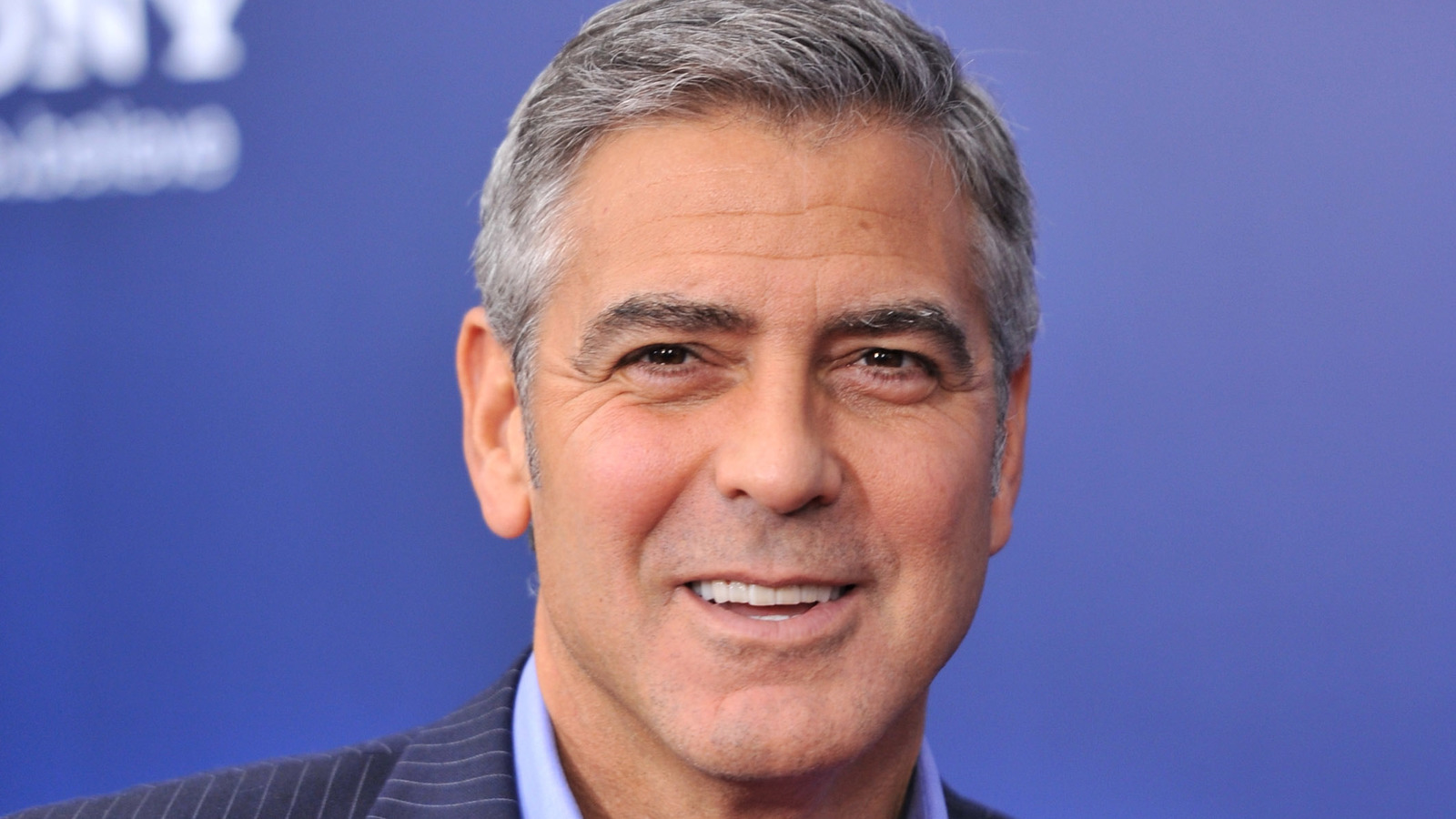
George Clooney stands as a definitive icon of modern Hollywood, blending the suave charisma of the Golden Age with contemporary social activism and savvy entrepreneurship. While many recognize him as an Oscar-winning actor and director, the truth behind the legend involves a failed professional baseball career, a billion-dollar liquor empire, and a high-tech satellite system used to monitor international human rights.
1. The Professional Baseball Dream That Almost Was
Long before he walked the red carpets of Cannes or Venice, George Clooney had his sights set on the baseball diamond. Growing up in Kentucky and Ohio, Clooney was a gifted athlete. In 1977, he attempted to follow a path far removed from acting by trying out for the Cincinnati Reds.
This was not merely a hobby; Clooney possessed genuine talent and a deep-seated desire to play professionally. However, the grueling reality of professional sports scouting is unforgiving. Despite his best efforts, he did not receive a contract offer and was cut during the tryouts. He has often joked in interviews that the difference between a professional athlete and an actor is that in acting, you can pretend to be good at things, whereas in baseball, the box score never lies. This early failure shaped his resilience, a trait that would prove essential during his first decade in Los Angeles, where he faced constant rejection before landing his breakout role.
2. The Decade of "Failed" Pilots and Persistence
The "overnight success" of George Clooney is a Hollywood myth. Before he became a household name as Dr. Doug Ross on ER in 1994, Clooney spent over ten years working as a journeyman actor. During this period, he appeared in approximately 15 television pilots that were never picked up or were quickly canceled.
His resume from the 1980s and early 1990s is a testament to the "hustle." He had a recurring role on The Facts of Life and appeared in the cult classic Return of the Killer Tomatoes. This lengthy apprenticeship allowed him to master the technical aspects of television production and camera work. By the time ER arrived, Clooney was in his mid-30s—an age when many actors have already given up. This decade of "failure" is why he is known today for his immense respect for crew members and his legendary work ethic on set; he truly knows what it is like to be an expendable part of the production machine.
3. The Nespresso Money and the Satellite Sentinel Project
Clooney has been the face of Nespresso for nearly two decades, a partnership that has earned him tens of millions of dollars. However, the surprising truth is how he utilizes these earnings. Clooney does not merely bank the checks for luxury items; he has funneled a significant portion of his endorsement income into the Satellite Sentinel Project.
Founded in 2010 in collaboration with John Prendergast, this initiative uses commercial satellites to monitor the borders of Sudan and South Sudan. The goal is to provide an "early warning system" for human rights abuses, tracking troop movements and the burning of villages to provide evidence of war crimes. Clooney famously stated that he wanted the perpetrators of genocide to have the same amount of attention paid to them as he receives from the paparazzi. As of 2026, his commitment to using "celebrity as a shield" remains one of the most sophisticated examples of humanitarian activism in the entertainment industry.
4. The Legendary Bond with Max the Pig
One of the most eccentric chapters of Clooney's life involves his 18-year relationship with a 300-pound pot-bellied pig named Max. Max was a gift from an early girlfriend, Kelly Preston, and he became a staple of Clooney’s household during his rise to fame.
Max was more than just a pet; he was a constant companion who often slept in Clooney's bed and traveled with him. The pig's longevity—living until 2006—mirrored the most transformative years of Clooney's career. When Max eventually passed away, Clooney expressed a profound sense of loss, stating that Max had been a huge part of his life. The story of Max the Pig helped solidify Clooney's image as a "confirmed bachelor" who preferred the company of his loyal pet to the traditional expectations of a Hollywood family life, a narrative that persisted until he met Amal Alamuddin.
5. The Billion-Dollar Tequila Accident: Casamigos
In 2013, Clooney and his friends Rande Gerber and Mike Meldman founded Casamigos Tequila. The surprising truth is that they never intended to start a public-facing business. The brand began as a private "house tequila" for their vacation homes in Cabo San Lucas, Mexico. They wanted a spirit that was smooth enough to drink all day without a "burn" or a hangover.
After two years of producing the tequila solely for personal use and gifting to friends, their distillery informed them that they were consuming roughly 1,000 bottles a year—far too much to be considered "samples" for personal consumption. They were forced to get a commercial license. In 2017, Diageo acquired Casamigos for $700 million upfront, with an additional $300 million based on performance over the following decade. This deal effectively made Clooney the highest-paid actor in the world for 2018, despite him not appearing in a single film that year.
6. Self-Deprecation Regarding "Batman & Robin"
While most actors try to bury their cinematic failures, Clooney has turned his leading role in 1997's Batman & Robin into a masterclass in self-deprecation. He is remarkably open about the fact that he believes he "destroyed the franchise" and often apologizes to fans for the movie’s quality, including the infamous "Bat-nipples" on the suit.
This transparency is a key part of the "Clooney Legend." By being the first to laugh at himself, he effectively neutralized the potential for the film to derail his career. Instead of becoming a punchline, he became the guy who was "too good for the material." This humility paved the way for his transition into more serious, prestige filmmaking with directors like Steven Soderbergh and the Coen Brothers.
7. The Generosity of "The 14"
In 2013, Clooney performed an act of generosity that sounds like a plot from one of his Ocean’s movies. He invited 14 of his closest friends—men who had helped him when he was a struggling actor—to dinner. When they arrived, each found a Tumi suitcase at their seat containing $1 million in cash.
Clooney explained that when he first arrived in Los Angeles, he was broke and these friends let him sleep on their couches and lent him money for food. He wanted to ensure that they never had to worry about their children’s education or their mortgages again. He even paid the taxes on the gifts so his friends would receive the full million. This story, confirmed by Rande Gerber, highlights a level of loyalty and "old-school" honor that is increasingly rare in the transactional world of Hollywood.
8. The "Mayor" of Lake Como
Since purchasing Villa Oleandra in Laglio, Italy, in 2002, Clooney has become an unofficial diplomat for the region. His presence transformed Lake Como from a quiet retreat into a global hotspot, but his impact on the local community is what truly surprises.
Clooney is not a distant celebrity neighbor; he is deeply involved in local affairs. He has worked with the mayor of Laglio to manage the influx of tourists and paparazzi, ensuring that the privacy of the locals is respected. In return, the town council once passed ordinances to protect his privacy, effectively making it a crime to approach his villa. In 2026, he remains a beloved figure in the region, known for his support of local businesses and his efforts to provide aid during regional flooding events.
9. Mastering the Art of the Long Prank
Clooney is notorious for being the industry's most dedicated prankster. His pranks are not simple gags but elaborate "long cons" that can last for years. One of his most famous involved Brad Pitt; Clooney put a bumper sticker on Pitt’s car that looked like a police emblem but featured a vulgar message, leading to Pitt being pulled over by the authorities.
He also famously spent weeks "preparing" a fake script for Matt Damon, telling him it was a high-profile project while secretly having the wardrobe department take in Damon's pants by an eighth of an inch every few days to make Damon think he was gaining weight. These pranks serve a professional purpose: they build a sense of camaraderie and "crew culture" on set that makes actors and staff want to work on George Clooney productions repeatedly.
10. Advocacy and the Clooney Foundation for Justice
The ultimate truth behind the Clooney legend in 2026 is his transition from entertainer to serious geopolitical advocate. Alongside his wife, human rights lawyer Amal Clooney, he co-founded the Clooney Foundation for Justice (CFJ). Unlike many celebrity charities that focus on broad awareness, the CFJ is highly technical and tactical.
The foundation operates programs like "TrialWatch," which monitors criminal trials globally where there is a high risk of human rights violations. They also run "The Albie Awards," named after Justice Albie Sachs, to honor courageous defenders of justice. This work represents the "legend" in its most mature form—using the influence gained from decades of stardom to provide tangible legal and logistical support to those fighting systemic oppression.
Comparing the Facets of the Clooney Legend
The following table summarizes the different spheres of influence George Clooney has navigated throughout his career.
| Category | Key Achievement/Entity | Impact Level | Primary Motivation |
|---|---|---|---|
| Entertainment | ER & Ocean's Eleven | Global Icon | Craft & Professionalism |
| Business | Casamigos Tequila | Billion-Dollar Exit | Lifestyle & Quality |
| Philanthropy | Satellite Sentinel Project | Geopolitical | Human Rights Monitoring |
| Human Rights | Clooney Foundation for Justice | Legal/Structural | Systemic Reform |
| Personal | Villa Oleandra (Lake Como) | Local/Community | Privacy & Tradition |
Frequently Asked Questions
Did George Clooney actually play professional baseball?
No, George Clooney never played professional baseball at a league level. He was a talented high school player and earned a tryout with the Cincinnati Reds in 1977, but he was not offered a contract. He often cites this failure as a pivotal moment that redirected his focus toward acting.
How did George Clooney make his money if not just from acting?
While his acting and directing fees are substantial, a significant portion of Clooney's massive net worth comes from the sale of Casamigos Tequila. In 2017, the brand was sold to Diageo for a deal valued at up to $1 billion. Additionally, his long-term endorsement deal with Nespresso has been a consistent source of high revenue.
Is George Clooney still active in politics?
George Clooney is highly active in political advocacy, though he has consistently denied interest in running for public office. He focuses his efforts on international human rights, campaign finance reform, and supporting democratic processes through the Clooney Foundation for Justice and various high-profile fundraising efforts.
What is the Satellite Sentinel Project?
The Satellite Sentinel Project is an organization co-founded by Clooney that uses commercial satellite imagery to monitor and report on human rights abuses and potential war crimes in conflict zones, specifically in Sudan. It aims to deter mass atrocities by providing public evidence of military movements and destruction.
Who are "The 14" friends he gave money to?
"The 14" is a group of Clooney's long-time friends, including Rande Gerber, who supported him during his early, struggling years in Hollywood. In 2013, he gave each of them $1 million as a thank-you for their loyalty. Most of these men are not celebrities, but rather the individuals who provided him with housing and small loans before he was famous.
Following the Clooney Path of Impact
To engage with the "truth behind the legend" in your own life, consider looking beyond your primary career toward high-impact philanthropy or community building. Clooney’s success is built on the foundation of resilience (the baseball and pilot years) and diversification (business and advocacy).
If you are interested in supporting the causes Clooney champions, the most direct route is to research the work of the Clooney Foundation for Justice. They provide regular updates on their "TrialWatch" initiatives and offer avenues for supporting legal protection for journalists and marginalized communities worldwide. By understanding that "the legend" is a product of hard work and strategic giving, one can move past the celebrity veneer to find a blueprint for meaningful global citizenship.