Achieving rapid weight loss that remains sustainable requires a strategic blend of caloric restriction, metabolic preservation, and hormonal regulation. To lose weight effectively in 2026, you must prioritize high protein intake and resistance training to protect lean muscle mass while utilizing high-fiber nutrition and sleep hygiene to manage the biological signals that drive hunger and fat storage.
The Science of Sustainable Weight Loss in 2026
The weight loss landscape has evolved significantly. While the fundamental law of thermodynamics—Calories In vs. Calories Out (CICO)—remains the primary driver of fat loss, we now understand that the quality of those calories and the hormonal environment of the body determine whether that weight loss comes from fat or muscle. Rapid weight loss is often criticized for being temporary, but when executed with a focus on metabolic health, it can serve as a powerful catalyst for long-term transformation.
To "keep it off," one must address Metabolic Adaptation. When you reduce calories, your body often responds by lowering its Basal Metabolic Rate (BMR) and increasing hunger hormones like ghrelin. The following ten tips are designed to bypass these biological traps, allowing for a fast reduction in adiposity without the typical rebound effect.
1. Prioritize High Protein Intake for Thermogenesis and Satiety
Protein is the most critical macronutrient for both losing weight fast and maintaining that loss. From a technical standpoint, protein has a higher Thermic Effect of Food (TEF) than carbohydrates or fats. This means the body expends significantly more energy (approximately 20–30% of the calories consumed) just to digest and process protein.
Furthermore, protein is the primary driver of satiety. It stimulates the release of satiety hormones, such as cholecystokinin (CCK), glucagon-like peptide-1 (GLP-1), and peptide YY (PYY), while simultaneously suppressing the hunger hormone ghrelin. For those aiming for rapid results, consuming 1.6 to 2.2 grams of protein per kilogram of body weight is recommended to preserve Lean Body Mass (LBM) during a caloric deficit. Without adequate protein, a significant portion of "weight" lost will be metabolic-driving muscle tissue, which virtually guarantees future weight regain.
2. Implement Heavy Resistance Training to Protect BMR
While cardiovascular exercise is excellent for heart health, resistance training is the superior tool for fat loss maintenance. When you lose weight quickly, your body naturally tries to slow down your metabolism to conserve energy. Lifting weights sends a biological signal to the body that muscle tissue is "functional" and must be preserved despite the energy shortage.
By maintaining or even increasing muscle mass, you keep your BMR elevated. Muscle tissue is more metabolically active than fat tissue even at rest. Additionally, intense resistance training triggers Excess Post-exercise Oxygen Consumption (EPOC), keeping your metabolic rate elevated for hours after you leave the gym. In 2026, the clinical consensus remains that a combination of compound movements—squats, deadlifts, presses, and rows—provides the greatest hormonal and metabolic stimulus for fat loss.
3. Focus on High-Volume, Low-Energy Density Foods (Fiber)
One of the most effective "tricks" to losing weight without feeling deprived is focusing on food volume. Fiber, specifically soluble fiber, slows down gastric emptying and increases the time it takes for nutrients to be absorbed. This leads to a more stable blood glucose response and prolonged feelings of fullness.
According to the World Health Organization, a diet high in fruits, vegetables, and legumes is foundational for preventing unhealthy weight gain. By filling half your plate with non-starchy vegetables (like broccoli, spinach, or cauliflower), you can eat a large volume of food for very few calories. This trick tricks the mechanoreceptors in your stomach into signaling to the brain that you are full, making it much easier to adhere to a caloric deficit over the long term.
4. Optimize Sleep Hygiene to Regulate Leptin and Ghrelin
Sleep is often the missing link in weight loss programs. Research consistently shows that sleep deprivation impairs the prefrontal cortex—the part of the brain responsible for impulse control—while simultaneously disrupting the balance of hunger hormones. Specifically, lack of sleep lowers leptin (the fullness hormone) and raises ghrelin (the hunger hormone).
In a state of chronic sleep debt, the body is also more likely to store fat in the visceral region due to elevated cortisol levels. Aiming for 7–9 hours of quality sleep per night is not just about recovery; it is a metabolic necessity. Those who sleep less than six hours a night are significantly more likely to experience "weight loss plateaus" because their bodies are biologically primed to hold onto energy stores and crave high-calorie, hyper-palatable foods.
5. Leverage Water-Induced Thermogenesis and Hydration
Water is a non-negotiable component of rapid fat loss. Hydration is essential for the process of lipolysis (the breakdown of fats). Beyond its role in biochemistry, drinking water has a documented thermogenic effect. Clinical studies have shown that drinking 500ml of water can temporarily increase metabolic rate by up to 30%.
Additionally, many people mistake thirst for hunger. Drinking a large glass of water 20 minutes before a meal can lead to a natural reduction in calorie intake. In 2026, health practitioners emphasize "pre-loading" with water as a simple, no-cost strategy to improve satiety and ensure that the kidneys and liver can efficiently process the metabolic byproducts of fat breakdown.
6. Utilize Mindful Eating and the "20-Minute Rule"
The speed at which you eat can determine how much body fat you carry. It takes approximately 20 minutes for the hormonal signals of satiety to travel from the gut to the brain. In our fast-paced society, many individuals consume their entire caloric requirement before the brain realizes it is no longer hungry.
Mindful eating involves chewing thoroughly and eliminating distractions like smartphones or television during meals. This practice allows for the proper signaling of satiety peptides. By slowing down, you give your body the chance to signal that it has had enough, which naturally prevents overeating. This behavioral "trick" is one of the most effective ways to maintain weight loss because it re-syncs your eating habits with your internal biological cues.
7. Incorporate Non-Exercise Activity Thermogenesis (NEAT)
While structured workouts are important, they often only account for 5% of your total daily energy expenditure. The calories burned through NEAT—walking, fidgeting, standing, and performing daily chores—can account for up to 15–30% of your energy output.
To lose weight fast and keep it off, you must increase your daily movement outside of the gym. This could mean using a standing desk, taking the stairs, or hitting a target of 10,000 steps per day. Increasing NEAT is the most sustainable way to keep your total daily energy expenditure (TDEE) high without the systemic fatigue that comes from over-training in the gym. It is the "silent" calorie burner that prevents weight regain during the maintenance phase.
8. Track Macronutrients to Identify "Hidden" Calories
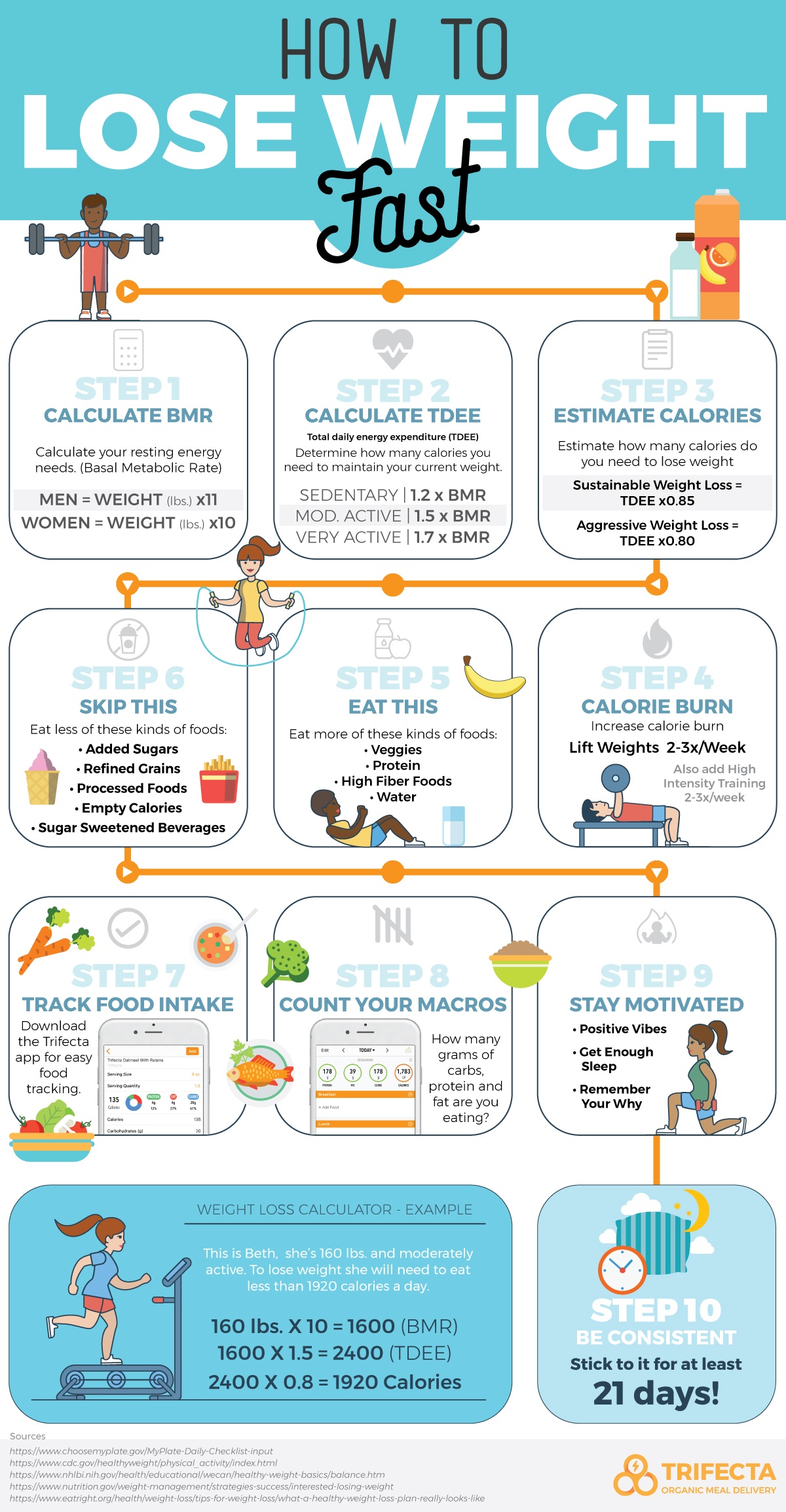
You cannot manage what you do not measure. While "intuitive eating" is a long-term goal, most people are remarkably poor at estimating their calorie intake, often underestimating by as much as 30-50%. To lose weight fast, a period of precise tracking is usually necessary.
Using digital tools to track macronutrients (Proteins, Fats, and Carbohydrates) ensures that you are hitting your protein targets and staying within a caloric range that promotes fat loss. It also helps identify "calorie bombs"—foods that are small in volume but incredibly high in energy, such as oils, dressings, and nuts. Understanding the caloric density of your food choices provides the education needed to make better decisions once you stop tracking.
9. Manage Chronic Stress and the HPA Axis
Chronic stress is a major barrier to fat loss. When the body is under constant stress, the Hypothalamic-Pituitary-Adrenal (HPA) axis is overactive, leading to chronically high levels of cortisol. Elevated cortisol is directly linked to increased abdominal fat storage and insulin resistance.
Even if your diet is perfect, high stress can stall weight loss. Implementing stress-management techniques such as meditation, deep breathing exercises, or regular time in nature can lower cortisol levels. By calming the nervous system, you create a hormonal environment that is conducive to fat oxidation rather than fat storage.
10. Develop a "Transition Phase" for Long-Term Maintenance
The biggest mistake in weight loss is viewing the "diet" as having an end date. Once the target weight is reached, the body is in a sensitive metabolic state. A sudden return to previous eating habits will result in rapid weight regain, often exceeding the original weight.
A proven trick for keeping weight off is the "Reverse Diet." This involves slowly increasing calories (by 100–200 per week) while continuing resistance training. This process "re-primes" the metabolism, allowing the BMR to recover without a massive spike in body fat. Having a clear plan for the month after your weight loss goal is reached is what separates those who succeed from those who cycle through "yo-yo" dieting.
Comparative Weight Loss Strategies
The following table compares different approaches to weight loss based on their impact on speed and long-term maintenance.
| Strategy | Speed of Loss | Impact on BMR | Maintenance Difficulty |
|---|---|---|---|
| Caloric Deficit Only | Moderate | Low (Muscle loss likely) | High |
| Keto / Low-Carb | Fast (Water loss) | Moderate | Moderate |
| High Protein + Weights | Moderate/Fast | High (Preserves muscle) | Low |
| High Volume / Fiber | Moderate | Neutral | Low |
| Crash Dieting | Very Fast | Very Low (Metabolic crash) | Extremely High |
Frequently Asked Questions
What is a safe rate for "fast" weight loss?
Clinical guidelines generally suggest that losing 0.5% to 1% of your body weight per week is a safe and sustainable rate. While faster loss is possible in the first two weeks (often due to glycogen and water weight), exceeding this rate long-term can lead to significant muscle wasting and nutrient deficiencies.
Can I lose weight without doing any cardio?
Yes. Weight loss is primarily driven by a caloric deficit. Resistance training and NEAT (daily movement) are often more effective for long-term fat loss than traditional "steady-state" cardio because they protect your metabolic rate. Cardio is a tool to increase energy expenditure, but it is not a requirement for fat loss.
Why does weight loss slow down after the first month?
This is typically due to a combination of three factors: the initial loss of water weight is over, your BMR has decreased slightly because you are now a smaller person, and your body has become more efficient at the exercise you are doing. To break this plateau, you may need to adjust your calories or increase your activity levels.
Are weight loss medications a permanent solution?
In 2026, medications like GLP-1 agonists are common. However, clinical data shows that without the lifestyle foundations mentioned above—specifically high protein and resistance training—individuals often lose a significant amount of muscle mass and tend to regain the weight once the medication is discontinued. They are tools, not cures.
Do I need to cut out all carbohydrates?
No. Carbohydrates are the preferred fuel source for high-intensity exercise. While reducing refined sugars is beneficial, complex carbohydrates like oats, quinoa, and sweet potatoes provide the energy needed to perform well in the gym, which in turn helps you maintain the muscle mass necessary for a high metabolism.
Implementation and Next Actions
The journey to losing weight fast and keeping it off is not a linear path, but a structured biological shift. To begin, do not attempt to change all ten factors at once. Start by calculating your TDEE and setting a protein target of 1.6g/kg of body weight. Once your nutrition is stabilized, introduce a three-day-a-week resistance training program to anchor your metabolism.
Consistency is the ultimate "trick." The biological adaptations that lead to permanent weight loss take time to solidify. By focusing on the quality of your sleep and your daily movement, you create a lifestyle that supports a leaner body composition without the constant feeling of restriction. Monitor your progress through more than just the scale—track your strength levels, your waist circumference, and your energy levels to ensure that the weight you are losing is indeed body fat.