J. Robert Oppenheimer remains one of the most complex and polarizing figures of the 20th century, serving as the "father of the atomic bomb" while later becoming a vocal advocate for nuclear arms control. Beyond the laboratory and the famous cinematic portrayals, his life was marked by extraordinary intellectual depth, eccentric personal habits, and a series of historical intersections that reveal a man far more multifaceted than a single scientific achievement.
1. He Taught Himself Sanskrit to Read the Bhagavad Gita in its Original Form
One of the most famous anecdotes regarding Oppenheimer is his quotation of the Bhagavad Gita following the Trinity test: "Now I am become Death, the destroyer of worlds." However, few realize that this wasn't a casual citation of a translated text. Oppenheimer was a genuine polyglot with a profound interest in Eastern philosophy.
In the early 1930s, while teaching at the University of California, Berkeley, Oppenheimer studied Sanskrit under Arthur W. Ryder. He was not merely interested in the linguistics but was searching for a philosophical framework to reconcile his scientific pursuits with the human experience. His ability to read the original text allowed him to engage with the concepts of dharma (duty) and the weight of consequential actions, which would later haunt his work on the Manhattan Project. This intellectual pursuit demonstrates that his mind was never confined to physics; he viewed the world through a lens of combined scientific rigor and classical humanism.
2. He Almost Faced Criminal Charges for a Poisoned Apple
During his postgraduate studies at Cambridge University in 1925, Oppenheimer struggled through a period of intense psychological distress. He was unhappy with the required laboratory work under his tutor, Patrick Blackett, preferring theoretical physics to experimental physics. In a moment of severe emotional instability, he reportedly laced an apple with toxic chemicals—often cited as cyanide or a similar lab substance—and left it on Blackett's desk.
Fortunately, Blackett did not eat the apple. The university administration discovered the act and nearly expelled him, which would have ended his career before it began. Oppenheimer’s parents intervened, negotiating a deal where he was placed on probation and required to undergo psychiatric treatment in London. This incident is frequently discussed by biographers like Kai Bird and Martin J. Sherwin in American Prometheus as a turning point that highlighted his fragile mental state during his youth.
3. He Was Nominated for the Nobel Prize Three Times but Never Won
Despite his monumental contributions to theoretical physics and his leadership of the project that ended World War II, J. Robert Oppenheimer never received a Nobel Prize. He was nominated for the Nobel Prize in Physics in 1945, 1951, and 1967.
The primary reason for this "snub" is often attributed to the nature of his work. The Nobel Committee typically rewards specific discoveries or experimental proofs rather than administrative leadership or general theoretical synthesis. While Oppenheimer was brilliant, many of his peers felt he lacked the "singular discovery" that defined a Nobel laureate. Furthermore, his work on the atomic bomb was politically charged, and his later career was overshadowed by the revocation of his security clearance during the Red Scare, which likely influenced the committee’s decision-making process.
| Era | Key Role/Focus | Major Contribution/Event |
|---|---|---|
| 1920s-1930s | Academic Physicist | Research on Black Holes and Quantum Mechanics |
| 1942-1945 | Director, Los Alamos | Development of the first Atomic Bombs |
| 1947-1952 | Chairman, GAC | Advocacy for Nuclear Control and International Cooperation |
| 1954 | Security Hearing Defendant | Loss of Security Clearance due to alleged Communist ties |
| 2022 | Historical Redress | Posthumous vacating of the 1954 decision by US Dept. of Energy |
4. He Predicted the Existence of Black Holes Decades Before the Term Was Coined
Before the Manhattan Project consumed his life, Oppenheimer was a pioneer in astrophysics. In 1939, he co-authored a paper with his student Hartland Snyder titled "On Continued Gravitational Contraction." This paper used Albert Einstein’s theory of general relativity to show that when a massive star exhausts its nuclear fuel, it could collapse into a point of infinite density.
This research essentially described what we now call a black hole. At the time, the physics community, including Einstein himself, was skeptical of such extreme gravitational phenomena. The paper was published on September 1, 1939—the same day Germany invaded Poland, marking the start of World War II. Because the world’s focus shifted to the war, Oppenheimer’s groundbreaking work in astrophysics was largely ignored for decades until the field of "black hole physics" became a mainstream scientific pursuit in the 1960s.
5. His Love for New Mexico Led to the Selection of Los Alamos
The choice of Los Alamos as the site for the Manhattan Project was not purely a strategic military decision; it was deeply personal. Oppenheimer had fallen in love with the high desert of New Mexico as a teenager when he visited the state to recover from a bout of colitis. He frequently returned to ride horses and explore the wilderness.
When General Leslie Groves needed a remote location for the secret laboratory, Oppenheimer suggested the Pajarito Plateau. He famously said, "My two great loves are physics and New Mexico. It's a pity they can't be combined." By selecting Los Alamos, he did exactly that. The site provided the necessary isolation for security while allowing Oppenheimer to work in a landscape that he found spiritually and intellectually rejuvenating.
6. He Was a "Chain-Smoking" Workaholic Who Frequently Forgot to Eat
Oppenheimer’s physical appearance was often described as "cadaverous." Standing over six feet tall but weighing barely 125 pounds at times, his frailty was the result of a lifelong habit of intense work coupled with a neglect for basic nutrition. He was a legendary chain-smoker, rarely seen without a cigarette or a pipe in hand, even during high-pressure meetings at Los Alamos.
His colleagues noted that during the most stressful periods of the Manhattan Project, he would subsist almost entirely on alcohol and tobacco. He had a particular fondness for "stiff" martinis, often prepared with a rim of honey and lime juice—a recipe he became famous for among the social circles of Los Alamos. This lifestyle eventually took a toll on his health, contributing to his death from throat cancer in 1967.
7. He Met with Albert Einstein Frequently but They Rarely Agreed on Physics
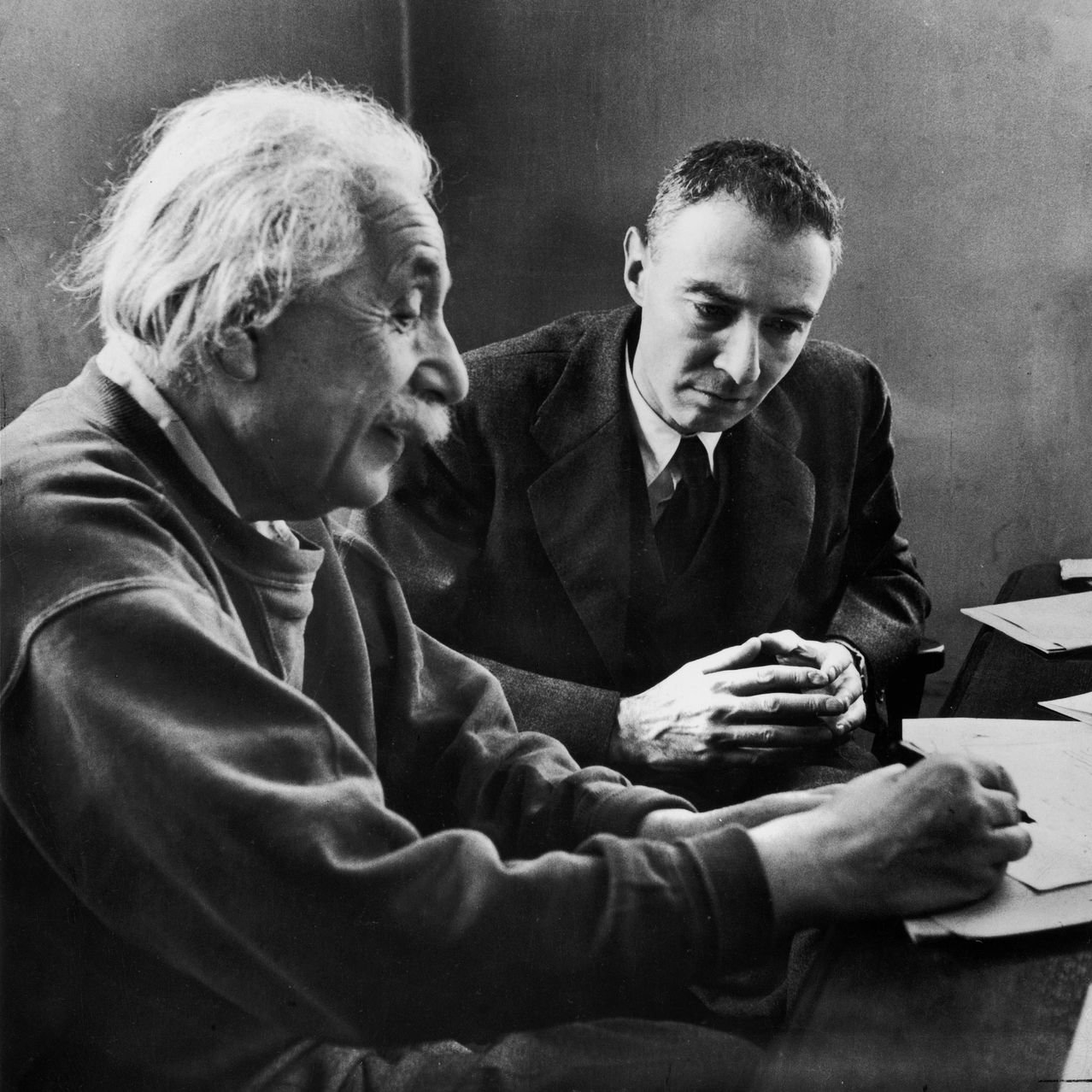
While the 2023 film highlighted their relationship, the reality was a mix of deep mutual respect and fundamental scientific disagreement. Both men were at the Institute for Advanced Study in Princeton after the war, but they represented two different generations of physics.
Einstein remained skeptical of quantum mechanics, famously stating that "God does not play dice with the universe." Oppenheimer, on the other hand, was a central figure in the quantum revolution. Despite these differences, Einstein was one of the few people who could relate to Oppenheimer’s burden of having changed the world through science. When Oppenheimer faced his security hearing in 1954, Einstein advised him that he didn't need to subject himself to such a "witch hunt" and should simply walk away, advice that Oppenheimer—driven by a sense of duty to his country—could not take.
8. He Faced a Secret Trial That Ruined His Career
In 1954, at the height of the McCarthy-era Red Scare, Oppenheimer was subjected to a grueling security hearing by the Atomic Energy Commission (AEC). Led largely by his political rival Lewis Strauss, the hearing investigated Oppenheimer’s past associations with members of the Communist Party, including his brother Frank and his former girlfriend Jean Tatlock.
The hearing was not a legal trial, but its effects were just as devastating. Oppenheimer was stripped of his security clearance, effectively ending his influence on American nuclear policy. It wasn't until 2022 that the United States government officially vacated the 1954 decision, with the Department of Energy acknowledging the process was flawed and biased. This formal statement by the DOE serves as a modern restoration of his legacy.
9. He Was a Gifted Linguist Beyond Sanskrit
While his Sanskrit studies are the most famous, Oppenheimer's linguistic range was vast. He was fluent in several languages, including French, German, and Dutch. In fact, when he went to the Netherlands to give a series of lectures early in his career, he allegedly learned Dutch in just six weeks to ensure he could deliver his presentations in the local language.
This ability to quickly master complex systems—whether they were linguistic or mathematical—was a hallmark of his genius. He could absorb information at a rate that intimidated even his most brilliant colleagues. This intellectual versatility allowed him to manage the diverse group of scientists at Los Alamos, as he could speak the "language" of chemists, theoretical physicists, and engineers with equal fluency.
10. His Brother Was Also a Brilliant Physicist Who Was "Blacklisted"
J. Robert wasn't the only physicist in the family. His younger brother, Frank Oppenheimer, was an accomplished experimental physicist who also worked on the Manhattan Project. However, Frank’s career was derailed even more severely than Robert’s due to his brief membership in the Communist Party during the 1930s.
After being blacklisted from academic positions during the Red Scare, Frank spent years as a cattle rancher in Colorado. He eventually returned to science education and founded the Exploratorium in San Francisco in 1969. The Exploratorium became a world-renowned interactive science museum, proving that the Oppenheimer legacy of scientific curiosity extended far beyond the destructive power of the atomic bomb.
Frequently Asked Questions
Did Oppenheimer regret building the atomic bomb?
Oppenheimer never expressed regret for the scientific achievement itself, believing it was a necessity of the war against fascism. However, he felt a profound sense of "moral responsibility" for the weapon's use and the subsequent nuclear arms race. He famously told President Harry S. Truman, "I feel I have blood on my hands," a comment that reportedly annoyed the President.
What happened to Oppenheimer after he lost his security clearance?
After 1954, Oppenheimer retreated from government work but continued to lead the Institute for Advanced Study in Princeton. He spent much of his time sailing in the Virgin Islands and giving lectures on the intersection of science and society, warning about the dangers of nuclear proliferation until his death in 1967.
Was Oppenheimer ever a member of the Communist Party?
Oppenheimer never officially joined the Communist Party, although he had many "fellow traveler" associations. He contributed money to various left-wing causes and was surrounded by friends and family members who were active communists. The FBI maintained a massive file on him for decades due to these connections.
How did the 2022 decision change his historical status?
The 2022 decision by Secretary of Energy Jennifer Granholm to vacate the 1954 ruling officially cleared Oppenheimer's name. It acknowledged that the original hearing was a result of "prejudice and political pressure" rather than actual evidence of disloyalty, essentially restoring his reputation as a loyal American citizen.
Where can I see the actual Los Alamos site today?
The Los Alamos National Laboratory remains a top-secret research facility. However, parts of the original Manhattan Project sites are now part of the Manhattan Project National Historical Park, managed by the National Park Service. Visitors can tour some of the historical buildings in the town of Los Alamos, New Mexico.
Re-evaluating the Legacy of J. Robert Oppenheimer
As we look back from the year 2026, the legacy of J. Robert Oppenheimer is more nuanced than ever. The restoration of his security clearance and the renewed public interest in his life have shifted the focus from his "downfall" to his role as a precursor to modern scientific ethics. For those interested in the history of science, the next logical step is to visit the Manhattan Project National Historical Park or explore the digital archives of the Atomic Heritage Foundation to see the primary documents that shaped the nuclear age. Understanding Oppenheimer requires looking past the "destroyer of worlds" moniker and recognizing the linguist, the teacher, and the flawed human being who navigated the most dangerous era in human history.