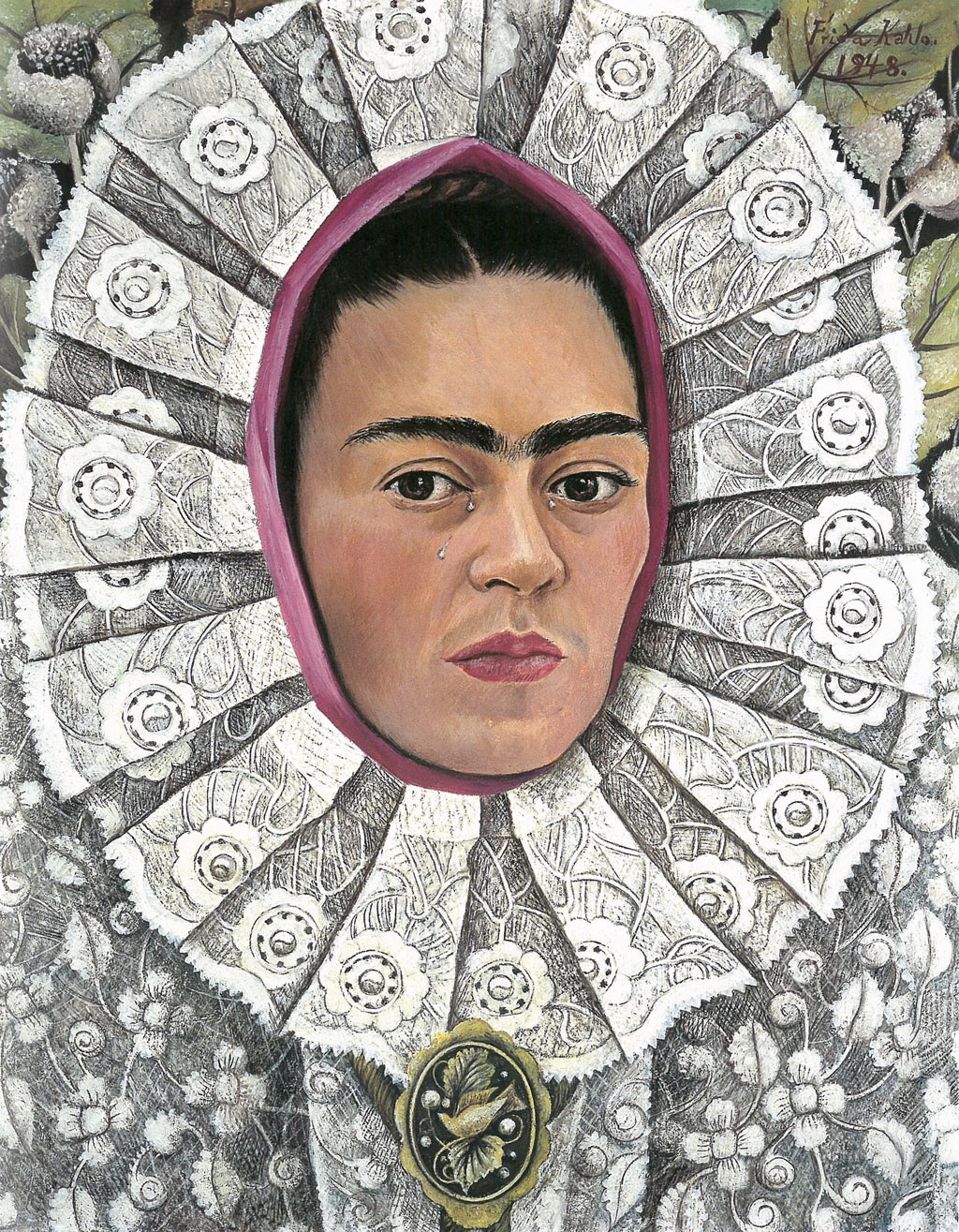
Frida Kahlo was a Mexican painter who transformed personal suffering and cultural identity into a legacy of uncompromising self-portraits. While often categorized as a Surrealist or a symbol of feminist resilience, the truth behind her life reveals a woman who meticulously engineered her persona to navigate chronic pain, radical politics, and a tumultuous marriage.
1. The Deliberate Reinvention of Her Birth Date
One of the most enduring myths about Frida Kahlo is her birth date. While her official birth certificate states she was born on July 6, 1907, Kahlo frequently claimed she was born on July 7, 1910. This was not a simple act of vanity to appear younger; it was a profound political statement.
By moving her birth year to 1910, Kahlo aligned her personal arrival with the outbreak of the Mexican Revolution. She wanted her life to begin alongside the birth of modern Mexico. This "truth" behind her identity highlights how deeply her sense of self was intertwined with the political spirit of her country. She considered herself a "daughter of the revolution," and this alignment influenced her art’s focus on Mexicanidad—the celebration of indigenous Mexican culture and a rejection of European colonial influences.
2. The 1925 Accident was a Turning Point for Her Career
Kahlo did not originally set out to be an artist. In her youth, she was a bright student enrolled at the prestigious National Preparatory School, aiming to become a doctor. However, on September 17, 1925, a tragic collision between a wooden bus and a streetcar changed her trajectory.
The "truth" of the accident is more gruesome than many popular accounts suggest. An iron handrail pierced her abdomen and uterus, causing lifelong complications with fertility and chronic pain. During her months of convalescence, her father, Wilhelm (Guillermo) Kahlo—a photographer and amateur painter—gave her his paints. Her mother had a special easel made that allowed her to paint while lying in bed, and a mirror was placed on the canopy so she could see herself. Painting became her primary tool for psychological survival and medical documentation.
3. Her Rejection of the "Surrealist" Label
André Breton, the founder of the Surrealist movement, famously described Kahlo’s work as a "ribbon around a bomb" and invited her to exhibit in Paris. However, Kahlo resisted being labeled a Surrealist. While her paintings often featured dreamlike imagery, floating figures, and symbolic landscapes, her intent was fundamentally different from the European Surrealists.
The truth behind her rejection of the movement lies in her connection to reality. Surrealists focused on the subconscious and the world of dreams. Kahlo famously stated, "I never painted dreams. I painted my own reality." For Frida, the imagery of a bleeding heart or a broken column was not a surrealist fantasy; it was a literal representation of her physical and emotional state. In 2026, art historians continue to emphasize her role as a precursor to autobiographical art rather than a standard-bearer for Surrealism.
4. The Complexity of the "Elephant and the Dove"
The relationship between Frida Kahlo and Diego Rivera is often romanticized, but it was a complex, often destructive, mutual dependency. When they married in 1929, her mother referred to them as "the elephant and the dove" due to their massive difference in physical size. Rivera was twenty years her senior and already an internationally recognized muralist.
The truth behind their union involves a cycle of infidelity, professional admiration, and two separate marriages to each other. They divorced in 1939 only to remarry in 1940. Their domestic arrangement was equally unconventional; they lived in a "twin house" in San Angel, which consisted of two separate buildings connected by a narrow bridge. This architectural choice symbolized their need for individual creative space while remaining inextricably linked. Rivera acknowledged that Frida was the superior artist, even if his fame eclipsed hers during their lifetimes.
5. Fashion as a Form of Political Resistance and Medical Necessity
Frida’s iconic look—the Tehuana dresses, elaborate floral headdresses, and heavy jewelry—is often viewed through a lens of aesthetic style. However, the truth behind her wardrobe is both political and functional.
The long, flowing skirts of the Tehuana costume served a practical purpose: they hid her right leg, which had been thinned by polio at age six and further damaged in the bus accident. The rigid corsets she wore for spinal support were often decorated with her own paintings, turning her medical equipment into art. Politically, choosing the Tehuana dress—a matriarchal society's garment from the Isthmus of Tehuantepec—was a rejection of Western fashion and an embrace of indigenous Mexican strength.
| Feature | Aesthetic Purpose | Practical/Truth Purpose |
|---|---|---|
| Tehuana Skirts | Celebration of indigenous culture | Concealing a withered leg and orthopedic braces |
| Floral Headdresses | Traditional Mexican beauty | Drawing attention upward away from her injured torso |
| Painted Corsets | Artistic expression | Providing necessary spinal support after 30+ surgeries |
| Unibrow/Facial Hair | Defiance of gender norms | Rejecting conventional beauty standards of the 1930s-50s |
6. Her Involvement in Radical Politics and Leon Trotsky
Frida Kahlo was a lifelong communist and a member of the Mexican Communist Party (PCM). Her political convictions were not a hobby; they were central to her world view. This truth is best exemplified by her relationship with Leon Trotsky, the exiled Russian revolutionary.
Kahlo and Rivera were instrumental in securing political asylum for Trotsky in Mexico. He lived with them at the Casa Azul (The Blue House) from 1937 to 1939. During this time, Frida and Trotsky had a brief, secret affair. She even dedicated a self-portrait to him, titled Between the Curtains. Her commitment to Marxism remained until her final days; her last public appearance in 1954 was at a demonstration protesting U.S. intervention in Guatemala, where she was seen in a wheelchair, holding a placard.
7. The Truth About Her Physical Suffering
It is a common misconception that Frida Kahlo’s pain was primarily emotional due to Rivera’s affairs. The biological truth is that she lived in a state of near-constant physical agony. Over the course of her life, she underwent at least 32 surgeries.
Her medical history included spinal fusions, the amputation of several toes (and eventually her right leg below the knee due to gangrene), and numerous procedures on her feet and back. She spent years in various plaster casts and steel corsets. Many of her paintings, such as The Broken Column, provide a visceral look at this physical reality. The nails piercing her skin in that painting represent the localized pain of her nerves, and the ionic column standing in for her spine illustrates the fragility of her skeletal structure.
8. She Was a Trailblazer for Bisexual Visibility
While her marriage to Diego Rivera dominated her public life, the truth of Kahlo’s romantic life was far more expansive. She was openly bisexual at a time when such transparency was rare and often dangerous.
She had well-documented affairs with both men and women. Among her famous paramours were the singer Chavela Vargas, the photographer Nickolas Muray, and the artist Isamu Noguchi. These relationships were not hidden from Rivera, who generally tolerated her affairs with women but was often jealous of her male lovers. Kahlo’s fluidity in her personal life mirrored the way she played with gender roles in her art, occasionally painting herself in men's suits or emphasizing her facial hair to challenge the binary expectations of the mid-20th century.
9. The "Fridos": Her Impact as an Educator
In 1943, Kahlo accepted a teaching position at La Esmeralda, the Ministry of Public Education’s school of painting and sculpture. When her health prevented her from traveling to the school, she moved the classes to her home, the Blue House in Coyoacán.
Her students became known as "Los Fridos." The truth behind her teaching style was unconventional and egalitarian. She encouraged her students to look at the "real Mexico," taking them to markets, pulquerias, and streets to find their subjects. She didn't want them to mimic her style; she wanted them to find their own voices within the context of their environment. This period of her life showed a nurturing, pedagogical side of Kahlo that is often overshadowed by her personal dramas.
10. The Rise of "Fridamania" After Her Death
Frida Kahlo died in 1954 at the age of 47. At the time of her death, she was primarily known in Mexico and as "Diego Rivera’s wife" abroad. The global icon we recognize in 2026 is the result of a phenomenon known as "Fridamania," which began in the 1970s.
The truth behind her posthumous fame is linked to the rise of the feminist, Chicano, and LGBTQ+ movements. These groups found in Kahlo a figure who embodied their struggles: the reclaimed indigenous identity, the female experience of the body, and the defiance of heteronormative standards. While her image has been commercialized on everything from coffee mugs to high-fashion runways, her actual work remains a stark, often uncomfortable testament to a life lived without filters.
Key Dates in Frida Kahlo's Medical and Artistic Journey
To understand the truth behind her art, one must see how closely her physical crises correlated with her creative output.
- 1907: Born in Coyoacán, Mexico (July 6).
- 1913: Contracts polio, resulting in a deformed right leg.
- 1925: The bus accident occurs; begins painting while bedridden.
- 1929: Marries Diego Rivera for the first time.
- 1932: Suffers a traumatic miscarriage in Detroit, inspiring the painting Henry Ford Hospital.
- 1939: Paints The Two Fridas during her divorce from Rivera; travels to Paris.
- 1944: Health declines significantly; begins wearing the steel corset depicted in The Broken Column.
- 1953: Her first solo exhibition in Mexico; arrives in an ambulance and is carried in on a hospital bed.
- 1954: Dies at the Blue House (July 13).
Frequently Asked Questions
Did Frida Kahlo really have a unibrow?
Yes, Frida Kahlo naturally had a thick unibrow and facial hair, which she intentionally exaggerated in her self-portraits. This was a deliberate choice to challenge conventional beauty standards and to embrace her natural features. By refusing to groom these features to meet the "feminine" ideals of the time, she made her face a canvas for radical self-acceptance and a rejection of European aesthetic norms.
How many self-portraits did Frida Kahlo paint?
Out of the approximately 143 paintings Kahlo produced during her lifetime, 55 are self-portraits. When asked why she painted herself so often, she replied, "I paint myself because I am so often alone and because I am the subject I know best." Her self-portraits serve as a visual diary of her physical pain, her psychological states, and her changing relationship with Diego Rivera.
What was Frida Kahlo’s cause of death?
The official cause of death was a pulmonary embolism, though no autopsy was performed. She died at her home, the Blue House, in 1954. Some biographers have speculated about the possibility of an intentional overdose of painkillers, as her final diary entry read: "I joyfully await the exit—and I hope never to return—Frida." However, this remains speculative, and her health had been in severe decline for years following a leg amputation.
Is the Blue House (Casa Azul) open to the public?
Yes, the Casa Azul in Coyoacán, Mexico City, was turned into the Frida Kahlo Museum in 1958. It remains one of the most visited museums in Mexico. Visitors can see her personal belongings, her studio, her collection of pre-Columbian artifacts, and many of her original works. The museum preserves the environment in which she spent most of her life and eventually died.
Engaging with Frida Kahlo’s Legacy Today
To truly understand Frida Kahlo beyond the commercialized "Fridamania," enthusiasts should focus on her primary documents. Studying her diary, which was published with full-color illustrations, provides an intimate look at her stream-of-consciousness thoughts and sketches. Visiting her work in person at the Museum of Modern Art (MoMA) in New York or the Dolores Olmedo Museum in Mexico City offers a perspective on the scale and texture of her paintings that digital images cannot replicate. For those interested in the intersection of disability and art, her life serves as a foundational study in how physical limitations can be transformed into a source of profound creative power.