Alan Menken is the legendary composer and pianist responsible for the soundtrack of a generation, defining the sound of the Disney Renaissance and modern musical theater. From the underwater melodies of The Little Mermaid to the sweeping romanticism of Beauty and the Beast, his work has earned him a rare seat in the EGOT circle.
Throughout his career, Menken has transformed the landscape of animated film by infusing it with the structure and heart of Broadway. His ability to blend various musical genres—ranging from calypso and doo-wop to gothic choral arrangements—has made his compositions timeless. As of 2026, his influence remains a cornerstone of the entertainment industry, bridging the gap between nostalgic classics and contemporary stage hits.
1. He is a Rare EGOT Winner
Alan Menken belongs to an elite group of entertainers who have won the four major American entertainment awards: an Emmy, a Grammy, an Oscar, and a Tony (EGOT). He achieved this milestone in 2020, becoming the 16th person in history to do so. His journey to this status was unique because, while he dominated the Oscars and Grammys in the 1990s, the Emmy and Tony awards came much later in his career.
Menken's EGOT status was solidified when he won a Daytime Emmy Award for Outstanding Original Song in a Children’s, Young Adult or Animated Program for "Waiting in the Wings" from Rapunzel's Tangled Adventure. His Tony Award was earned in 2012 for the score of the Broadway hit Newsies. This "grand slam" of show business is a testament to his versatility across film, television, and live theater, proving that his melodic sensibilities translate effectively to every medium.
2. He Originally Planned to Follow a Career in Medicine
It may be difficult to imagine the world of music without the "Menken touch," but Alan’s early life was steered toward a very different path. Born into a family with a strong medical background—his father was a dentist—Menken enrolled at New York University (NYU) as a pre-med student. He initially felt the pressure to pursue a traditional, stable profession, despite his innate interest in the piano and composition.
However, the pull of the arts was too strong to ignore. He eventually pivoted to a music degree, focusing on piano and composition. After graduating, he joined the BMI Lehman Engel Musical Theatre Workshop, where he met his most significant collaborator, Howard Ashman. This career shift not only changed his life but also salvaged the future of the American animated musical, which had been in a state of decline before his arrival at Disney.
3. The Ashman-Menken Partnership Saved Disney Animation
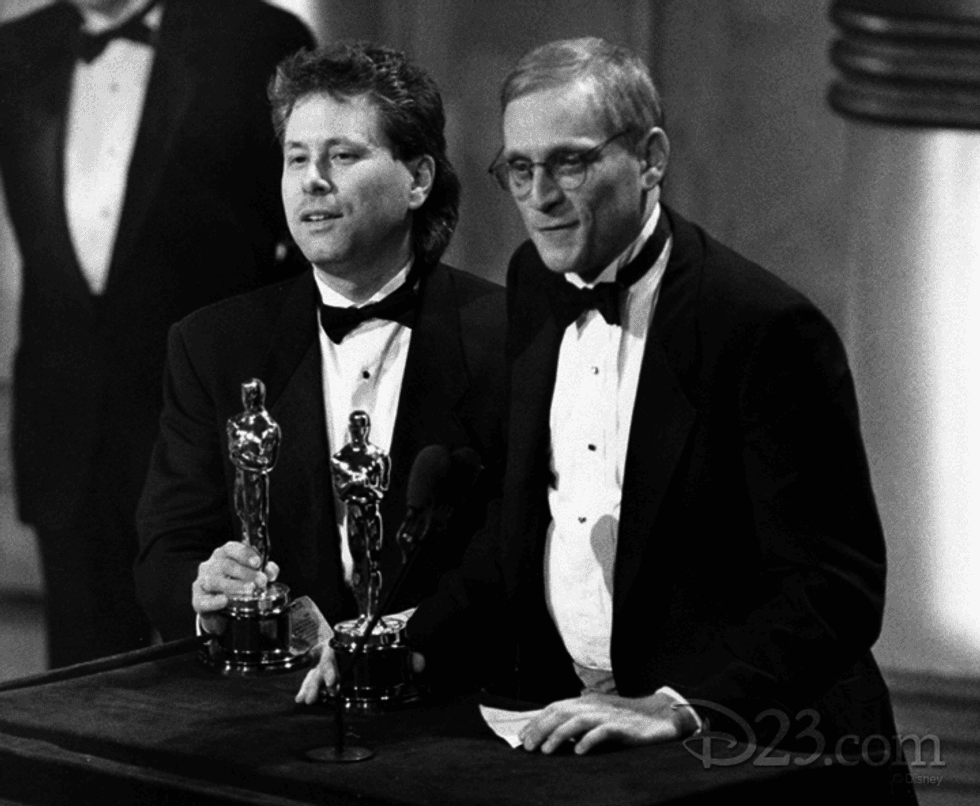
In the late 1980s, Walt Disney Animation Studios was struggling to regain its former glory. The partnership between Alan Menken and lyricist Howard Ashman is widely credited with sparking the "Disney Renaissance." Their first collaboration for the studio was The Little Mermaid (1989), which introduced the "Broadway-style" animated musical.
Before Menken and Ashman, animated songs were often treated as simple interludes. Ashman and Menken applied the narrative techniques of musical theater, where songs drive the plot and reveal character motivations. The "I Want" song, exemplified by "Part of Your World," became a staple of the Disney formula thanks to their influence. Their collaboration continued with Beauty and the Beast and Aladdin, though tragically, Ashman passed away during the production of Aladdin in 1991.
4. He Holds Eight Academy Awards
Alan Menken’s success at the Academy Awards is statistically staggering. He has won eight Oscars, making him one of the most awarded living individuals in the history of the Academy. His wins are consistently paired in the categories of Best Original Score and Best Original Song, reflecting his ability to craft both a cohesive atmospheric soundscape and a standalone radio-ready hit.
| Film | Year | Award Category | Winning Song / Work |
|---|---|---|---|
| The Little Mermaid | 1989 | Best Original Score | Instrumental Score |
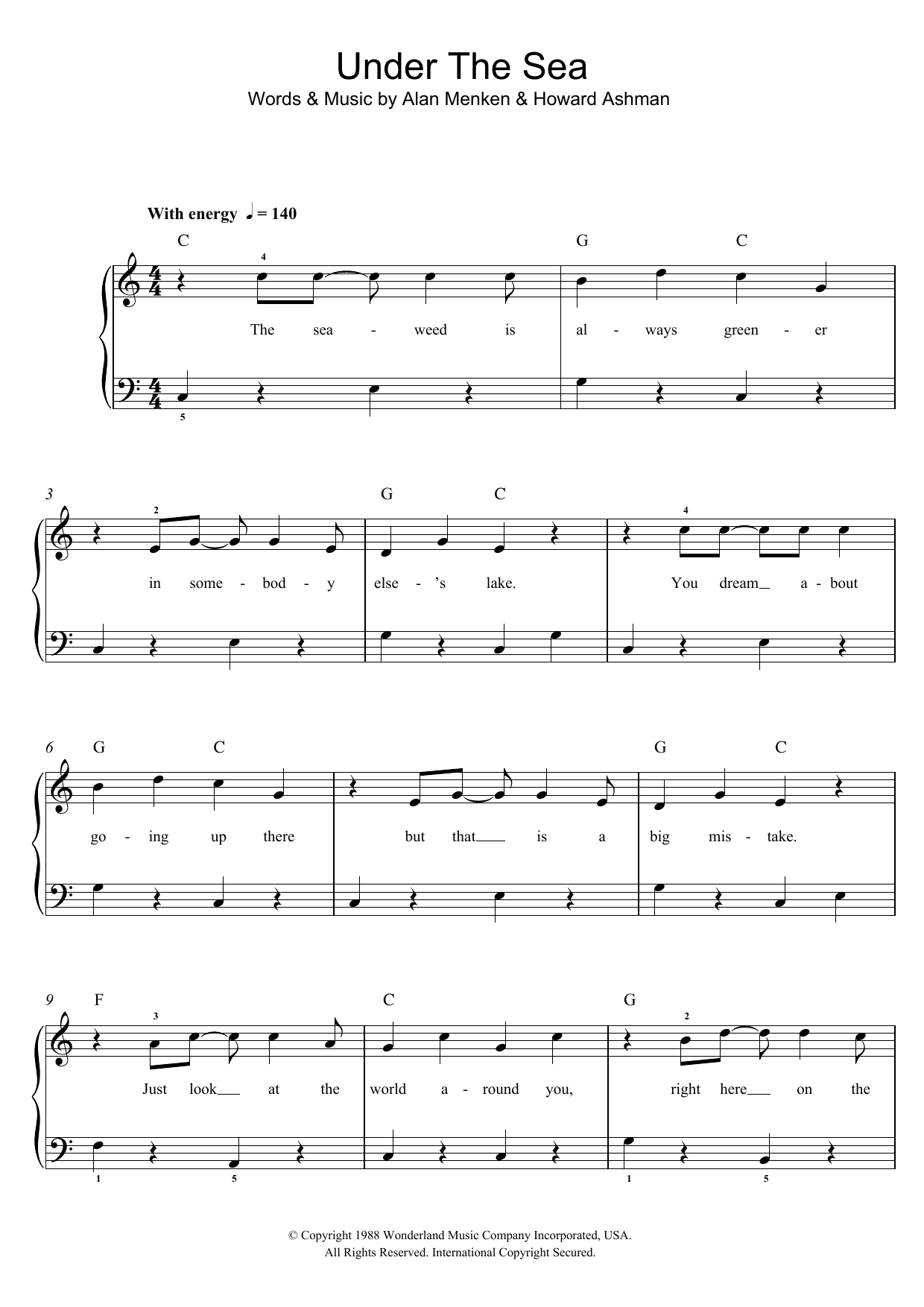
| The Little Mermaid | 1989 | Best Original Song | "Under the Sea" |
| Beauty and the Beast | 1991 | Best Original Score | Instrumental Score |
| Beauty and the Beast | 1991 | Best Original Song | "Beauty and the Beast" |
| Aladdin | 1992 | Best Original Score | Instrumental Score |
| Aladdin | 1992 | Best Original Song | "A Whole New World" |
| Pocahontas | 1995 | Best Original Score | Instrumental Score |
| Pocahontas | 1995 | Best Original Song | "Colors of the Wind" |
5. His First Major Success was an Off-Broadway Cult Classic
Before the glitz of Disney, Menken and Ashman found success with the dark, comedic musical Little Shop of Horrors. Opening Off-Broadway in 1982, the show was a massive hit that parodied 1960s B-movies and featured a soulful, rock-and-roll-inspired score. The music relied heavily on doo-wop and early 60s pop, showcasing Menken’s ability to write in specific period styles.
Little Shop of Horrors eventually became a film in 1986, earning Menken his first Academy Award nomination for the song "Mean Green Mother from Outer Space." This project served as the ultimate proof of concept for the Menken-Ashman duo, demonstrating that they could take high-concept stories and make them accessible and emotionally resonant through catchy, narrative-driven music.
6. He is a Master of Genre-Hopping
One of Alan Menken’s greatest technical strengths is his "chameleon-like" ability to adapt his musical style to the setting of a story. He does not have a single "Menken sound" so much as he has a "Menken sensibility" for melody that fits any culture or era.
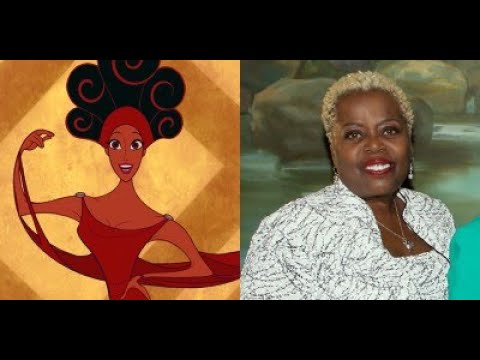
- Hercules: He utilized 1960s Gospel music to tell the story of a Greek demigod, viewing the Muses as a "Greek chorus" in the most literal sense.
- The Hunchback of Notre Dame: He shifted toward grand, Gothic choral arrangements and liturgical sounds to reflect the 15th-century Parisian setting.
- The Little Mermaid: He integrated Calypso and Reggae influences to give the undersea world a vibrant, tropical energy.
- Newsies: He employed a gritty, anthemic New York street sound that perfectly captured the spirit of the 1899 newsboys' strike.
7. He Won His Tony Award for "Newsies"
While Menken is often associated with film, his contribution to the American stage is profound. Though several of his films were adapted for Broadway—including Beauty and the Beast, The Little Mermaid, and Aladdin—it was the stage adaptation of the 1992 cult-film Newsies that finally brought him the Tony Award for Best Original Score in 2012.
The stage version of Newsies was a surprise juggernaut. Originally intended for a limited run at the Paper Mill Playhouse, the show's popularity forced a move to Broadway. Menken, working with lyricist Jack Feldman, added several new songs to the existing film score, such as "Watch What Happens" and "Santa Fe," which became instant theater standards.
8. He Has Collaborated With Other Legends After Ashman
Following the death of Howard Ashman, many wondered if Menken could find another lyricist who shared that specific creative shorthand. Menken proved his resilience by collaborating with some of the biggest names in the industry. For Aladdin, he finished the work with the legendary Sir Tim Rice (best known for Jesus Christ Superstar and The Lion King).
He later partnered with Stephen Schwartz (the creator of Wicked) for Pocahontas, The Hunchback of Notre Dame, and Enchanted. In more recent years, he has worked closely with Glenn Slater and even collaborated with Lin-Manuel Miranda on the live-action reimagining of The Little Mermaid. These partnerships have allowed Menken to stay relevant across decades, blending his classic melodic style with more modern lyrical sensibilities.
9. His Music is the Heart of the Disney Theme Parks
The influence of Alan Menken extends beyond the theater and the cinema screen; it is woven into the very fabric of the Disney Parks experience. From the background music loops at Epcot to the massive nighttime spectaculars like World of Color and Happily Ever After, Menken’s themes provide the emotional cues for millions of visitors each year.
The "Compass of Your Heart," a song he wrote for the Sindbad’s Storybook Voyage attraction at Tokyo DisneySea, has gained a massive following among theme park enthusiasts. His ability to write "earworms" that evoke specific emotions—wonder, excitement, or nostalgia—makes his work the perfect soundtrack for the immersive environments Disney creates.
10. He Remains Active and Influential in 2026
Even as a veteran of the industry, Alan Menken has not slowed down. In the mid-2020s, he has continued to work on both new projects and the preservation of his legacy. He has been heavily involved in the musical development of Skydance Animation's Spellbound and has continued to refine scores for the ongoing wave of Disney live-action adaptations.
His influence on the next generation of composers is undeniable. Figures like Lin-Manuel Miranda and the duo Pasek & Paul frequently cite Menken as a primary influence. His legacy is not just in the awards he has won, but in the way he taught audiences that music is the most effective way to communicate the "human" (or mermaid, or beast) element of any story.
Frequently Asked Questions
What is Alan Menken’s most famous song?
While subjective, "A Whole New World" from Aladdin is often cited as his most famous work, as it reached #1 on the Billboard Hot 100. Other massive hits include "Under the Sea," "Beauty and the Beast," and "Colors of the Wind."
How many Oscars does Alan Menken have in 2026?
As of 2026, Alan Menken holds eight Academy Awards. He was the most awarded living person in terms of Oscars for many years, a record only rivaled by visual effects artists or late legends like Walt Disney.
Did Alan Menken work on the "The Lion King"?
No. While many associate The Lion King with the Disney Renaissance, the music for that film was composed by Hans Zimmer, with songs by Elton John and Tim Rice. Menken was working on other projects like Pocahontas and The Hunchback of Notre Dame during that era.
Which Broadway shows did Alan Menken write?
Menken has a prolific Broadway career including Little Shop of Horrors, Beauty and the Beast, The Little Mermaid, Sister Act, Newsies, Aladdin, A Bronx Tale, and Leap of Faith.
Is Alan Menken still composing in 2026?
Yes, Alan Menken remains an active composer. He continues to work on film scores, stage adaptations, and special projects for Disney and other major studios, maintaining his status as one of the most sought-after melodicists in the world.
How to Explore Alan Menken’s Musical Legacy
To truly appreciate the genius of Alan Menken, one should look beyond the radio hits and listen to his full scores. The "Entr'acte" from the Broadway version of Beauty and the Beast or the "Overture" from The Hunchback of Notre Dame showcase his intricate orchestrations and ability to weave multiple leitmotifs together.
For those interested in the history of his work, the documentary Howard (available on Disney+) provides an intimate look at his partnership with Howard Ashman and the birth of the modern Disney musical. Aspiring composers and fans alike can find inspiration in his journey from a pre-med student to an EGOT winner, proving that following one's passion can lead to a world-changing career.