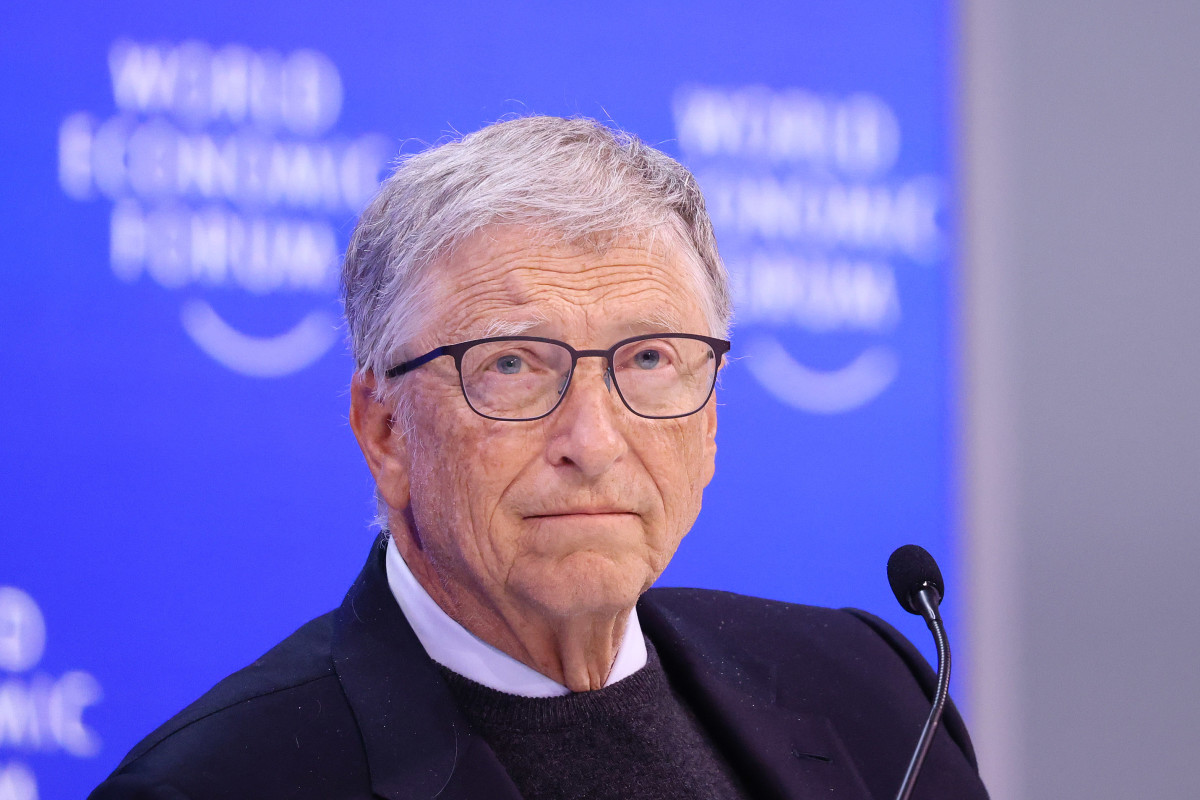
As of early 2026, Bill Gates’ net worth is estimated to be between $150 billion and $165 billion, maintaining his position as one of the world's wealthiest individuals. This fortune is the result of his foundational success with Microsoft, followed by decades of disciplined asset diversification through Cascade Investment LLC and strategic shifts into energy, agriculture, and climate technology.
The Financial Landscape of Bill Gates in 2026
The wealth profile of Bill Gates in 2026 reflects a sophisticated transition from a single-stock billionaire to a diversified institutional-scale investor. While his name remains synonymous with Microsoft, the majority of his wealth no longer resides in software equity. Instead, his fortune is managed through a complex web of private holdings, real estate, and public equities that have benefited from the compounding growth of the post-pandemic era.
Estimating the exact figure of Gates’ wealth involves analyzing his remaining Microsoft shares, which are estimated to be around 1% of the company, and the massive portfolio of Cascade Investment LLC. In the years leading up to 2026, the global equity markets experienced significant volatility due to advancements in Artificial Intelligence and shifts in energy policy. Because Gates positioned his portfolio toward "hard assets" like farmland and "future-proof assets" like waste management and clean energy, his net worth has shown remarkable resilience against inflationary pressures.
His wealth is also shaped by his ongoing commitment to the Bill & Melinda Gates Foundation. Despite transferring tens of billions of dollars to the foundation over the last two decades—including a massive $20 billion injection in 2022—his personal assets have continued to grow. This phenomenon is largely attributed to the high rate of return on his diversified investments, which often outpaces the rate of his record-breaking philanthropy.
The Microsoft Era: Laying the Foundation of Wealth
The origin of Bill Gates' billionaire status is one of the most documented success stories in corporate history. In 1975, Gates and his childhood friend Paul Allen founded Microsoft (originally Micro-soft) in Albuquerque, New Mexico. The initial "how" of his wealth accumulation was centered on a pivotal business decision: the licensing model.
Unlike other software developers of the 1970s and 80s who sold their software outright, Gates insisted on a non-exclusive licensing agreement with IBM for the MS-DOS operating system. This allowed Microsoft to license the same software to other "PC clone" manufacturers. As the personal computer market exploded, Microsoft became the universal standard. By the time Microsoft went public in 1986, the company’s valuation was roughly $350 million. Gates, who retained a 45% stake, became a billionaire just one year later at the age of 31.
Throughout the 1990s, Microsoft achieved a near-monopoly in the operating system and office productivity markets with Windows and Office. This period represented the fastest accumulation of wealth in Gates' life. By 1999, at the height of the dot-com bubble, his net worth briefly surpassed $100 billion (equivalent to over $180 billion today when adjusted for inflation). The core mechanism of his fortune during this phase was simple: massive equity retention in a high-margin, scalable software business that faced little effective competition.
From Software to Diversification: The Role of Cascade Investment LLC
A critical turning point in preserving and growing the Gates fortune was the decision to diversify. Recognizing that having 100% of his wealth tied to a single technology company was a significant risk, Gates began selling Microsoft shares systematically starting in the mid-1990s. The proceeds from these sales were funneled into Cascade Investment LLC, a private investment firm managed by Michael Larson.
Cascade Investment is the engine that keeps Gates’ net worth stable today. Instead of chasing high-risk tech startups, Larson steered the capital toward "value" investments—companies with strong moats, essential services, and consistent cash flows. This strategy mirrors the philosophy of Warren Buffett, a long-time friend and mentor to Gates.
By 2026, the fruits of this diversification are evident. Cascade holds major stakes in various industries that are disconnected from the tech cycle. For example, substantial holdings in Canadian National Railway and Republic Services (a waste management leader) provide steady dividends and capital appreciation. By reducing his Microsoft stake to approximately 1% by 2026, Gates successfully decoupled his personal survival from the fate of the software industry, ensuring that even if the tech sector faced a downturn, his billion-dollar fortune would remain intact.
Key Asset Classes in the Gates Portfolio
The composition of Bill Gates' net worth in 2026 is characterized by a "barbell" strategy: holding stable, income-generating assets on one end and high-growth, high-impact venture capital on the other. Below are the primary pillars of his current portfolio.
Public Equities and Traditional Holdings
Through Cascade and his personal accounts, Gates remains a major shareholder in several "blue chip" corporations. These include Berkshire Hathaway (though he stepped down from the board in 2020), Caterpillar Inc., and Deere & Company. These investments provide exposure to global infrastructure and industrial growth.
Farmland and Agricultural Real Estate
One of the more surprising elements of Gates’ wealth is his status as one of the largest private owners of farmland in the United States. By 2026, his holdings encompass more than 270,000 acres across dozens of states. This is a strategic play on food security and inflation-resistant assets. Farmland provides a double benefit: the underlying land value tends to appreciate over time, while the lease of the land to farming operations generates consistent annual income.
Breakthrough Energy and Climate Tech
A growing portion of Gates’ capital is deployed through Breakthrough Energy, an umbrella organization he founded to accelerate the transition to net-zero emissions. While much of this is philanthropic or "impact-first," many of the underlying investments in fusion energy, long-duration energy storage, and green hydrogen are positioned to become trillion-dollar industries. In the 2026 landscape, as green energy mandates become more stringent worldwide, these early-stage bets have begun to show significant valuation increases, contributing to his overall net worth.
| Asset Category | Primary Holdings | Strategic Purpose |
|---|---|---|
| Technology | Microsoft (approx. 1% stake) | Legacy equity and growth |
| Logistics | Canadian National Railway | Infrastructure and steady dividends |
| Sustainability | Republic Services | Recession-proof essential services |
| Real Estate | 270,000+ acres of US Farmland | Inflation hedge and food security |
| Industrial | Deere & Co, Caterpillar | Global development exposure |
| Venture Capital | Breakthrough Energy Ventures | High-growth climate solutions |
Philanthropy and Wealth: The Impact of the Gates Foundation
It is impossible to discuss Bill Gates’ net worth without addressing the Bill & Melinda Gates Foundation. As of 2026, the foundation is one of the largest private charitable organizations in the world, with an endowment exceeding $70 billion. Gates has frequently stated his intention to eventually drop off the list of the world's wealthiest people by giving away the vast majority of his assets.
However, the "problem" Gates faces is the sheer efficiency of his investment strategy. When a $150 billion fortune grows at an average annual return of 7% to 10%, it generates $10 billion to $15 billion in new wealth every year. To actually reduce his net worth, Gates has to give money away faster than his investments can compound.
Following his 2021 divorce from Melinda French Gates, the management of their joint fortune became a subject of public scrutiny. While substantial assets were transferred as part of the settlement, both parties committed to continuing their work through the foundation. In 2026, the foundation’s spending has increased to roughly $9 billion annually, targeting global health, education, and gender equality. This massive outflow serves as a counterweight to his investment gains, keeping his net worth from reaching the $200 billion+ heights seen by other tech moguls like Elon Musk or Jeff Bezos.
Lessons in Wealth Accumulation from the Gates Journey
The trajectory of Bill Gates' billionaire fortune offers several actionable insights for long-term wealth management. While few can replicate the success of Microsoft, the principles applied by Gates and his team at Cascade are universal.
- Equity is the Primary Wealth Driver: Gates did not build his fortune through a high salary; he built it by owning nearly half of a company that changed the world. Retaining a significant ownership stake during the high-growth phase is the only way to reach "billionaire" status.
- The Power of Non-Exclusive Licensing: The early MS-DOS deal illustrates the importance of scalability. By creating a product once and selling it millions of times without being tied to a single hardware manufacturer, Gates maximized his profit margins.
- Strategic Diversification is Essential for Preservation: Most people who become wealthy through one company eventually lose that wealth if they stay too concentrated. Gates’ transition into railways, waste management, and farmland is a masterclass in risk mitigation.
- Long-Term Horizon Investing: Gates rarely engages in day-trading or speculative "meme" assets. His portfolio is built on 10-to-20-year horizons, allowing him to ignore market noise and benefit from the power of compounding.
Why Farmland Is a Key Component
Farmland is often viewed as a "boring" investment, but for a billionaire, it is a perfect hedge. It is a finite resource that is essential for human survival. As the global population grows and climate change impacts arable land, the value of the 270,000 acres Gates owns becomes increasingly significant. It serves as a stable foundation that balances out the volatility of his tech and venture capital holdings.
Does Bill Gates Still Own Microsoft?
Yes, but he is no longer the majority shareholder. As of 2026, his ownership is estimated to be approximately 1% of the total outstanding shares. He stepped down from the Microsoft board of directors in 2020 to focus more on his philanthropic efforts, though he continues to serve as a technology advisor to the company’s current leadership.
How Did the Divorce Affect His Net Worth?
The 2021 divorce resulted in a significant transfer of assets to Melinda French Gates. Public filings at the time showed billions of dollars worth of stock in companies like Deere & Co and Canadian National Railway being moved to Melinda's private accounts. However, because the total pool of wealth was so large and the markets remained strong through the mid-2020s, Bill Gates’ individual net worth recovered quickly and remains near record highs in 2026.
What is the Giving Pledge?
Bill Gates co-founded The Giving Pledge with Warren Buffett in 2010. It is a commitment by the world's wealthiest individuals to give away more than half of their wealth to charitable causes, either during their lifetime or in their will. Gates' current 2026 net worth is essentially "on deck" for donation, as he has committed to eventually giving away "virtually all" of his wealth to the foundation.
Navigating the Future of the Gates Fortune
For those tracking the net worth of high-net-worth individuals, the focus on Bill Gates in 2026 should remain on his transition into climate-tech and sustainable infrastructure. While the "how he built it" part of the story is firmly rooted in 20th-century software, the "how he grows it" part is now firmly rooted in 21st-century sustainability.
Investors and researchers should monitor the performance of Breakthrough Energy Ventures’ portfolio companies as they go public or are acquired. These exits will likely be the primary source of any sudden spikes in Gates’ net worth in the coming years. Furthermore, the continued steady performance of Cascade’s "value" stocks provides a high floor for his wealth, making it unlikely that he will drop out of the top ten wealthiest individuals list anytime before the end of the decade.