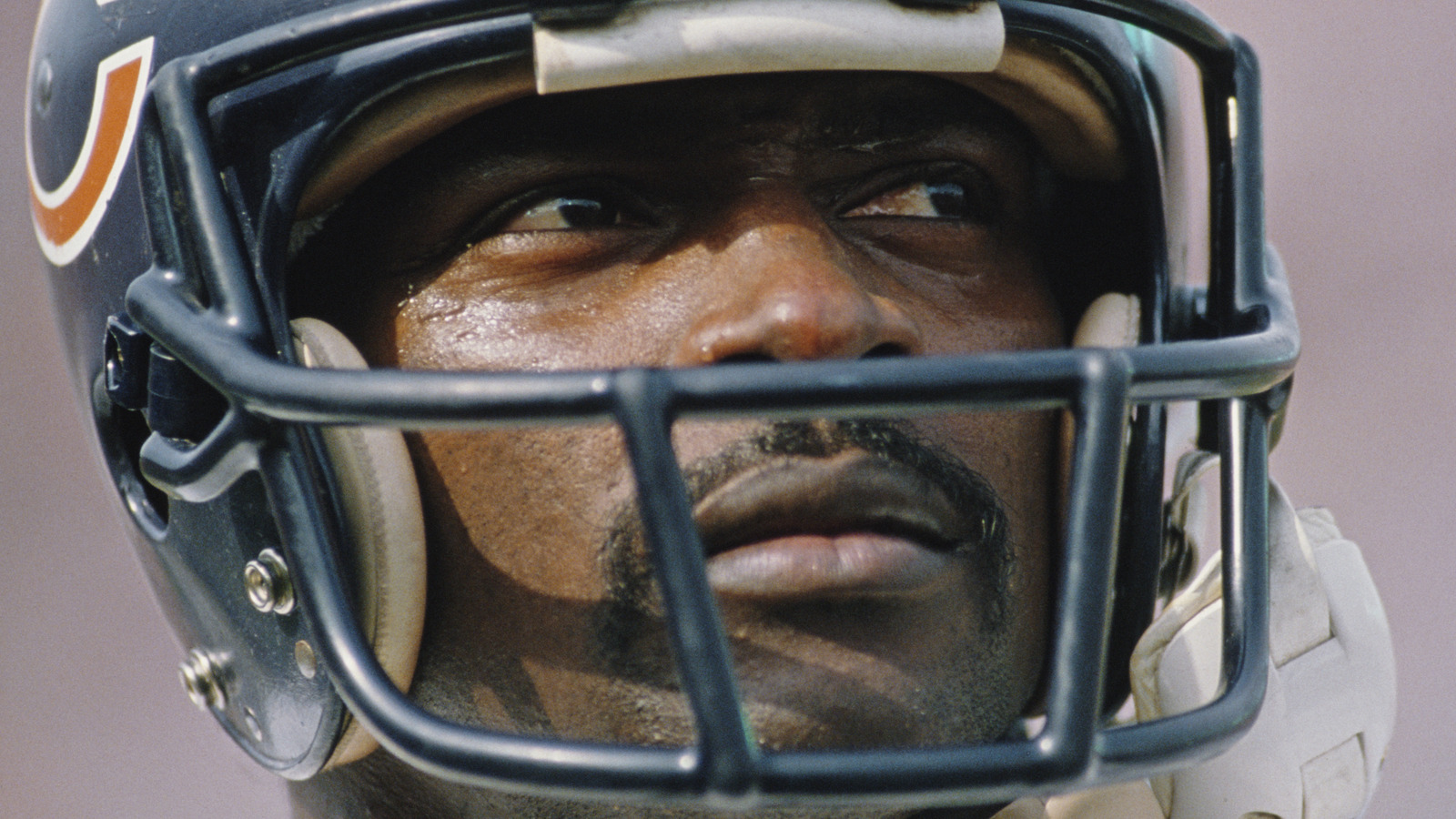
Walter Payton’s number 34 remains one of the most revered symbols in professional football history. Worn by the Chicago Bears running back throughout his entire 13-season career from 1975 to 1987, the digit represents not just statistical greatness, but a standard of excellence, resilience, and humanitarianism that continues to define the culture of the National Football League (NFL) in 2026.
The Origins of 34 in Chicago
When Walter Payton was drafted by the Chicago Bears in 1975 out of Jackson State University, he did not immediately choose the number 34 as a statement of intent. In professional football, incoming rookies are often assigned available numbers based on position groups and inventory at the time of arrival. At the start of his tenure, Payton stepped into a locker room steeped in the tradition of the "Monsters of the Midway."
The number 34 was not retired or considered legendary prior to Payton’s arrival. It was simply a jersey designation for a running back in the Bears' system. However, Payton’s immediate impact transformed the perception of the jersey. During his rookie season, he struggled initially, but he quickly established himself as a versatile offensive weapon. By the time he concluded his career, he held the NFL record for career rushing yards—a mark that stood for nearly two decades—and the number 34 became synonymous with the "Sweetness" moniker he carried throughout his life.
Statistical Mastery and Physical Play
The legacy of the jersey is inextricably linked to Payton’s unique style of play. Unlike many running backs of his era who relied solely on speed or brute force, Payton was a "complete" back. His durability is perhaps the most defining characteristic of the 34 jersey; he famously missed only one game during his entire career, a feat that, in the modern 2026 NFL landscape, is statistically improbable.
His ability to run with power, catch passes out of the backfield, and serve as an elite blocker made the number 34 a focal point for opposing defensive coordinators. The jersey became a target on the field, yet Payton’s commitment to "never go down on first contact" meant that defenders rarely had the luxury of a clean tackle. This specific legacy—defined by relentless effort and an unwillingness to accept defeat—elevated the jersey from a uniform identifier to a badge of honor for the franchise.
The Retirement of the Jersey
In keeping with the traditions of the Chicago Bears, the organization retired the number 34 shortly after Payton’s retirement. Retiring a jersey number is the ultimate sign of respect in North American professional sports, effectively removing the number from circulation to ensure that no future player can ever wear it for that specific team.
The retirement ceremony served as a formal acknowledgment that the history of the Chicago Bears is divided into eras: before 34 and after 34. While other greats have worn different numbers for the organization, the void left by 34 remains a psychological placeholder for the team’s identity. The jersey now hangs in the rafters of Soldier Field, serving as a permanent anchor to the franchise's past glory and a benchmark for all subsequent players to measure their own commitment.
Comparing NFL Jersey Retirements
Retiring a jersey number is a significant administrative decision for an NFL franchise. Because teams have limited numbers available—partly due to league rules regarding which positions can wear which numbers—the retirement of a digit like 34 creates a permanent constraint on the team's roster management.
| Player | Team | Number | Significance |
|---|---|---|---|
| Walter Payton | Chicago Bears | 34 | All-time leading rusher at retirement; symbol of durability |
| Jim Brown | Cleveland Browns | 32 | Dominant physical runner; league MVP winner |
| Barry Sanders | Detroit Lions | 20 | Elusive runner; high career yards per carry |
| Gale Sayers | Chicago Bears | 40 | Explosive talent; career cut short by injury |
This comparison highlights that while many greats have their jerseys retired, the context for the retirement of 34 is based on a combination of extreme longevity and comprehensive offensive utility.
The Humanitarian Legacy: The Walter Payton Man of the Year Award
Beyond the field, the legacy of the number 34 lives on through the Walter Payton NFL Man of the Year Award. Established in 1970 as the NFL Man of the Year award, it was renamed in 1999 to honor Payton’s legacy of volunteerism and charity work. In 2026, this remains the most prestigious off-field honor a player can receive.
Current NFL players who win this award are allowed to wear a special patch on their jerseys for the remainder of their careers, featuring a silhouette of the number 34. This serves as a functional, ongoing link between modern philanthropic work and the standards set by Payton decades ago. It ensures that the number 34 is not merely a retired relic in a stadium, but a living part of the league’s moral framework.
Addressing Common Questions
Why is Walter Payton often referred to as "Sweetness"?
The nickname "Sweetness" originated during his college years at Jackson State. Coaches and teammates gave him the name because of his personality and his graceful, fluid running style that made playing the position look easy. It eventually became a branding element that contrasted with the tough, physical nature of his play, making the number 34 an iconic brand in its own right.
Can any active player wear number 34 in the NFL?
While the Chicago Bears have permanently retired number 34, other NFL teams are not required to retire the number. However, out of respect for Payton's legacy, many players across the league voluntarily avoid requesting the number. If a player does wear 34 on a different team, it is purely a roster-management choice and does not carry the same historical weight as it does in Chicago.
What are the criteria for the Walter Payton Man of the Year?
The award is given to a player who demonstrates excellence on the field and significant dedication to philanthropy and community impact. Nominees are selected by their respective teams, and a blue-ribbon panel ultimately chooses the winner. The criteria prioritize sustained, long-term impact rather than a single event.
How does the legacy of 34 affect modern Bears players?
For players entering the Chicago Bears organization in 2026, the absence of the number 34 serves as a daily reminder of the "Bear culture." It sets a high bar for physical toughness and community engagement. Coaches and veterans often reference the "Payton standard" when discussing practice habits, reinforcing that while the jersey is gone, the expectation of excellence remains constant.
Maintaining the Standard
For fans and historians of the game, the story of Walter Payton’s number is a study in how sports figures transition from active competitors to cultural symbols. The jersey represents the intersection of individual achievement and organizational values. The next action for those interested in the history of the sport is to observe how current organizations navigate the tension between honoring retired legends and managing roster availability. Collectors and fans often look to official NFL archives or the Pro Football Hall of Fame to see the physical preservation of the jersey, which remains one of the most sought-after pieces of memorabilia in American sports history.