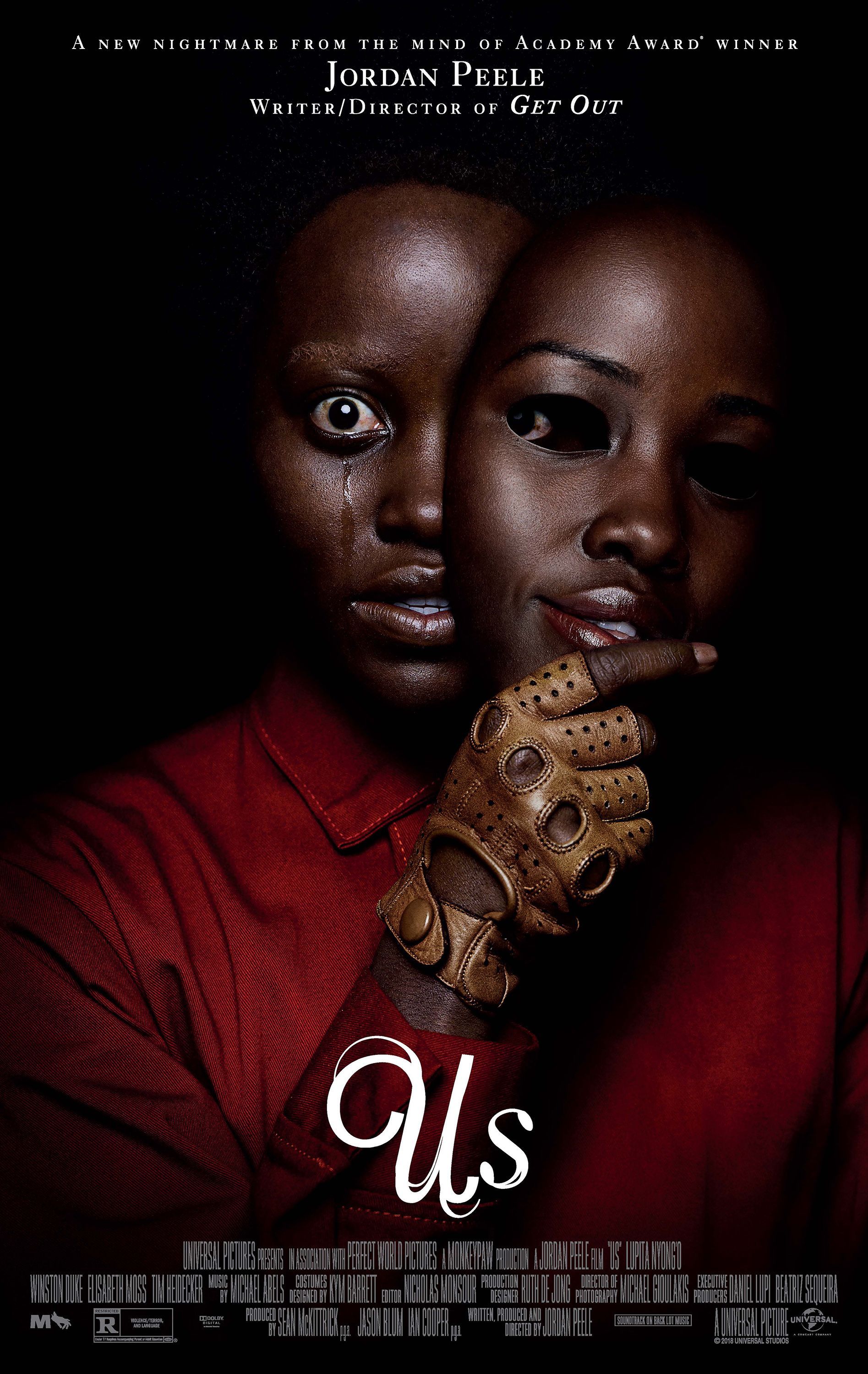
The ending of Jordan Peele’s 2019 film Us reveals that the protagonist, Adelaide Wilson, is actually a Tethered—a clone who swapped places with her surface-dwelling counterpart, Red, as a child. This revelation reframes the entire narrative, shifting the audience’s perspective from a simple survival story to a complex allegory about privilege, identity, and the systemic consequences of an ignored underclass.
The Core Reveal: The Switch in the Funhouse
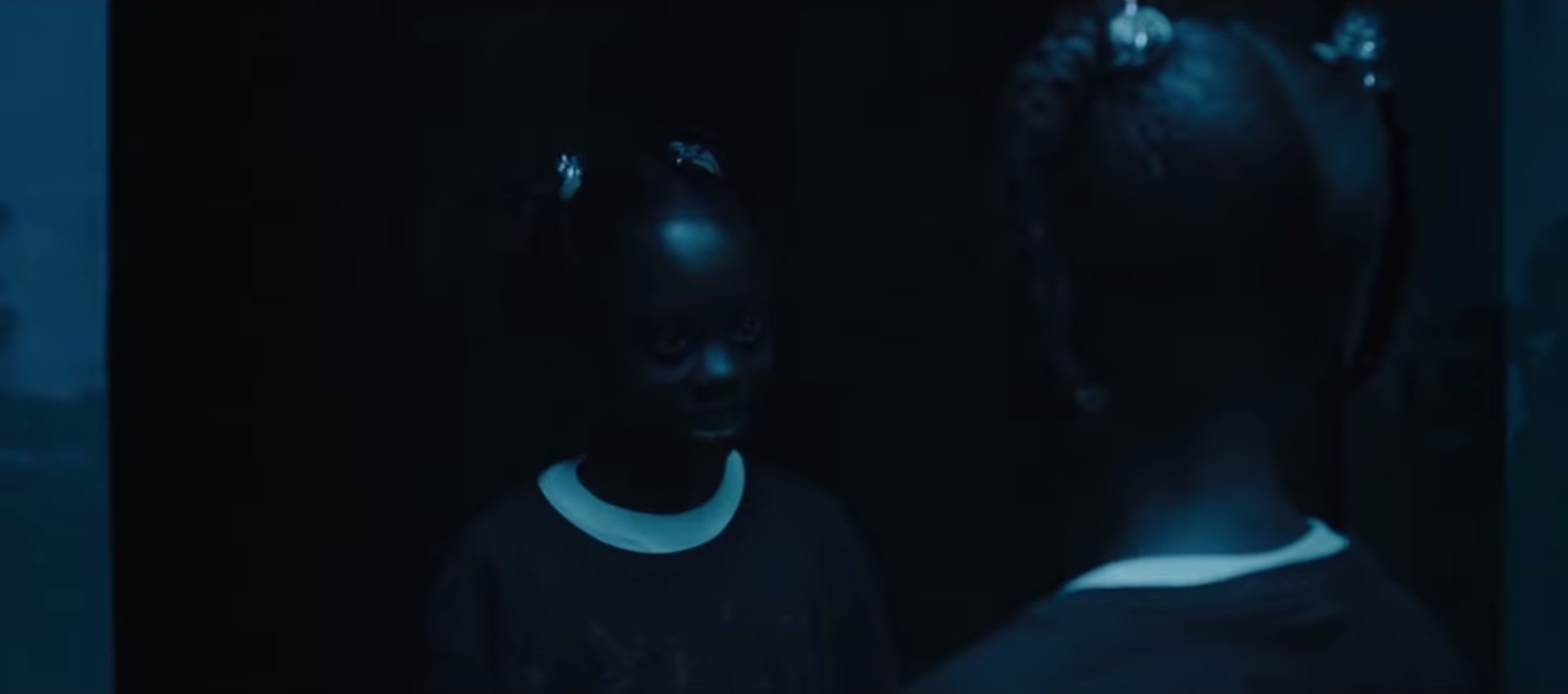
The pivotal moment occurs in the film’s final act when the adult Adelaide confronts her doppelgänger, Red, in a subterranean classroom beneath the Santa Cruz boardwalk. Through a series of fluid, rhythmic flashbacks, the audience learns the origin of the conflict: in 1986, the young Adelaide wandered into a funhouse on the beach and encountered her tethered counterpart.
The Tethered, an underground society created by a failed government experiment to control the surface population through a shared soul, are kept in a state of mimicry. When the two girls met, the Tethered version—who would eventually be known as Red—dragged the real Adelaide into the tunnels, shackled her, and took her place in the upper world. The woman the audience followed for the entire film, believing her to be the victim, was actually the usurper who had been living a stolen life for decades.
Understanding the Tethered and the Experiment
To understand why this ending carries such weight, one must examine the lore established within the film. The Tethered are a physical manifestation of a government project intended to control the surface world. When the project was abandoned, the creations were left to rot in the tunnels, eating raw rabbit meat and mimicking the mundane actions of their counterparts above.
The revelation that Adelaide—the "hero"—is actually a product of this system forces the viewer to confront the nature of "monsters." By humanizing the antagonist, Red, and exposing the sociopathic behavior of the survivor, Adelaide, the film rejects the binary of good versus evil. Adelaide, having lived a life of privilege, is forced to reclaim her place through violence, mirroring the very rage that drove the Tethered uprising.
Why Red is the Tragic Figure
Red serves as the emotional anchor of the film's conclusion. Throughout the narrative, she is the only member of the Tethered capable of complex speech, a vestige of the life she once lived before being forced underground. Her motivation for the uprising—the "Hands Across America" movement—is not merely about destruction, but about reclaiming the surface and asserting an identity that has been systematically suppressed.
When the audience realizes Red is the original Adelaide, her behavior takes on a new context. She isn't a mindless monster; she is a victim of a cruel experiment seeking justice. Her defeat at the hands of the "fake" Adelaide, who has internalized the values of the upper class, serves as a bleak commentary on how systems of power preserve themselves by framing the oppressed as the aggressors.
The Significance of Hands Across America
The film concludes with the Tethered holding hands across the United States in a formation inspired by the 1986 charity event, Hands Across America. In the context of the film, this serves as a grotesque appropriation of a symbol of American unity. It highlights the irony that the society above is built upon the suffering of those below, yet remains entirely oblivious to their existence until the system begins to collapse.
The ending sequence is not just a visual spectacle; it is a declaration of presence. The Tethered, long ignored, have forced the world to acknowledge them. By framing this through the lens of a failed charity movement, Peele underscores the performative nature of social empathy.
Comparative Analysis of the Two Versions
| Feature | Adelaide (The Surface Dweller) | Red (The Original Girl) |
|---|---|---|
| Origin | Born in the underground tunnels | Born on the surface |
| Development | Adopted societal norms and privilege | Subjected to trauma and isolation |
| Motivations | Survival and maintaining status quo | Reclaiming humanity and justice |
| Fate | Remains on the surface | Killed in the final confrontation |
Unresolved Ambiguities: Is the Ending Truly a Victory?
While the immediate threat is neutralized, the ending of Us is intentionally haunting. The film concludes with Adelaide's son, Jason, looking at her with a knowing expression. He realizes that his mother is not who she claims to be. This moment of recognition suggests that the cycle of trauma is not over.
The audience is left to wonder whether the "fake" Adelaide will continue to hide her past or if the secret will eventually destroy the family unit. Furthermore, the broader social implications remain: the Tethered have effectively crippled the infrastructure of the surface world. The film does not provide a roadmap for reconciliation, mirroring the intractable nature of the class and social divisions it seeks to represent.
The Role of Performance and Duality
The ending relies heavily on the physical performances of Lupita Nyong'o, who plays both roles. Her ability to distinguish between the two characters—the grounded, slightly detached Adelaide and the visceral, pained Red—is the engine that makes the twist work. The choreography of their final fight is more than an action set-piece; it is a dance of two halves of the same soul, reflecting the internal struggle between the version of ourselves we present to the world and the version we suppress.
FAQ: Common Questions About the Ending
Why did the Tethered wear red jumpsuits?
The red jumpsuits act as a visual identifier for the Tethered, but they also serve as a symbolic uniform of the collective. In the context of the film's visual language, the red represents both the blood of their uprising and the visceral reality of their existence, which the surface world attempts to sanitize.
Does Jason know that his mother is a Tethered?
Yes. The final scene features a subtle interaction between Jason and his mother. By pulling his mask down, Jason signals that he understands the "trick." He realizes that his mother is not the person she was, and by extension, he becomes a witness to the secret that defines her existence.
Are the Tethered literal, or is this an allegory?
The film functions as both. While the plot provides a pseudo-scientific explanation for the Tethered, the narrative is clearly allegorical. They represent the "shadow" of the American dream—the unseen laborers and marginalized groups upon which the comfort of the affluent rests.
Did the rest of the world suffer the same fate?
The film suggests that the uprising is national in scope. The images of the Tethered holding hands across the country imply that this is a systemic shift, not an isolated incident confined to the Wilson family.
Practical Advice: Engaging with the Film’s Themes
To fully appreciate the ending, consider re-watching the film with the knowledge of the switch. Pay close attention to:
- Adelaide's reactions to mirrors: She often avoids her reflection, a behavior now explained by her knowledge of her true nature.
- The use of dance: Notice how the "real" Adelaide struggles with coordination, while Red has the natural grace of a dancer.
- The silence of the Tethered: Consider how the lack of speech in the others reflects their lack of agency, which Red only regained after years of psychological strain.
When analyzing the film, avoid searching for a single "correct" political interpretation. Jordan Peele has noted in interviews that the film is a Rorschach test; the ending serves to reflect the viewer's own anxieties about class, race, and the structures of power in modern society.