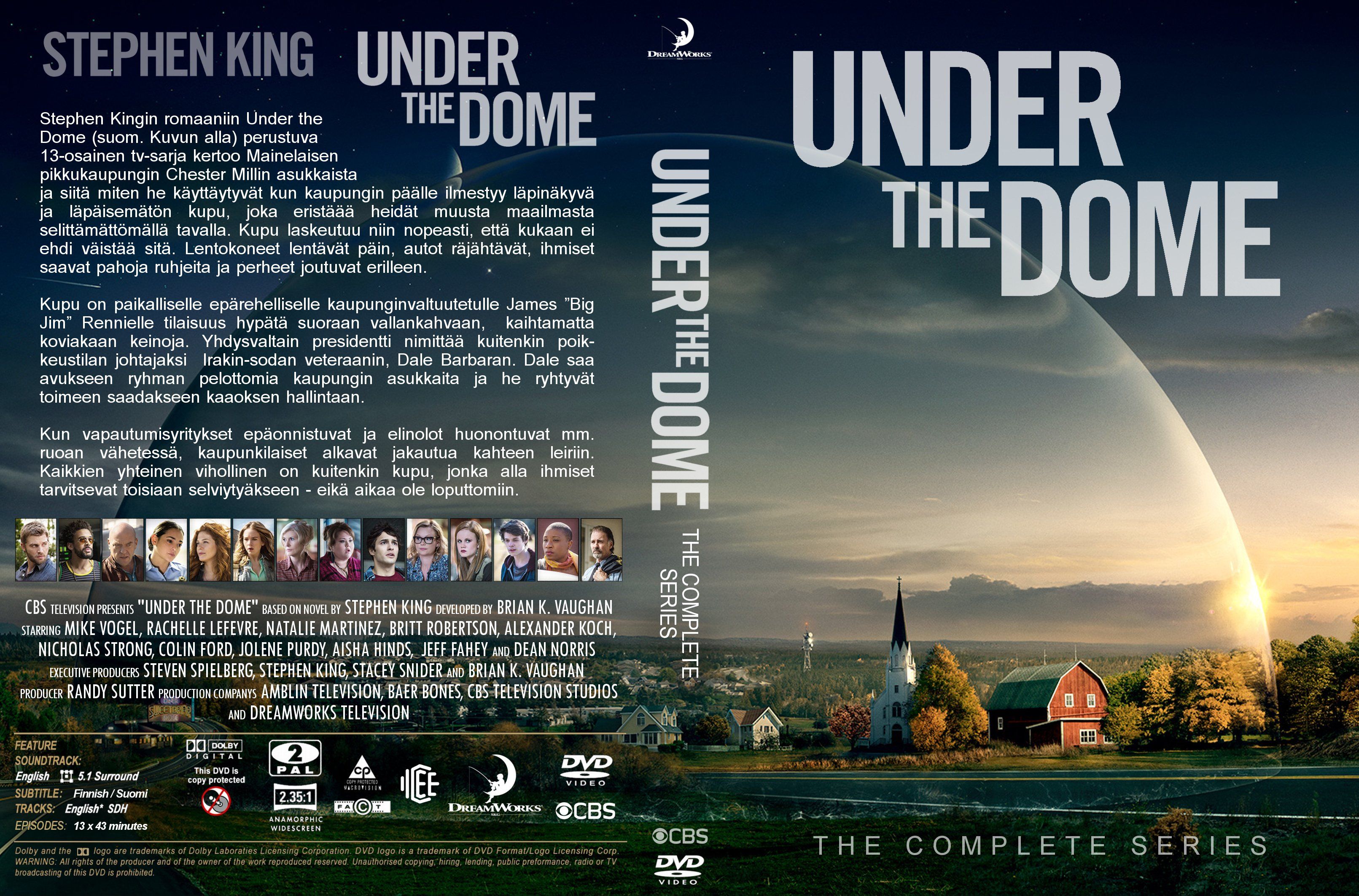
Under the Dome was cancelled by CBS primarily due to a steep decline in television ratings, critical backlash regarding the show's creative direction, and the conclusion of its original business model. While it began as a record-breaking summer event, the series eventually strayed too far from Stephen King’s source material, leading to its termination after three seasons in 2015.
The story of Under the Dome is a fascinating case study in how a "limited event series" can become a victim of its own success. When it first premiered in June 2013, it shattered expectations for summer programming, which was historically a "dead zone" for scripted network television. However, by the time the series finale aired, the landscape of the show—and the audience's patience—had shifted dramatically. As we look back from 2026, the series remains a cautionary tale about the perils of stretching a finite premise beyond its natural lifespan.
The Meteoric Rise: Redefining Summer Television
Before understanding why Under the Dome was cancelled, it is essential to understand why it was such a massive hit in the first place. In 2013, CBS made a bold move by partnering with Steven Spielberg’s Amblin Television to adapt Stephen King’s 2009 novel. The premise was simple and terrifying: a small Maine town is suddenly and inexplicably sealed off from the rest of the world by an enormous, transparent, and indestructible dome.
The premiere episode drew an astounding 13.5 million viewers, a number unheard of for a summer debut in the modern era. This success proved that audiences would tune into high-quality, high-budget scripted drama during the warmer months, rather than just reality television or reruns. The show was originally conceived as a "limited event," meaning it was intended to have a clear beginning, middle, and end within a single season. However, the ratings were so high that CBS could not resist the urge to turn it into an ongoing series.
Analyzing the Ratings Decline: A Statistical Downward Spiral
The most quantifiable reason for the cancellation of Under the Dome was the massive loss of viewers between Season 1 and Season 3. Television networks are ultimately driven by advertising revenue, which is directly tied to "Live+Same Day" viewership numbers and the 18-49 demographic.
In its first season, Under the Dome averaged roughly 11 million viewers per episode and a 2.7 rating in the key demographic. By Season 2, those numbers began to dip as the novelty wore off, averaging around 7 million viewers. However, Season 3 saw a catastrophic drop. The final season averaged only 4.7 million viewers, with some episodes dipping below the 4 million mark.
| Season | Average Viewers (Millions) | 18-49 Demo Rating | Rotten Tomatoes Audience Score | Key Plot Driver |
|---|---|---|---|---|
| Season 1 | 11.21 | 2.7 | 75% | Initial Mystery & Survival |
| Season 2 | 7.17 | 1.6 | 45% | Science vs. Faith / The Egg |
| Season 3 | 4.70 | 1.0 | 23% | The Kinship / Alien Invasion |
The 18-49 demographic rating, which is the "gold standard" for advertisers, fell by over 60% from the series premiere to the series finale. For a high-budget production featuring expensive special effects and a large ensemble cast, these numbers no longer justified the costs of production.
Creative Divergence and Fan Frustration
While ratings provide the "what," the creative choices of the writers provided the "why." Under the Dome faced significant criticism for how it handled the transition from a limited series to an ongoing drama.
Straying from the Source Material
Stephen King’s novel is a dense, 1,000-page political allegory about resources, power, and environmental collapse. The show’s first season followed the book’s trajectory relatively closely, but once the show was renewed for a second and third season, the writers had to invent new mysteries to keep the dome from "coming down." This led to increasingly convoluted plotlines involving "The Egg," interdimensional portals, and eventually, a full-scale alien "Kinship" storyline that many fans found ridiculous.
The Loss of Character Logic
By Season 3, the characters’ motivations became inconsistent. Characters like "Big Jim" Rennie (played by Dean Norris) fluctuated between being a sociopathic murderer and a reluctant hero so many times that the audience lost their emotional investment. The introduction of new characters, such as Christine Price (Marg Helgenberger), felt forced and served to complicate a narrative that was already struggling to find its footing.
Brian K. Vaughan’s Departure
A significant turning point occurred when the original showrunner and lead developer, Brian K. Vaughan (the acclaimed comic book writer behind Saga and Y: The Last Man), left the series after Season 2. Vaughan was instrumental in balancing the high-concept sci-fi with grounded character work. His departure left a vacuum that resulted in a shift toward more traditional—and often clichéd—science fiction tropes in Season 3.
The Business Model: The Amazon Deal and Global Distribution
Interestingly, Under the Dome was a pioneer in a business model that initially shielded it from cancellation. CBS struck a landmark deal with Amazon Prime Video, where episodes would be available to stream on Amazon just four days after their broadcast on CBS. This deal, along with lucrative international licensing agreements, meant that the show was profitable for CBS before a single episode even aired.
However, this "bulletproof" financial model had its limits. Even with outside funding, the brand damage of a declining flagship show matters to a network. By 2015, CBS was looking to refresh its summer lineup with new projects like Zoo and BrainDead. The network realized that the "event" status of Under the Dome had evaporated. It was no longer a prestige water-cooler show; it had become a target of critical derision.
The Official Cancellation Announcement
On August 31, 2015, CBS officially announced that the Season 3 finale would serve as the series finale. Nina Tassler, the Chairman of CBS Entertainment at the time, issued a statement thanking the fans and the creative team but emphasizing that the "Dome is coming down."
Unlike many shows that are cancelled on a cliffhanger, the writers of Under the Dome were given enough notice to craft an ending. While the Season 3 finale did resolve the immediate threat of the dome, it notably included a "hook" for a potential Season 4, featuring the discovery of a new egg in a different location. This suggests that the producers were still holding out hope for a renewal or a move to a streaming platform, which ultimately never materialized.
The Legacy of the Show in 2026
Standing in 2026, we can see Under the Dome as a significant milestone in the "Peak TV" era. It helped usher in the trend of high-budget summer scripted series, paving the way for shows like Stranger Things and The White Lotus.
Despite its rocky ending, the show remains a popular choice on streaming platforms for those looking for a binge-worthy mystery. However, for purists of the Stephen King novel, the show serves as a reminder that some stories are better suited for the "Limited Series" format rather than the multi-season "marathon" format. There have been sporadic rumors in the early 2020s about a possible "faithful" remake—perhaps as a high-fidelity miniseries on a platform like HBO or Netflix—but as of now, the 2013-2015 CBS version remains the definitive screen adaptation.
Why fans still discuss the show today:
- The Concept: The "locked-in" trope remains one of the most effective ways to study human nature under pressure.
- The Cast: Despite the writing issues, performances by Dean Norris, Mike Vogel, and Rachelle Lefevre were generally well-received.
- The Mystery: Even with its flaws, the show excelled at creating "cliffhanger" moments that made it difficult for viewers to stop watching.
Frequently Asked Questions
Did Stephen King like the TV show?
Stephen King had a complicated relationship with the adaptation. While he served as an executive producer and even made a cameo appearance, he was vocal about the show's deviations from his book. He famously defended the show early on, stating that the TV version was an "alternative reality," but later acknowledged that the narrative had moved far beyond his original vision.
How did the show end compared to the book?
The endings are vastly different. In the book, the dome is revealed to be a "toy" for young extraterrestrial beings, and it is removed after the townspeople plead for their lives. In the show, the dome is a protective barrier created by an alien race to shield a "kinship" of humans from a different threat, and it is shattered using a high-frequency sound device.
Was Under the Dome ever considered for a Season 4 on another network?
After CBS announced the cancellation, there were brief discussions about whether Amazon or another streaming service might pick up the show, given the existing distribution deal. However, due to the declining ratings and the high cost of the cast's contracts, no deal was ever reached.
Why were people so upset with Season 3?
The primary grievance was the "Kinship" storyline, which involved most of the town being brainwashed by an alien entity. This stripped many characters of their agency and transformed the show from a psychological drama about human behavior into a more generic "alien invasion" story.
Can I watch Under the Dome in 2026?
Yes, the series remains available on various digital platforms. It is most commonly found on Paramount+ (given its CBS roots) and is often available for purchase or streaming on Amazon Prime Video in multiple regions.
Final Perspective: How to Experience the Story Today
If you are a fan of the premise but were disappointed by the show's cancellation and creative shift, the best next action is to read Stephen King’s original novel. The book provides a much more grounded, political, and visceral exploration of the "Chester's Mill" incident without the supernatural "Kinship" elements found in the later seasons.
For those who enjoy the television format, Under the Dome remains an interesting watch for its first season alone. It captures a specific moment in television history when the boundaries between "event programming" and "serialized drama" were being blurred. Just be prepared for the narrative to become increasingly experimental—and often confusing—as you progress toward the finale.