U-Haul has solidified its position as the primary infrastructure provider for self-storage and relocation logistics across North America. As of 2026, the company operates over 82 million square feet of storage space, leveraging a massive network of company-owned facilities and independent dealerships. This guide provides a technical analysis of current U-Haul storage offerings, security protocols, and operational workflows designed to optimize your storage experience.
While U-Haul is synonymous with truck rentals, this analysis focuses exclusively on U-Haul Self-Storage facilities and U-Box portable containers. For information regarding vehicle rentals or hitch installations, please consult our specialized equipment guides.
The 2026 Self-Storage Landscape: Why U-Haul Remains Dominant
The self-storage industry in 2026 is defined by two primary factors: technological integration and localized accessibility. U-Haul has adapted by implementing "Smart Facility" protocols across its newer builds and retrofitting legacy locations. This dominance is not merely a result of footprint but of a vertically integrated ecosystem where customers can manage their entire move—from boxes and tape to climate-controlled units and truck returns—within a single interface.
In 2026, the primary search intent for "uhaul storage" is transactional, with users seeking immediate availability, transparent pricing, and specific security features. The target audience ranges from residential movers to commercial enterprises utilizing storage for inventory management.
Technical Specifications and Unit Dimension Metrics
Selecting the correct unit size is a critical operational decision that impacts both cost-efficiency and the physical integrity of stored items. U-Haul provides a range of standardized dimensions, each engineered for specific volume capacities.
| Unit Size | Total Square Footage | Estimated Cubic Capacity | Ideal Use Case |
|---|---|---|---|
| 5' x 5' | 25 sq. ft. | 200 cu. ft. | Personal lockers, small furniture, 10-15 standard boxes. |
| 5' x 10' | 50 sq. ft. | 400 cu. ft. | One-bedroom apartment contents or motorcycle storage. |
| 10' x 10' | 100 sq. ft. | 800 cu. ft. | Two-bedroom apartment; essential for local business inventory. |
| 10' x 15' | 150 sq. ft. | 1,200 cu. ft. | Three-bedroom home contents or large office equipment. |
| 10' x 20' | 200 sq. ft. | 1,600 cu. ft. | Full-sized house contents or vehicle/small boat storage. |
| 10' x 30' | 300 sq. ft. | 2,400 cu. ft. | Large estate storage or commercial distribution stock. |
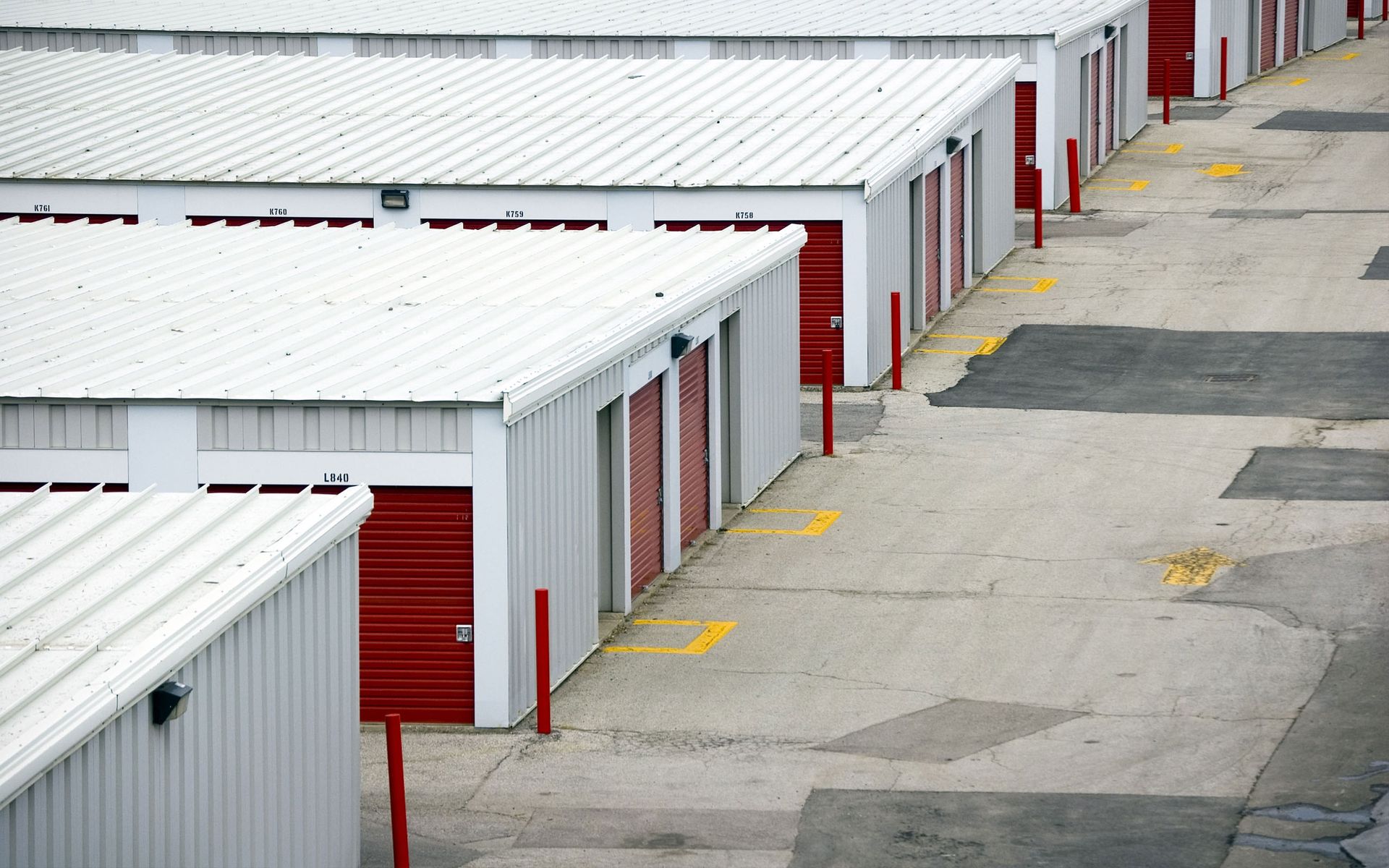
Beyond raw dimensions, U-Haul facilities in 2026 offer varying access types. "Drive-up" units feature roll-up doors accessible via exterior vehicle paths, ideal for heavy equipment. "Interior" units are located within multi-story, climate-controlled buildings, requiring the use of freight elevators and heavy-duty pushcarts provided on-site.
Climate Control Technology and Preservation Standards
For items sensitive to thermal expansion or hygroscopic damage, climate control is an operational necessity rather than a luxury. U-Haul's 2026 climate-controlled facilities maintain specific environmental ranges to prevent the degradation of wood, electronics, and delicate fabrics.
Technical HVAC Benchmarks
Temperature Regulation Facilities are engineered to maintain a temperature range between 65°F and 85°F regardless of external seasonal fluctuations. This prevents extreme heat from melting plastics or extreme cold from making materials brittle.
Relative Humidity (RH) Controls Advanced dehumidification systems target a relative humidity level below 55%. This is the critical threshold for preventing the germination of mold spores and the oxidation of metal components.
Air Filtration Systems Modern 2026 facilities utilize MERV-13 filtration in their ventilation systems to reduce dust accumulation and airborne particulates, ensuring that long-term storage does not result in respiratory irritants or surface damage.
Security Protocols and 2026 Industry Standards
Security in the self-storage sector has transitioned from passive surveillance to active AI monitoring. U-Haul’s flagship 2026 facilities utilize a multi-layered security stack to mitigate risk and ensure tenant peace of mind.
- Electronic Gate Access: Every tenant is assigned a unique alphanumeric or biometric mobile credential. Access logs are recorded in real-time, allowing facility managers to track ingress and egress patterns.
- Individually Alarmed Units: High-tier facilities feature sensors on every unit door. If a door is opened without the corresponding access code being entered at the gate or through the mobile app, local alarms and site management are instantly notified.
- 4K UHD Surveillance: AI-driven camera systems monitor all hallways and loading bays. These systems are capable of identifying "unusual dwell times" and can alert 24/7 monitoring centers to potential security breaches or medical emergencies.
- Safestor Insurance Tiers: U-Haul mandates that all stored goods be covered by insurance. While many homeowners' policies offer limited off-premises coverage, U-Haul’s Safestor and Safestor Mobile programs provide specialized coverage for fire, wind, and theft without a deductible for the tenant.
Comparative Analysis: U-Haul vs. Industry Competitors (2026)
When evaluating U-Haul against other national providers like Public Storage or Extra Space Storage, several key differentiators emerge regarding contract flexibility and integrated services.
| Feature | U-Haul Storage (2026) | Public Storage | Extra Space Storage |
|---|---|---|---|
| Contract Type | Month-to-Month | Month-to-Month | Month-to-Month |
| Truck Integration | Full on-site fleet | Limited/Third-party | Third-party referrals |
| Online Move-In | 24/7 "Contactless" | Mobile App only | Website/App |
| 24/7 Access | Available at 85% of sites | Limited by location | Limited by location |
| U-Box Integration | Native / Hybrid | Not Available | Not Available |
| Administrative Fees | Low/Transparent | Variable/High | Moderate |
U-Haul’s primary advantage in 2026 remains its "One-Stop" capability. The ability to return a rental truck and immediately move goods into a pre-reserved unit reduces the logistical friction of a move significantly.
Operational Guide: Reserving and Moving into Your Unit
The 2026 U-Haul workflow is designed to be fully digital, though on-site support remains available during business hours.
- Selection and Reservation: Utilize the U-Haul app to browse local inventory. The "Room Count" tool allows you to input your furniture list to receive an AI-generated size recommendation.
- Digital Onboarding: Complete your rental agreement digitally. You will be required to upload a government-issued ID and select your Safestor insurance tier.
- The "Move-In" Interface: Upon arriving at the facility, use the app to open the main gate. Your unit number and a digital map will be displayed. If you purchased a lock online, it will be waiting inside your unit; otherwise, you must provide a high-security disc lock.
- Loading Logistics: Utilize the complimentary heavy-duty carts located at every entrance. Ensure heavy items are placed at the bottom and frequently accessed items are placed near the front of the unit.
- Payment and Vacating: Payments are automated via the U-Haul portal. When you are ready to vacate, simply empty the unit, remove your lock, and "Check Out" via the app to stop future billing cycles immediately.
Specialized Storage: U-Box and Vehicle Solutions
For those who require more flexibility than a fixed unit, U-Haul’s U-Box containers provide a hybrid solution. These are 257-cubic-foot weather-resistant containers that can be delivered to your home, loaded at your pace, and then stored at a U-Haul facility or shipped globally.
Additionally, U-Haul has expanded its vehicle storage footprint in 2026. This includes:
- Open Lot Storage: Uncovered parking for RVs and trailers within a fenced perimeter.
- Covered Parking: Protection from UV rays and hail.
- Enclosed Vehicle Units: 10' x 20' or larger units specifically designed with reinforced floors for cars and classic vehicle preservation.
Frequently Asked Questions
Does U-Haul storage require a long-term commitment?
No, all U-Haul storage rentals are on a month-to-month basis with no long-term contracts. This allows for maximum flexibility, whether you need storage for two weeks during a home renovation or several years for business inventory.
Is climate control necessary for all items?
While not mandatory for all items, it is highly recommended for electronics, antiques, photos, and musical instruments. Standard units are suitable for items that would typically be stored in a garage or shed, such as garden tools and outdoor plastic furniture.
What happens if I lose my access code or key?
In 2026, access codes can be reset instantly through the authenticated U-Haul mobile app. If you lose the physical key to your disc lock, you must contact facility management; for security reasons, only authorized locksmiths or managers are permitted to perform lock cuts.
Are there items that are prohibited from U-Haul storage?
Yes, for safety and legal compliance, you cannot store explosives, flammable liquids (gasoline, propane), perishable food items, or living organisms. Storing hazardous materials is a violation of the rental agreement and may lead to immediate termination.
Can I change my unit size after I have moved in?
Absolutely. If you find your unit is too small or has excessive empty space, facility managers can facilitate a "Transfer" to a different unit size within the same facility, provided inventory is available. Your rent will be pro-rated accordingly.
Expert Insight for a Seamless Storage Experience
To maximize your U-Haul storage utility in 2026, prioritize vertical space. Use uniform box sizes to ensure stable stacking and always leave a small aisle in the center of the unit for access. If you are storing in a non-climate-controlled unit, consider using moisture-absorbing canisters (desiccants) to provide an extra layer of protection against seasonal humidity shifts.
As the industry leader, U-Haul continues to set the benchmark for accessibility and security. By leveraging their digital tools and understanding the technical requirements of your specific items, you can ensure a professional-grade storage experience that protects your assets effectively.