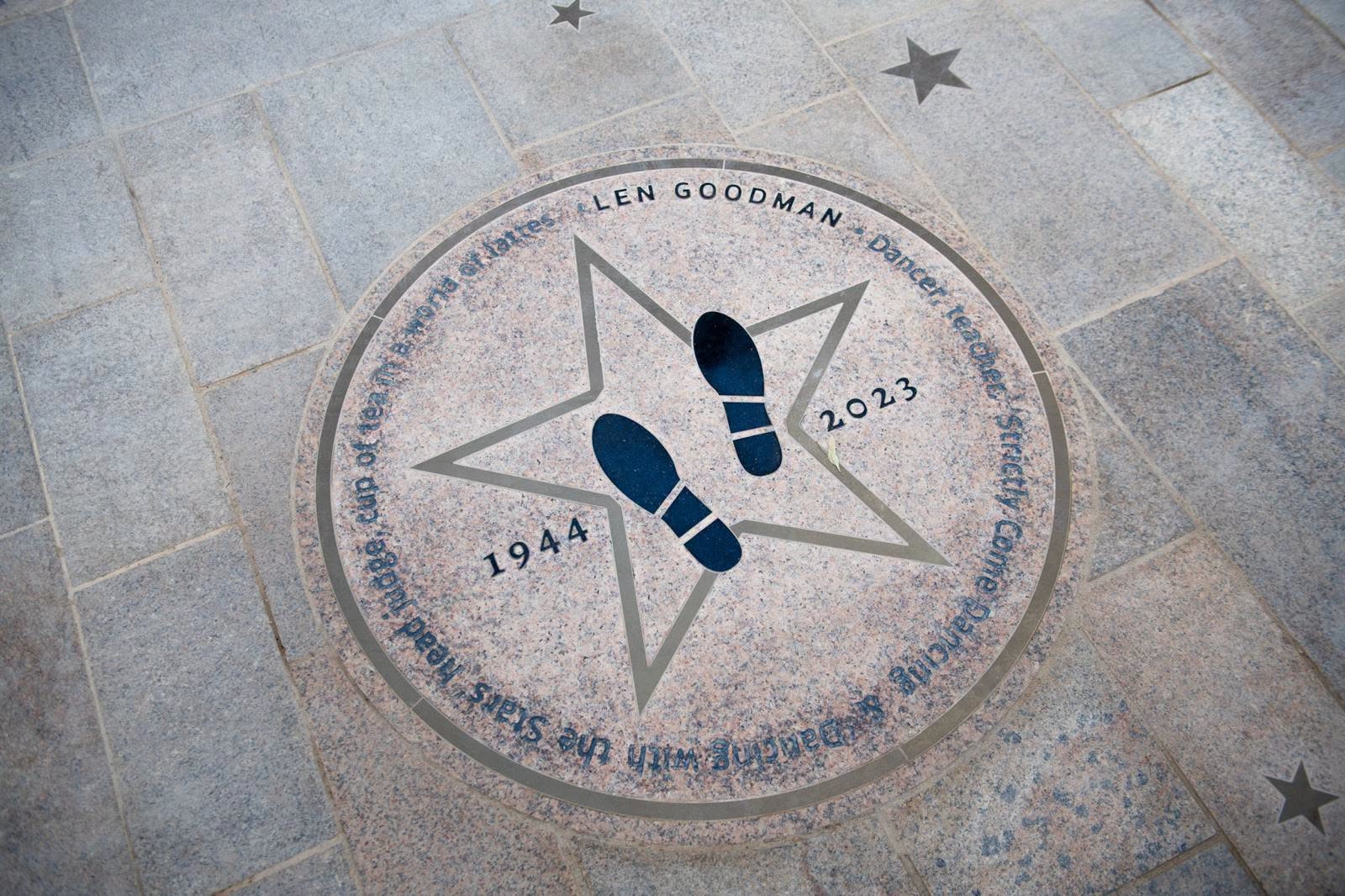
Len Goodman was the quintessential voice of ballroom dancing, serving as the technical conscience for millions of viewers across the globe. As the head judge of Strictly Come Dancing and Dancing with the Stars, he combined rigorous technical standards with a charming, "old-school" charisma that defined the modern era of dance reviews.
Even as we look back from the perspective of 2026, the legacy of Len Goodman remains the gold standard for dance adjudication. His passing in April 2023 marked the end of an era, but his influence on how we perceive, critique, and appreciate ballroom dance continues to resonate in every "Seven!" shouted by fans and every heel lead perfected by professionals. This tribute explores the life, the technical philosophy, and the enduring impact of the man widely regarded as the "King of Reviews."
The Formative Years: From the Docks to the Dance Floor
Len Goodman’s journey to becoming the world’s most recognized dance judge was far from traditional. Born in Bethnal Green, London, in 1944, Goodman grew up in a working-class environment that valued grit and hard work. Before he ever stepped onto a competitive dance floor, he worked as an apprentice welder and sold fruit and vegetables from his grandfather’s barrow.
His entry into the world of dance was accidental—a doctor recommended it as a form of therapy for a foot injury sustained while playing football. What began as a medical necessity quickly transformed into a lifelong passion. By his early twenties, Goodman was competing at the highest levels, eventually winning the British Exhibition Championships four times. This competitive background provided the bedrock of his technical expertise. Unlike many modern celebrity judges, Goodman’s reviews were rooted in the grueling reality of professional competition, where a misplaced toe or a lack of "frame" could mean the difference between a trophy and a loss.
The Architect of the Modern Dance Review
When Strictly Come Dancing debuted on the BBC in 2004, followed shortly by Dancing with the Stars in the United States, the concept of a "dance review" for a mainstream audience was largely untested. Goodman was instrumental in translating the esoteric language of ballroom—terms like "fleckerls," "syncopation," and "rise and fall"—into something the general public could understand and enjoy.
Len Goodman was the "King of Reviews" because he balanced three critical elements:
- Technical Rigor: He refused to be swayed by flashy production values or "gimmicks." If a Viennese Waltz lacked the proper continuous turn, he would say so, regardless of how many pyrotechnics were on stage.
- Relatable Metaphors: He had a unique ability to describe complex movements using everyday imagery. Whether he was comparing a dancer’s movement to a "poached egg on a piece of toast" or describing a performance as "crisp as a freshly laundered shirt," his reviews were visceral and memorable.
- Constructive Honesty: Goodman’s critiques were never mean-spirited. He famously stated that he would rather be "honest than popular." This integrity earned him the respect of the professional dancers, who valued his "pickle" (tough) critiques over empty praise.
The Goodman Standards: Analyzing Technical Excellence
To understand why Goodman was celebrated as the king of reviews, one must understand the specific criteria he applied to every performance. While other judges might focus on the "story" or the "emotional connection," Len looked at the foundation.
The Importance of the Frame
For Goodman, the "frame"—the way a couple holds their upper bodies in ballroom dances—was non-negotiable. He looked for a strong, still, and spacious connection that allowed for fluid movement without losing structural integrity. A "collapsed frame" was often met with his signature stern look and a lower-than-expected score.
Footwork and Placement
Goodman was a stickler for "heel leads" in the Waltz and Foxtrot. He believed that proper footwork was the soul of ballroom dancing. In his reviews, he frequently pointed out when a celebrity had "flat feet" or failed to use their toes correctly in Latin dances like the Cha-cha-cha. This attention to detail forced the show's professional partners to maintain high standards, even when working with beginners.
Content Over Performance
The most common point of friction between Goodman and his fellow judges (particularly Bruno Tonioli and Craig Revel Horwood) was "content." Len famously disliked "messing about at the start"—long introductory segments where no actual dancing took place. He demanded that a 90-second routine contain as much recognizable syllabus movement as possible.
Comparing Judging Styles: The Goodman Era vs. Modern Standards
As of 2026, dance competition shows have evolved, but Goodman's specific style remains a point of reference. The following table compares his approach to the broader trends seen in modern televised dance reviews.
| Feature | The Len Goodman Approach | Modern/Contemporary Judging Trends |
|---|---|---|
| Primary Focus | Technical syllabus and ballroom tradition. | Performance energy, "viral" moments, and storytelling. |
| View on Props | Highly critical; seen as a distraction from pure dance. | Generally encouraged for thematic consistency. |
| Catchphrases | "Seven!", "It’s a ten from Len!", "Pickle." | Varied; often focused on emotional superlatives. |
| Critique Style | Objective and instructional; focuses on the "how." | Subjective and evocative; focuses on the "feeling." |
| Role of the Judge | The "Headmaster" or technical authority. | The "Mentor" or appreciative spectator. |
| Tolerance for Fusion | Low; preferred distinct, traditional styles. | High; encourages mixing genres (e.g., Hip-hop with Tango). |
Key Milestones in a Legendary Career
Goodman’s career was marked by more than just television appearances. He was a dedicated teacher who ran the Goodman Academy in Dartford, Kent, for decades. His commitment to the "grassroots" of dancing ensured that his technical standards were passed down to new generations of instructors.
- 2004: Appointed Head Judge of Strictly Come Dancing.
- 2005: Appointed Head Judge of Dancing with the Stars (USA), necessitating a grueling transatlantic commute for several years.
- 2016: Retired from Strictly Come Dancing, handing the torch to Shirley Ballas.
- 2022: Announced his retirement from Dancing with the Stars to spend more time with his family in Britain.
- 2023: Awarded a posthumous tribute at the Mirrorball Trophy ceremony, which was renamed the "Len Goodman Mirrorball Trophy."
The "Seven!" Phenomenon and Cultural Impact
Perhaps no other judge in history has had a score associated so closely with their personality. The way Goodman shouted "Seven!" became a cultural touchstone. It represented the "respectable" score—one that acknowledged hard work but indicated there was still room for improvement.
His reviews transcended the ballroom. They taught audiences that excellence requires discipline and that a "good" job is worth celebrating just as much as a "perfect" one. In a media landscape often dominated by hyperbole, Goodman’s willingness to give a 6 or a 7 to a popular but technically flawed celebrity was a refreshing display of professional integrity.
Maintaining the Legacy: How to Review Dance Like Len
For aspiring dancers, critics, or fans in 2026, adopting a "Goodman lens" when watching dance can enhance the experience. To review dance with the same authority as the King of Ballroom, consider these three principles:
- Look for the Basics First: Before being swept away by the costumes or the music, look at the feet. Are they in the right place? Is the posture correct?
- Value Tradition: Understand the history of the dance being performed. A Samba should feel like a carnival; a Tango should feel like a drama. If the essence of the dance is lost, the review should reflect that.
- Be Fair but Firm: Praise the effort, but do not ignore the errors. Len believed that true respect for a performer meant giving them the truth so they could improve.
Common Questions About Len Goodman’s Career
Why was Len Goodman called the "King of Ballroom"?
The title stems from his dual authority as both a champion professional dancer and the long-standing head judge of the world's two most successful dance franchises. His deep knowledge of the British ballroom syllabus made him the final arbiter of technical correctness.
What was Len Goodman’s "Seven!" catchphrase about?
While he gave out many scores, his enthusiastic delivery of the number seven became his trademark. It became a meme and a fan-favorite moment, often imitated by the audience and his fellow judges. It represented a score that was "good" but stayed true to his rigorous standards.
Did Len Goodman actually teach dancing?
Yes, he was a highly respected teacher and adjudicator long before he became a television star. He owned and operated the Goodman Academy in Kent, where he taught everything from social ballroom to competitive Latin.
How did Len Goodman influence the popularity of ballroom dance?
Prior to the mid-2000s, ballroom dancing was often viewed as an archaic or niche hobby. Goodman’s presence on television helped demystify the sport, making the technical aspects accessible and showing the "human" side of the rigorous training involved.
What is the Len Goodman Mirrorball Trophy?
Following his passing in 2023, the producers of Dancing with the Stars renamed the show’s ultimate prize the "Len Goodman Mirrorball Trophy." This ensures that his name is synonymous with the highest achievement in the competition he helped build.
Continuing the Tradition of Excellence
To truly celebrate Len Goodman is to maintain the high standards he championed for over sixty years. Whether you are a professional dancer or a casual viewer, the best way to honor his memory is to look past the glitz and glamour and appreciate the "proper" way of doing things.
As we move forward through the 2026 dance season and beyond, the "King of Reviews" reminds us that while trends may change and production budgets may grow, the fundamentals of dance—posture, rhythm, and passion—are timeless. Next time you watch a performance, ask yourself: "What would Len say?" If the answer involves a "Seven!" and a comment about a heel lead, you know you are watching with the eyes of a true ballroom aficionado.