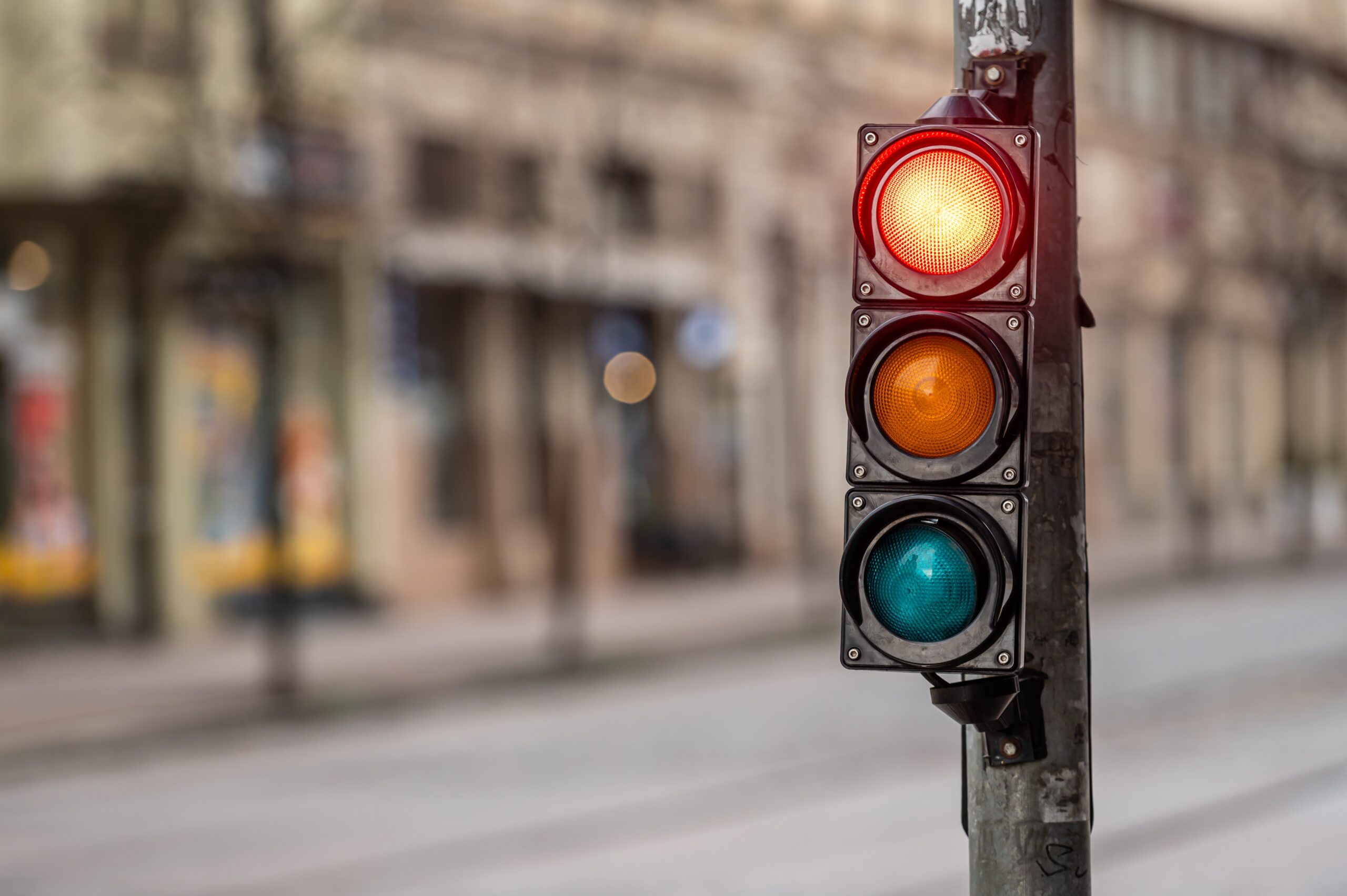
As of August 30, 2026, the Department of Transportation (DOT), in coordination with the National Highway Traffic Safety Administration (NHTSA), has officially expanded its pilot program for "Smart Intersections" in 14 major U.S. metropolitan areas. The most significant shift involves the integration of a "White Phase" into the traditional traffic light colors, a move designed to synchronize human-operated vehicles with the growing density of Level 4 autonomous vehicle (AV) swarms. This technological leap aims to reduce urban congestion by an estimated 24% by the end of the 2027 fiscal year.
Quick Facts: The 2026 Traffic Light Color Evolution
| Feature | Standard Status | 2026 Pilot Status | Primary Function |
|---|---|---|---|
| Red Light | Mandatory | Mandatory | Absolute stop; cross-traffic priority. |
| Yellow Light | Mandatory | Mandatory | Clearing intersection; predictive braking. |
| Green Light | Mandatory | Mandatory | Proceed with caution; V2I sync active. |
| White Light | N/A | Active (14 Cities) | Follow the lead vehicle (AV Coordination). |
| Flicker Rate | Static | Variable (AI-led) | Communicates urgency to AV sensors. |
The Catalyst: Why Traffic Light Colors are Surging Toward Change Now
The current pressure on urban infrastructure has reached a breaking point. Observing the current market trend, the influx of autonomous delivery fleets and robo-taxis from companies like Waymo and Tesla has created a "bottleneck" at traditional intersections. The rigid logic of green-yellow-red is no longer sufficient to handle the millisecond decision-making required by modern AI.
Reports from the field indicate that the "White Phase" is not merely a cosmetic change but a fundamental shift in traffic physics. When a sufficient number of autonomous vehicles occupy an intersection, the traffic light colors transition to white. This signals to human drivers that they should simply follow the vehicle in front of them: if the lead car moves, you move; if it stops, you stop.
This "swarm logic" utilizes 5G-V2X (Vehicle-to-Everything) communication. Instead of each vehicle reacting individually to a color change, the intersection acts as a single, fluid organism. The federal government’s $8.2 billion "Luminous Corridor" grant has accelerated the installation of these high-spectrum LED arrays, which are capable of emitting specific wavelengths that are more easily "read" by both human retinas and LiDAR sensors.
Expert Analysis: The Psychological and Technical Ripple Effects
The move to modify traffic light colors has sparked intense debate among urban planners and behavioral psychologists. Dr. Helena Vance, Lead Researcher at the MIT Mobility Initiative, suggests that the "cognitive load" on drivers is shifting. "For over a century, traffic light colors provided a binary choice—go or stop," Vance noted in a recent symposium. "The introduction of a coordination color requires a higher degree of trust in the infrastructure."
From a technical standpoint, the information gain from this shift is massive. Data gathered from the San Francisco "Smart Grid" shows that the white light phase effectively eliminates the "Dilemma Zone"—that awkward moment when a driver is unsure whether to brake or accelerate during a yellow transition.
Key technical advantages of the 2026 color updates include:
- Reduced Idle Time: AI-timed transitions reduce carbon emissions by minimizing stop-and-go patterns.
- Enhanced Pedestrian Safety: Integrated thermal sensors at the pole level communicate with the traffic light colors to extend red phases if a pedestrian is detected in the crosswalk.
- Emergency Vehicle Preemption: New LED spectrums allow emergency responders to "force" a green-wave through encrypted optical signals, bypassing standard timers.
Consumer Guide: Navigating the New Traffic Light Colors
For the average motorist, the transition may feel jarring. However, the 2026 DMV National Standards have been updated to include these new protocols. Here is how to navigate the current smart corridors:
- Identifying Smart Intersections: Look for the "C-V2X Enabled" blue signage located roughly 500 feet before the signal.
- The White Light Protocol: If the light turns white, do not look for a green or red cue. Simply follow the trajectory and speed of the vehicle directly ahead of you.
- The Pulsing Yellow: In many updated jurisdictions, a pulsing yellow light now replaces the "protected left turn" arrow during low-traffic hours, signaling a "yield-to-AI" priority.
- Fines and Compliance: New "Smart Cameras" are now calibrated to detect "Swarm Breaking." If a human driver fails to follow the lead vehicle during a white phase, causing a disruption in the flow, automated citations are issued via the Digital License Plate system.
If you are driving a vehicle manufactured before 2022, you are encouraged to stay in the right-hand lanes. These lanes are increasingly being optimized for manual operation, whereas left and center lanes are becoming "High-Speed Autonomous Priority" zones.
The Road Ahead: Will Physical Colors Disappear?
Looking toward 2030, the industry consensus suggests that physical traffic light colors may eventually become obsolete. Industry insiders at Siemens Mobility and Yunex Traffic are already testing "Virtual Signaling." This technology bypasses the need for physical poles entirely, projecting the traffic light colors directly onto the Head-Up Display (HUD) or windshield of the vehicle.
The legal framework for this is currently being drafted in the "2027 Infrastructure Autonomy Act." This proposed legislation would allow cities to decommission physical signals in designated "Fully Autonomous Zones." For now, the hybrid model—using enhanced LED traffic light colors—serves as the bridge between the human-centric past and the machine-led future.
The socio-economic impact cannot be understated. Real estate values in "Green-Wave Zones" (areas with optimized traffic flow) have already seen a 12% uptick compared to areas with legacy signaling. As we move into the final quarter of 2026, the success of the white light pilot will determine if this color becomes a permanent fixture of the global driving experience.