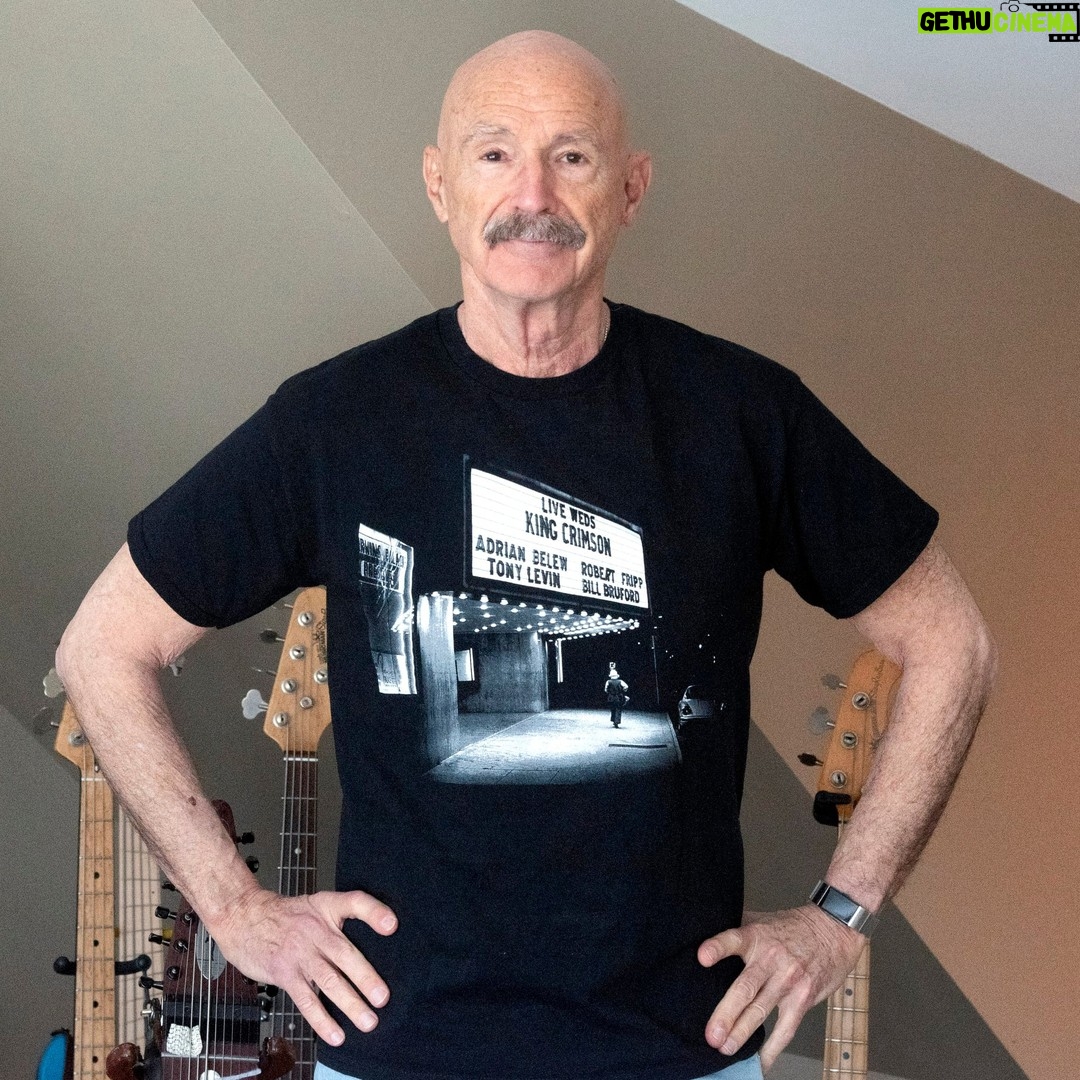
Tony Levin is widely regarded as one of the most prolific and versatile bassists in modern music history. Spanning over five decades, his career is defined by his mastery of both electric and acoustic bass, his pioneering work with the Chapman Stick, and his foundational contributions to progressive rock, jazz, and pop music through high-profile collaborations with artists like King Crimson, Peter Gabriel, and John Lennon.
The Foundations of a Versatile Career
Born in Boston, Massachusetts, Tony Levin began his musical journey as a classical student, mastering the upright bass and tuba. This early formal training in orchestral environments provided him with a unique rhythmic sensitivity and a sophisticated approach to composition that eventually translated into his contributions to popular music. By the late 1960s and early 1970s, Levin had moved to New York City, where he became a sought-after session musician.
His ability to bridge the gap between complex progressive arrangements and accessible pop structures established him as a key figure in the recording industry. Unlike many of his contemporaries who focused exclusively on one sub-genre, Levin’s career has been defined by his fluidity. He maintains a rigorous schedule that balances solo projects—such as his work with the Tony Levin Band and Stick Men—with high-pressure studio sessions and global arena tours. This duality is a hallmark of his professional longevity; he is as comfortable performing avant-garde improvisational jazz as he is locking in a steady, melodic groove for a radio hit.
Signature Instruments: Beyond the Standard Bass
Tony Levin’s reputation as an innovator is largely built upon his creative use of specialized gear. While he is an expert on the standard four-string electric bass, his sound is synonymous with several unique instruments that have altered the landscape of low-end frequencies in contemporary music.
The Chapman Stick
Levin is perhaps the most famous proponent of the Chapman Stick, an instrument featuring ten or twelve strings that are played using a "tapping" technique on the fretboard. This allows for a piano-like polyphonic approach, where the player can handle bass lines and melodic chords simultaneously. Levin’s integration of the Stick into the King Crimson soundscape starting in the early 1980s gave the band its distinctive, percussive, and fluid bottom end.
The Music Man StingRay and NS Design Upright
For his more traditional bass work, Levin has long favored the Music Man StingRay, a bass noted for its active electronics and aggressive, punchy midrange. His use of the "Funk Fingers"—modified drumsticks attached to the fingers of his right hand—allows him to strike the strings with a percussive attack, creating a sound reminiscent of a mallet striking an upright bass, a technique notably used on Peter Gabriel's So album. Additionally, his work with NS Design electric upright basses has allowed him to retain the organic feel of a double bass while navigating the technical demands of modern stages.
Collaborative History and Artistic Impact
Levin’s discography is a roadmap of late 20th and early 21st-century music innovation. His collaborations have spanned across divergent genres, reflecting his technical versatility and his ability to adapt his playing style to serve the needs of a song.
The King Crimson Era
Levin’s tenure with King Crimson, beginning in 1981 with the album Discipline, is often cited as a benchmark for technical precision. Alongside Robert Fripp, Bill Bruford, and Adrian Belew, Levin helped redefine progressive rock through the use of polyrhythms and interlocking, gamelan-inspired patterns. His ability to anchor complex, shifting time signatures while adding melodic flourishes remains a core element of the band's aesthetic.
Peter Gabriel and Global Stardom
His decades-long partnership with Peter Gabriel has been instrumental in shaping the sound of world-fusion and art-pop. From the experimental textures of Gabriel’s early solo albums to the polished, emotive sound of So, Levin’s bass lines provide a structural anchor that allows for Gabriel’s expansive vocal and rhythmic experimentation.
Notable Collaborations
Levin’s session credits are extensive, ranging from the Beatles’ individual solo work to collaborations with jazz icons and heavy metal pioneers. The table below provides a cross-section of his professional engagements:
| Collaborator | Primary Contribution | Notable Work |
|---|---|---|
| King Crimson | Chapman Stick / Bass | Discipline |
| Peter Gabriel | Bass / Vocals / Stick | So |
| John Lennon | Bass | Double Fantasy |
| Pink Floyd | Bass | A Momentary Lapse of Reason |
| Seal | Bass | Seal (1994) |
| Stick Men | Chapman Stick / Lead | Prog Noir |
Practical Insights for Modern Musicians
For aspiring musicians, Tony Levin’s career offers a lesson in adaptability. His success is not derived from mastering a single "trick," but from developing a deep, foundational understanding of music theory coupled with a curiosity toward hardware. Levin’s approach to the recording process emphasizes "serving the song." He often notes that a bassist’s primary duty is to provide a solid, rhythmic foundation that facilitates the lead instruments' expression, rather than over-playing for the sake of individual ego.
A critical aspect of his workflow involves continuous experimentation. By maintaining an active presence in the gear community—often sharing updates on his specialized tunings and equipment setups—Levin demonstrates that even a veteran musician must treat every recording session as a chance to refine one's craft. For those looking to emulate his sound, the prerequisite is not merely acquiring a Chapman Stick or a specific model of bass, but understanding how to apply different rhythmic techniques—such as his "Funk Fingers"—to change the texture of the instrument’s attack.
FAQ: Understanding the Musician
How did Tony Levin develop the "Funk Fingers" technique?
Levin developed this technique while working on Peter Gabriel's recording sessions. He sought a way to get the percussive, forceful attack of a drumstick hitting a string without the fatigue of manually hitting the strings. By cutting down drumsticks and attaching them to his index and middle fingers, he created a unique sonic signature that allows the bass to cut through dense arrangements.
What is the primary difference between his standard bass playing and his work on the Chapman Stick?
Standard electric bass playing typically focuses on monophonic lines that provide the harmonic and rhythmic root. The Chapman Stick, due to its tapping design, allows Levin to play bass parts and chordal or lead parts at the same time. This turns him into a self-contained rhythm section in certain live settings.
Is Tony Levin's work limited to progressive rock?
While he is most famous for his progressive rock contributions, his career is remarkably broad. He has recorded and toured with pop artists like Carly Simon, jazz ensembles, and even heavy metal acts. His approach is rooted in musicianship, not genre, which allows him to work effectively across any musical style.
How does his classical background influence his rock performance?
His early training in orchestral upright bass and tuba provided him with a deep understanding of resonance and pitch control. This formal foundation allows him to handle complex musical notation and intricate, non-standard time signatures with a level of comfort that is rare in rock and pop circles.
What is the most effective way to start learning Tony Levin’s style?
Focusing on internalizing his "less is more" philosophy is the best start. Practice maintaining a very consistent rhythmic pocket, as much of his work relies on "locking in" with the drummer. Once technical proficiency with a standard bass is achieved, exploring the Chapman Stick or similar tapped-instrument techniques can expand one's sonic palette.
Next Steps for Exploration
To better understand Tony Levin's contributions, one should listen to the transition in rhythm section dynamics between Discipline by King Crimson and the mid-1980s work of Peter Gabriel. Analyzing these tracks reveals the intentionality behind his note choices and his restraint in performance. For those interested in his ongoing projects, following the output of his group, Stick Men, provides the most direct look into his current musical interests and his continued innovation with the Chapman Stick.