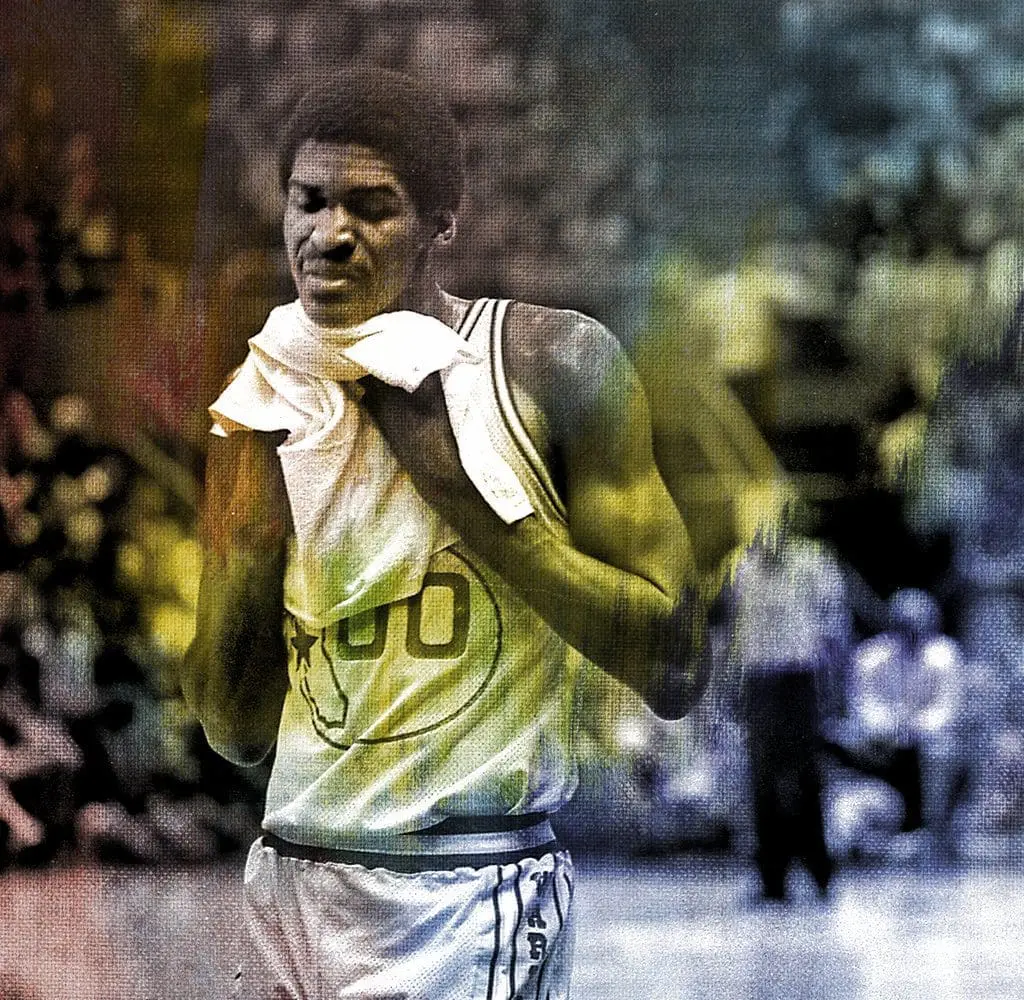
Robert Parish stands 7 feet 1 inch (216 cm) tall, a stature that anchored the interior of the Boston Celtics' legendary 1980s dynasty. As of 2026, the Hall of Fame center remains a paragon of longevity, having played an unprecedented 21 seasons and 1,611 regular-season games, a record that stood for nearly three decades.
The narrative of professional basketball cannot be written without a significant chapter dedicated to Robert "The Chief" Parish. Known for his stoic demeanor, high-arcing rainbow jump shot, and relentless consistency, Parish was the silent engine behind some of the greatest teams in NBA history. While his physical height of 7'1" made him a natural center, his cardiovascular conditioning and disciplined lifestyle allowed him to outlast nearly every contemporary from his era. Today, in 2026, his career serves as the ultimate blueprint for modern players seeking to maximize their professional lifespan.
The Physical Dimensions of a Legend: Robert Parish’s Height
Robert Parish’s official playing height was listed at 7 feet 1 inch, with a playing weight that typically hovered around 230 to 244 pounds. Unlike many modern "seven-footers" who may be measured in shoes to reach that mark, Parish’s height was a genuine, imposing physical fact that allowed him to dominate the paint during an era of extremely physical post-play.
In the context of 2026, where "small ball" and "positionless basketball" have altered the role of the traditional center, Parish's dimensions remain the gold standard for a rim protector. His wingspan, though not officially recorded with the precision of modern NBA Combine metrics, was notably expansive, allowing him to tip rebounds to teammates and contest shots without necessarily needing to leave his feet.
As Parish has entered his 70s, like many athletes of his stature, there is natural speculation regarding height loss due to spinal compression. However, he remains an imposing figure in public appearances, still towering over most peers. His commitment to yoga and martial arts during his playing days—practices he has advocated for long into retirement—likely contributed to maintaining his posture and structural health far better than the average retired big man.
A Career Defined by Longevity: 21 Seasons of Excellence
When Robert Parish retired in 1997, he left the game having played more regular-season games (1,611) than any player in the history of the league at that time. This record of durability is perhaps his most significant statistical achievement. To put this in perspective for the 2026 audience, Parish's career spanned from the post-ABA merger era of 1976 all the way to the second Chicago Bulls three-peat in the late 90s.
Parish's journey began with the Golden State Warriors, who drafted him 8th overall in 1976. While his four years in Oakland were productive, it was the landmark trade to the Boston Celtics in 1980 that shifted the trajectory of NBA history. Boston traded two first-round picks to the Warriors for Parish and the pick that became Kevin McHale. This trade is widely regarded as one of the most lopsided in sports history, as it instantly created the "Big Three" of Larry Bird, Kevin McHale, and Robert Parish.
Throughout his 21 seasons, Parish was the ultimate "iron man." He rarely suffered major injuries, a feat he attributed to a strict fitness regimen that was decades ahead of its time. In an era where players often "played themselves into shape" during training camp, Parish arrived prepared, often utilizing vegetarianism and intense stretching routines to stay supple.
Comprehensive Career Statistics and Achievements
Robert Parish’s statistical output is a testament to sustained excellence rather than a single, explosive peak. He averaged a double-double for eight of his seasons in Boston and was a constant threat on both ends of the floor.
| Category | Career Total / Average | Notable Peak |
|---|---|---|
| Total Games Played | 1,611 | Most in NBA History (Regular Season) |
| Points Per Game | 14.5 PPG | 19.9 PPG (1981-82) |
| Rebounds Per Game | 9.1 RPG | 12.1 RPG (1978-79) |
| Blocks Per Game | 1.5 BPG | 2.9 BPG (1978-79) |
| Field Goal Percentage | 53.7% | 57.2% (1979-80) |
| All-Star Selections | 9 | 1981–1987, 1990, 1991 |
| NBA Championships | 4 | 1981, 1984, 1986, 1997 |
His 23,334 career points and 14,715 rebounds place him among the elite tier of all-time NBA greats. What the box scores don't always show is his efficiency. Parish was an exceptional shooter for a man of his size; his high-release jump shot was nearly unblockable and became a staple of the Celtics' half-court offense.
The Legacy of "The Chief": Impact on the Game
The nickname "The Chief" was given to Parish by teammate Cedric Maxwell, inspired by the stoic character Chief Bromden from the film One Flew Over the Cuckoo's Nest. The name fit Parish perfectly. On a team featuring the vocal intensity of Larry Bird and the comedic energy of Kevin McHale, Parish was the quiet, immovable force.
His legacy is built on three distinct pillars:
1. The Anchor of the Celtics Dynasty
While Bird was the heart and McHale was the finesse, Parish was the foundation. He handled the grueling defensive assignments against the likes of Kareem Abdul-Jabbar and Moses Malone, allowing his teammates the freedom to operate on the perimeter. His ability to run the floor was also legendary; despite his size, Parish was often the first big man down the court on a fast break, finishing with his signature fluidity.
2. The Pioneer of Athletic Longevity
In 2026, we see players like LeBron James playing into their 40s, but Parish was the original pioneer of this path. By incorporating yoga and focusing on core strength before it was a league-wide trend, he proved that a 7-foot frame did not have to "break down" by age 30. His final championship with the Chicago Bulls in 1997, at age 43, served as a poetic conclusion to a career that refused to succumb to time.
3. Defensive Mastery and Consistency
Parish was never a "flashy" defender, but he was fundamentally sound. He understood verticality and positioning, making him one of the most effective rim protectors of his generation. His 2,361 career blocks rank him among the top 10 in league history (since blocks became an official stat), yet he rarely found himself in foul trouble, a testament to his discipline.
Robert Parish in 2026: Life After the Hardwood
As of 2026, Robert Parish remains an active ambassador for the game. He is frequently seen at Celtics events and NBA 75th Anniversary celebrations (having been named one of the 50 and 75 greatest players in NBA history). His post-career life has been defined by the same privacy and dignity that characterized his playing days.
Unlike many of his contemporaries who moved into high-profile coaching or broadcasting roles, Parish has often preferred a more reserved life, occasionally providing mentorship to young centers. In a modern NBA where centers are expected to shoot three-pointers and switch onto guards, Parish's advice often centers on the "lost art" of post positioning and the mental toughness required to play the grueling center position for two decades.
His induction into the Naismith Memorial Basketball Hall of Fame in 2003 was a formality, but his impact continues to be felt by any player who values durability over highlights. In the pantheon of big men, Parish is the ultimate example of the "everyday player" who happened to be 7'1" and remarkably gifted.
Frequently Asked Questions
How many rings did Robert Parish win?
Robert Parish won four NBA championships. Three of these came with the Boston Celtics (1981, 1984, and 1986) during their dominant run in the 1980s. He won his fourth and final ring with the Chicago Bulls in 1997, playing a veteran bench role alongside Michael Jordan and Scottie Pippen during his final season in the league.
Why was Robert Parish called "The Chief"?
The nickname was bestowed upon him by his Boston Celtics teammate Cedric Maxwell. It was a reference to the character Chief Bromden, the silent and powerful Native American character in the movie One Flew Over the Cuckoo's Nest. Parish's stoic, silent demeanor and his immense physical presence made the comparison an instant hit with fans and media alike.
Did Robert Parish ever play for the Warriors?
Yes, Robert Parish began his career with the Golden State Warriors. He was drafted 8th overall in 1976 and played four seasons in Oakland. While he performed well individually, the team struggled, leading to the 1980 trade that sent him to Boston. Many historians view this trade as the catalyst that ended the Warriors' post-1975 championship relevance for decades while simultaneously launching the Celtics' 80s dynasty.
Is Robert Parish still the leader in NBA games played?
As of early 2026, Robert Parish’s record of 1,611 regular-season games remains one of the highest marks in history. While players like LeBron James have approached this number due to incredible longevity, Parish's record stood unchallenged for nearly 30 years, highlighting just how rare it is for a center of his size to remain healthy and productive for 21 seasons.
What were Robert Parish's signature moves?
Parish was best known for his "rainbow" jump shot—a high-arcing jumper that he released from well above his head, making it nearly impossible for defenders to block. He was also an elite "rim-runner," meaning he excelled at sprinting the full length of the court on fast breaks to get easy layups before the opposing center could catch up.
Verification of a Hall of Fame Career
For those looking to verify the statistical milestones of Robert Parish, official records are maintained by the NBA Stats Department and Basketball-Reference. His legacy is also preserved at the Naismith Memorial Basketball Hall of Fame, where his 2003 induction speech and career retrospective are archived. When evaluating his impact, it is essential to look at the "Celtics Big Three" era (1980–1992) as his primary period of influence, though his rookie years and final season in Chicago provide the necessary context for his unparalleled longevity.