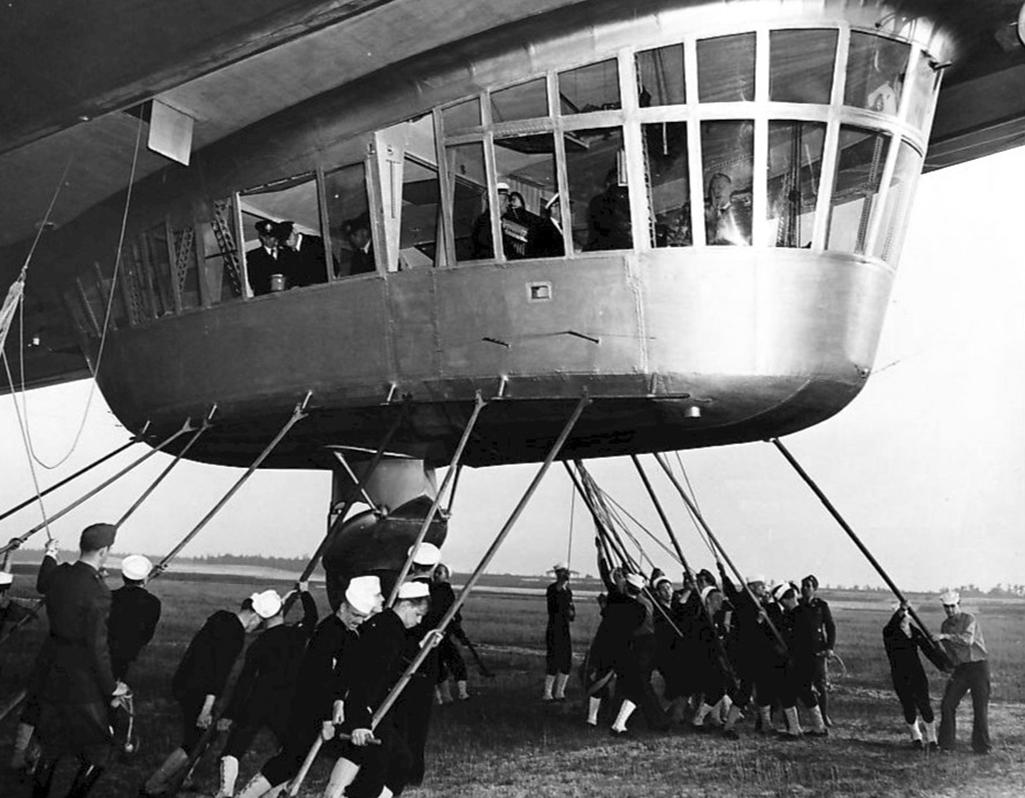
The destruction of the LZ 129 Hindenburg on May 6, 1937, at Lakehurst, New Jersey, remains one of the most scrutinized disasters in aviation history. Of the 97 individuals on board, 62 survived the inferno, which consumed the massive airship in less than 40 seconds. Their firsthand accounts provided critical evidence for investigators, while the tragedy permanently altered global perceptions of lighter-than-air travel.
The Mechanics of the Disaster
The Hindenburg was the largest aircraft ever to fly, measuring 803 feet in length and filled with 7 million cubic feet of highly flammable hydrogen. As it attempted to moor at the Naval Air Station Lakehurst during a thunderstorm, static electricity ignited leaking hydrogen near the upper fin. The fire spread with catastrophic speed, not through a single explosion, but through a rapid series of vents that allowed the fire to consume the hull from the tail forward.
For the survivors, the event was characterized by the suddenness of the transition from a routine landing to a life-threatening inferno. Most of those who escaped were located in the lower passenger decks or the control car, allowing them to jump to the ground as the ship’s nose pitched upward and the tail crashed to the tarmac. The survival rate was significantly aided by the fact that the airship was near the ground and moving slowly during the moment of ignition.
Witness Accounts and Firsthand Experiences
The survivors included both crew members and passengers, many of whom documented their experiences in the immediate aftermath. Their stories consistently describe a brief period of confusion followed by the realization that the airship was falling.
Werner Franz, a cabin boy on the flight, was working in the mess hall when the fire started. He famously credited a burst water tank—which ruptured above him—with dousing the flames in his immediate vicinity, allowing him to escape through a hatch. Others, like passenger Margaret Mather, recalled the eerily silent nature of the initial fire, noting that the roar of the flames only became audible once the structural integrity of the airship began to fail.
These accounts were essential to the subsequent inquiry led by the U.S. Department of Commerce and the German commission. While some survivors reported hearing muffled pops or seeing St. Elmo’s fire on the outer skin prior to the blaze, their testimony helped experts rule out sabotage, pointing instead to an electrostatic discharge as the most probable ignition source for the leaking gas.
Statistical Breakdown of the Incident
To understand the scope of the survival and the human cost of the disaster, the following data provides a clear view of the passenger and crew distribution.
| Category | Total Onboard | Fatalities | Survivors | Survival Rate |
|---|---|---|---|---|
| Passengers | 36 | 13 | 23 | 63.9% |
| Crew | 61 | 22 | 39 | 63.9% |
| Total | 97 | 35 | 62 | 63.9% |
The high survival rate of nearly 64% is frequently cited as a testament to the specific conditions of the crash. Had the airship been at cruising altitude rather than in the final stages of landing, it is widely accepted that there would have been no survivors.
Technical Limitations and Safety Factors
The Hindenburg utilized hydrogen as a lifting gas because the United States, which held a monopoly on helium production, refused to export the gas to Nazi Germany under the Helium Control Act of 1927. This geopolitical restriction forced the use of hydrogen, despite its inherent volatility.
Following the disaster, technical experts identified several factors that complicated escape:
- Fabric Coating: The outer skin of the Hindenburg was treated with a compound containing aluminum powder and cellulose acetate butyrate, which acted as a solid-fuel accelerant.
- Structural Integrity: Once the girders began to fail, the airship lost its vertical stability, causing the nose to point toward the sky. This made movement toward the exit hatches extremely difficult for those trapped in the upper decks.
- Environmental Factors: The thunderstorm activity in the area increased the atmospheric electrical potential, creating a high-risk environment for a ship covered in a conductive, flammable coating.
The Legacy of the Hindenburg Disaster
The legacy of the Hindenburg is inextricably linked to the end of the "Golden Age" of airships. Before May 1937, rigid airships were viewed as the premier luxury mode of intercontinental travel, offering stability and comfort superior to contemporary ocean liners and aircraft.
Within hours of the disaster, the news, underscored by the iconic radio commentary of Herbert Morrison and the widespread distribution of photographic evidence, shattered public confidence in the safety of hydrogen-filled craft. The disaster served as a definitive psychological turning point. Even though the German zeppelin program attempted to maintain operations, the economic reality and the shift in public sentiment toward fixed-wing aircraft—such as the emerging Douglas DC-3—rendered the commercial airship obsolete.
By 2026, the Hindenburg remains a standard case study in aviation history regarding the importance of gas safety, fire-retardant materials, and the risks associated with static discharge in aviation design. It serves as a stark reminder of how technological ambition, when tempered by geopolitical limitations, can lead to irreversible safety compromises.
Frequently Asked Questions
What was the primary cause of the Hindenburg fire?
Official investigations concluded that the ignition was likely caused by an electrostatic discharge. The airship had flown through a thunderstorm, causing its outer skin to build up a static charge. When the landing lines were dropped to the ground, they acted as a ground, creating a spark near the tail where hydrogen was leaking from a ruptured cell.
Did any of the Hindenburg survivors reach old age?
Yes, many survivors went on to live long lives. Werner Franz, the cabin boy mentioned earlier, became one of the last living links to the disaster, passing away in 2014. The longevity of these individuals allowed historians to gather extensive oral histories that clarified the events of the final minutes of the flight.
Was the Hindenburg disaster an act of sabotage?
While sabotage was a popular theory in the immediate aftermath, no evidence has ever been found to support it. The German and American investigations, as well as independent academic analysis conducted in the decades since, have consistently pointed to the combination of leaking hydrogen and environmental electrical conditions as the cause.
Why was helium not used in the Hindenburg?
The Hindenburg was designed to use helium, but the United States government placed an embargo on the export of helium to Germany. While Germany had the technical capability to use the non-flammable gas, the lack of supply forced them to use hydrogen, which was both abundant and cheap but significantly more dangerous.
How many passengers were on the final flight?
There were 36 passengers on board the flight from Frankfurt to Lakehurst. Of these passengers, 23 survived the disaster. The remainder of the 97 individuals on board were crew members, who were essential to the complex operation of navigating and maintaining the massive airship.
Next Steps for Historical Research
For those interested in further verifying these accounts, primary source documents are available through the National Archives and Records Administration (NARA) in the United States, which holds the official reports of the Department of Commerce investigation. Researchers should look specifically for the "Report of the Airship Hindenburg Disaster" (1937). Additionally, the Zeppelin Museum in Friedrichshafen, Germany, houses original logs and correspondence from the crew, providing a vital perspective on the operational procedures of the era. If you are conducting academic research, prioritize these archival materials over dramatized media accounts to ensure factual accuracy regarding the timelines and technical specifications of the LZ 129.