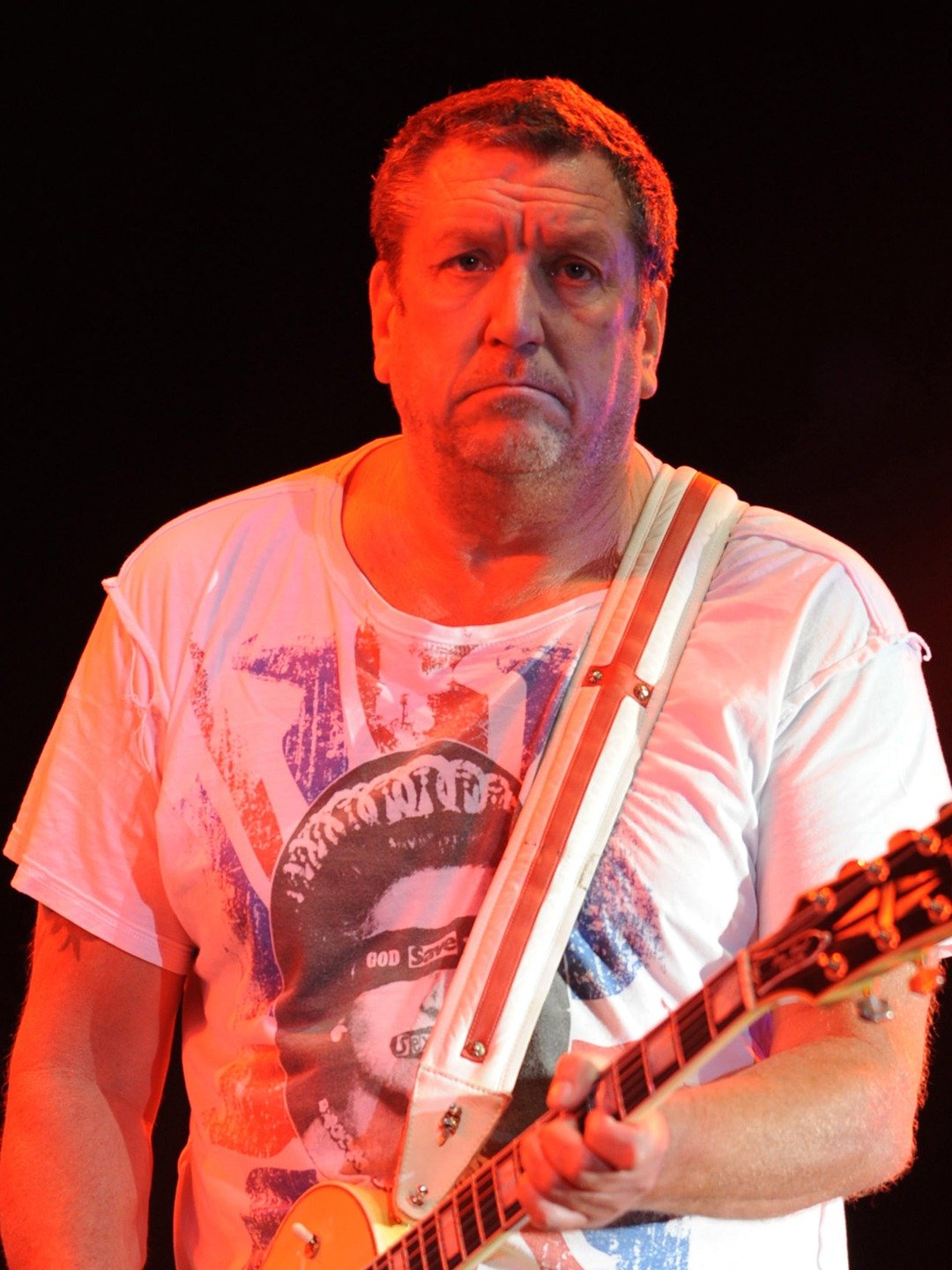
Steve Jones is an English musician, songwriter, and radio broadcaster best known as the founding guitarist of the influential 1970s punk rock band the Sex Pistols. Renowned for his raw, wall-of-sound guitar tone and defining riff-work on Never Mind the Bollocks, Here's the Sex Pistols, he later built a successful career with bands like The Professionals and as a long-running Los Angeles radio host.
While several prominent public figures share the name Steve Jones—including the Welsh evolutionary biologist and author Professor Steve Jones, the Welsh television presenter Steve Jones, and the 1996 U.S. Open golf champion Steve Jones—the primary cultural footprint associated with the name belongs to the Sex Pistols guitarist and broadcaster. This profile focuses primarily on the life, musical legacy, gear, and broadcast career of musician Steve Jones, while providing contextual comparison with other notable namesakes.
Early Life and the Origins of British Punk
Steve Jones was born on September 3, 1955, in Shepherd's Bush, West London. Raised primarily by his mother and stepfather in working-class West London, Jones experienced a difficult childhood marked by neglect and abuse, which he documented extensively in his later writings. Seeking escape, he turned to shoplifting, petty crime, and a deep obsession with 1970s glam rock icons such as David Bowie, Roxy Music, and the New York Dolls.
Before mastering the guitar, Jones formed early musical groups with his school friend and drummer Paul Cook. Alongside Wally Nightingale and Warwick "Wong" Nightingale, they formed a band called The Strand (named after the Roxy Music song "Do the Strand"). The group frequented Sex, the Chelsea clothing boutique operated by Malcolm McLaren and Vivienne Westwood. Recognizing the band's raw potential, McLaren agreed to manage them on the condition that Nightingale step aside, allowing Jones to transition from lead vocals to guitar.
Jones famously learned to play the electric guitar rapidly over a matter of months, often practicing while fueled by speed and determination. Much of the band’s early sound gear was acquired through unconventional means; Jones famously stole microphones, amplifiers, and sound equipment from the back doors of London music venues, including gear belonging to David Bowie's Ziggy Stardust tour at the Hammersmith Odeon in 1973.
With the addition of bassist Glen Matlock and charismatic lead vocalist John Lydon (Johnny Rotten), the group re-emerged in late 1975 as the Sex Pistols. Jones's hard-hitting, muscular rhythm playing rapidly became the musical engine behind the UK punk movement.
The Sex Pistols Sound: Guitar Tone, Gear, and Studio Secrets
Despite punk rock’s public reputation for deliberate amateurism, Steve Jones brought a tight, precise, and surprisingly sophisticated recording technique to the studio. Producer Chris Thomas, who helmed the session recordings for the Sex Pistols' sole studio album, Never Mind the Bollocks, Here's the Sex Pistols (1977), recognized Jones's rhythmic precision and layered his guitar tracks to create an authoritative "wall of sound."
Steve Jones's Core Signal Chain:
- Guitar: 1974 Gibson Les Paul Custom (Cream/White, featuring pin-up decals)
- Amplifier: Late-1960s Silverface Fender Twin Reverb (modified / cranked)
- Studio Technique: Multi-tracked rhythm guitars (panned left & right)
Signature Equipment and Modifications
Jones's most recognizable instrument is a cream-colored 1974 Gibson Les Paul Custom decorated with silhouettes of 1950s pin-up girls. Given to him by manager Malcolm McLaren—who had originally obtained it from Sylvain Sylvain of the New York Dolls—the instrument featured a heavy mahogany body and high-output humbucking pickups that yielded a thick, sustaining drive.
Contrary to the belief that early punk guitarists relied strictly on high-gain Marshall stacks, Jones recorded the vast majority of Never Mind the Bollocks using a late-1960s Fender Twin Reverb amplifier equipped with JBL speakers. By pushing the clean Fender amplifier to maximum volume, Thomas and Jones achieved a tight, overdriven sound that retained chord clarity without descending into muddy distortion.
Bass Performance on Never Mind the Bollocks
A lesser-known historical fact regarding the recording of Never Mind the Bollocks is that Steve Jones performed almost all of the bass tracks on the record. Original bassist Glen Matlock left the group in early 1977 prior to album tracking completed. Replacement bassist Sid Vicious lacked the studio technique and physical dexterity needed for precise recording, and was hospitalized with hepatitis during major sessions. As a result, producer Chris Thomas had Jones play the bass lines himself, laying down tight, locked-in bass parts alongside Paul Cook's drumming to ensure the album met high production standards.
Post-Sex Pistols Career: Bands, Solo Output, and Collaborations
Following the volatile breakup of the Sex Pistols during their 1978 United States tour, Jones refused to step away from the music industry. He immediately partnered with drummer Paul Cook to form The Professionals in 1979. Signed to Virgin Records, The Professionals released several singles and the acclaimed 1981 album I'll Do the Talking Anyday, blending punk aggression with classic rock songcraft.
- Sex Pistols Breakup (1978)
- The Professionals (1979–1982) — with Paul Cook
- Solo Era (1987–1989) — Albums: "Mercy" & "Fire and Gasoline"
- Neurotic Outsiders (1995–1999) — with Duff McKagan, Matt Sorum, & John Taylor
- Broadcasting Career (2004–Present) — Host of "Jonesy's Jukebox"
Throughout the late 1980s and 1990s, Jones relocated to Los Angeles and established himself as a versatile guitarist, guest musician, and solo artist. His major post-Pistols projects included:
- Solo Albums: Jones released two solo records on MCA Records: Mercy (1987), which leaned into melodic hard rock and featured the hit title track later used in Miami Vice, and Fire and Gasoline (1989), a heavier rock album featuring guest appearances by Ian Astbury and Billy Idol.
- Neurotic Outsiders: In 1995, Jones formed the supergroup Neurotic Outsiders alongside Guns N' Roses bassist Duff McKagan and drummer Matt Sorum, along with Duran Duran bassist John Taylor. The group performed regular gigs at Los Angeles's Viper Room and released a self-titled studio album in 1996.
- Session Work: Jones contributed guitar tracks to recordings by a wide variety of artists, including Iggy Pop (Instinct album), Bob Dylan, Thin Lizzy, Joan Jett, and Megadeth.
Radio Career and Jonesy's Jukebox
In 2004, Steve Jones launched a second career as an influential radio personality in Southern California. His show, Jonesy's Jukebox, debuted on Los Angeles indie rock station Indie 103.1 FM and quickly achieved cult status due to its unscripted, highly eclectic format.
Unlike traditional commercial radio programming dictated by corporate playlists, Jones maintained complete acoustic freedom. He brought his own vinyl and CD collection into the studio, spinning rare punk tracks, classic rock cuts, reggae, and undiscovered indie singles. Interspersed between tracks were Jones's rambling, humorous monologues, live acoustic jams, and offbeat interviews with major cultural icons, including Johnny Dep, Robert Plant, Dave Grohl, and Jerry Cantrell.
Over two decades, Jonesy's Jukebox aired across multiple platforms, transitioning from Indie 103.1 FM to KROQ's HD radio channel and eventually to 95.5 KLOS FM in Los Angeles. The show demonstrated Jones's broad musical taste and earned critical acclaim from broadcast journalists and listeners alike.
Disambiguation: Comparing Prominent Figures Named Steve Jones
Because "Steve Jones" is a relatively common name across English-speaking nations, readers frequently encounter distinct public figures operating in science, sports, broadcasting, and music. The table below outlines the primary figures to ensure accurate identification.
| Person | Primary Field | Known For / Major Achievements | Active Eras | Primary Location |
|---|---|---|---|---|
| Steve Jones | Music & Radio | Guitarist for the Sex Pistols; host of Jonesy's Jukebox; author of Lonely Boy | 1975–Present | London, UK / Los Angeles, USA |
| Prof. Steve Jones | Genetics & Biology | Professor Emeritus of Genetics at UCL; author of The Language of Genes; BBC broadcaster | 1970s–Present | Wales / London, UK |
| Steve Jones | TV Hosting | Presenter for Channel 4's T4, The X Factor USA, Formula 1 coverage on Channel 4 | 2000s–Present | Rhondda, Wales / London, UK |
| Steve Jones | Professional Golf | PGA Tour golfer; winner of the 1996 U.S. Open Championships | 1980s–2010s | New Mexico / Arizona, USA |
Autobiography, Pistol Series, and Cultural Legacy
In November 2016, Steve Jones published his autobiography, Lonely Boy: Tales from a Sex Pistol, co-written with journalist Ben Thompson. The memoir provided a candid, unvarnished account of his turbulent early life, sexual abuse, struggles with addiction, musical career, and recovery. Critics praised the book for its honesty and lack of rock-and-roll revisionism.
In 2022, FX produced a six-part television miniseries titled Pistol, directed by Academy Award-winner Danny Boyle (Trainspotting, Slumdog Millionaire). Based directly on Lonely Boy, the series framed the rise of British punk through Steve Jones's perspective, with actor Toby Wallace portraying Jones. The dramatization introduced Jones's foundational role in the punk movement to a new generation of viewers.
- Lonely Boy: Tales from a Sex Pistol (2016 Memoir)
- Directed by Danny Boyle (2022)
- FX/Hulu Limited Series: "Pistol" (Toby Wallace starring as Steve Jones)
Jones's guitar style—characterized by relentless down-stroking, clear power chords, and economic lead runs—fundamentally reshaped rock guitar performance. Sub-genres ranging from American hardcore and pop-punk to alternative rock and grunge directly draw upon the sonic blueprint Jones established in 1977.
Frequently Asked Questions
Did Steve Jones play bass on Never Mind the Bollocks?
Yes. Steve Jones recorded almost all of the bass tracks for Never Mind the Bollocks, Here's the Sex Pistols. Original bassist Glen Matlock had left the group before full album production began, and Sid Vicious was largely unavailable due to illness and limited technical studio skill. Producer Chris Thomas had Jones lay down the bass tracks alongside Paul Cook's drums to maintain tight rhythmic timing.
What guitar and amplifier did Steve Jones use in the Sex Pistols?
Jones primarily used a white/cream 1974 Gibson Les Paul Custom decorated with pin-up girl stickers, given to him by Malcolm McLaren. While he used Marshall amplifiers on stage, his distinct studio guitar tone on Never Mind the Bollocks was achieved by running his Gibson Les Paul directly into a cranked late-1960s Fender Twin Reverb amplifier.
Is Steve Jones the musician related to the TV host or scientist Steve Jones?
No. The Sex Pistols guitarist Steve Jones is not related to Professor Steve Jones (the Welsh geneticist and author) or Steve Jones (the Welsh television presenter). They are distinct public figures who share the same name.
What is Jonesy's Jukebox?
Jonesy's Jukebox is an acclaimed, unscripted radio show hosted by Steve Jones. Originating on Los Angeles station Indie 103.1 FM in 2004, the show became famous for Jones's eclectic music selections, informal humor, and casual on-air conversations with musicians, actors, and cultural figures.
What was the TV series Pistol based on?
The 2022 FX miniseries Pistol, directed by Danny Boyle, was based directly on Steve Jones's 2016 autobiography, Lonely Boy: Tales from a Sex Pistol. The series dramatized the formation, rapid rise, and collapse of the Sex Pistols from Jones's viewpoint.
Recommended Listening and Reading for Exploring Steve Jones's Work
To fully appreciate Steve Jones's contributions to music, rock history, and media, explore the following curated list of core works spanning his multi-decade career:
- Essential Album: Never Mind the Bollocks, Here's the Sex Pistols (1977)Listen closely to tracks like "Holiday in the Sun," "Bodies," and "Problems" to hear Jones's signature multi-tracked rhythm guitars and tight basswork.
- Post-Pistols Listening: The Professionals – The Complete ProfessionalsExamine Jones's songwriting evolution post-1978, highlighting a bridge between early British punk and early 1980s power-pop and hard rock.
- Solo Era Highlight: Mercy (1987)Explore Jones's mid-80s melodic rock style, showcasing his vocal abilities and clean, expressive solo guitar work.
- Memoir: Lonely Boy: Tales from a Sex Pistol (Da Capo Press, 2016)Read Jones's firsthand account of London working-class culture, the birth of punk rock, gear acquisition, addiction recovery, and his radio career.
- Television Viewing: Pistol (FX/Hulu, 2022)Watch the six-episode miniseries directed by Danny Boyle for a visual and dramatic adaptation of Jones's early life and journey with the Sex Pistols.