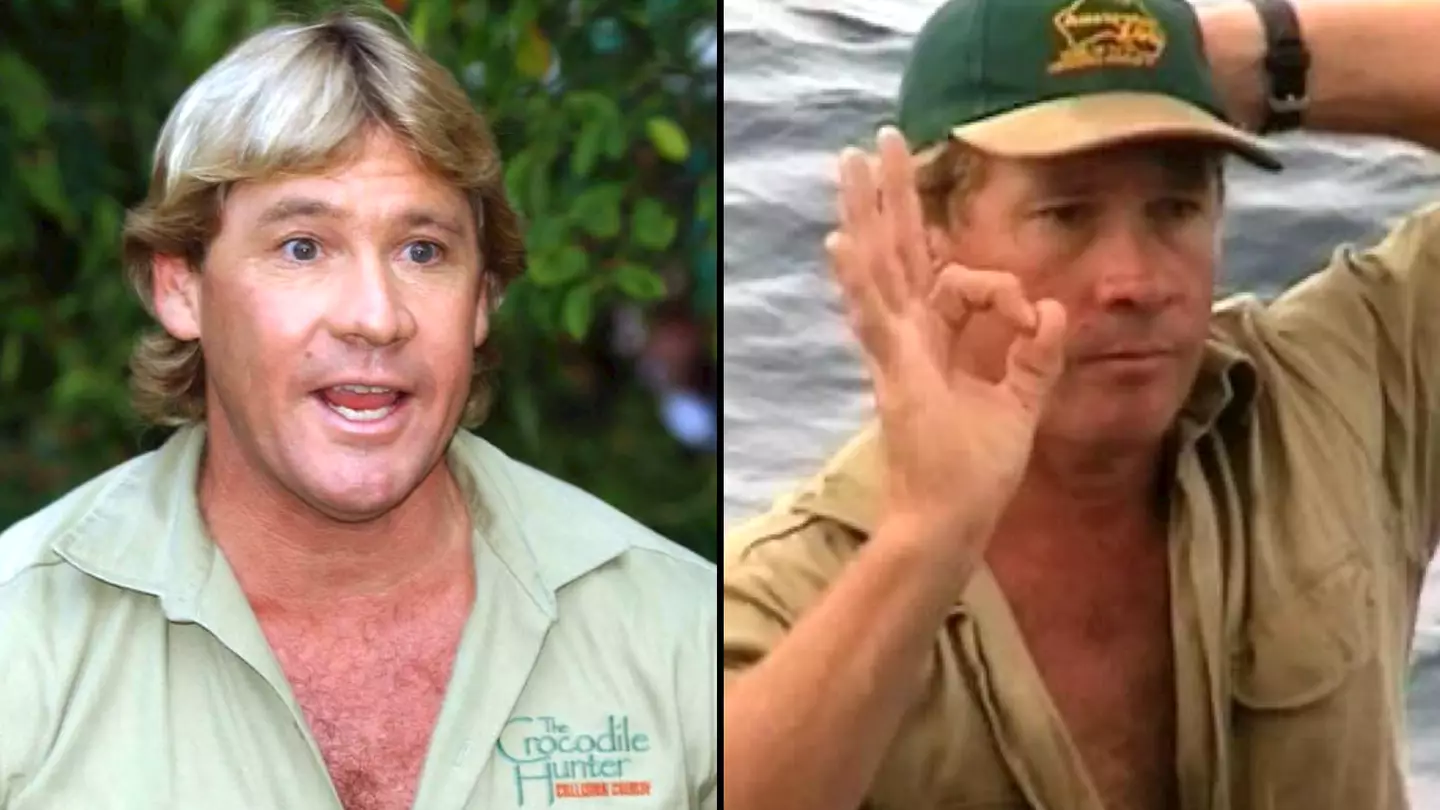
On September 4, 2006, Australian wildlife conservationist and television personality Steve Irwin died after suffering a penetrating chest injury inflicted by a stingray barb off the coast of Port Douglas, Queensland. The Queensland Coroner's investigation and autopsy confirmed that the direct cause of death was severe thoracic trauma and cardiac puncture, resulting in rapid internal hemorrhage and fatal cardiac arrest.
The Circumstances Surrounding the Incident at Batt Reef
Steve Irwin was aboard his research vessel, the Crocodile One, near Batt Reef—a coral reef complex located off Port Douglas in Far North Queensland, Australia. The primary objective of the expedition was to shoot footage for the marine documentary series Ocean's Deadliest. However, due to adverse weather conditions that halted primary production, Irwin and his crew decided to shoot alternative background footage in shallow waters for his daughter’s program, Bindi the Jungle Girl.
Irwin, accompanied by cameraman Justin Lyons, snorkeled in chest-deep water to locate and record a large short-tail stingray (Bathytoshia brevicaudata), an elasmobranch species estimated to weigh over 100 kilograms (220 pounds) with a disc width exceeding two meters. Irwin approached the ray from behind to capture footage of the animal swimming away.
As the stingray moved forward, it unexpectedly reared up on its pectoral fins and repeatedly struck Irwin with its serrated caudal spine (tail barb). The animal inflicted dozens of rapid blows in a span of mere seconds. The tail barb breached Irwin’s chest wall, penetrating his heart wall and pericardium before the ray swam into deeper water.
Lyons immediately helped Irwin back onto the main inflatable tender boat and signaled the main vessel for emergency aid. Despite continuous cardiopulmonary resuscitation (CPR) performed by crew members and emergency medical response team personnel who met the vessel off Low Isles, Irwin was pronounced dead shortly after paramedics assessed him.
Official Cause of Death and Forensic Autopsy Analysis
Following the arrival of law enforcement and medical authorities, an official autopsy was ordered by the Queensland State Coroner and performed in Cairns, Queensland. The formal findings established clear medical boundaries between physical mechanical trauma and envenomation.
Mechanism of Fatal Injury:
- Stingray Caudal Barb penetrates Anterior Thoracic Wall
- Direct Puncture of Right Ventricle
- Catastrophic Hemopericardium & Bleeding
- Rapid Cardiac Arrest / Exsanguination
Thoracic Penetration and Cardiac Trauma
The primary cause of death listed in the coronial file was direct penetrating sharp force trauma to the heart, leading to massive internal hemorrhage and rapid exsanguination. The stingray’s caudal barb acts like a bayonet; it is composed of stiff vasodentin edged with sharp, retrograded (backward-facing) serrations designed to tear tissue upon entry and withdrawal.
When the barb struck Irwin’s left chest wall, it passed through the intercostal space between his ribs, pierced the anterior pericardial sac, and entered the muscle wall of the right ventricle. This structural disruption caused two instantaneous physiological events:
- Massive Exsanguination: The tearing of cardiac tissue and main blood vessels led to rapid blood loss within the thoracic cavity.
- Pericardial Tamponade: Blood filling the space between the pericardial sac and the heart restricted the ventricles from expanding properly, preventing effective blood pumping and causing immediate hemodynamic collapse.
Physical Trauma vs. Envenomation
A common point of inquiry surrounding the autopsy was whether stingray venom played a role in Irwin's death. Stingray barbs are covered with an integumentary sheath containing glandular tissue that secretes proteinaceous venom. While venom causes excruciating localized pain, tissue necrosis, and systemic reactions in standard non-fatal limb stabs, the forensic report determined that venom played an entirely secondary, negligible role in Irwin's case.
The physical damage inflicted by the barb—specifically the laceration of the cardiac wall—was severe enough to produce fatal unconsciousness within seconds and full cardiac arrest within minutes, long before systemic biochemical effects from stingray venom could take effect.
Key Findings of the Queensland Coroner’s Investigation
The official investigation into Steve Irwin’s death was overseen by the State Coroner of Queensland, working alongside the Queensland Police Service. Because the incident occurred within Australian territorial waters, state coronial law required a thorough inquiry into the accidental death.
The coronial investigation reached four primary conclusions:
- Absence of Human Error or Negligence: The coroner concluded that the crew acted with complete professionalism and maintained standard emergency responses. Equipment safety checks, communications protocols, and emergency medical intervention efforts were executed correctly.
- Unprovoked Defensive Animal Behavior: Marine biologists and wildlife specialists consulted during the coronial review analyzed the footage. They determined that the stingray did not display unprovoked predatory aggression. Instead, trapped between Irwin in front of it and the cameraman slightly to the side, the ray likely mistook Irwin’s shadow or proximity for an attacking predator (such as a tiger shark) and reacted reflexively.
- Inefficacy of Immediate Field Resuscitation: Forensic evidence demonstrated that no level of immediate field medical care could have saved Irwin’s life given the nature of the injury. Resuscitation efforts, including chest compressions, were unable to counteract the catastrophic physical breach of the heart chamber.
- Accidental Death Ruling: The formal legal determination confirmed the event as a tragic, rare workplace accident resulting from unpredictable wild animal behavior.
Verified Coronial Facts vs. Public Misconceptions
Due to Steve Irwin’s worldwide celebrity, numerous rumors and sensationalized reports surfaced immediately following his death. The table below compares common public myths against the verified findings of the Queensland Coroner and medical examiners.
| Aspect | Public Misconception / Myth | Verified Coronial & Medical Fact |
|---|---|---|
| Primary Cause of Death | Toxicity or fatal poisoning from stingray venom. | Physical cardiac trauma and massive blood loss caused by direct puncture of the heart wall. |
| Video Availability | The death video was leaked online and is accessible on public video archives. | The video was seized by Queensland Police, reviewed by the coroner, and subsequently destroyed or surrendered to the family. No authentic footage has ever been leaked. |
| Behavior of the Animal | The stingray aggressively attacked Irwin without warning or physical proximity. | The stingray exhibited a defensive instinct, reacting reflexively after feeling trapped or threatened in shallow water. |
| Pre-existing Health Issues | An underlying cardiac condition contributed to his sudden death. | Autopsy confirmed Irwin was in excellent physical health; death was entirely caused by external sharp force thoracic injury. |
| Removal of the Barb | Speculation that pulling the barb out caused the fatal injury. | Coronial analysis confirmed the barb tore through tissue during the stingray's rapid striking motion; physical removal in the field did not alter the fatal outcome. |
Pathophysiology of Stingray Barb Injuries in Forensic Medicine
Fatalities caused by stingrays are exceptionally rare in medical and forensic literature. Elasmobranchs use their serrated tail barbs almost exclusively for defense against marine predators. Understanding the biomechanics of Irwin’s injury provides critical context into why this incident proved fatal where most stingray interactions result only in localized limb wounds.
Stingray Barb Anatomy:
- Central Spine (Vasodentin) leading to Tip
- Retrograded Tearing Serrations (Backward Barbs)
Stingray barbs are structurally composed of dense vasodentin—a calcified cartilage-like material—covered by an epidermal envelope. The spine features backward-facing serrations along both edges. When a barb enters soft tissue, it penetrates easily; however, when extracted or forced back out by animal motion, these backward-facing teeth tear skin, muscle, and vascular walls.
In standard stingray injuries, human victims step on rays buried in sand, prompting the animal to whip its tail upward into the victim's foot or lower leg. While painful, these peripheral injuries affect non-vital extremity tissue.
In Irwin’s case, two rare variables collided:
- Positional Geometry: Irwin was swimming directly above the ray in shallow water, positioning his chest within the natural arc of the ray's tail reflex.
- Anatomical Target: The barb struck the anterior chest wall (the sternal/intercostal region), where the tissue layer separating the environment from the heart is relatively thin.
When a sharp, rigid, serrated object strikes the thoracic cage at high velocity, it can bypass bone structures, penetrate the intercostal muscle, and pierce the low-pressure right ventricle of the heart, leading to fatal cardiac tamponade and internal hemorrhage.
Evidence Management: Video Footage and Legal Privacy
A unique aspect of Steve Irwin’s death investigation was the existence of high-definition video footage capturing the entire incident. Cameraman Justin Lyons continued recording throughout the encounter, providing investigators with definitive visual evidence of how the injury occurred.
Police Seizure and Coronial Review
Following the vessel’s arrival at shore, officers from the Queensland Police Service impounded the Crocodile One as a crime scene and confiscated all original video media under the Coroners Act 2003 (Queensland). The video was reviewed by forensic experts, marine biologists, and State Coroner Patricia O'Connor to determine the exact sequence of events.
The video footage was critical in confirming that:
- The event was entirely accidental.
- No third parties were involved or at fault.
- The stingray struck with extreme speed, delivering multiple barb strikes in under two seconds.
Destruction and Archiving Protocols
Under Queensland coronial privacy protections, sensitive evidence—especially raw footage detailing fatal trauma—is protected from public disclosure. Upon completion of the coronial investigation:
- All secondary copies created for police analysis were destroyed under court supervision.
- The master recording was placed in a secure evidence vault before being released exclusively to Irwin’s widow, Terri Irwin.
- Terri Irwin confirmed in subsequent public interviews that the master footage was permanently destroyed without ever being broadcast or uploaded.
As a result, any video clip on digital platforms claiming to show Steve Irwin’s actual death is fraudulent.
Legacy of Safety Protocols in Marine Wildlife Production
The findings from the autopsy and coronial report led to changes in how natural history film crews approach marine encounters, particularly around bottom-dwelling elasmobranchs.
Following the investigation, documentary production standards across major international networks were updated to include enhanced safety measures:
- Distance Buffers: Maintaining mandatory minimum clearance zones when filming large stingrays, manta rays, or bottom-dwelling sharks from behind or above.
- Approach Angles: Instructing divers never to position themselves directly above a stingray or block its path of egress in shallow water.
- Emergency Medical Planning: Mandating specialized trauma kits—including chest seals and advanced hemorrhage control equipment—on all remote marine production vessels.
- Risk Assessments for Benthic Species: Reclassifying large stingrays in safety manuals from low-risk marine life to potentially lethal defensive organisms when approached closely.
Frequently Asked Questions
Was Steve Irwin killed by stingray venom or physical trauma?
Steve Irwin was killed by physical trauma. The Queensland Coroner’s autopsy established that the primary cause of death was a penetrating chest wound inflicted by the stingray's serrated barb, which punctured his heart wall. This caused massive blood loss and cardiac arrest. Stingray venom played no significant role in his death.
Was the official autopsy report released to the public?
The complete, unredacted autopsy file remains sealed under Queensland privacy laws governing coronial records. However, the State Coroner released summary findings confirming the official cause of death (cardiac puncture leading to sudden trauma and blood loss) and ruling the death an accident.
What happened to the video footage of Steve Irwin's death?
The video footage was confiscated by the Queensland Police Service for the coronial investigation. Following the investigation's conclusion, all police copies were destroyed, and the original master tape was surrendered to Terri Irwin. The family subsequently destroyed the footage. No authentic video of the incident exists publicly.
How rare are fatal stingray attacks?
Fatal stingray injuries are extremely rare. Prior to Steve Irwin’s death in 2006, only two fatal stingray incidents had ever been recorded in Australian history. Worldwide, fewer than five fatal cases are reported per decade, and almost all result from direct punctures to vital internal organs (such as the heart or lungs) rather than limb stabs.
Where was Steve Irwin filming when the incident occurred?
Irwin was filming near Batt Reef, a large coral reef complex located off the coast of Port Douglas in Far North Queensland, Australia. He was operating from his research vessel, the Crocodile One, in shallow reef waters.
Applying Marine Safety and Coronial Evidence Lessons
Understanding the findings of Steve Irwin’s coronial report emphasizes the importance of respecting wild animal behaviors and understanding marine environments. For researchers, filmmakers, and recreational divers, the core takeaway is clear: defensive behaviors in marine life can be fatal when proximity limits an animal's escape routes.
When interacting with marine wildlife, always observe these fundamental safety precautions:
- Maintain Escape Paths: Never position yourself between a marine animal and open water, particularly in shallow or confined reef environments.
- Avoid Top-Down Approaching: Do not swim directly over the top of benthic species like stingrays, as shadows from above trigger biological predator-defense responses.
- Respect Defensive Anatomy: Recognize that even non-aggressive, passive animals possess specialized physical defense mechanisms capable of inflicting severe trauma.
- Prioritize Advanced Medical Planning: Ensure remote dive expeditions carry field trauma supplies capable of treating major thoracic and penetrating injuries.