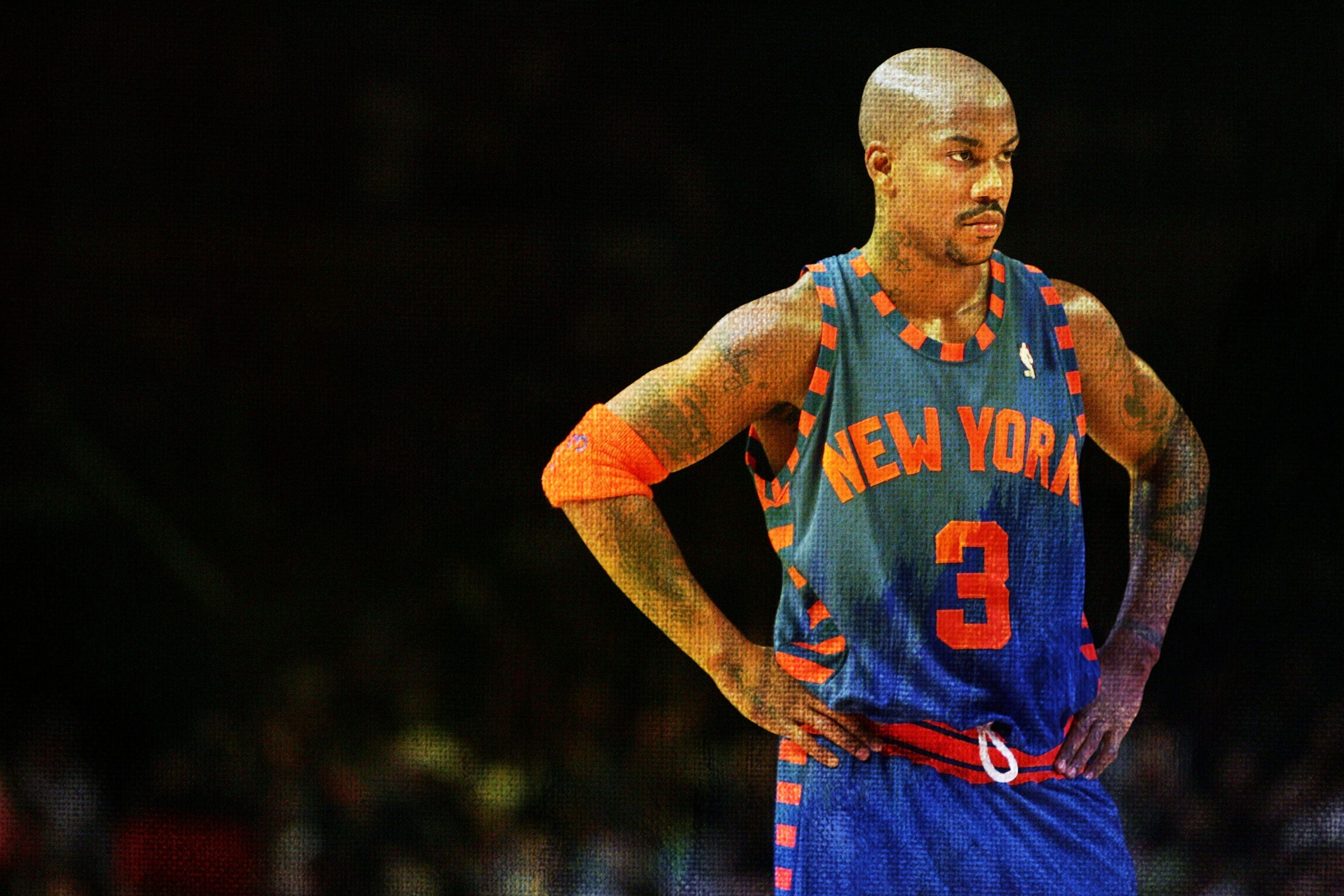
Stephon Marbury earned approximately $151.8 million in gross NBA salary across a 13-year American career, anchored by a $76 million maximum extension signed in 2003. He subsequently rebuilt his financial platform in China through multi-million-dollar playing and coaching contracts, ownership of the independent Starbury sneaker brand, and cross-border Asian commercial ventures.
NBA Contract Breakdown and Total On-Court Salary Earnings
Stephon Marbury entered the National Basketball Association in 1996 as the fourth overall draft pick by the Milwaukee Bucks, who immediately traded his rights to the Minnesota Timberwolves. Over his 13-season NBA career, Marbury established himself as one of the premier point guards of his era, which translated into top-tier compensation under the league's Collective Bargaining Agreement (CBA).
Rookie Scale and Early Extension (1996–2001)
Marbury's financial trajectory began with a standard three-year rookie scale contract with Minnesota worth roughly $6.1 million. Upon completing his third season, Marbury sought a trade to a larger market, resulting in his deal to the New Jersey Nets in 1999. In New Jersey, he executed his first major veteran deal: a six-year extension valued at approximately $71 million. This contract solidified Marbury as a designated franchise player, paying him an average annual value (AAV) exceeding $11 million during an era when the NBA salary cap hovered between $34 million and $42 million.
The Max Extension and New York Knicks Era (2001–2009)
In 2001, Marbury was traded to the Phoenix Suns, who assumed the remainder of his six-year deal. In 2003, Phoenix locked Marbury into a four-year maximum contract extension worth roughly $76 million. Before the extension commenced, Marbury was traded to the New York Knicks in January 2004.
This max extension carried Marbury through the peak of his financial earning years in the NBA:
- 2005–06 Season: ~$14.6 million
- 2006–07 Season: ~$17.1 million
- 2007–08 Season: ~$19.0 million
- 2008–09 Season: ~$20.8 million (scheduled base compensation)
The 2009 Contract Buyout and Boston Celtics Stint
Marbury's tenure with the New York Knicks ended in late February 2009 following a protracted public dispute with management. Rather than letting his contract expire at the end of the 2008–09 season, the Knicks agreed to a buyout. Marbury agreed to give up roughly $2 million of his remaining $20.8 million salary, receiving an estimated $18.8 million in buyout compensation.
Immediately after clearing waivers, Marbury signed a prorated veteran minimum contract with the Boston Celtics for the remainder of the 2008–09 season, earning roughly $785,000. He declined a subsequent veteran minimum offer from Boston for the 2009–10 season, choosing to pause his American playing career. In total, Marbury's gross NBA playing earnings reached approximately $151.8 million.
Financial Breakdown of Major Career Contracts and Earnings
The following table summarizes the primary contracts, team transitions, estimated total earnings, and financial characteristics of Stephon Marbury's playing and coaching career.
| Career Phase / Organization | Contract Type / Role | Active Timeline | Estimated Total Value / Earnings | Key Strategic & Financial Notes |
|---|---|---|---|---|
| Minnesota Timberwolves | Rookie Scale Contract | 1996–1999 | $6.1 Million | Standard 1996 top-5 rookie slot; traded to New Jersey in 3rd year. |
| New Jersey Nets / Phoenix Suns | 6-Year Veteran Extension | 1999–2004 | $71.0 Million | Signed in NJ; transferred to Phoenix in 2001 via trade. |
| Phoenix Suns / NY Knicks | 4-Year Max Extension | 2004–2009 | $76.0 Million | Signed in Phoenix; transferred to Knicks in major 2004 multi-player trade. |
| NY Knicks Buyout | Contract Termination Deal | 2009 | $18.8 Million | Forfeited ~$2M of $20.8M final-year salary to secure free agency. |
| Boston Celtics | Veteran Minimum (Prorated) | 2009 | $785,000 | Final active NBA stint; declined subsequent multi-year minimum offer. |
| CBA Playing Era (Shanxi, Foshan, Beijing Ducks) | International Star Contracts | 2010–2018 | $12.0M–$15.0M (Est.) | Net salary terms plus substantial incentive bonuses for 3 championships. |
| Beijing Royal Fighters | CBA Head Coach Contract | 2019–2023 | $4.0M–$6.0M (Est.) | 4-year coaching contract; paid top-tier CBA managerial rate. |
The CBA Era: Contracts, Coaching Deals, and Chinese Endorsements
Marbury’s decision to move to the Chinese Basketball Association (CBA) in 2010 represented a pivot from traditional post-NBA career paths. Rather than taking secondary roles in Europe or accepting minimum deals in America, Marbury relocated to China, where he built a self-sustaining commercial ecosystem.
- Stephon Marbury Global Earnings Pipeline:
- NBA Salary & Buyouts: $151.8 Million Gross Career On-Court Salary
- CBA Contracts & Coaching: $16.0M - $21.0M (Player & Head Coach Rates)
- Starbury Brand IP Equity: Direct-to-Consumer & Asian Licensing Revenue
- Cross-Border Ventures: Hong Kong Hub, Talent Pass & Private Equity
Player Contracts in China (2010–2018)
Marbury spent his initial CBA seasons with Shanxi Zhongyu and Foshan Dralions before joining the Beijing Ducks in 2011. In Beijing, Marbury led the franchise to three CBA Championships (2012, 2014, and 2015).
While CBA base salaries for foreign stars were capped lower than top-tier NBA contracts—typically ranging from $1.5 million to $2.5 million net per season—Marbury's deals included structure-specific benefits:
- Tax-Net Compensation: CBA contracts for elite foreign players were frequently structured as net-after-tax payouts, handled directly by the club.
- Performance Incentives: Championship and playoff appearance bonuses added mid-six-figure supplements to his base compensation.
- Housing and Travel Allowances: Full operational coverage for living and personal staff expenses within Beijing.
CBA Head Coaching Career (2019–2023)
Following his retirement as a player in 2018, Marbury signed a multi-year deal to become the head coach of the Beijing Royal Fighters (Beijing Fly Dragons) in 2019. Coaching compensation in the CBA for prominent former players with high name recognition commands top-tier manager salaries, estimated between $1 million and $1.5 million annually. Marbury coached the Royal Fighters through the 2022–2023 season, providing financial continuity post-retirement.
Asian Commercial Endorsements and Media Rights
Marbury leveraged his athletic status into direct monetization in East Asia. His regional endorsement portfolio has included partnerships with Chinese footwear brand 361 Degrees, local financial institutions, health and wellness brands, and tech companies.
Beyond corporate endorsements, Marbury monetized his personal likeness through unique IP deals:
- "I Am Marbury" Musical: A stage production based on his life in China that ran in major Chinese cities.
- Biographical Film (My Other Home): A feature film released in 2017 starring Marbury as himself, generating licensing fees and revenue-sharing profits.
- The House of Marbury Museum: A dedicated museum in Beijing built to honor his contributions to Beijing basketball, providing commercial visibility for his personal brand.
Starbury and the Business Structure of an Equity-First Athlete Brand
Marbury's most notable entrepreneurial project is the Starbury sneaker brand, launched in 2006. At a time when top signature basketball shoes from Nike, Adidas, and Jordan Brand retailed for $120 to $175, Marbury launched his line at a retail price of $14.98.
The Steve & Barry's Model and IP Ownership
The original Starbury strategy relied on a partnership with low-cost clothing retailer Steve & Barry's. To keep the retail price under $15 without sacrificing court performance, Marbury eliminated traditional marketing expenses, expensive athlete endorsement budgets, and intermediary distribution margins. Steve & Barry's handled brick-and-mortar retail distribution, while Marbury retained majority equity and intellectual property rights to the Starbury logos, design patents, and trademarks.
When Steve & Barry’s filed for Chapter 11 bankruptcy in 2008, many athlete-backed retail licensing deals collapsed entirely. However, because Marbury owned the underlying IP directly rather than holding a simple royalty agreement, he preserved the brand.
- Traditional Athlete Endorsement Model:
- Brand (Nike/Adidas)
- Owns IP & Product
- Pays Athlete 4-5% Royalty
- Marbury Starbury Direct-Equity Model:
- Marbury
- Owns 100% Brand IP
- Controls Supply Chain
- Retains Gross Margins
Direct-to-Consumer Transition and Asian Manufacturing Integration
Following his move to China, Marbury reorganized the Starbury business structure:
- DTC E-Commerce Realignment: Shifted primary retail channels to direct-to-consumer online platforms, reducing physical storefront overhead.
- Supply Chain Optimization: Relocated manufacturing oversight directly to Jinjiang and Guangzhou in China's Fujian and Guangdong provinces, cutting shipping costs and cycle times.
- Cross-Border Licensing: Licensed the Starbury trademark to regional distributors across East Asia, South America, and Eastern Europe for non-basketball apparel categories.
By taking full equity ownership over his brand rather than accepting an endorsement check, Marbury created a long-term commercial asset that survived the bankruptcy of its original retail distributor.
Modern Post-Playing Portfolio, Hong Kong Residency, and Current Business Deals
As of 2026, Marbury operates a diversified business structure that spans cross-border commerce, youth development, brand licensing, and institutional investments between North America and Asia.
Hong Kong Top Talent Pass Scheme (TTPS)
In late 2023, Marbury was formally approved under Hong Kong’s Top Talent Pass Scheme (TTPS) in Category A (designating individuals with an annual income reaching HK$2.5 million—approx. $320,000 USD—or higher in the year prior to application). This status established Hong Kong as the primary corporate and legal headquarters for his holding companies and family offices.
The Hong Kong corporate hub provides several structural financial advantages:
- Tax Efficiency: Hong Kong’s territorial tax system taxes only income generated within the special administrative region, optimizing international licensing royalties from Starbury.
- Capital Mobility: Unrestricted capital flow facilitates investment between Asian equity markets and North American real estate portfolios.
- Cross-Border Logistics Hub: Direct access to Greater Bay Area manufacturing and distribution hubs for consumer products.
Youth Sports Academies and Cross-Cultural Programs
Marbury has converted his personal brand into operational sports businesses across mainland China and Hong Kong. His revenue streams include:
- Marbury Basketball Academies: Private training programs operating in Beijing, Shenzhen, and Hong Kong charging tuition fees for elite youth training.
- Government and Educational Consultancies: Retainer contracts with municipal sports bureaus and international schools in Asia for basketball curriculum development.
- Media & Digital Content Monetization: Social media monetization across Chinese platforms (Weibo, Douyin, Xiaohongshu) and international networks, partnering with global consumer products targeting Asian demographics.
Lessons in Financial Resilience and Alternative Global Monetization
Marbury's career presents an instructive case study in modern athlete asset allocation, risk mitigation, and personal brand protection.
1. Retention of Intellectual Property
By refusing to sell the Starbury mark outright or sign a restrictive, non-equity shoe deal during his NBA peak, Marbury preserved an asset that he could reactivate in international markets. Own-brand equity protects an athlete from corporate cancellation or contract expiration.
2. Geographic Market Pivots
When his NBA career halted in 2009, Marbury did not exhaust his capital attempting to force an American comeback. Instead, he relocated his personal brand to China—the world's second-largest economy and one of the fastest-growing basketball markets—where he established an unmatched cultural and business foothold.
3. Structural Adaptation to Buyouts
Marbury used his 2009 Knicks buyout to buy out his remaining obligations, prioritize long-term brand rehabilitation over short-term salary disputes, and transition smoothly into global ventures without carrying significant debt.
Frequently Asked Questions (FAQ)
What was Stephon Marbury’s total gross NBA career salary?
Stephon Marbury earned approximately $151.8 million in gross base compensation across 13 seasons in the NBA. His highest-earning single season occurred in 2008–09, when his scheduled salary reached $20.8 million prior to his buyout deal with the New York Knicks.
How much was Stephon Marbury paid during his New York Knicks contract buyout?
In February 2009, Marbury and the New York Knicks agreed to a buyout of his $20.8 million contract for the 2008–09 season. Marbury surrendered approximately $2 million in compensation to secure his release, receiving roughly $18.8 million before taxes, after which he signed a prorated veteran minimum contract with Boston.
How did the Starbury sneaker line sell shoes for $14.98 and stay profitable?
Starbury eliminated traditional marketing expenses, celebrity endorsement fees, and third-party retail markups. By distributing directly through Steve & Barry's stores initially—and later through direct-to-consumer online channels—the brand maintained modest profit margins per unit while prioritizing high volume and consumer accessibility.
Did Stephon Marbury make money playing and coaching in China?
Yes. Over his eight-year CBA playing career and four-year tenure as head coach of the Beijing Royal Fighters, Marbury earned an estimated $16 million to $21 million in total foreign salary, bonus structures, and coaching retainers, much of which was structured under net-of-tax contract terms.
What is Stephon Marbury’s business headquarters status today?
As of 2026, Marbury operates his global investments, licensing operations, and holding companies out of Hong Kong, having been approved under Hong Kong's Top Talent Pass Scheme (TTPS). This setup serves as the strategic corporate base for Starbury’s international expansion and Asian commercial partnerships.
Strategic Takeaways for Sports Business and Athlete Equity Planning
Marbury's career choices demonstrate how modern professional athletes can structure their contracts and personal brand portfolios for multi-decade financial stability:
- Prioritize IP Ownership Over Short-Term Licensing: Holding full intellectual property rights to a personal brand creates enterprise value that outlasts on-court playing careers and third-party corporate bankruptcies.
- Explore Non-Traditional International Markets: Moving early into expanding international markets (such as East Asia) offers higher cultural leverage, higher endorsement yields, and extended earning horizons compared to staying in domestic secondary markets.
- Optimize Capital Transfer Structures: Utilizing clear corporate tax hubs—such as Hong Kong’s territorial framework—enables cross-border athletes to preserve revenue streams generated across multiple international jurisdictions.
- Prepare for Post-Playing Continuity: Transitioning directly from elite athlete to head coach, academy founder, and brand director maintains personal brand equity and creates ongoing fee-based income.