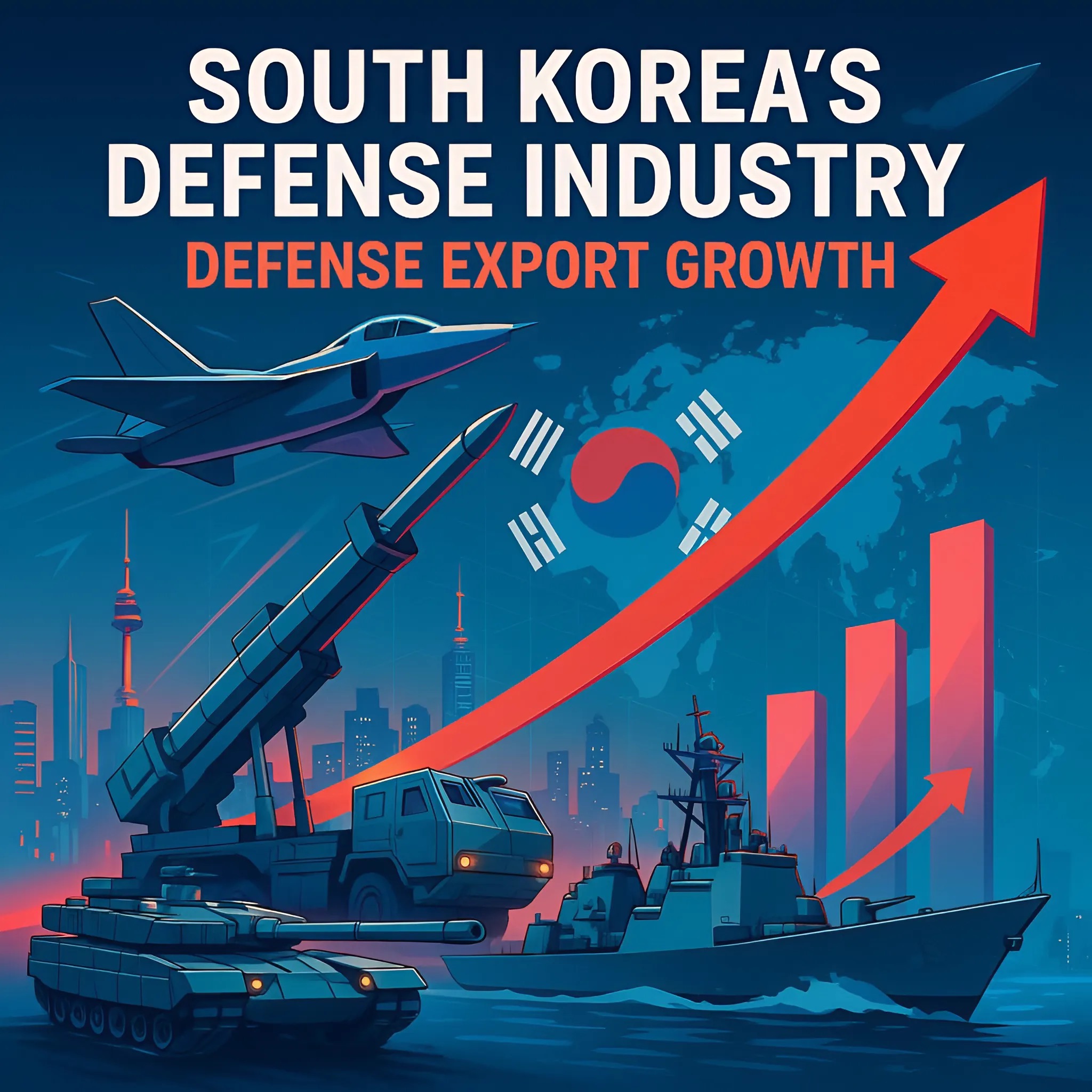
South Korea's defense strategy combines a high-tech military posture designed to deter North Korean aggression with a rapidly expanding global defense export industry. Built upon the U.S.–Republic of Korea (ROK) alliance and domestic innovation, South Korea maintains robust conventional deterrence, advanced missile defense networks, and cutting-edge land, air, and naval defense manufacturing.
Strategic Security Posture and Threat Landscape
South Korea’s defense architecture operates primarily to counter asymmetrical and conventional threats from North Korea while navigating broader Indo-Pacific regional dynamics. Situated in a complex geopolitical neighborhood, the Republic of Korea Armed Forces prioritize immediate readiness against ballistic missile launches, artillery saturation threats near the Demilitarized Zone (DMZ), and potential tactical nuclear capabilities developed by Pyongyang.
To address these security challenges, South Korea relies heavily on its tailored operational framework known as the Three-Axis System:
- Kill Chain: A preemptive strike framework engineered to detect and target North Korean missile launchers and command nodes before an imminent launch occurs.
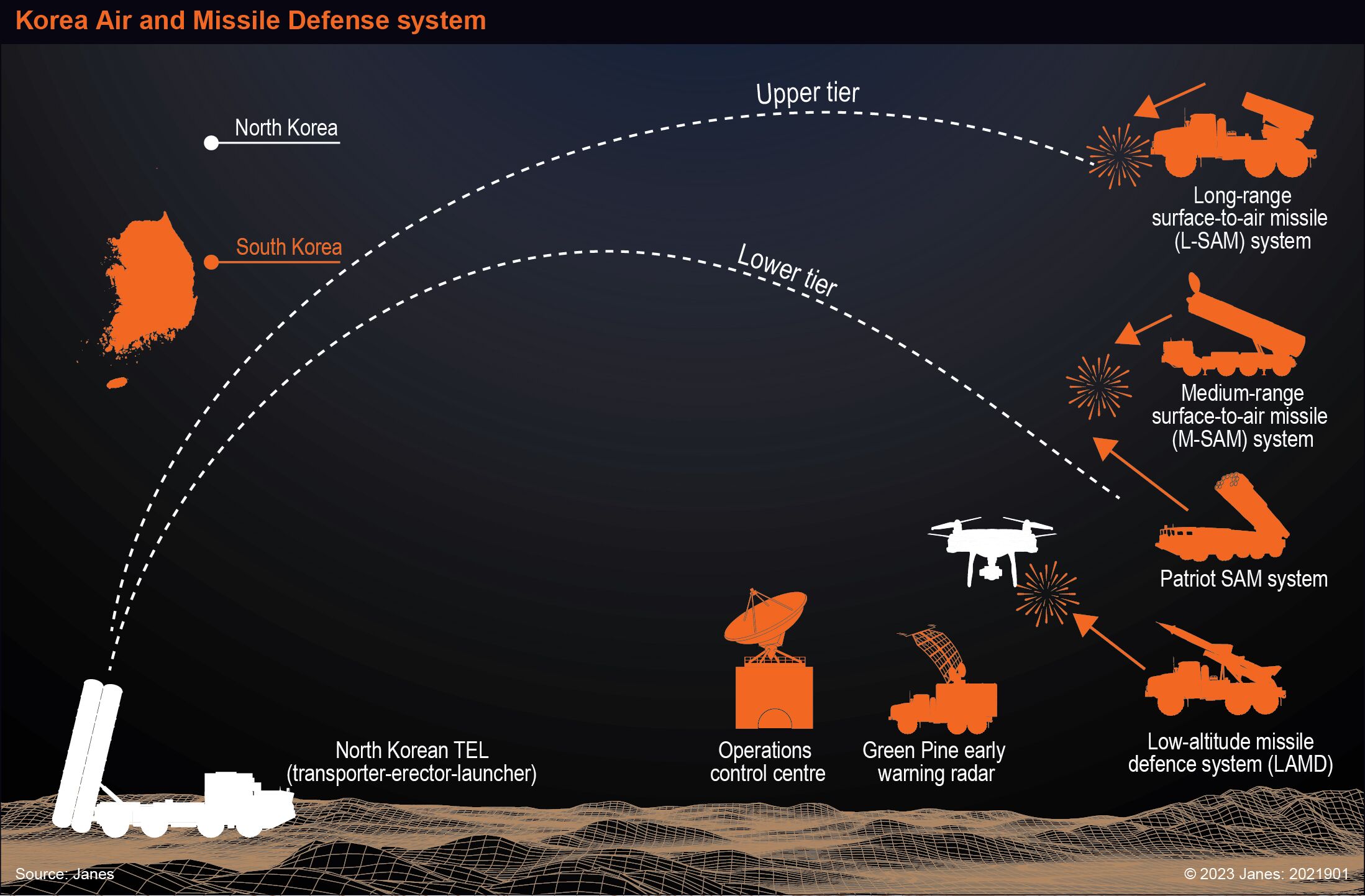
- Korea Air and Missile Defense (KAMD): A multi-layered missile defense architecture designed to intercept incoming ballistic, cruise, and artillery threats at various altitudes using systems like the PAC-3, L-SAM, and Cheongung-II (KM-SAM).
- Korea Massive Punishment and Retaliation (KMPR): A operational concept aimed at neutralizing enemy leadership and critical military facilities using high-precision weapons—such as the Hyunmoo series of ballistic missiles—if deterrence fails.
Beyond the Korean Peninsula, Seoul’s defense strategy increasingly accounts for regional maritime security, supply chain vulnerability, and grey-zone activities in the East and South China Seas. Balancing bilateral security commitments with complex regional economic ties requires South Korea to maintain flexible, multi-domain defense capabilities.
ROK Armed Forces Structure and Technological Modernization
The Republic of Korea Armed Forces consist of the Army, Navy, Air Force, and Marine Corps, totaling approximately 480,000 active-duty personnel. Faced with severe demographic headwinds caused by a historically low fertility rate, South Korea is undergoing a structural transformation from a mass conscript force into an agile, tech-centric military.
- ROK DEFENSE & SECURITY ARCHITECTURE
- U.S.-ROK Alliance & Extended Deterrence (Nuclear Consultative Group / CFC)
- THREE-AXIS SYSTEM
- Kill Chain (Preemptive Strike)
- KAMD (Layered Interception)
- KMPR (Mass Retaliation)
- DEFENSE INDUSTRIAL BASE ("K-DEFENSE")
- Land: K2, K9, Redback
- Air: KF-21, FA-50
- Naval: KDDX, KSS-III Submarines
Land Forces Integration
The ROK Army remains the largest service branch. Modernization efforts center on Project Army TIGER (Transformative Innovation for Ground forces with Energy and Robotics), which integrates automated command-and-control networks, armored personnel carriers, and uncrewed ground vehicles (UGVs) down to the squad level. Heavy armor upgrades focus on deploying advanced variants of the K2 Black Panther main battle tank and K9 Thunder self-propelled howitzer.
Naval and Maritime Superiority
The ROK Navy is transitioning toward a blue-water naval force to safeguard maritime lines of communication. Key programs include the Dosan Ahn Changho-class (KSS-III) diesel-electric attack submarines equipped with Submarine-Launched Ballistic Missiles (SLBMs), the KDDX next-generation destroyer project, and expanded amphibious capabilities supported by the ROK Marine Corps.
Air and Space Operations
The ROK Air Force prioritizes multi-role air superiority and space domain awareness. The fleet relies on modern multi-role aircraft including F-35A Lightning II stealth fighters and F-15K Slam Eagles, alongside indigenous platforms. Defense initiatives also focus heavily on military communications satellites (such as the Anasis-II) and dedicated electro-optical reconnaissance satellites to eliminate blind spots in regional surveillance.
The Rise of "K-Defense": Global Export Success
Over the past decade, South Korea has emerged as one of the world's leading arms exporters—a sector commonly referred to as K-Defense. South Korean defense contractors have successfully captured market share in Europe, the Middle East, Asia-Pacific, and Latin America by offering high-performance weapons platforms with rapid delivery schedules and localized production terms.
Key Export Platforms
- K9 Thunder Self-Propelled Howitzer (Hanwha Aerospace): Accounts for over half of the global market share for track-mounted 155mm artillery. Adopted by nations including Poland, Finland, Norway, Estonia, Australia, India, and Egypt due to its high fire rate, mobility, and reliability in extreme climates.
- K2 Black Panther Main Battle Tank (Hyundai Rotem): Features an advanced hydro-pneumatic suspension, auto-loader, and digital battlefield management. Poland signed landmark contracts to acquire and co-produce localized K2PL variants to overhaul its armored units.
- FA-50 Fighting Eagle & KF-21 Boramae (Korea Aerospace Industries): The FA-50 is a light combat aircraft derived from the T-50 supersonic trainer, widely exported to the Philippines, Iraq, Poland, and Malaysia. Meanwhile, the multi-role KF-21 Boramae represents South Korea's entry into 4.5-generation fighter jet development.
- Cheongung-II (KM-SAM) Air Defense System (LIG Nex1 / Hanwha): A hit-to-kill surface-to-air missile system optimized for low-to-medium altitude interception. Significant procurement agreements have been secured with the United Arab Emirates and Saudi Arabia.
- Redback Infantry Fighting Vehicle (Hanwha Aerospace): Selected by Australia for its LAND 400 Phase 3 program, featuring advanced rubber tracks, active protection systems (APS), and modular armor.
Key Industrial Advantages
South Korea’s rapid industrial expansion rests on three core capabilities: maintainable manufacturing supply chains, strong interoperability with NATO standards, and a willing approach to technology transfer. While many Western defense industrial bases face production backlogs, South Korean shipyards and assembly lines retain high-volume output capacities honed through continuous domestic procurement.
Technical Comparison of Major South Korean Defense Platforms
The following table summarizes the operational roles, manufacturers, and key specifications of South Korea's flagship domestic defense platforms.
| System Name | Category | Primary Manufacturer | Key Performance Metrics / Features | Export & Operational Status |
|---|---|---|---|---|
| K2 Black Panther | Main Battle Tank | Hyundai Rotem | 120mm/L55 smoothbore gun, auto-loader, active protection system, 1,500 hp engine | Active in ROK Army; exported to Poland (K2/K2PL variants). |
| K9A1 / K9A2 Thunder | 155mm Self-Propelled Howitzer | Hanwha Aerospace | 3-round burst in 15 seconds, 40+ km range, fully automated turret (A2 variant) | In operational use globally (Poland, Finland, Norway, Australia, Egypt). |
| KF-21 Boramae | Multi-Role Fighter Aircraft | Korea Aerospace Industries (KAI) | Twin-engine, AESA radar, stealth-contoured airframe, payload capacity up to 7.7 tons | Serial production underway; joint development program with Indonesia. |
| Cheongung-II (KM-SAM) | Surface-to-Air Missile System | LIG Nex1 / Hanwha Systems | Hit-to-kill interception, multi-function X-band radar, cold-launch mechanism | Deployed by ROK Armed Forces; exported to UAE and Saudi Arabia. |
| Dosan Ahn Changho (KSS-III) | Diesel-Electric Attack Submarine | Hanwha Ocean / HD Hyundai | 3,000+ ton displacement, AIP technology, 6-cell VLS for tactical SLBMs | Active service in ROK Navy; offered for international naval tenders. |
| K239 Chunmoo | Multiple Launch Rocket System (MLRS) | Hanwha Aerospace | Multi-calibre pod system (130mm, 239mm, 600mm ballistic missiles) | Deployed domestically; exported to Poland (Homar-K variant) and UAE. |
The U.S.–ROK Alliance and Integrated Deterrence
The security architecture of South Korea is rooted in the 1953 U.S.–ROK Mutual Defense Treaty. The alliance maintains roughly 28,500 U.S. troops stationed in South Korea under United States Forces Korea (USFK) and operates a unique operational command setup through the U.S.–ROK Combined Forces Command (CFC).
Extended Deterrence and Nuclear Planning
While South Korea does not possess domestic nuclear weapons, extended deterrence guarantees provided by the United States serve as the primary strategic umbrella against nuclear coercion. The establishment of the Nuclear Consultative Group (NCG)—following the landmark 2023 Washington Declaration—formalized deeper bilateral integration regarding joint planning, intelligence sharing, and execution of strategic operations involving U.S. nuclear assets.
Wartime Operational Control (OPCON) Transfer
A central long-term policy goal for South Korea is the transfer of Wartime Operational Control (OPCON) from a U.S. commander to an ROK general within the CFC framework. Transition conditions depend on three major criteria:
- ROK acquisition of key critical capabilities to lead combined military operations.
- ROK development of essential strike and defense capabilities against North Korean nuclear and missile threats.
- A regional security environment conducive to an OPCON transition.
South Korea continues to invest heavily in C4ISR (Command, Control, Communications, Computers, Intelligence, Surveillance, and Reconnaissance) assets to fulfill these prerequisites.
Challenges Facing South Korea's Defense Sector
Despite industrial success and technological growth, South Korea’s defense strategy must navigate critical structural headwinds over the next decade:
- Demographic Cliff: Rapid population decline limits the pool of eligible male conscripts. The ROK military must maintain operational readiness with fewer personnel by expanding automated systems, artificial intelligence, and uncrewed combat assets.
- Geopolitical Balancing: Expanding defense exports into non-aligned markets and deepening ties with NATO member states creates diplomatic friction with regional powers. Managing supply chain dependencies for raw materials remains a vital priority.
- Defense Technology Security: As arms exports increase, protecting sensitive military intellectual property against cyber espionage and unauthorized reverse-engineering requires constant security enforcement across complex defense supply chains.
Frequently Asked Questions
What is the length of mandatory military service in South Korea?
Mandatory military service (conscription) for South Korean males ranges between 18 and 21 months, depending on the branch of service. The Army and Marine Corps require 18 months, the Navy requires 20 months, and the Air Force requires 21 months.
Why is South Korea referred to as a global "defense hub"?
South Korea earned this reputation by offering advanced, NATO-interoperable weapon platforms at competitive pricing with remarkably fast delivery timelines. Unlike traditional defense suppliers facing manufacturing capacity limits, South Korean shipyards and production lines can fulfill large-scale orders quickly.
What is South Korea's "Three-Axis System"?
The Three-Axis System is South Korea's defense strategy designed to counter North Korean nuclear and missile capabilities. It comprises Kill Chain (preemptive strikes), KAMD (layered missile interception), and KMPR (massive retaliation strikes against command infrastructure).
Does South Korea produce its own fighter jets?
Yes. South Korea developed the FA-50 light combat aircraft and developed the KF-21 Boramae, an advanced 4.5-generation multi-role fighter. Serial production of the KF-21 is active, with integration of advanced avionics, AESA radar, and indigenous weapons systems.
What role does the U.S. military play in South Korea's defense?
The United States maintains around 28,500 service members in South Korea under United States Forces Korea (USFK). The U.S. provides extended deterrence—including nuclear, conventional, and missile defense capabilities—under the U.S.–ROK Mutual Defense Treaty.
Strategic Guidance for Assessing South Korea's Defense Trajectory
For defense analysts, procurement officers, and policy researchers monitoring South Korea's evolving security posture, focus on these evaluation metrics:
- Monitor Defense Budget Allocations: Analyze the Ministry of National Defense (MND) annual budgets, specifically focusing on allocations for R&D in AI, autonomous platforms, and space-based reconnaissance under the Defense Innovation 4.0 blueprint.
- Track Export Technology Transfers: Observe how South Korea structures industrial offset programs, local assembly agreements, and tech-sharing arrangements with client nations in Europe and the Indo-Pacific.
- Evaluate OPCON Transition Milestones: Follow joint U.S.–ROK military exercises to assess progress on the full operational capability (FOC) certification required for the transition of wartime operational control to South Korean military leadership.