Sheryl Crow is an American musical icon, multi-instrumentalist, and nine-time Grammy Award winner who defined the sound of 1990s roots-rock and remains a pivotal influence in 2026. Her career spans over three decades, moving from background vocals for legends to a 2023 Rock & Roll Hall of Fame induction and continued relevance as a songwriter and producer.
From Missouri Roots to the Global Stage
Sheryl Suzanne Crow was born in Kennett, Missouri, in 1962, into a musically inclined family. Her early environment provided a fertile ground for the classical and jazz influences that would later inform her pop-rock sensibilities. After graduating from the University of Missouri with a degree in music composition and performance, Crow initially worked as a music teacher for elementary students. This foundational period in pedagogy likely contributed to the structural clarity found in her later songwriting.
Her shift toward a professional performance career began in the mid-1980s when she moved to Los Angeles. Before achieving solo stardom, Crow earned her reputation as a top-tier session and touring musician. Her most notable early break was securing a spot as a backup singer on Michael Jackson’s "Bad" World Tour (1987–1989). Performing alongside Jackson provided her with an unparalleled education in stadium-level production and professional endurance. Following this, she provided vocals for artists such as Don Henley, Stevie Nicks, and Rod Stewart, establishing herself as a versatile vocalist capable of adapting to various rock and pop textures.
The "Tuesday Night Music Club" and the Rise to Superstardom
Crow’s solo career did not start without obstacles. An initial attempt at a debut album in 1992 was scrapped because she felt the polished pop production did not reflect her authentic voice. This decision to prioritize artistic integrity over a quick release proved prophetic. She pivoted to a more collaborative, organic approach with a group of Los Angeles musicians who met on Tuesdays to jam and write. This collective became the foundation for her 1993 debut, Tuesday Night Music Club.
While the album started slowly, the third single, "All I Wanna Do," became a cultural phenomenon in 1994. The song’s laid-back, conversational delivery and its depiction of the L.A. lifestyle resonated globally, earning Crow three Grammy Awards, including Record of the Year and Best New Artist. However, the success was marred by internal friction within the collective, as members disputed the distribution of songwriting credit. This period was a crucible for Crow, forcing her to assert her role as a primary creative force rather than just a frontwoman for a session band.
Establishing Artistic Autonomy: The Self-Titled Era
If her debut was a collaborative effort, her 1996 follow-up, Sheryl Crow, was a declaration of independence. Taking the producer’s chair herself—a move still relatively uncommon for female artists in the mid-90s—Crow crafted a grittier, more politically and socially conscious record. Hits like "If It Makes You Happy" and "Everyday Is a Winding Road" showcased her ability to blend catchy hooks with distorted guitars and introspective lyrics.
The technical production of this album moved away from the "polished" sound of the era, opting for a dry, "roomy" drum sound and layers of analog keyboards. This aesthetic became a hallmark of her mid-career work. The album won Grammys for Best Rock Album and Best Female Rock Vocal Performance, solidifying her status as a serious rocker rather than a one-hit pop star. This era also marked her transition into a more vocal role as a social commentator, with songs like "Redemption Day" (later covered by Johnny Cash) reflecting her interest in global politics and human rights.
Technical Artistry: Gear and Musicality
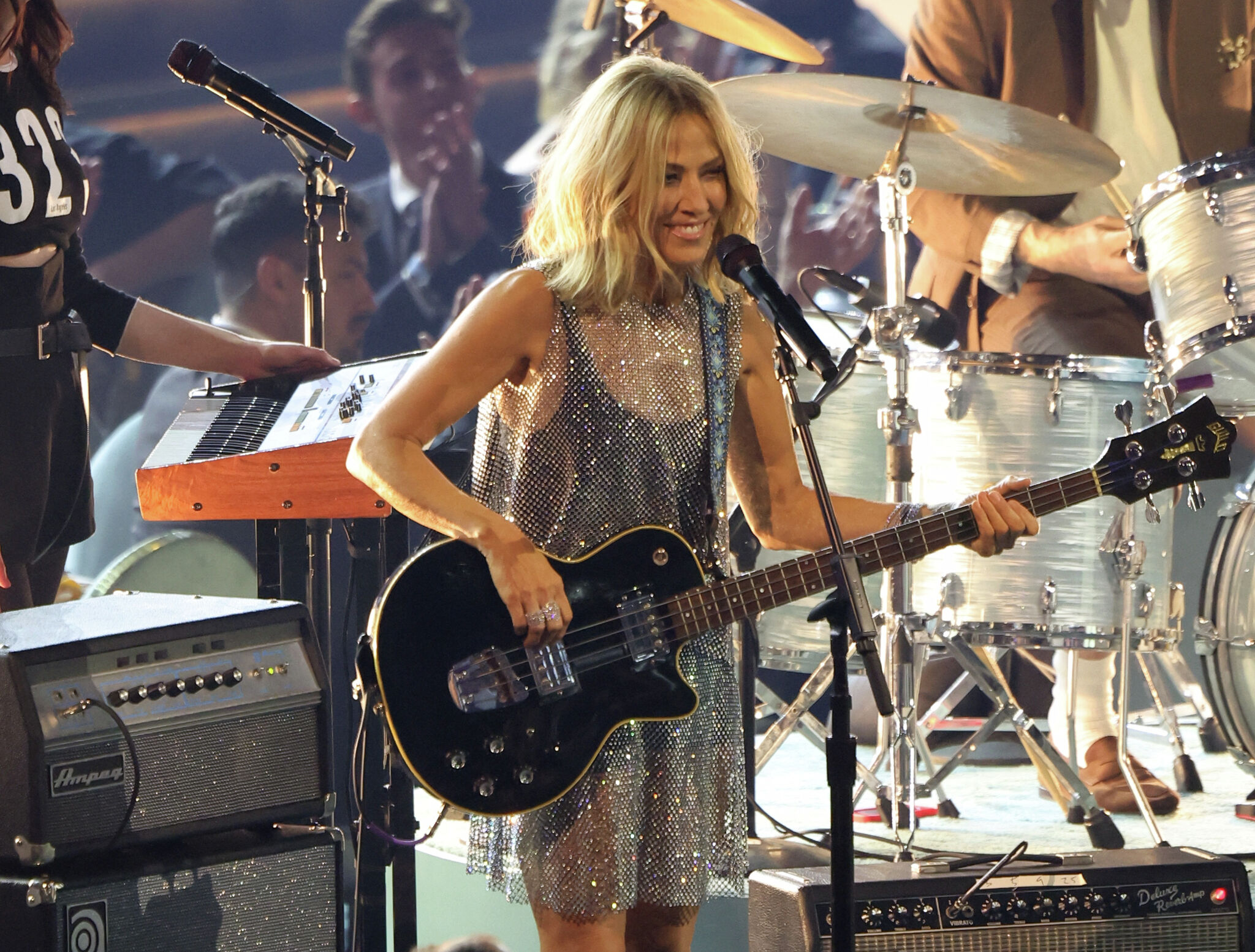
One of the most overlooked aspects of Sheryl Crow’s career is her proficiency as a multi-instrumentalist. While most often seen with a guitar, she is a classically trained pianist and an accomplished bassist. Her bass playing, in particular, often features a melodic, McCartney-esque quality that anchors her more folk-leaning tracks.
In terms of equipment, Crow has a long-standing association with Gibson. Her signature model, the Gibson Sheryl Crow Country Western, is a staple for acoustic performers who require a guitar that can cut through a full band mix without losing its low-end warmth.
| Category | Key Instrument/Gear | Purpose/Usage |
|---|---|---|
| Acoustic Guitar | Gibson Sheryl Crow Country Western | Her primary instrument for live rhythm and songwriting. |
| Electric Guitar | 1959 Fender Telecaster | Used for the "twang" and bite found in her blues-rock tracks. |
| Bass Guitar | 1962 Fender Precision Bass | Often used in the studio to provide a vintage, "thumpy" foundation. |
| Keyboards | Hammond B3 Organ / Wurlitzer | Foundational to the soul-rock sound of The Globe Sessions. |
| Microphone | Shure SM7B / Neumann U67 | Favored for her husky, mid-range vocal captures in the studio. |
Her production style often leans on "real" sounds—live drums, tube amplification, and minimal digital correction. In an era of increasing automation, her commitment to the "organic" sound of the 70s rock greats (like The Rolling Stones and Fleetwood Mac) has made her catalog age remarkably well.
Resilience, Health, and Activism
Sheryl Crow’s narrative is also one of personal resilience. In 2006, she was diagnosed with ductal carcinoma in situ (DCIS), a form of breast cancer. Her public journey through treatment and recovery turned her into a powerful advocate for early detection and women’s health. Following her recovery, she adopted two sons, Wyatt and Levi, and shifted her lifestyle toward a more rural, family-oriented pace in Nashville, Tennessee.
This shift influenced her later musical output, which saw her leaning more heavily into country and Americana. Albums like Detours (2008) addressed both her personal health battles and her concerns for the environment. Crow has been a vocal supporter of environmental causes, notably campaigning to reduce single-use plastics and participating in the "Stop Global Warming College Tour." This blend of personal vulnerability and public advocacy has maintained her deep connection with a loyal fan base that has grown older alongside her.
The Rock & Roll Hall of Fame and Later Career
In 2023, Sheryl Crow was inducted into the Rock & Roll Hall of Fame, a recognition of her influence on a generation of singer-songwriters. Artists like Olivia Rodrigo and Brandi Carlile have frequently cited Crow as a blueprint for how to navigate the music industry with both commercial success and creative control.
Although she famously announced that her 2019 album Threads—which featured collaborations with icons like Keith Richards, Stevie Nicks, and Mavis Staples—would be her final full-length studio album, Crow did not stop creating. In 2024, she released Evolution, an album that explored the impact of artificial intelligence and the changing nature of human connection. As of 2026, she continues to release singles and perform at major festivals, demonstrating that her "retirement" from the album format was merely a transition into a more flexible way of releasing music.
Frequently Asked Questions
How many Grammys does Sheryl Crow have?
Sheryl Crow has won 9 Grammy Awards out of 32 nominations. Her wins span multiple categories, including Record of the Year, Best New Artist, Best Rock Album, and Best Female Rock Vocal Performance. This diversity in awards highlights her ability to cross genre lines between pop, rock, and country.
What is Sheryl Crow’s most famous song?
"All I Wanna Do" (1994) remains her most commercially successful and widely recognized song. However, "If It Makes You Happy," "Everyday Is a Winding Road," and "Soak Up the Sun" are also considered staples of the American pop-rock canon and receive significant radio airplay decades after their release.
Does Sheryl Crow write her own music?
Yes, Crow is the primary songwriter or co-writer on nearly all of her material. She is also a prolific producer, having produced her own multi-platinum self-titled album and several subsequent projects. Her ability to write, perform, and produce her own work was a key factor in her Rock & Roll Hall of Fame induction.
Is Sheryl Crow still touring in 2026?
Yes, Sheryl Crow remains active on the touring circuit. While she has moved away from grueling year-long world tours, she frequently headlines major music festivals (such as Bonnaroo or Glastonbury) and performs special "residency" style dates or co-headlining tours with other legacy artists.
What instruments does Sheryl Crow play?
Sheryl Crow is a multi-instrumentalist. On her studio recordings, she is often credited with playing acoustic and electric guitar, bass, piano, organ, and accordion. Her versatility allows her to build the "bones" of her songs in the studio before bringing in session musicians.
Essential Listening for New Listeners
For those looking to explore Sheryl Crow's extensive discography in 2026, a chronological approach provides the best insight into her evolution. Start with Tuesday Night Music Club to understand her pop-rock origins, then move to her self-titled 1996 album for her grittier, more autonomous sound. The Globe Sessions (1998) is essential for those who appreciate soulful, introspective songwriting, while Evolution (2024) offers a modern perspective on her enduring relevance in the digital age. Collectively, these works represent a masterclass in American songwriting that balances commercial appeal with technical sophistication and emotional depth.