As of 2026, Sweep Easy’s net worth is estimated to be negligible, as the company has largely ceased active operations and product manufacturing. Although the brand secured a rare "double offer" of $80,000 for 25% equity on Shark Tank Season 2, the deal never finalized during the due diligence phase, and the company struggled to maintain retail presence against dominant household cleaning conglomerates.
The Sweep Easy Pitch: A Recap of the Shark Tank Appearance
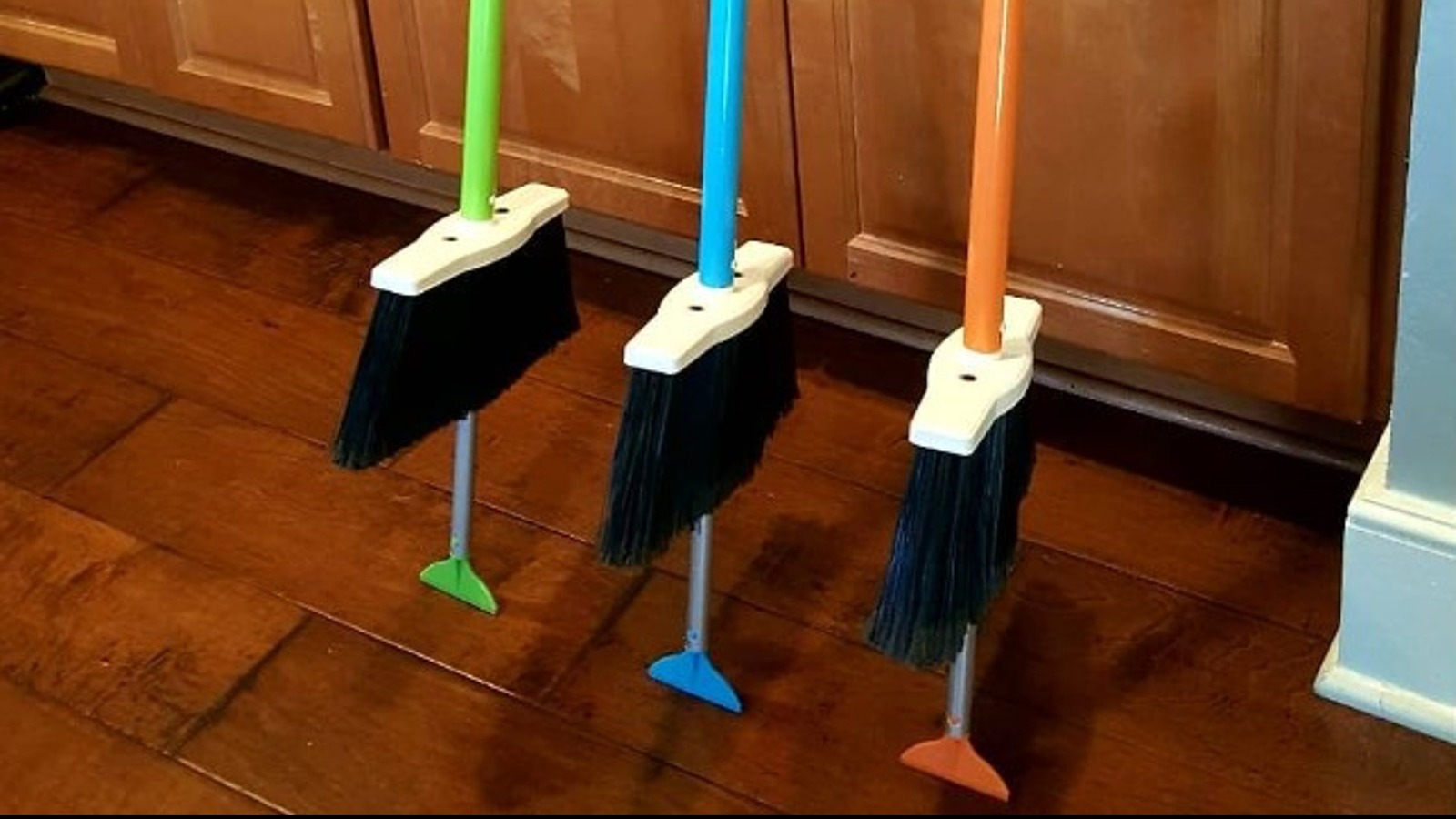
In 2011, entrepreneur Shane Pannell appeared on the second season of Shark Tank to present his invention: the Sweep Easy broom. The product was a seemingly simple yet effective modification of a standard kitchen broom, featuring a built-in, retractable scraper. The user could engage a thumb-trigger to extend a plastic or metal blade from the head of the broom to scrape away stuck-on debris, such as dried food or tape, without having to bend over or use a separate tool.
Pannell entered the tank seeking $40,000 for a 25% stake in his company. His pitch focused on the "problem-solution" dynamic common in the cleaning industry. He demonstrated how traditional sweeping often leaves behind residue that requires manual scraping, a physical burden for many users. The Sharks were immediately impressed by the product’s utility and its potential for mass-market appeal.
The response from the panel was uniquely positive. Typically, Sharks negotiate downward on valuation. However, Daymond John and Kevin Harrington were so convinced of the product's viability in the "As Seen on TV" and licensing markets that they joined forces. They offered Pannell $80,000—double his original ask—for the same 25% equity. The caveat was that the Sharks intended to license the design to a major manufacturer rather than building an independent manufacturing empire. Pannell accepted the deal on air, creating one of the show’s most memorable early-season moments.
The Deal That Didn't Close: Post-Tank Reality and Due Diligence
Despite the excitement of the on-air handshake, the deal between Shane Pannell, Daymond John, and Kevin Harrington did not close after the cameras stopped rolling. This is a common occurrence in the Shark Tank ecosystem, where "due diligence" often reveals hurdles that make a venture-scale investment difficult.
For Sweep Easy, the primary obstacle was likely the difficulty of the licensing model in the cleaning tool industry. Giants like O-Cedar, Libman, and Rubbermaid dominate the shelf space in big-box retailers. For a licensing deal to work, one of these incumbents must be willing to pay a royalty for a specific patent. If the patent is not ironclad, or if the manufacturing cost of the integrated scraper significantly reduces the profit margin per unit, these large corporations often decline the partnership.
Without the backing of John and Harrington, Pannell was forced to navigate the treacherous waters of the consumer goods market independently. While he did manage to bring the product to market and sell it via the Sweep Easy website and select regional retailers, the lack of a massive marketing budget and the "As Seen on TV" distribution engine made it difficult to sustain growth. By 2026, the company serves more as a cautionary tale regarding the complexities of the hardware and cleaning industries.
Sweep Easy Net Worth and Financial Performance (2011–2026)
Determining the net worth of a private, small-scale entity like Sweep Easy in 2026 requires looking at its historical valuation and current assets. At the time of the Shark Tank pitch, the $80,000 offer for 25% implied a post-money valuation of $320,000.
In the years following the episode, the company experienced a temporary "Shark Tank effect" bump. Revenue was generated through direct-to-consumer sales, with the broom retailing for approximately $19.99 to $24.99. However, the costs associated with injection molding, inventory storage, and shipping for a bulky item like a broom are high.
Estimated Financial Breakdown
| Metric | Shark Tank Pitch (2011) | Growth Phase (2012-2015) | Current Status (2026) |
|---|---|---|---|
| Valuation | $320,000 (Implied) | ~$500,000 (Estimated) | Negligible / Defunct |
| Investment | $80,000 (Never Closed) | Self-Funded / Small Loans | $0 |
| Retail Price | $19.99 | $24.95 | N/A (Out of Stock) |
| Primary Channel | Concept / Prototypes | E-commerce / Local Retail | Inactive |
| Net Worth | Asset-based (Patent) | Revenue-based | Intellectual Property only |
By 2026, Sweep Easy does not hold a significant market share. The net worth of the company is essentially tied to its remaining intellectual property (IP). If the patents have expired or have been circumvented by competitors with similar "built-in scraper" designs, the company’s book value is near zero. For many small Shark Tank businesses that fail to reach a national scale, the "net worth" often dissipates into the founder’s personal career shift.
Technical Specifications and Product Design Evolution
The Sweep Easy broom was lauded for its mechanical simplicity. In the world of industrial design, adding moving parts to a static tool like a broom often introduces points of failure. Pannell’s design attempted to mitigate this through a streamlined trigger mechanism.
- The Scraper Blade: The original design featured a heavy-duty plastic scraper, though later iterations explored stainless steel for industrial use. The blade was angled to provide maximum leverage when the broom head was tilted.
- Retraction Mechanism: A spring-loaded sleeve allowed the scraper to stay hidden during normal sweeping. This was crucial because an exposed blade would snag on carpets or uneven flooring.
- Broom Bristles: The bristles were typically made of flagged-tip polypropylene, designed to pick up fine dust. The challenge was ensuring the scraper didn't interfere with the bristle "fanning" during use.
- Handle Durability: Since the scraper required the user to apply downward pressure, the handle had to be reinforced compared to a standard $5 grocery store broom. This increased the bill of materials (BOM), which ultimately affected the retail price point.
In the cleaning tool market of 2026, we see many of these features integrated into "all-in-one" cleaning systems. However, Sweep Easy was one of the first to attempt to modernize the humble broom through a mechanical add-on rather than a chemical or electronic one.
Why Sweep Easy Failed to Scale: A Business Analysis
The failure of Sweep Easy to become a household name, despite a successful television appearance, can be attributed to several structural factors in the consumer packaged goods (CPG) sector.
1. High Shipping-to-Value Ratio
A broom is a "low-value, high-volume" item. It is long, awkward to box, and relatively inexpensive. For an e-commerce business, the cost of shipping a $20 broom can often consume 30% to 50% of the gross margin. Without the ability to ship in bulk to thousands of retail locations (like Walmart or Target), the unit economics for a small business are often unsustainable.
2. Competition from House Brands
Retailers like Home Depot or Lowe's often have their own "store brands" (e.g., HDX or Kobalt). These brands can manufacture a similar product at a fraction of the cost. Unless the Sweep Easy patent was broad enough to prevent any scraper-broom combination, competitors could easily iterate on the idea.
3. The "One-and-Done" Purchase
A broom is a durable good. Unlike soap or paper towels, a customer only needs to buy one every few years. Without a "razor-and-blade" model (where the customer must buy recurring refills or replacement parts), the customer acquisition cost (CAC) must be extremely low to remain profitable. Sweep Easy lacked a recurring revenue component.
Where is Shane Pannell Now?
Shane Pannell remains a respected figure in the Shark Tank community as an example of an inventor who successfully identified a genuine "pain point." While Sweep Easy did not become a billion-dollar exit, Pannell’s journey highlighted the realities of the American inventor’s experience.
Post-Sweep Easy, Pannell has focused on other entrepreneurial ventures and professional endeavors. Like many inventors who appear on the show, the experience served as a masterclass in business, even if the specific product didn't achieve long-term commercial dominance. His ability to stand his ground in the Tank and secure a deal better than what he asked for remains a case study for future contestants on the show.
Frequently Asked Questions
Is Sweep Easy still in business in 2026?
No, Sweep Easy is no longer actively manufacturing or selling brooms. The company’s official website and social media channels have been largely inactive for several years, and the product is generally unavailable through major retailers.
Where can I buy the Sweep Easy broom today?
As of 2026, the Sweep Easy broom is difficult to find. Your best chance of acquiring one is through secondary markets like eBay or specialized liquidators. Some "knock-off" versions or similar integrated-scraper brooms are available from large cleaning brands, but the original Sweep Easy brand is not in active distribution.
Why did the deal with Daymond John and Kevin Harrington fall through?
While the exact details of the failed due diligence were not made public, it is widely understood that the licensing terms could not be reached with major manufacturers. Without a licensing partner, the Sharks' strategy for the company became unviable, leading them to withdraw from the investment.
What was the original price of the Sweep Easy broom?
During its primary production run, the Sweep Easy broom typically retailed for between $19.99 and $24.99, depending on the retailer and whether it was the "Pro" or "Home" version.
Are there alternatives to the Sweep Easy broom?
Yes, many modern brooms now include built-in scrapers or comb-style dustpans to solve similar problems. Brands like O-Cedar and various "As Seen on TV" successors have introduced products with similar functionality, often at a lower price point due to superior economies of scale.
Lessons for Hardware Entrepreneurs in 2026
The story of Sweep Easy offers several critical takeaways for inventors in the hardware space. First, the importance of a "licensable" design cannot be overstated if you do not have the capital to build a global supply chain. Second, the "Shark Tank Effect" is a powerful marketing tool, but it is not a substitute for a long-term retail strategy.
For those looking to launch a product in the 2026 market, focusing on "sustainability" and "smart integration" is often more effective than simple mechanical additions. However, Shane Pannell’s Sweep Easy will always be remembered as a clever solution to a universal problem, proving that even the most basic tools in our homes can be reimagined with a bit of ingenuity.