For small business owners and self-employed professionals, the SEP IRA (Simplified Employee Pension) for the 2025 tax year represents one of the most flexible and high-limit retirement savings vehicles available. As we move through 2026, understanding the specific contribution limits, eligibility requirements, and filing deadlines is essential for maximizing tax deductions and securing long-term financial stability.
The SEP IRA for the 2025 tax year allows employers to contribute up to $69,000 or 25% of an employee’s compensation, whichever is less. Because the current year is 2026, business owners have until their tax filing deadline—typically April 15, 2026, or October 15, 2026, with an extension—to establish the plan and make contributions that count against their 2025 tax liability.
Understanding the Scope of SEP IRA for the 2025 Tax Year
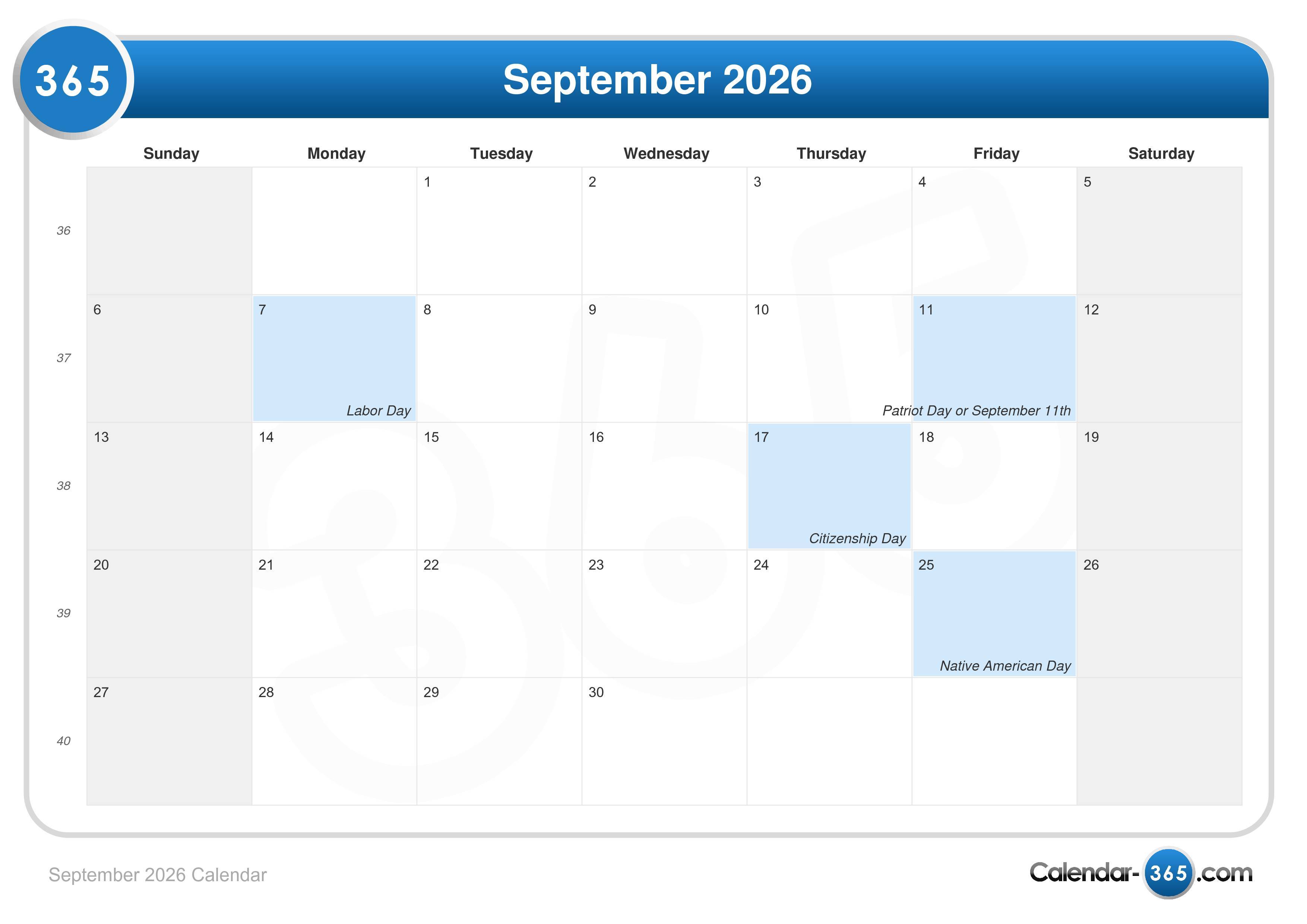
While "SEP 25" may occasionally refer to the calendar date of September 25—notably World Pharmacists Day and the anniversary of the Bill of Rights’ proposal—in the context of financial planning and tax compliance, it almost exclusively refers to the 2025 Simplified Employee Pension (SEP) plan cycle. This retirement arrangement is governed by Internal Revenue Code Section 408(k) and is designed to provide a simplified method for employers to contribute to their employees' retirement, as well as for self-employed individuals to contribute to their own.
The 2025 cycle is particularly significant due to the continued rollout of provisions from the SECURE Act 2.0. This legislation introduced the ability for SEP IRA contributions to be designated as Roth contributions, a shift that has gained significant traction among custodians and plan providers as we enter 2026. This allows for post-tax contributions that grow tax-free, offering a strategic alternative to the traditional pre-tax SEP IRA model.
Primary Benefits of the SEP IRA
- High Contribution Ceilings: The limits far exceed those of traditional or Roth IRAs.
- Administrative Simplicity: Unlike a 401(k), there are no annual Form 5500 filings required for most SEP plans.
- Discretionary Funding: Employers are not required to contribute every year, providing flexibility during lean business cycles.
- Immediate Tax Deductions: Contributions are generally 100% tax-deductible for the business.
2025 SEP IRA Contribution Limits and Calculations
The Internal Revenue Service (IRS) adjusts retirement plan limits annually based on inflation. For the 2025 tax year, the limits saw a notable increase, which remains the benchmark for those finalizing their 2025 filings in 2026.
The $69,000 Ceiling
For 2025, the maximum contribution limit is $69,000, an increase from the $66,000 limit in 2023 and the $69,000 limit established for 2024. This cap applies to the total employer contribution made to an individual’s account. It is important to note that catch-up contributions (available to those aged 50 and older in 401(k) plans) do not apply to SEP IRAs.
The 25% Compensation Rule
The amount an employer can contribute is capped at 25% of the employee’s total compensation. For the 2025 tax year, the maximum amount of compensation that can be considered for this calculation is $350,000.
Calculating Contributions for the Self-Employed: If you are a sole proprietor or a partner in a partnership, the calculation is slightly more complex. You must calculate your "net earnings" by subtracting the deductible portion of your self-employment tax and your SEP contribution itself from your gross income. Effectively, this results in a maximum contribution of 20% of your net adjusted self-employment income.
| Feature | 2025 Tax Year Specification | 2026 Context/Deadline |
|---|---|---|
| Maximum Contribution | $69,000 | Due by tax filing date in 2026 |
| Compensation Cap | $350,000 | Used for 2025 income reporting |
| Minimum Participation Wage | $750 | Earned during 2025 |
| Roth Option | Available (SECURE 2.0) | Implementation varies by custodian |
| Catch-up Contributions | N/A | Not applicable to SEPs |
Eligibility Requirements for Employees
To maintain the tax-advantaged status of a SEP IRA, the IRS requires that the plan be "nondiscriminatory." This means that if an employer contributes to their own account, they must also contribute to the accounts of all "eligible employees" at the same percentage of salary.
The Three-of-Five Rule
An employee is generally considered eligible if they:
- Are at least 21 years of age.
- Have worked for the business in at least three of the last five years.
- Have received at least $750 in compensation from the business during the 2025 tax year.
Employers can choose to be less restrictive (e.g., allowing employees to participate after only one year of service) but cannot be more restrictive than these IRS guidelines. These rules also apply to the business owner, who is treated as an employee of their own business for plan purposes.
Excludable Employees
Certain employees can be legally excluded from the SEP plan even if they meet the age and service requirements. These include employees covered by a collective bargaining agreement (union members) and non-resident alien employees who received no U.S. source income.
Implementation Deadlines in 2026
One of the unique advantages of the SEP IRA is the ability to set up the plan and fund it after the calendar year has ended. For the 2025 tax year, the window for action remains open well into 2026.
The Standard Filing Deadline
For most individuals and sole proprietors, the deadline to establish and fund a 2025 SEP IRA is April 15, 2026. This coincides with the individual income tax filing deadline. Contributions made by this date are deductible on the 2025 return.
The Extension Window
If the business owner files for an automatic six-month extension for their tax return, the deadline to fund the SEP IRA is moved to October 15, 2026. This is a critical strategy for businesses managing cash flow, as it provides an additional six months to generate the funds necessary for the contribution while still reaping the 2025 tax benefit.
Plan Establishment
Unlike a Solo 401(k), which typically must be established by December 31 of the tax year to allow for employee deferrals, a SEP IRA can be created as late as the tax filing deadline (including extensions). This makes it the "emergency" retirement plan of choice for business owners who realize late in the tax season that they need a significant deduction.
The Introduction of Roth SEP IRAs
As we operate in 2026, the Roth SEP IRA has become a primary point of discussion for tax professionals. Under the SECURE Act 2.0, employers can now allow employees (including themselves) to elect to treat SEP contributions as Roth contributions.
Tax Treatment
In a traditional SEP IRA, contributions are excluded from the employee’s gross income and are tax-deferred until withdrawal. In a Roth SEP IRA, the contribution is included in the employee’s gross income for the year it is made (2025), but all qualified future withdrawals are tax-free.
Employer Considerations
If an employer offers a Roth option, the contributions are still deductible for the business. However, the employee will see the contribution reported as wages on their W-2. By 2026, most major financial institutions (such as Fidelity, Schwab, and Vanguard) have updated their plan documents to support this feature, though business owners must explicitly amend their existing Form 5305-SEP or adoption agreement to enable it.
Setting Up a SEP IRA: A Step-by-Step Procedure
If you have not yet established a plan for your 2025 income, the following steps must be completed before your 2026 filing deadline:
- Execute a Formal Written Agreement: Most businesses use IRS Form 5305-SEP (Simplified Employee Pension—Individual Retirement Accounts Contribution Agreement). This document does not need to be filed with the IRS but must be kept in the business records.
- Provide Employee Disclosures: Each eligible employee must be given a copy of the Form 5305-SEP and a statement regarding the nature of the plan.
- Establish the Accounts: A separate SEP IRA account must be opened for each eligible employee at a qualified financial institution (bank, insurance company, or mutual fund provider).
- Calculate and Deposit Contributions: Determine the percentage of compensation (up to 25%) to be contributed. This percentage must be uniform for all eligible employees.
- Report to the IRS: The financial institution will report the contribution to the IRS on Form 5498. The business owner claims the deduction on their relevant tax form (Schedule C for sole proprietors, Form 1120 or 1120-S for corporations).
Common Pitfalls and Troubleshooting
Despite its name, the "Simplified" Employee Pension has complexities that can lead to IRS audits or penalties if mishandled.
The "All-or-Nothing" Contribution Rule
A common mistake is contributing a higher percentage of salary to the owner's account than to the employees' accounts. If you contribute 25% for yourself, you must contribute 25% for every eligible employee. Failure to do so can disqualify the plan, leading to the loss of tax deductions and potential penalties.
Counting "Earned Income" Incorrectly
For the self-employed, "compensation" is not your gross revenue. It is your net profit minus the deduction for one-half of your self-employment tax. Using the wrong base number for your 2025 calculations can lead to an "excess contribution" penalty of 6% per year on the overage.
Missing the Deadline
While the SEP has a generous deadline, there is no "grace period" beyond the extended tax filing date. If you miss the October 15, 2026, deadline (assuming an extension), you cannot characterize those funds as 2025 contributions. They will instead be applied to the 2026 tax year.
Frequently Asked Questions
Can I have both a SEP IRA and a Traditional IRA?
Yes. You can contribute to both a SEP IRA and a personal Traditional or Roth IRA in the same year. However, the high income often generated by business owners, combined with being "covered by a retirement plan at work" (the SEP), may limit your ability to deduct contributions to a personal Traditional IRA. For 2025/2026, check the specific IRS income phase-out ranges for IRA deductibility.
What happens if I make an excess contribution for 2025?
If you contribute more than the $69,000 limit or 25% of compensation, you should withdraw the excess amount plus any earnings on that excess before your tax filing deadline. If you fail to do so, you will be subject to a 6% excise tax on the excess amount for every year it remains in the account.
Do I have to contribute the same amount every year?
No. One of the primary advantages of the SEP IRA is that contributions are completely discretionary. You can contribute 25% in a high-profit year like 2025 and 0% in a more difficult year. You are not locked into a specific dollar amount or percentage long-term.
Can I use a SEP IRA if I am a one-person business?
Absolutely. The SEP IRA is highly popular for "solopreneurs" and freelancers. In a one-person business, you are both the employer and the employee, allowing you to maximize your retirement savings with minimal paperwork compared to a Solo 401(k).
Does the September 25 date affect my 2025 SEP IRA?
The date September 25 has no specific legal or tax significance for the SEP IRA, other than being a calendar day within the 2025 tax year. However, if you are an employer in the pharmaceutical industry, you might choose to announce your annual SEP contribution on September 25 to coincide with World Pharmacists Day as a benefit to your staff.
Next Actions for the 2026 Filing Season
As you finalize your financial records for the 2025 tax year, your first priority should be to consult with a tax professional to calculate your exact maximum contribution based on your final 2025 net income. If you have not yet established a plan, contact a brokerage immediately to open a SEP IRA account.
Ensure that your Form 5305-SEP is signed and dated. If you intend to utilize the new Roth provisions for your 2025 contributions, verify that your chosen custodian is equipped to handle Roth SEP designations and that you have accounted for the resulting tax liability on your 2025 return. Finally, if you require more time to fund the plan, ensure your 2025 tax extension is filed before April 15, 2026.