September 11 refers to the coordinated terrorist attacks executed by al-Qaeda against the United States on September 11, 2001. In 2026, this date marks a 25-year milestone of historical reflection, representing a quarter-century of transformed global security, domestic policy shifts, and the enduring legacy of those who perished or suffered long-term health consequences from the event.
The Events of September 11, 2001: A Chronology
The attacks of September 11, 2001, involved the hijacking of four commercial airplanes by 19 terrorists. This operation was meticulously planned to strike symbols of American economic, military, and political power. The timeline of that morning changed the trajectory of the 21st century in less than two hours.
At 8:46 a.m. EDT, American Airlines Flight 11 struck the North Tower (Tower 1) of the World Trade Center in New York City. Initially perceived by many as a tragic accident, the reality of a coordinated attack became undeniable at 9:03 a.m., when United Airlines Flight 175 struck the South Tower (Tower 2). The impact caused catastrophic structural damage to both skyscrapers, which were once the tallest buildings in the world.
The third aircraft, American Airlines Flight 77, was crashed into the western facade of the Pentagon in Arlington, Virginia, at 9:37 a.m. This strike targeted the heart of the U.S. Department of Defense. The final hijacked plane, United Airlines Flight 93, crashed in a field near Shanksville, Pennsylvania, at 10:03 a.m. Evidence later revealed that passengers and crew on Flight 93 fought back against the hijackers, likely preventing the aircraft from reaching its intended target in Washington, D.C., believed to be either the U.S. Capitol or the White House.
The collapse of the Twin Towers followed shortly after. The South Tower fell at 9:59 a.m., followed by the North Tower at 10:28 a.m. The destruction resulted in the deaths of 2,977 victims across all three sites. This total includes the 2,753 people killed in New York, 184 at the Pentagon, and 40 in Pennsylvania.
The Immediate and Long-Term Geopolitical Consequences
The geopolitical landscape of 2026 is still defined by the "War on Terror" initiated in the wake of the attacks. Following the events, the United States invoked Article 5 of the North Atlantic Treaty for the first and only time in NATO’s history, declaring that an attack on one member was an attack on all.
The subsequent invasion of Afghanistan in late 2001 was aimed at dismantling al-Qaeda and removing the Taliban regime that provided them sanctuary. This conflict became the longest war in American history, officially concluding with the withdrawal of U.S. forces in 2021. However, the regional instability and the evolution of extremist groups in the two decades since have continued to influence foreign policy decisions well into 2026.
Beyond Afghanistan, the 9/11 attacks served as a catalyst for the 2003 invasion of Iraq, under the doctrine of preemptive strikes against perceived threats of weapons of mass destruction. The ripple effects of these conflicts reorganized alliances in the Middle East and led to a permanent shift in how sovereign nations view border security and intelligence sharing. Today, international diplomacy remains heavily focused on counter-terrorism cooperation, a direct legacy of the 2001 attacks.
Domestic Policy and the Evolution of National Security
Domestically, the U.S. government underwent its most significant reorganization since World War II. The creation of the Department of Homeland Security (DHS) in 2002 consolidated 22 different federal agencies into a single cabinet-level department. This was designed to bridge the intelligence gaps that allowed the 9/11 hijackers to operate within the country undetected.
The Transportation Security Administration (TSA) was also established, fundamentally changing the experience of air travel. Prior to 9/11, airport security was often managed by private contractors with varying standards; today, federalized, high-tech screening is the global norm. Technologies such as biometric scanning, advanced imaging, and the REAL ID Act—which faces its final implementation milestones around the 2026 era—are all direct descendants of post-9/11 security mandates.
Furthermore, the passage of the USA PATRIOT Act in October 2001 expanded the government’s authority to monitor communications and financial transactions. While proponents argued these measures were essential for preventing future attacks, the act sparked a decades-long debate over the balance between national security and individual privacy. These legal frameworks have been amended and contested numerous times, but the core infrastructure of the "surveillance state" remains a central component of the American legal system in 2026.
Health Impacts and Sustained Support Systems
One of the most persistent issues regarding September 11 is the long-term health crisis facing first responders, survivors, and residents of Lower Manhattan. The collapse of the World Trade Center released a toxic cloud of dust containing asbestos, lead, mercury, and other hazardous materials.
In the years following the attacks, thousands of individuals were diagnosed with 9/11-related illnesses, including respiratory diseases, gastrointestinal disorders, and various forms of cancer. This led to the passage of the James Zadroga 9/11 Health and Compensation Act of 2010. The act established the World Trade Center Health Program (WTCHP), which provides medical monitoring and treatment for those affected.
The September 11th Victim Compensation Fund (VCF) was also created to provide financial assistance to individuals (or their beneficiaries) who suffered physical harm or died as a result of the attacks or the subsequent debris removal. In 2019, the VCF was permanently authorized and funded through 2092, ensuring that the younger generations of responders who are only now manifesting symptoms will have access to support. As of 2026, the number of deaths from 9/11-related illnesses has surpassed the number of people killed on the day of the attacks, highlighting the ongoing nature of this tragedy.
Memorialization and the 25th Anniversary in 2026
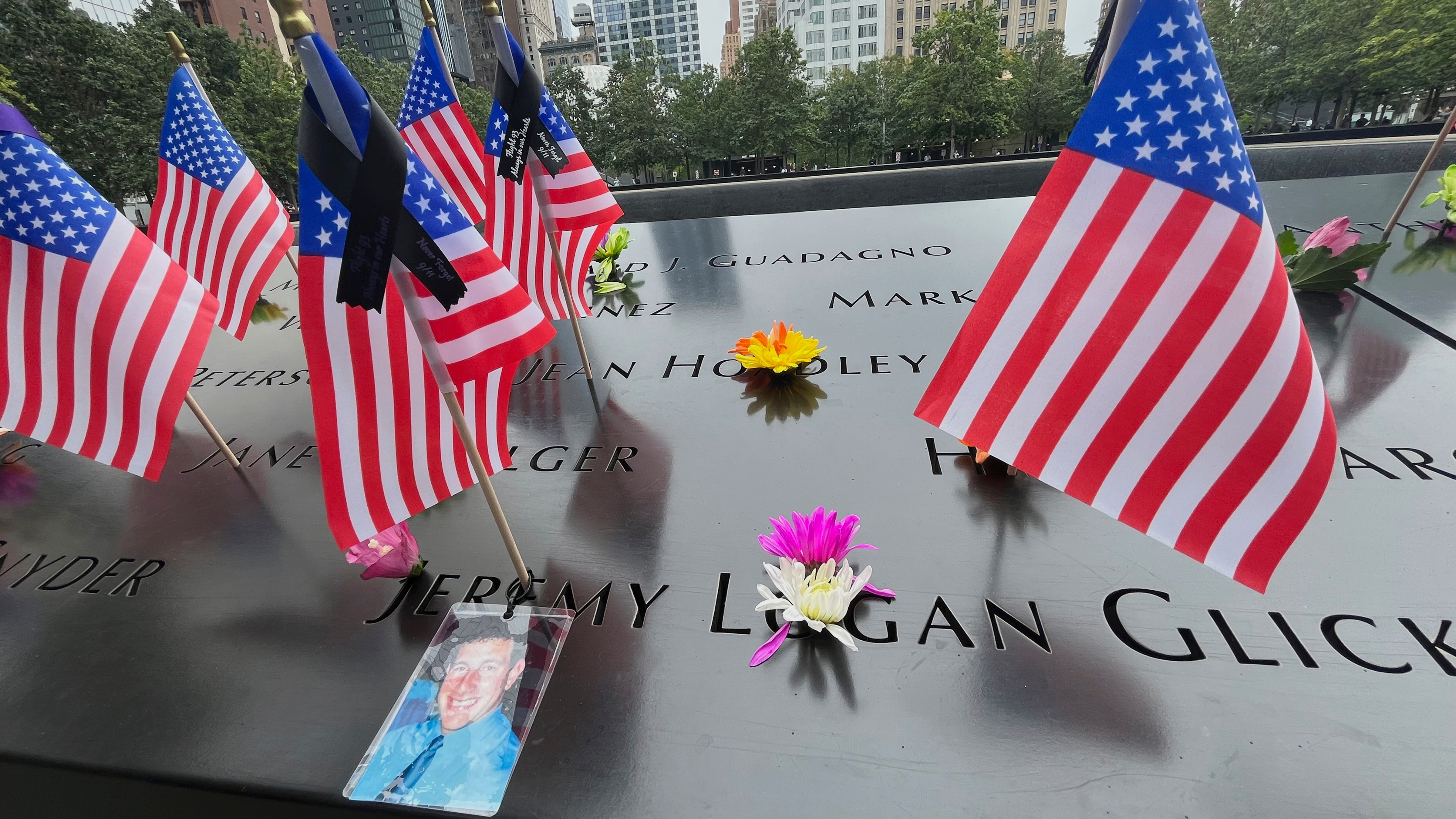
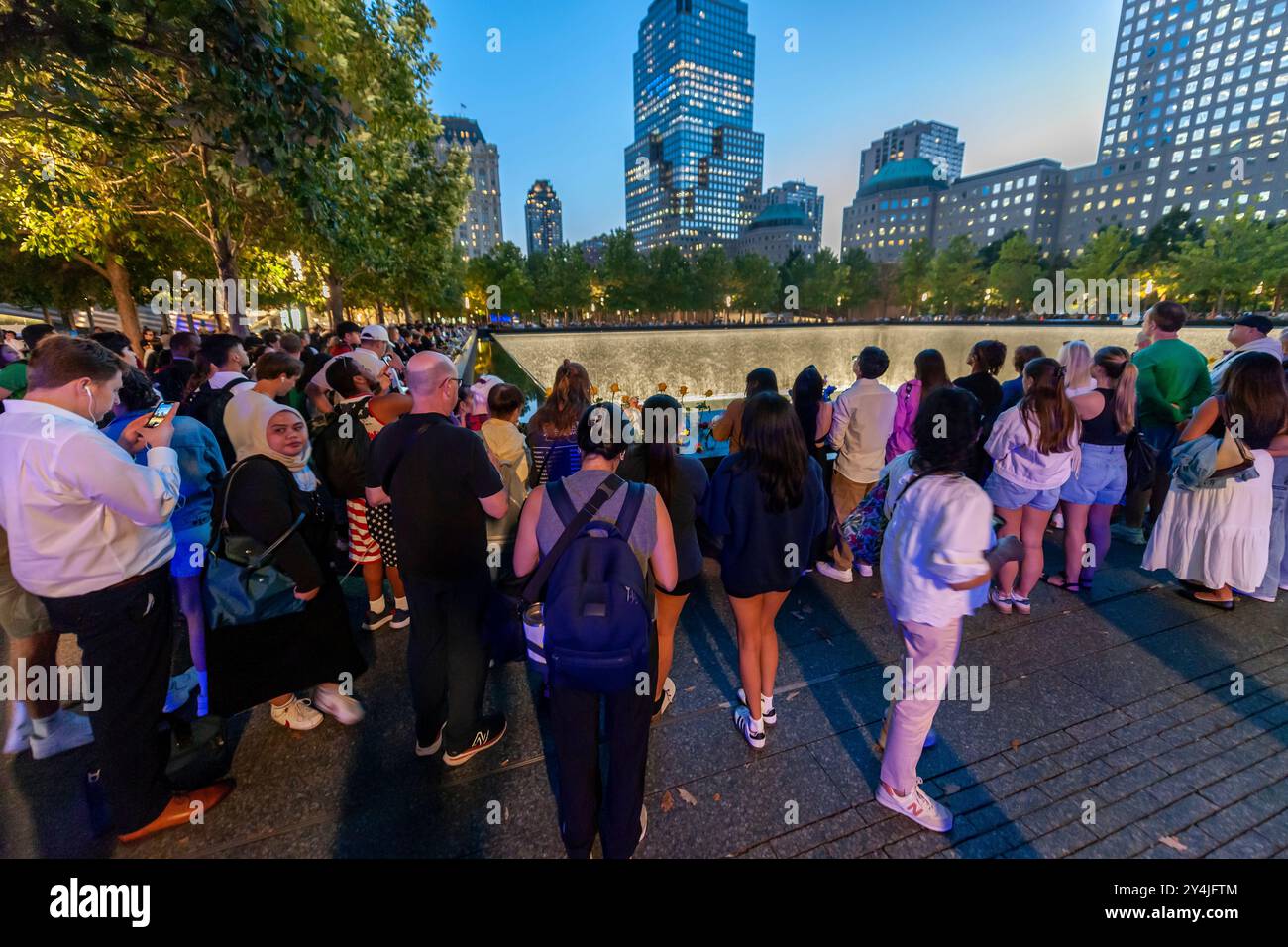
The year 2026 marks the 25th anniversary of the attacks, a milestone that transitions the event from living memory for many into a permanent fixture of historical education for younger generations. The National September 11 Memorial & Museum in New York City serves as the primary site for this remembrance.
The memorial features two massive reflecting pools set within the footprints of the original Twin Towers, with the names of the victims inscribed in bronze around the edges. The museum, located beneath the memorial plaza, houses artifacts ranging from "The Last Column" to personal effects of the victims, providing a somber, narrative-driven account of the day.
Similar sites of remembrance exist elsewhere. The Pentagon Memorial features 184 cantilevered benches, each dedicated to a victim, while the Flight 93 National Memorial in Shanksville includes the Tower of Voices, a 93-foot-tall structure with 40 wind chimes. For the 25th anniversary in 2026, these locations serve as focal points for national unity, emphasizing the "Never Forget" mantra that has defined the American consciousness for a quarter-century.
Comparing the Pre- and Post-9/11 Eras
The following table outlines the significant shifts in various sectors of public life that occurred as a result of the September 11 attacks, as seen from the perspective of 2026.
| Feature | Pre-September 11 Status | Post-September 11 (2026 Reality) |
|---|---|---|
| Airport Security | Private contractors; minimal liquid/shoe restrictions. | TSA-federalized; biometric entry; strict liquid and electronic screening. |
| Intelligence Sharing | Siloed agencies (CIA/FBI) with limited data exchange. | Integrated sharing via DHS and the National Counterterrorism Center. |
| Domestic Surveillance | Higher privacy bars; warrants required for most data. | Expanded authority under Patriot Act; metadata collection programs. |
| Aviation Safety | Cockpit doors often unlocked; passengers could visit pilots. | Reinforced, bulletproof cockpit doors; strict access protocols. |
| Public Sentiment | Low concern regarding domestic terrorism. | Permanent state of heightened vigilance and "See Something, Say Something." |
| Global Diplomacy | Cold War leftovers; focus on nation-states. | Focus on non-state actors and global extremist networks. |
Frequently Asked Questions
Who was responsible for the September 11 attacks?
The attacks were carried out by the extremist group al-Qaeda, led by Osama bin Laden. The group operated out of Afghanistan with the protection of the Taliban. The 19 hijackers were primarily from Saudi Arabia, with others from the United Arab Emirates, Lebanon, and Egypt. The 9/11 Commission Report later identified the failure of intelligence agencies to "connect the dots" as a primary reason the plot was not thwarted.
How many people died in the 9/11 attacks?
A total of 2,977 people were killed in the immediate attacks. This includes 2,606 in the World Trade Center and surrounding area, 125 at the Pentagon, and 246 on the four hijacked planes (not including the 19 hijackers). In the 25 years since, thousands more have died from illnesses contracted due to exposure to toxins at Ground Zero.
What is the current status of the World Trade Center site?
In 2026, the World Trade Center site is a fully rebuilt complex. It includes One World Trade Center (the Freedom Tower), which stands at a symbolic 1,776 feet, along with several other office towers, the Oculus transportation hub, and the National 9/11 Memorial & Museum. The site serves as both a thriving commercial center and a place of solemn remembrance.
Is the Victim Compensation Fund still accepting claims in 2026?
Yes, the September 11th Victim Compensation Fund (VCF) is fully operational in 2026. Following the signing of the "Never Forget the Heroes" Act in 2019, the fund was extended through October 2092. This long-term extension was designed to ensure that those who develop cancers or other latent conditions decades after exposure can still receive the compensation they deserve.
How has air travel changed because of 9/11?
Air travel underwent a permanent transformation involving the federalization of security through the TSA. Key changes include the screening of all checked and carry-on luggage for explosives, the requirement for government-issued ID (like REAL ID) to board, and the implementation of "PreCheck" programs to expedite low-risk travelers. Cockpit doors are now hardened against intrusion, and air marshals are frequently present on flights.
Recommendations for Continued Learning and Remembrance
For those seeking to understand the full scope of September 11 as of 2026, several actions are recommended to gain a comprehensive perspective. First, visiting the official memorials in New York, Virginia, or Pennsylvania provides a physical connection to the scale of the events that books and videos cannot replicate. Each site offers a unique perspective on the tragedy—urban destruction in NYC, a military strike in Arlington, and a heroic struggle in Shanksville.
Second, educators and students should utilize the archives of the 9/11 Commission Report, which remains the most thorough public investigation into the events. Reading the summaries of this report helps clarify the systemic vulnerabilities that existed at the time. Finally, supporting organizations like the FealGood Foundation or the Tunnel to Towers Foundation is a practical way to honor the legacy of the first responders who continue to face health and financial challenges 25 years later. These actions ensure that the history of September 11 is not only remembered but that its ongoing human costs are actively addressed.