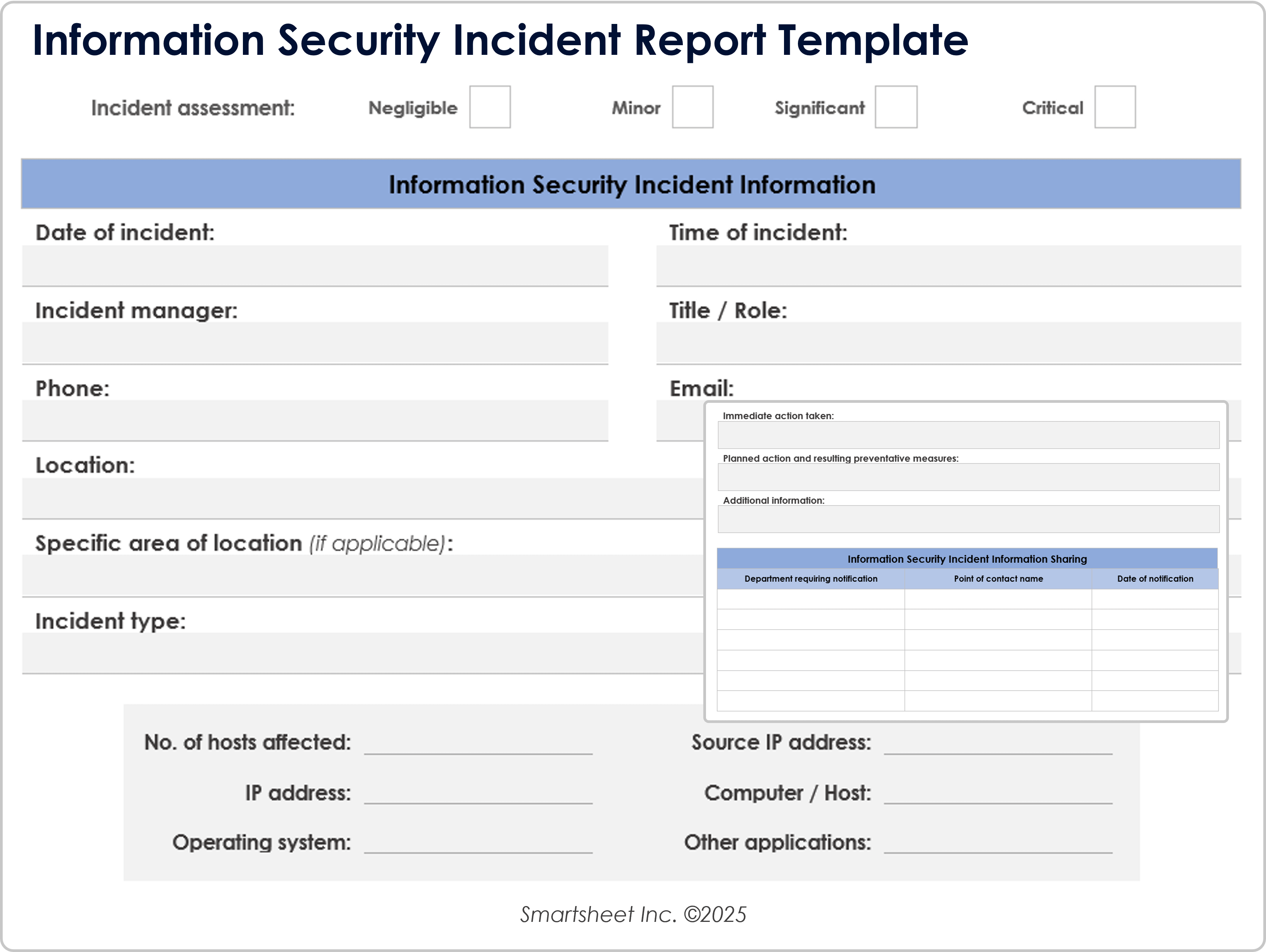
A security incident is an unauthorized or unexpected event that compromises the confidentiality, integrity, or availability of an organization's digital or physical assets. Unlike a general technical glitch, an incident involves a violation of security policies or safeguards, necessitating a formal response to mitigate damage, protect data, and restore normal operations.
In the landscape of 2026, the definition of a security incident has expanded beyond traditional hacking. It now encompasses a wide array of threats, including sophisticated AI-driven social engineering, supply chain vulnerabilities, and physical security breaches that target data centers. For any organization, distinguishing between a routine technical "event" and a high-stakes "incident" is the first step in maintaining a resilient security posture.
The Critical Distinction: Event vs. Incident vs. Breach
To manage security effectively, one must first master the terminology. While these terms are often used interchangeably in casual conversation, they represent distinct tiers of severity and required action in a professional cybersecurity context.
An event is any observable occurrence in a system or network. This includes a user logging in, a firewall blocking a known malicious IP, or a system update being installed. Most events are benign and part of normal operations. However, when an event indicates a potential deviation from standard security policy, it is elevated to a security incident. For example, a single failed login attempt is an event; a thousand failed login attempts from a foreign IP address within one minute is an incident.
A data breach is a specific type of security incident where sensitive, protected, or confidential data is actually viewed, stolen, or used by an unauthorized individual. Every breach is an incident, but not every incident is a breach. A Distributed Denial of Service (DDoS) attack that takes a website offline is a severe security incident because it affects availability, but if no data was exfiltrated, it is not classified as a data breach. Understanding this hierarchy is essential for accurate reporting to stakeholders and regulatory bodies.
Common Categories of Security Incidents in 2026
The threat landscape in 2026 is characterized by increased automation and the weaponization of machine learning. Security incidents generally fall into several primary categories, each requiring a tailored response strategy.
Unauthorized Access and Credential Compromise
This remains the most prevalent type of incident. It occurs when an attacker gains access to systems by bypassing or stealing authentication factors. In 2026, this often involves "Session Hijacking" or sophisticated "MFA Fatigue" attacks, where attackers bombard users with authorization requests until one is accidentally approved. Once inside, the attacker can move laterally through the network, escalating privileges to reach sensitive databases.
Malware and Advanced Ransomware
Malware has evolved into highly modular code that can lie dormant for months before activating. Ransomware in 2026 often utilizes "triple extortion" tactics: encrypting data, threatening to leak sensitive information, and launching DDoS attacks against the victim’s clients if the ransom is not paid. These incidents disrupt business continuity and pose significant financial and reputational risks.
Social Engineering and Phishing
Despite advancements in email filtering, human psychology remains a primary vulnerability. Modern phishing incidents often use "Deepfake" audio or video to impersonate executives, tricking employees into transferring funds or revealing administrative credentials. Because these incidents bypass technical controls by exploiting trust, they are among the most difficult to detect through automated means alone.
Denial of Service (DoS) and Distributed DoS (DDoS)
These incidents target the availability of services. By overwhelming a network or application with traffic, attackers ensure that legitimate users cannot access resources. While historically used for activism or "hacktivism," DDoS attacks in 2026 are frequently used as a distraction technique to mask more subtle data exfiltration attempts happening simultaneously.
The NIST Incident Response Life Cycle
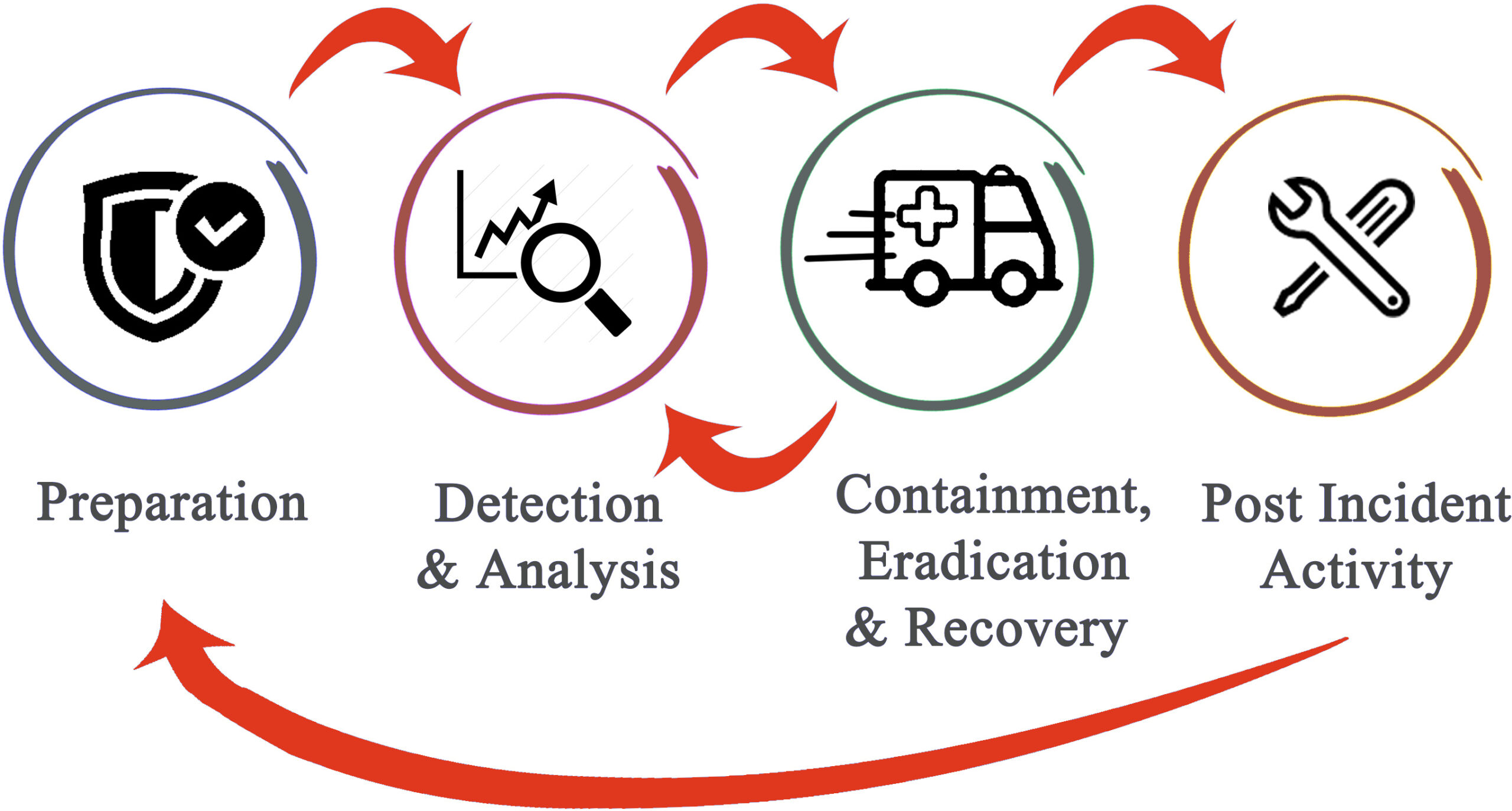
To handle security incidents systematically, most organizations follow the framework established by the National Institute of Standards and Technology (NIST), specifically NIST SP 800-61. This life cycle ensures that responses are consistent, repeatable, and effective.
1. Preparation
Preparation is the foundation of incident response. It involves establishing an Incident Response Team (IRT), defining communication channels, and implementing security tools such as Endpoint Detection and Response (EDR) and Security Information and Event Management (SIEM) systems. Organizations must conduct regular "tabletop exercises" to simulate various incident scenarios, ensuring that every team member knows their role when a real crisis occurs.
2. Detection and Analysis
This phase begins when signs of an incident are identified through automated alerts or manual reports. The goal is to determine the scope, origin, and severity of the incident. Analysis involves looking at log files, network traffic patterns, and system behavior. In 2026, AI-driven triage tools are often used here to filter out false positives, allowing human analysts to focus on high-priority threats.
3. Containment, Eradication, and Recovery
Once an incident is confirmed, the immediate priority is containment—stopping the "bleeding." This might involve isolating a compromised server from the network or disabling a compromised user account. Following containment, the IRT moves to eradication, which involves removing the root cause of the incident, such as deleting malware or closing a firewall hole. Recovery focuses on restoring systems to normal operation, which may involve rebuilding systems from "clean" backups.
4. Post-Incident Activity
Often referred to as the "Lessons Learned" phase, this is the most neglected yet most important step. The team reviews what happened, why it happened, and how the response could have been faster. The findings from this phase are used to update the preparation phase, creating a continuous loop of improvement.
Incident Severity and Impact Classification
Not all incidents require the same level of resources. Organizations use a classification matrix to determine the urgency of the response.
| Severity Level | Impact Description | Required Action Time | Examples |
|---|---|---|---|
| Critical | Widespread disruption; loss of sensitive customer data; complete system outage. | Immediate (24/7) | Ransomware locking core servers; large-scale data exfiltration. |
| High | Significant impact on a department; potential for legal or regulatory penalties. | Within 1–4 hours | Compromise of a privileged admin account; localized malware infection. |
| Medium | Limited impact on productivity; no immediate threat to core data integrity. | Within 24 hours | Repeated failed login attempts; unauthorized software installation. |
| Low | Minor policy violations; no data loss or operational disruption. | Within 2–5 business days | An employee bypassing a web filter; minor misconfiguration of a non-critical asset. |
Legal and Regulatory Reporting Requirements
In 2026, the legal landscape surrounding security incidents is more stringent than ever. Depending on the jurisdiction and the nature of the data involved, organizations may be legally obligated to report incidents to government authorities and affected individuals.
The General Data Protection Regulation (GDPR) remains the gold standard for data protection, requiring organizations to report a personal data breach to the relevant supervisory authority within 72 hours of becoming aware of it. In the United States, various state laws and federal regulations, such as those from the SEC for public companies, mandate specific disclosure timelines and formats. Failure to comply with these reporting windows can result in fines that far exceed the actual cost of the technical remediation.
Furthermore, industry-specific standards like PCI DSS (for payment card data) or HIPAA (for healthcare information) have their own strict incident handling and reporting protocols. Organizations must ensure that their legal and compliance teams are integrated into the Incident Response Team to navigate these requirements effectively.
Technologies Enhancing Incident Response in 2026
The scale of modern infrastructure makes manual incident monitoring impossible. Several key technologies are now essential for identifying and mitigating security incidents at speed.
- SOAR (Security Orchestration, Automation, and Response): SOAR platforms allow teams to create "playbooks" that automate routine tasks. For example, if a known malicious file is detected, the SOAR system can automatically isolate the infected laptop and reset the user’s password before a human analyst even sees the alert.
- XDR (Extended Detection and Response): XDR provides a holistic view of the security environment by integrating data from endpoints, networks, and cloud environments. This prevents "siloed" visibility, making it easier to track an attacker who moves across different platforms.
- Behavioral Analytics: Rather than looking for known "signatures" of malware, these tools use machine learning to establish a baseline of normal behavior. When a user who normally accesses files in New York suddenly starts downloading gigabytes of data from an IP in Singapore at 3:00 AM, the system flags a security incident based on the behavioral anomaly.
Frequently Asked Questions
What is the first thing to do when a security incident is discovered?
The first step is to verify the incident and perform initial containment. You must prevent the threat from spreading or exfiltrating more data. This often involves disconnecting affected devices from the network while preserving the system's memory (RAM) for forensic analysis, as shutting down a machine can sometimes destroy evidence.
Does every security incident require a forensic investigation?
No, only incidents that involve potential legal action, regulatory requirements, or significant data loss typically require a full digital forensic investigation. For minor incidents, such as a single malware infection that was successfully blocked by antivirus software, a standard remediation and internal review are usually sufficient.
How can small businesses manage security incidents without a dedicated SOC?
Small businesses often rely on Managed Security Service Providers (MSSPs). An MSSP provides 24/7 monitoring and response capabilities at a fraction of the cost of building an in-house Security Operations Center (SOC). Additionally, implementing basic frameworks like the CIS Critical Security Controls can significantly reduce the likelihood of an incident occurring.
What is a "Zero-Day" incident?
A zero-day incident occurs when an attacker exploits a vulnerability in software or hardware that is unknown to the vendor. Because there is "zero days" of notice and no existing patch, these incidents are particularly dangerous. Defense against zero-day incidents relies on behavioral monitoring and "defense-in-depth" strategies rather than traditional signature-based security.
Is a lost or stolen laptop considered a security incident?
Yes, a lost or stolen corporate device is a physical security incident. If the device contains unencrypted sensitive data, it may also be classified as a data breach. In 2026, most organizations use remote-wipe capabilities to mitigate the risk of these incidents, but the event must still be logged and investigated.
Strategic Next Steps for Resilience
Managing a security incident effectively is not just a technical task; it is a business imperative. Organizations should move toward a "Resilience First" model, assuming that an incident will eventually occur rather than hoping it won't.
The most effective next action is to conduct a comprehensive risk assessment to identify your most "crown jewel" assets. Once identified, ensure these assets have enhanced logging and restricted access controls. Secondly, formalize your Incident Response Plan (IRP) and ensure it is stored in a location that remains accessible even if your primary network is taken offline by ransomware. By shifting from a reactive to a proactive stance, organizations can ensure that a security incident remains a manageable event rather than a business-ending catastrophe.